
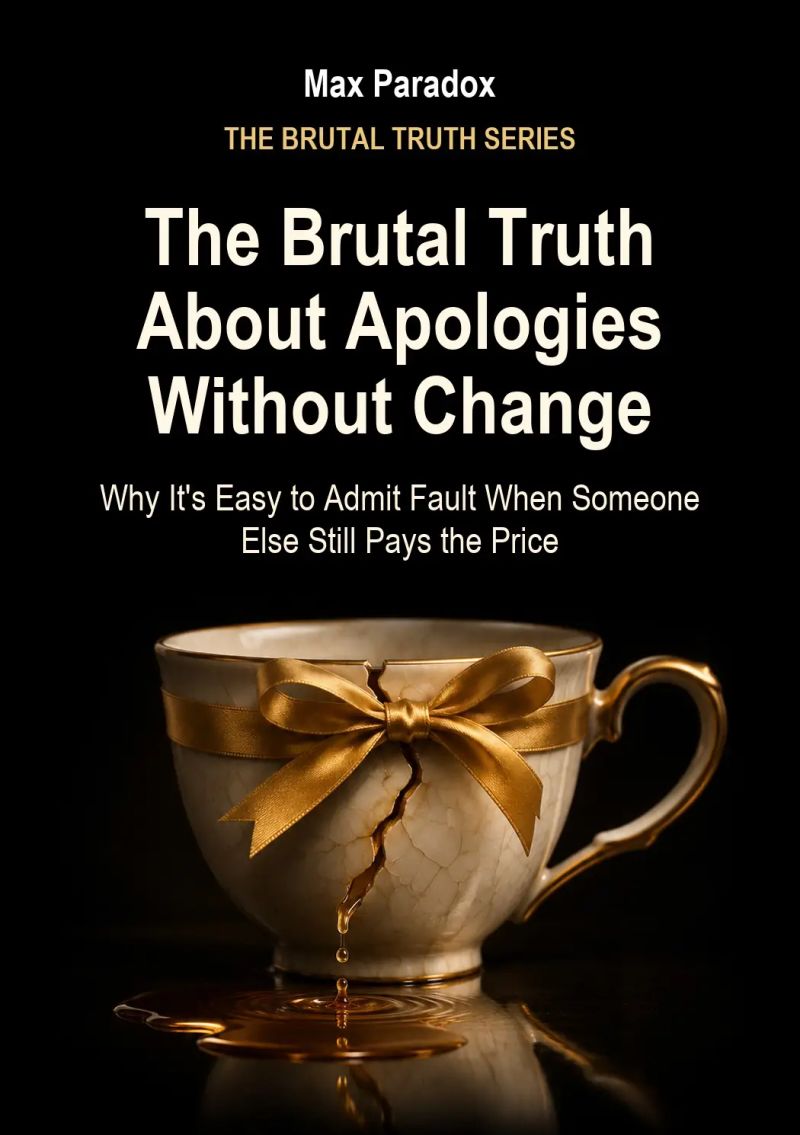
The Brutal Truth About Apologies Without Change - Why It's Easy to Admit Fault When Someone Else Still Pays the Price
By Max Paradox


Length6h 49m
About this audiobook
An apology can change the tone of a conversation while leaving tomorrow's consequences to the same person. This book examines the gap between the relief of being forgiven and the demanding work of repairing what happened.
From the introduction
This scene is illustrative, as are the other situations presented throughout this book. It does not describe a documented couple or a specific real-life incident. It represents a pattern that can be recognised in many different forms: someone crosses a boundary, fails another person, causes hurt, or transfers a responsibility, and then says the right words. The wrongdoing is acknowledged, the tension briefly subsides, and everyday life returns to its previous distribution of power. The person who paid the price is still expected to deal with the consequences. Sometimes there is an additional responsibility attached: accepting the apology in such a way that the person at fault does not feel rejected for having just admitted a mistake.
Apologies have a remarkable advantage. They allow a sentence to be brought to an end before the matter itself has been resolved. Someone can say, "You're right," "It was my fault," or "I shouldn't have done that," and then feel that the most important part has been completed. The statement has a clear beginning and an ending. It can be repeated, remembered, and even brought up later as evidence of good intentions. Change is considerably less convenient. It requires disrupting established habits, surrendering some comfort, and accepting consequences that do not disappear simply because someone feels remorse. Apologies are therefore sometimes treated like payment, although in reality they resemble an acknowledgement that a bill exists.
Not every such statement is a cynical trick. A person can genuinely regret their behaviour, feel ashamed of what they have done, and still be unable or unwilling to change the way they function. They may not understand the scale of the damage. They may overestimate their own ability to control their behaviour. They may fear the cost of changing more than they fear another conflict. There are also situations in which the limitations are real: someone may lack the money, influence, security, or freedom required to repair a situation immediately. Admitting fault is therefore not automatic proof of manipulation, just as sincere emotions are not proof of responsibility. Between the two lies a space in which the decisive question is who actually carries the consequences.
This publication was prepared using tools that support the creative process, including artificial intelligence solutions. The final concept, structure and editing are the responsibility of the author.
Audiobook details
GenreSelf-Help
Length6 hrs 49 mins
Narrated byListen with 1,000+ voices
FormateBook with Audio
Publish dateNov 29, 2026
LanguageEnglish
Table of contents
1INTRO
2Chapter 1 - The Words Have Been Accepted, the Matter Is Closed
3Chapter 2 - I'm Sorry If Anyone Was Offended
4Chapter 3 - When the Guilty Person Needs Comfort
5Chapter 4 - This Time, Things Really Will Be Different
Show all chaptersShow less
6Chapter 5 - Apologies That Open Doors
7Chapter 6 - The First Apology Goes to the Person in Power
8Chapter 7 - Everyone Saw Me Apologise
9Chapter 8 - When Everyone Expects You to Have Forgiven Already
10Chapter 9 - We Remember Different Versions of the Same Hurt
11Chapter 10 - When the Injured Person Becomes the Manager of Someone Else's Improvement
12Chapter 11 - Now We're Even
13Chapter 12 - Let's Not Make a Big Deal Out of It
14Chapter 13 - When You Begin to Doubt Your Own Emotions
15Chapter 14 - When Closeness No Longer Comes Naturally
16Chapter 15 - A Life Organised Around the Next Apology
17Chapter 16 - The Person Who Can Always Endure Everything
18Chapter 17 - Nothing Happened, After All
19Chapter 18 - There Was No Other Choice
20Chapter 19 - Everything Has Been Explained in the Records
21Chapter 20 - The Bill Nobody Wanted to Issue

Brutalna prawda o dziedziczeniu ról rodzinnych - Dlaczego przy tym samym stole znowu stajemy się dziećmiMax Paradox5h 52m$7.40

The Brutal Truth About Supercars on Display - How Speed, Scarcity, and Other People's Eyes Drive the Prestige MarketMax Paradox7h 11m$7.40

Die brutale Wahrheit über Entschuldigungen ohne Veränderung - Warum es leicht ist, Schuld einzugestehen, wenn jemand anderes weiterhin den Preis zahltMax Paradox7h 47m$7.40

Brutalna prawda o superautach na pokaz - Jak prędkość, rzadkość i cudze spojrzenia napędzają rynek prestiżuMax Paradox6h 53m$7.40

Die brutale Wahrheit über die gleichberechtigte Aufgabenverteilung zu Hause - Wer plant, an alles denkt und die Arbeit erfasst, von der nur die Hälfte sichtbar istMax Paradox7h 12m$7.40

Brutalna prawda o równym podziale w domu - Kto planuje, pamięta i rozlicza pracę, której widać tylko połowęMax Paradox5h 51m$7.40

Brutalna prawda o rozstaniach bez rozmowy - Jak technologia ułatwia znikanie i komu zostawia pracę nad zakończeniemMax Paradox6h 13m$7.40

Brutalna prawda o nieopłaconej trosce - Kto płaci czasem, gdy opieka w rodzinie zostaje nazwana miłościąMax Paradox6h 13m$7.40

The Brutal Truth About Men Without Confidants - How the Ideal of Self-Sufficiency Sets the Limits of Male IntimacyMax Paradox7h 50m$7.40

Brutalna prawda o mężczyznach bez powierników - Jak wzór samowystarczalności wyznacza granice męskiej bliskościMax Paradox7h 20m$7.40

Brutalna prawda o randkach jak rekrutacja - Co dzieje się z bliskością, kiedy każda osoba jest tylko jedną z opcjiMax Paradox6h 50m$7.40

Brutalna prawda o rodzicach na pokaz - Jak reputacja dobrego rodzica przejmuje uwagę przeznaczoną dla dzieckaMax Paradox6h 7m$7.40

Brutalna prawda o przeprosinach bez zmiany - Dlaczego łatwo uznać winę, kiedy rachunek nadal płaci ktoś innyMax Paradox6h 19m$7.40

The Brutal Truth About Performative Parents - How the Reputation of Being a Good Parent Takes Attention Away from the ChildMax Paradox6h 40m$7.40

Die brutale Wahrheit darüber, immer gebraucht zu werden - Was wir gewinnen, wenn uns die Selbstständigkeit anderer als Bedrohung erscheintMax Paradox6h 20m$7.40

Die brutale Wahrheit über die Ruhe im Internet - Was wir im Tausch gegen eine Bequemlichkeit aufgeben, um die wir nicht einmal mehr bitten müssenMax Paradox6h 46m$7.40

Brutalna prawda o świętym spokoju w internecie - Co oddajemy w zamian za wygodę, o którą już nawet nie musimy prosićMax Paradox5h 42m$7.40
The Brutal Truth About Politeness as Punishment - How Proper Words Can Humiliate Without Raising Your VoiceMax Paradox6h 16m$7.40

Brutalna prawda o automatyzowaniu odpowiedzialności - Kto naprawdę podejmuje decyzje, za które podobno odpowiada systemMax Paradox6h 34m$7.40
Learning to PrayJames Martin13h 24m4.5 (3.4K)$33 · $0.00

A Different WayChristopher A. Hall10h 45m4.5 (165)$29 · $0.00

The Hard Thing About Hard ThingsBen Horowitz7h 57m4.2 (134.3K)$26 · $0.00

10% Happier 10th AnniversaryDan Harris9h 28m4.1 (137.1K)$29 · $0.00
The Power of the OtherHenry Cloud5h 52m4.2 (3.5K)$24 · $0.00

What You Are Looking For Is in the LibraryMichiko Aoyama7h 19m4.1 (156.7K)$24 · $0.00
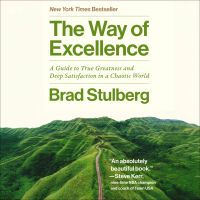
The Way of ExcellenceBrad Stulberg6h 46m4.2 (1.1K)$24 · $0.00

The AlchemistPaulo Coelho4h 1m4.1 (3.9M) · 1326$23 · $0.00

Change the RecipeJosé Andrés, Richard Wolffe4h 57m4.1 (2K)$20 · $0.00

The Lucky RideYasushi Kitagawa4h 26m4.1 (1.8K)$20 · $0.00
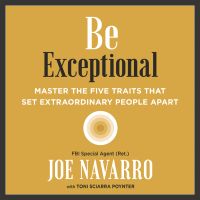
Be ExceptionalJoe Navarro, Toni Sciarra Poynter9h 11m4.0 (1.3K)$29 · $0.00
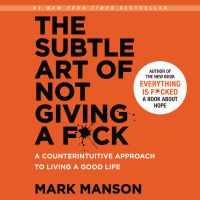
The Subtle Art of Not Giving a F*ckMark Manson5h 18m3.9 (1.7M)$24 · $0.00

HomeschooledStefan Merrill Block7h 10m3.6 (18.5K)$28 · $0.00

Autoimmunity and the Good GirlsSara Hirsh Bordo7h 51m$26 · $0.00

The Purpose Driven® Liferick warren9h 23m4.0 (896.8K) Only with Ultra

Your Desired FutureHenry Cloud6h 43m$24 · $0.00

Spiritual AnatomyDaaji Kamlesh D. Patel9h 47m4.7 (319)$29 · $0.00

The Dangerous Truth about Today’s MarijuanaLaura Stack CSP, MBA9h 57m4.7 (385)$20 · $0.00

The Gospel according to Spiritualism (Translated)Allan Kardec14h 39m4.6 (3.9K)$5.70 · $0.00

Birdie & HarlowTaylor Wolfe7h 50m4.6 (6.5K)$26 · $0.00
You may also like

The TouchstoneEdith Wharton4h 16m3.7 (2.3K)$2 · $0.00

After the AffairJanis A. Spring2h 56m4.2 (4.9K)$18 · $0.00

Bulletproof MarriageAdam Davis, Lt. Col. Dave Grossman6h 57m4.6 (719)$10 · $0.00

The Johnson SistersTresser Henderson10h 25m4.1 (583)$20

Wings of the DoveHenry James19h 55m3.9 (23.5K)$2.30 · $0.00

The Collected Plays of Anton ChekhovAnton Chekhov16h 11m4.4 (291)$2 · $0.00

Four FriendsRobyn Carr12h 35m3.9 (14.6K)$33 · $0.00

This Is How Your Marriage EndsMatthew Fray9h 15m4.2 (3.8K)$29 · $0.00

The Silent TreatmentAbbie Greaves9h 26m3.8 (14.9K)$29 · $0.00

The Magic CityEdith Nesbit7h 16m4.0 (3K)$4 · $0.00

First Comes Love, Then Comes MoneyBethany Palmer, Scott Palmer5h 19m4.0 (82)$24 · $0.00

Someone Let Me Down and I Don't Know Whether It Was a Mistake or a Pattern - How to Assess a One-Time Slip, Repeated Behavior, and Genuine Willingness to Make Amends Without Making a Decision Based on a Single NightMax Paradox7h 4m$7.50

The Later LifeLouis Couperus8h 10m3.9 (195)$2 · $0.00

The Marriage ReboundMeka James8h 48m3.7 (22)$29 · $0.00

I Heard “I'm Sorry,” but I Don't Want to Go Back to the Way Things Were - How to Tell Forgiveness Apart from Agreeing to the Old Rules, Rebuild Trust at Your Own Pace, and Decide What Really Needs to ChangeMax Paradox6h 7m4.2 (222)$7.50

Lockdown Liaisons - Beach house birthday and other storiesShobhaa De59m$4 · $0.00

NotoriousMaureen Dowd16h 52m3.6 (564)$40 · $0.00

A Discourse on the Evils of DancingJohn F. Mesick50m$2 · $0.00
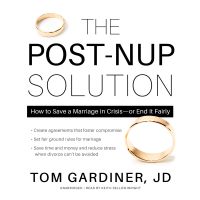
The Post-Nup SolutionTom Gardiner JD6h 47m$17

Save Your Marriage: The Ultimate Guide to Rebuilding Trust and Rekindling Love in Your RelationshipBrian Gibbs2h 41m$3.40 · $0.00