
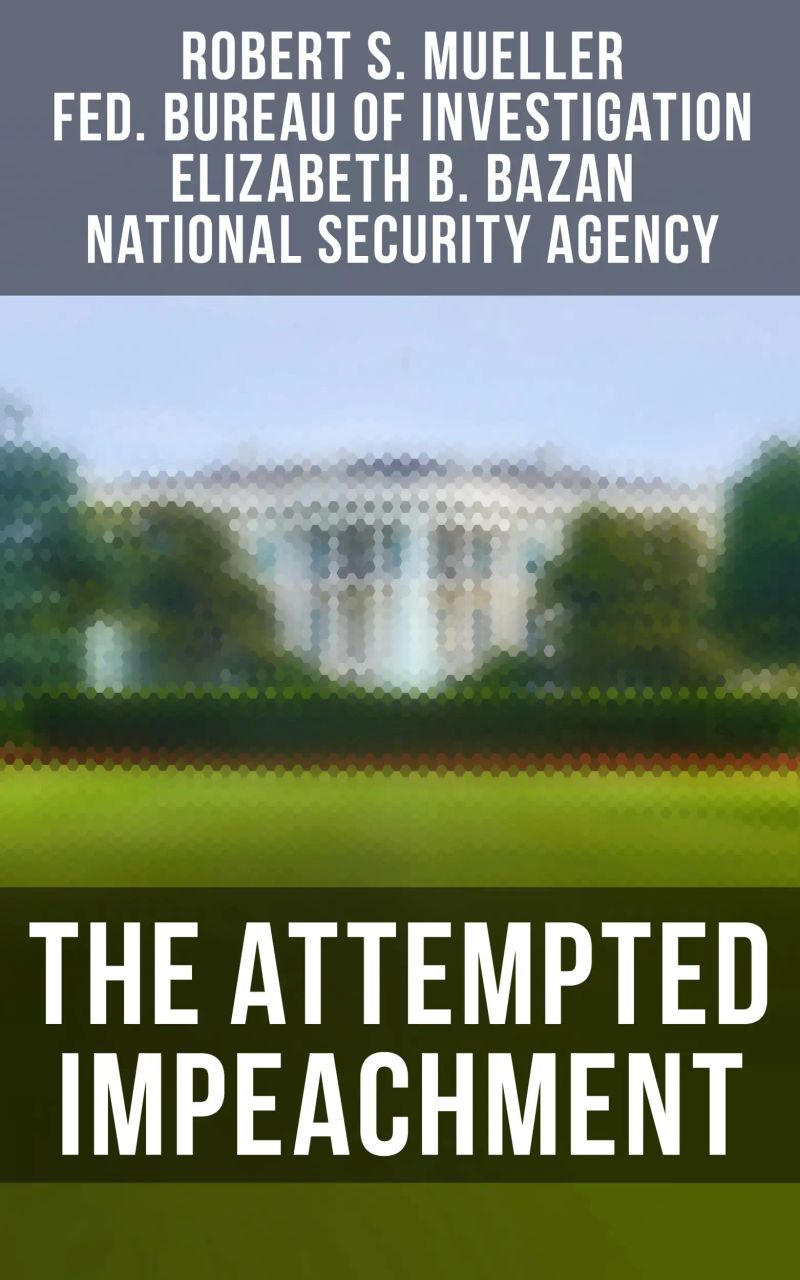
The Attempted Impeachment
The Trump Ukraine Impeachment Inquiry Report, The Mueller Report, Crucial Documents & TranscriptsBy Robert S. Mueller, Federal Bureau of Investigation, Elizabeth B. Bazan, National Security Agency


Length5h 21m
About this audiobook
'The Attempted Impeachment' stands as a crucial anthology that delves into the intricate weave of legal and political maneuvers associated with impeachment processes. Demonstrating a rich tapestry of literary styles, the collection incorporates analytical essays, detailed historical accounts, and persuasive legal arguments, reflecting the complex nature of its theme. The anthology brings forth key discussions on the ethical, constitutional, and political intricacies surrounding impeachment, forming a comprehensive narrative that highlights the tensions between power and accountability. The authors, Robert S. Mueller and Elizabeth B. Bazan, bring an authoritative voice to the anthology, drawing from their extensive backgrounds in the Federal Bureau of Investigation and the National Security Agency, respectively. Their expert knowledge paints a vivid picture of the constitutional challenges and national security implications tied to the theme of impeachment. The collection aligns with significant historical and cultural movements, showcasing a meticulous exploration of governance and the safeguarding of democratic institutions through the rule of law. This anthology is essential for scholars, legal experts, and politically-engaged readers aiming to deepen their understanding of impeachment's legal foundations and its profound implications on governmental integrity. It invites readers into a rigorous scholarly dialogue, enriched by the depth of insight and the panoramic view it offers on such a pivotal issue. The Attempted Impeachment' serves not only as an educational tool but also as a catalyst for future discourse on the preservation of democratic values within the framework of law.
Audiobook details
GenrePolitics and Government, Literary Classics
Length5 hrs 21 mins
Narrated byListen with 1,000+ voices
FormateBook with Audio
Publish dateDec 17, 2020
LanguageEnglish
Table of contents
1The History of the Revolution & The Communist Manifesto
2The Attempted Impeachment
3EXECUTIVE SUMMARY
4FINDINGS
5TABLE OF NAMES
Show all chaptersShow less
6I. The evidence does not establish that President Trump pressured the Ukrainian government to investigate his political rival for the purpose of benefiting him in the 2020 U.S. presidential election.
7A. The evidence does not establish that President Trump pressured President Zelensky during the July 25 phone call to investigate the President’s political rival for the purpose of benefiting him in the 2020 election.
81. The call summary does not reflect any improper pressure or conditionality to pressure Ukraine to investigate President Trump’s political rival.
92. President Zelensky has publicly and repeatedly said he felt no pressure to investigate President Trump’s political rival.
103. President Trump has publicly and repeatedly said he did not pressure President Zelensky to investigate his political rival.
114. Read-outs of the phone call from both the State Department and the Ukrainian government did not reflect that President Trump pressured President Zelensky to investigate his political rival.
125. The National Security Council leadership did not see the call as illegal or improper.
136. The anonymous, secondhand whistleblower complaint misstated details about the July 25 call, which has falsely colored the call’s public characterization.
14B. The evidence does not establish that President Trump withheld a meeting with President Zelensky to pressure Ukraine to investigate the President’s political rival for the purpose of benefiting him in the 2020 election.
151. Ukraine has a long history of pervasive corruption.
162. President Trump has a deep-seated, genuine, and reasonable skepticism of Ukraine due to its history of pervasive corruption.
173. Senior Ukrainian government officials publicly attacked President Trump during the 2016 campaign.
184. U.S. foreign policy officials were split on President Zelensky, a political novice with untested views on anti-corruption and a close relationship with a controversial oligarch.
195. President Trump extended an invitation to the White House to President Zelensky on three occasions without conditions.
206. Despite difficulty scheduling a face-to-face presidential meeting, senior Ukrainian officials interacted often with senior American officials between May and September 2019.
217. The evidence does not establish a linkage between a White House meeting and Ukrainian investigations into President Trump’s political rival.
228. The evidence does not establish that President Trump directed Vice President Pence not to attend President Zelensky's inauguration to pressure Ukraine to investigate the President's political rival.
239. President Trump and President Zelensky met during the United Nations General Assembly in September 2019 without any Ukrainian action to investigate President Trump’s political rival.
24C. The evidence does not establish that President Trump withheld U.S. security assistance to Ukraine to pressure Ukraine to investigate the President’s political rival for the purpose of benefiting him in the 2020 election.
251. President Trump has been skeptical about U.S. taxpayer-funded foreign assistance.
262. President Trump has been clear and consistent in his view that Europe should pay its fair share for regional defense.
273. U.S. foreign aid is often conditioned or paused, and U.S. security assistance to Ukraine has been paused before.
284. Despite President Trump’s skepticism, the Trump Administration’s policies have shown greater commitment and support to Ukraine than those of the Obama Administration.
295. Although security assistance to Ukraine was paused in July 2019, several witnesses testified that U.S. security assistance was not linked to any Ukrainian action on investigations.
306. President Trump rejected any linkage between U.S. security assistance and Ukrainian action on investigations.
317. Senior U.S. officials never substantively discussed the delay in security assistance with Ukrainian officials before the July 25 call.
328. The Ukrainian government denied any awareness of a linkage between U.S. security assistance and investigations.
339. The Ukrainian government considered issuing a public anti-corruption statement to convey that President Zelensky was “serious and different” from previous Ukrainian regimes.
3410. President Zelensky never raised a linkage between security assistance and investigations in his meetings with senior U.S. government officials.
3511. In early September 2019, President Zelensky’s government implemented several anti-corruption reform measures.
3612. The security assistance was ultimately disbursed to Ukraine in September 2019 without any Ukrainian action to investigate President Trump’s political rival.
37D. The evidence does not establish that President Trump set up a shadow foreign policy apparatus to pressure Ukraine to investigate the President’s political rival for the purpose of benefiting him in the 2020 election.
381. The President has broad Constitutional authority to conduct the foreign policy of the United States.
392. President Trump was likely skeptical of the established national security apparatus as a result of continual leaks and resistance from the federal bureaucracy.
403. The President has the constitutional authority to remove Ambassador Yovanovitch.
414. Ambassador Volker, Ambassador Sondland, and Secretary Perry were all senior U.S. government officers with official interests in Ukraine policy.
425. Referencing Ukrainian corruption, President Trump told Ambassador Volker, Ambassador Sondland, and Secretary Perry to talk to Mayor Giuliani.
436. At the Ukrainian government’s request, Ambassador Volker connected them with Mayor Giuliani to change his impression about the Zelensky regime.
447. The Ukrainian government understood that Mayor Giuliani was not speaking on behalf of President Trump.
458. Ambassador Volker, Ambassador Sondland, and Secretary Perry kept the National Security Council and the State Department informed about their actions.
469. Although some in the U.S. foreign policy establishment bristled, the roles of Ambassador Volker, Ambassador Sondland, and Secretary Perry and their interactions with Mayor Giuliani did not violate the law or harm national security.
47E. President Trump is not wrong to raise questions about Hunter Biden’s role with Burisma or Ukrainian government officials’ efforts to influence the 2016 campaign.
481. It is appropriate for Ukraine to investigate allegations of corruption in its country.
492. There are legitimate concerns surrounding Hunter Biden’s position on the board of Ukrainian energy company Burisma during his father’s term as Vice President of the United States.
503. There are legitimate questions about the extent to which Ukrainian government officials worked to oppose President Trump’s candidacy in the 2016 election.
More from Robert S. Mueller, Federal Bureau of Investigation, Elizabeth B. Bazan, National Security Agency
The Impeachment of Donald TrumpRobert S. Mueller, Federal Bureau of Investigation, Elizabeth B. Bazan, National Security Agency47h 31m$0.99 · $0.00
The Full Report on the Russian Interference in the 2016 Presidential ElectionRobert S. Mueller, Special Counsel's Office U.S. Department of Justice22h 33m4.1 (5.7K)$2 · $0.00
The Mueller ReportRobert S. Mueller, Special Counsel's Office U.S. Department of Justice22h 44m4.1 (8K)$2 · $0.00
How to Test Negative for StupidJohn Kennedy8h 13m4.7 (9.7K)$28 · $0.00

Black AF HistoryMichael Harriot15h 43m4.7 (14.6K)$33 · $0.00
The Gulag Archipelago Volume 3Aleksandr I. Solzhenitsyn21h 56m4.7 (8.9K)$46 · $0.00

MotherlandJulia Ioffe17h 52m4.7 (2.5K)$40 · $0.00

HostageEli Sharabi5h 25m4.6 (10.8K)$24 · $0.00

KrantikariSanjeev Sanyal11h 44m4.6 (1.3K)$16 · $0.00

Unbroken Bonds of BattleJohnny Joey Jones8h 31m4.6 (2.6K)$8 · $0.00
On Democracies and Death CultsDouglas Murray10h 38m4.6 (6.5K)$29 · $0.00

Balcony Over Jerusalem: A Middle East Memoir - Israel, Palestine and BeyondJohn Lyons12h 37m4.6 (1.4K)$33 · $0.00
RiggedMollie Hemingway12h 48m4.6 (4.2K)$23 · $0.00

SledgehammerDavid Friedman8h 21m4.7 (589)$26 · $0.00
Citizenship in a Republic (Annotated)Theodore Roosevelt2h 44m4.6 (1.4K)$2 · $0.00
No EscapeNury Turkel9h 30m4.6 (809)$28 · $0.00

Always FaithfulThomas Schueman, Zainullah Zaki12h 12m4.6 (977)$29 · $0.00
UnthinkableJamie Raskin15h 8m4.5 (9.3K)$8 · $0.00

My Fourth Time, We DrownedSally Hayden13h 59m4.6 (2.9K)$23 · $0.00
A Revolution of Common SenseScott Jennings9h 29m4.6 (528)$29 · $0.00
Statement From the Dock at the Rivonia TrialNelson Mandela2h 18m4.6 (1.3K)$1 · $0.00

Lessons from the EdgeMarie Yovanovitch17h 11m4.5 (5.9K)$40 · $0.00
To Rescue the American SpiritBret Baier10h 12m4.5 (2.7K)$8 · $0.00

To Kill a MockingbirdHarper Lee12h 18m4.5 (7.4M)$29 · $0.00

These Precious DaysAnn Patchett11h 14m4.5 (45.2K)$29 · $0.00

The Jeeves and Wooster Stories: The Complete Collection (33 Books)P. G. Wodehouse21h 57m4.7 (2.8K)$15 · $0.00
The Gulag Archipelago Volume 3Aleksandr I. Solzhenitsyn21h 56m4.7 (8.9K)$46 · $0.00

This Side of Paradise - The Original 1920 Edition (Annotated)F. Scott Fitzgerald11h 30m4.6 (1.6K)$2 · $0.00

The Great Gatsby: Original 1925 Edition (An F. Scott Fitzgerald Classic NovelFrancis Scott Fitzgerald4h 45m4.6 (9.3K)$18 · $0.00

TWELFTH NIGHTWilliam Shakespeare, Sidney Lee16h 38m4.6 (2.8K)$1.99 · $0.00

The Complete Histories / History Plays of William Shakespeare (Annotated)William Shakespeare29h 42m4.6 (2.3K)$0.99 · $0.00

Braving the TruthRachel Held Evans11h 31m4.7 (359)$29 · $0.00

The Old Man and the Sea (Annotated)Ernest Hemingway4h 27m4.6 (1.4K)$2 · $0.00
Henry V (The Play, Historical Background and Analysis of the Character in the Play)William Shakespeare, William Hazlitt8h 50m4.6 (1.3K)$1.99 · $0.00

H. P. LOVECRAFT Ultimate Collection: Novellas, Short Stories, Poetry & Essays (Annotated)H. P. Lovecraft12h 28m4.6 (2.3K)$2 · $0.00

Time RegainedMarcel Proust16h 8m4.5 (10.6K)$1.99 · $0.00
The Mis-Education of the NegroCarter Goodwin Woodson4h 32m4.5 (28.4K)$10 · $0.00
Lessons in TruthH. Emilie3h 50m4.6 (1.4K)$4.70 · $0.00

TORAH - Bilingual Edition: English/Hebrew (Annotated)Max Margolis, JPS28h 26m4.6 (1K)$2 · $0.00

Betty Crocker picture cooky bookBetty Crocker, Inc. General Mills2h 13m4.5 (6.5K)$1 · $0.00

The Complete Tales of Beatrix PotterBeatrix Potter3h 36m4.5 (75K)$3 · $0.00

Anne of Green GablesL. M. Montgomery11h 1m4.5 (1.2M)$2.30 · $0.00

Crime and Punishment (The Unabridged Garnett Translation) (Annotated)Fyodor Dostoevsky24h 25m4.5 (15.4K)$0.99 · $0.00
You may also like
Power GrabJason Chaffetz10h 35m4.2 (767)$29 · $0.00
NemesisChalmers Johnson11h 59m4.2 (1.2K)$21 · $0.00
Capitalist PunishmentVivek Ramaswamy7h4.3 (430)$24 · $0.00

No TreasonLysander Spooner3h 5m4.4 (1.2K)$1 · $0.00
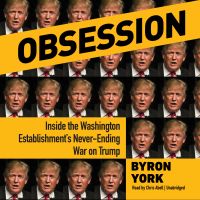
ObsessionByron York9h 23m4.5 (1.2K)$20

50 Things They Don't Want You to KnowJerome Hudson7h 45m4.2 (323)$26 · $0.00

Open Borders, Inc.Michelle Malkin13h 1m4.2 (461)$23 · $0.00
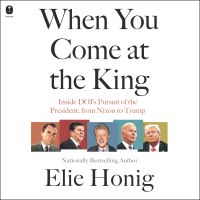
When You Come at the KingElie Honig11h 6m4.3 (334)$29 · $0.00

The History of the Standard Oil Company, Vol. 1Ida M. Tarbell9h 19m4.1 (496)$23 · $0.00
I Can’t BreatheDavid Horowitz6h 7m4.3 (604)$17 · $0.00
ImpeachNeal Katyal, Sam Koppelman6h 41m4.5 (2K)$24 · $0.00
Progressively WorseJoe Concha8h 3m4.6 (300)$7 · $0.00

How I Saved the WorldJesse Watters9h 26m4.4 (4.2K)$29 · $0.00
The Prosecution of George W. Bush for MurderVincent Bugliosi10h 42m4.0 (1.4K)$30 · $0.00
A Week in Wall StreetFrederick Jackson2h 59m$2 · $0.00

The Shadow On The Dial, and Other EssaysAmbrose Bierce7h 37m3.2 (24)$2 · $0.00

THE LONGEST WARSandra Marie Fulton5h 22m$10 · $0.00

About IrelandE. Lynn Linton1h3.4 (16)$1 · $0.00
The Grip cartoonsJ. W. Bengough40m$1 · $0.00
The Great DestroyerDavid Limbaugh16h 25m3.9 (914)$25 · $0.00