
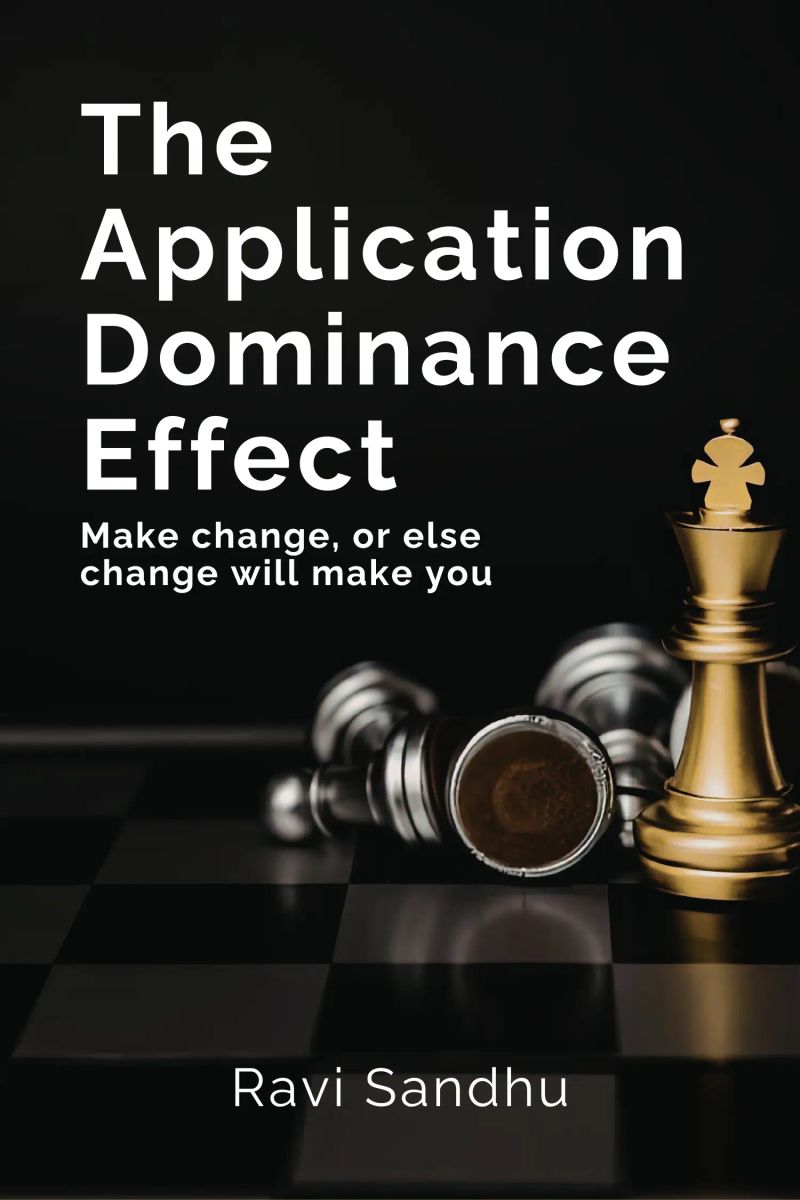
The Application Dominance Effect
Make Change, Or Else Change Will Make YouBy Ravi Sandhu


Length16h 27m
About this audiobook
When Google quietly became "the internet" and Hoover became "vacuuming," a single brand took over an entire category of thought. Ravi Sandhu calls this the Application Dominance Effect: the tendency for the first or loudest version of anything to colonise the mental space where alternatives should live, until better options become invisible and the status quo feels like the only option there ever was.
Drawing on thirty years across telecoms, banking, and enterprise technology, alongside personal stories from bhangra dance floors to corporate boardrooms, Sandhu gives change leaders, entrepreneurs, and curious minds a precise vocabulary for a force that quietly shapes what gets tried, funded, and left behind.
Part psychology, part field guide, this book explains how dominant frames form, why they resist even strong evidence, and how to break their grip, on your organisation, your career, and your own mind, closing with a practical audit for making change a lasting habit.
Audiobook details
GenreBusiness and Economics, Psychology
Length16 hrs 27 mins
Narrated byListen with 1,000+ voices
FormateBook with Audio
Publish dateJul 24, 2026
LanguageEnglish
Table of contents
1A Note on This Book
131The In the Box Thinker Does Not Know the Box
2The Application Dominance Effect
132Generational Freezing
3Preface: The Question You Haven’t Been Able to Answer
133Thawing the Model
4The Bias at Its Most Consequential
134The Name That Would Not Update
5What This Book Will Give You
135Chapter Twelve: Denial Is the First Step
Show all chaptersShow less
6The Biggest Box of Our Time
136The Twenty year Cycle
7The Territory Nobody Is Showing You
137What the Bias Is Actually Protecting
8How the Colonisation Happened
138Ressentiment and the Defence of the Dominant Frame
9The Shoehorn in Action
139Change Is a Constant: The Historical Evidence
10The Three AI Boxes
140Denial Is the First Step
11What the Professionals Are Getting Wrong
141Kotter and the Urgency Problem
12The Human Cost of the AI Box
142Brandolini and the Asymmetry of Challenge
13Breaking Out of the AI Box
143Dunning-Kruger and the Confidence of the Unaware
14Introduction: The Name on the Tube
144The Ignorance That Wears Expertise
15A Bias With a Name
145What the Arriving Generation Knows
16Standing on the Shoulders of Cognitive Science
146Recognising the Bias in Yourself
17Why It Needs Its Own Name
147The Chimp Hijack and Why Evidence Fails
18The Three People in the Room
148The Peak of Permanent Confidence
19What the Bias Costs
149The Asymmetry That Protects the Bias
20The Emotional Anatomy of the Bias
150The Social Gradient of the Dominant Frame
21A Book That Chooses Its Reader
151The Consciousness Levels Behind the Denial
22Who This Book Is For
152Delusion, Denial, and the Revolution That Already Happened
23Part One: How the Bias Is Born
153Chapter Thirteen: The Expert in the Room
24Chapter One: Sticky Legacy Operating Systems
154When Kübler-Ross Meets the Boardroom
25An Invisible Layer, Doing All the Work
155The Diagnostic That Changes Everything
26Why the Old One Doesn’t Leave
156The False Consultation
27Why Undoing Takes Longer Than Doing
157Locus of Control and the Voice That Fills the Room
28The Earth Stopped Being the Centre, and Nobody Told the Language
158Power, Identity, and the Theatre of Organisational Change
29The Moon Was Never the Ambitious Target
159Change-Maxxing: When the Initiative Is Optimised to Look Good Rather Than Work
30When a Company Runs Two Operating Systems Inside One Building
160MEDDPICC: The Change Leader’s Qualification Framework
31Why This Chapter Comes Before the Rest of the Book
161Putting MEDDPICC to Work
32Chapter Two: First In, Last Out
162The Prosci three phase Process: Structure as a Strategic Weapon
33The Psychology of Anchoring
163Phase 1: Prepare Approach
34The Twin Biases That Keep the Frame Sealed Shut
164Phase 2: Manage Change
35Why First Does Not Always Mean Best
165Phase 3: Sustain Outcomes
36The Role of Repetition
166Why Everyone Needs to Know the Three Phases
37Piaget’s Insight: Why Adults Stop Accommodating
167Part Four: Breaking the Bias
38The Explore Exploit Shift and the Application Dominance Effect
168Chapter Fourteen: The Disruptor’s Moment
39Nominalisation as the Application Dominance Effect in Language
169What Genuine Disruption Looks Like
40The Compound Effect
170The Crack in the Frame
41The eLearning Freeze
171Kotter’s Later Verdict: Run Two Systems on Purpose
42MAYA: The Mechanism Behind the Naming
172ChatGPT and the AI Disruption Moment
43Chapter Three: The Colonisation of Categories
173The Naming Trap: MAYA and the Next Dominant Frame
44Market Share Versus Mind Share
174Chapter Fifteen: Educating the Eye
45Two Frames, One Category
175Awareness as the First Step
46The Smartphone That Became the Category
176Curiosity as a Practice
47When Language Becomes Commerce
177The 70-20-10 Case for Deliberate Exposure
48When the Coloniser Becomes the Category
178The Ladder of Misinference: A Tool for Evaluating What Defends the Frame
49PC Versus Mac: A Category Colonised by Its Own Absence
179Media Literacy and the Bias
50Chapter Four: Culture Does the Work
180What Adult Learning Actually Requires
51The Evolutionary Inheritance: Why Following the Tribe Feels Safe
181The Practice in Daily Life
52How Language Locks It In
182Chapter Sixteen: Competing Against the Concept
53The Parent Effect
183Competing Against the Limitation
54The Comfort of the Familiar
184Naming What the Frame Excludes
55Why the Human Is Not in Charge
185Speaking to the Unmet Recognition
56The Self reinforcing System
186Pungra and the Compound Dominant Frame
57Education as Advertorial
187Creating New Reference Points
58The Hoover That Wasn’t
188Chapter Seventeen: Building Your Own Category
59Remote From What, Exactly?
189The Power of Naming
60The Moments of Maximum Danger: Divergence and Convergence
190Defining the Category Before It Is Contested
61Chapter Five: The Lies We’re Told
191The Crossroads of the Old and New Frame
62The Innocence of Origins
192What Category Creation Requires
63The Spectrum of Constructed Truth
193The Milk Problem and the Category Creator’s Challenge
64The Stickiness of the Dominant Story
194Part Five: Staying Modern
65Why Defenders Are Not Always Wrong
195Chapter Eighteen: The Modern Mindset
66The Drum That Had Another Name
196What the Modern Mindset Is Not
67Bhangra, Bollywood, and Two Thousand Kilometres
197The Four Qualities of the Modern Mind
68The Spectrum and Where You Stand On It
198Two Maps of the Same Crossing
69Milk, Oat Milk, and the War Over a Word
199Staying Modern Together
70When the Word Becomes the Product: Bread, Roti, and Tea
200Choosing Your Side
71What Bread, Roti, and Tea Tell Us
201The Freedom Fighters of Modernisation
72The Three Ns: How Dominant Belief Systems Protect Themselves
202The Nietzschean Dimension of the Freedom Fighter
73The Three Ns and the Application Dominance Effect
203Chapter Nineteen: Adapt or Be Subjected
74The Three Ns Beyond Food: Work, Technology, and Dance
204What Subjection Actually Looks Like
75Who Benefits, and How They Know It
205The Organisational Stakes
76The Classroom as the Most Trusted Channel
206The Institutional Failure Mode
77The Procreation Frame: Sex, Shame, and What the Body Is Actually For
207What Adaptation Actually Requires
78The Meat Frame: From Nutrition to Ecology to Ethics
208Ikigai and the Modernisation Opportunity
79The God Frame: When One Tradition’s Word Becomes Everyone’s Theology
209Applying Ikigai to the Modernisation You Are Leading
80Waheguru Is Not the Man in the Sky
210Taking Care of Those in Your Charge
81Atheism Through the Wrong Lens
211The Five Needs for Genuine Buy In
82The Colonial Grammar of the Sacred
212Putting the Five Needs to Work
83The Self describing Problem
213The Four Levers of Value
84The Lies of Previous Modernisations
214Combining the Four Levers
85The Cost of Unexamined Inheritance
215The Three Things People Actually Buy
86Examining What We Have Been Given
216Combining the Three Categories
87Make Change, Or Else Change Will Make You
217The Five Dysfunctions of a Team Facing Change
88Part Two: The Cost of the Bias
218What This Means for the Change Leader
89Chapter Six: The Invisible Competitors
219The Air Sandwich: When the Organisation Itself Is the Obstacle
90Not Losing the Race. Never Being Allowed to Run.
220The Nervous System in the Change Room
91Incremental Evolution When Revolution Is Available
221The Leap of Faith
92The Shoehorn Problem
222What the Companion Does
93A Pattern Repeating in Enterprise
223The Leader Who Has Made the Crossing
94When Two Cards Look the Same: Barclays, Barclaycard, and the Cost of Invisible Difference
224The Individual Stakes
95The Invisible Business Model: Apple, Google, and Who the Customer Really Is
225Chapter Twenty: Your Innovation Audit
96The Revolution That Comes Too Late
226The Cone of Plausibility: Mapping What the Dominant Frame Has Been Hiding
97Chapter Seven: The Xerox Trap
227How to Use This Audit
98The Name Becomes the Ceiling
228Part One: Mapping Your Dominant Brands
99Trapped by Your Own Success
2291. Information and search
100In the Box Thinking From the Inside Out
2302. Artificial intelligence
101The Revolutionary Delayed
2313. Health and fitness
102The Trap Closes Slowly
2324. Learning and professional development
103Chapter Eight: The Consumer Who Stopped Looking
2335. Communication and productivity tools
104The Frozen Picture
2346. Food and nutrition
105The Cost of the Comfortable Default
2357. Entertainment and media
106Thinking Inside Someone Else's Box
2368. Financial services
107The Illusion of Being Current
237Part Two: Diagnosing the Depth of the Bias
108The Smoothie That Was a Juicer
2381. When did your association with this brand form?
109The Social Cost of Seeing Clearly
2392. Can you name three credible alternatives in this category?
110Being Made Without Knowing It
2403. What assumptions does the dominant brand make about this category that you have absorbed without examining?
111Part Three: The Staying Modern Imperative
2414. When did you last seriously evaluate an alternative in this category?
112Chapter Nine: Three Types of People
2425. Has the category changed significantly since your mental model of it was formed?
113The Leader
243Part Three: Identifying Your Priority Areas
114Which One Are You?
2441. Which categories are most consequential for your professional life?
115What Moves People Between Types
2452. Which categories are most consequential for your personal wellbeing?
116The Political Mapping
2463. In which categories is the pace of change fastest?
117The Map of Consciousness and the Three Types of People
2474. Where do you feel the most certain that you already know what you need to know?
118Crossing 200: The Threshold This Book Is Building Toward
248What to Do With What You Find
119Nietzsche and the Will to Cross
249Why the Exploration Fades: The Decay Curve
120Chapter Ten: The World Doesn’t Wait
250Part Four: The Change Leader’s Diagnostic
121Compounding Disadvantage
251The Change Leader’s Vocabulary
122Subjected to a Future You Did Not Choose
252Conclusion
123The Pace Is Not Slowing
253The Bias Is Not the Enemy
124The Danger of Feeling Current
254The World Is Larger Than the Brand
125The AI Window
255A Personal Challenge
126When the Backup Became the Primary: Virtual, Physical, and the Reversal Nobody Named
256See Further
127Is Teaching Still Teaching?: The Tutor That Replaced the Teacher
257The Change Leader’s Commission
128Chapter Eleven: Frozen in the Brand Moment
258The Freedom to See
129When the Model Was Formed
259An Invitation
130The Gap Between Model and Reality
More from Ravi Sandhu

Little Sam Falls In Love With BhangraRavi Sandhu38m$2.99 · $0.00

Fell In Love With BhangraRavi Sandhu3h$2.99 · $0.00

Meet MeatRavi Sandhu10h 3m$2.99 · $0.00

Relationships ModernisedRavi Sandhu5h 58m$2.99 · $0.00

Fat Is Your SuperpowerRavi Sandhu3h 14m$2.99 · $0.00

A Bridge Not Too FarDeepak Ohri4h 55m$15

AretéBrian Johnson19h 57m$35
Level UpRob Dial7h 42m$26 · $0.00

Hal Moore on LeadershipHarold G. Moore, Mike Guardia5h 6m$17

Basic Economics, Fifth EditionThomas Sowell28h 6m$40

The Goals ProgramZig Ziglar4h 34m$20

The Stocks & ETF Compass: A Guide to Wealth, High Standard of Living, and Secure Retirement through Intelligent Investment in the Stock Market and Passive Income – Including Starter GuideJens Hattermann4h 9m$20 · $0.00

Eat It!Jordan Syatt, Michael Vacanti4h 40m$20 · $0.00

Not Everything Counts but Everything Matters: The powerful and inspirational new book about leadership and achieving success from the visionary multi-premiership winning Panthers coachIvan Cleary6h 1m$24 · $0.00

Leads MachineFrancis Rodino6h 30m$27 · $0.00

CAPITAL (Complete 3 Volume Edition)Karl Marx111h 13m$2 · $0.00

BuildTony Fadell11h 5m$8 · $0.00

The Entrepreneur Roller CoasterDarren Hardy7h 8m$17
The Law of Success in Sixteen LessonsNapoleon Hill1h 31m$2 · $0.00

The Ambuja StoryNarotam Sekhsaria13h 59m$33 · $0.00

Military Culture ShiftCorie Weathers13h 13m$25 · $0.00

Saving Social CareNeil Eastwood4h 54m$18 · $0.00

Big TrustShadé Zahrai, Fayçal Sekkouah8h 36m$26 · $0.00

SocialismLudwig von Mises24h 8m$30
Being EssentialDain Dunston4h 13m$15 · $0.00

Finding Your VoiceMannette Morgan8h 10m$20

Invisible StormJason Kander6h 48m$24 · $0.00

I've Been to the MountaintopMartin Luther King48m5 (1)$11 · $0.00
AretéBrian Johnson19h 57m$35

Ullathin KuralPrem Rawat8h 17m$18 · $0.00

I Am The StormJanice Dean9h$8 · $0.00

On Democracies and Death CultsDouglas Murray10h 38m$29 · $0.00

TerraformPropaganda5h 39m$24 · $0.00

Hour of the HeartIrvin D. Yalom, Benjamin Yalom8h 19m5 (1)$26 · $0.00

The Thomas Sowell ReaderThomas Sowell14h 51m$25

So You Want to Talk about RaceIjeoma Oluo7h 41m$17

Braving the TruthRachel Held Evans11h 31m$29 · $0.00
Level UpRob Dial7h 42m$26 · $0.00

As a JewSarah Hurwitz8h 36m$26 · $0.00

The North American Indian (Illustrated Edition)Edward S. Curtis, Frederick Webb Hodge6h$2 · $0.00

Burn the HaystackJennie Young, PhD9h 30m$29 · $0.00

Good InsideBecky Kennedy9h 55m$29 · $0.00

Du Bois: EssaysW.E.B. Du Bois6h 23m$1 · $0.00

Valley of the BirdtailAndrew Stobo Sniderman, Douglas Sanderson10h 1m$29 · $0.00

Lies My Therapist Told MeGreg E. Gifford9h 3m$29 · $0.00
You may also like

Forget That!Roger Flax PhD6h 44m$23

Lavoro senza fineIrene Doda3h 19m$8 · $0.00
Never Lead AloneKeith Ferrazzi5h 39m$24 · $0.00

The Neuroscience of MindfulnessStan Rodski5h 28m$24 · $0.00
Leads MachineFrancis Rodino6h 30m$27 · $0.00

The AI Culture BlueprintSagar Pandya1h 30m$2 · $0.00
Imperfect LeadershipJose Echeverri4h 40m$5 · $0.00

The 10-Hour Work MonthLaura Anderson6h 23m$23

The True Creator of EverythingMiguel Nicolelis14h 41m$23 · $0.00

The Creativity CodeMarcus du Sautoy9h 54m$20 · $0.00

Seen Yet UnseenBärí A. Williams7h 33m$23

SiliconFederico Faggin9h 46m$20

A Brief History of IntelligenceMax S. Bennett12h 18m$29 · $0.00

Think, Focus, Grow RichRobert4h 38m$6 · $0.00

Passages from the Life of a PhilosopherCharles Babbage16h 25m$2 · $0.00

Future YouFrances Valintine8h 27m$26 · $0.00

Senility and the brain cellsJiddu Krishnamurti1h 31m$4 · $0.00

Demystifying Secrets of WellnessDr. Deepika Shetty2h 22m$4

Heavily MeditatedDave Asprey9h 58m$29 · $0.00

Living with a sustained seriousnessJiddu Krishnamurti1h 29m$4 · $0.00