
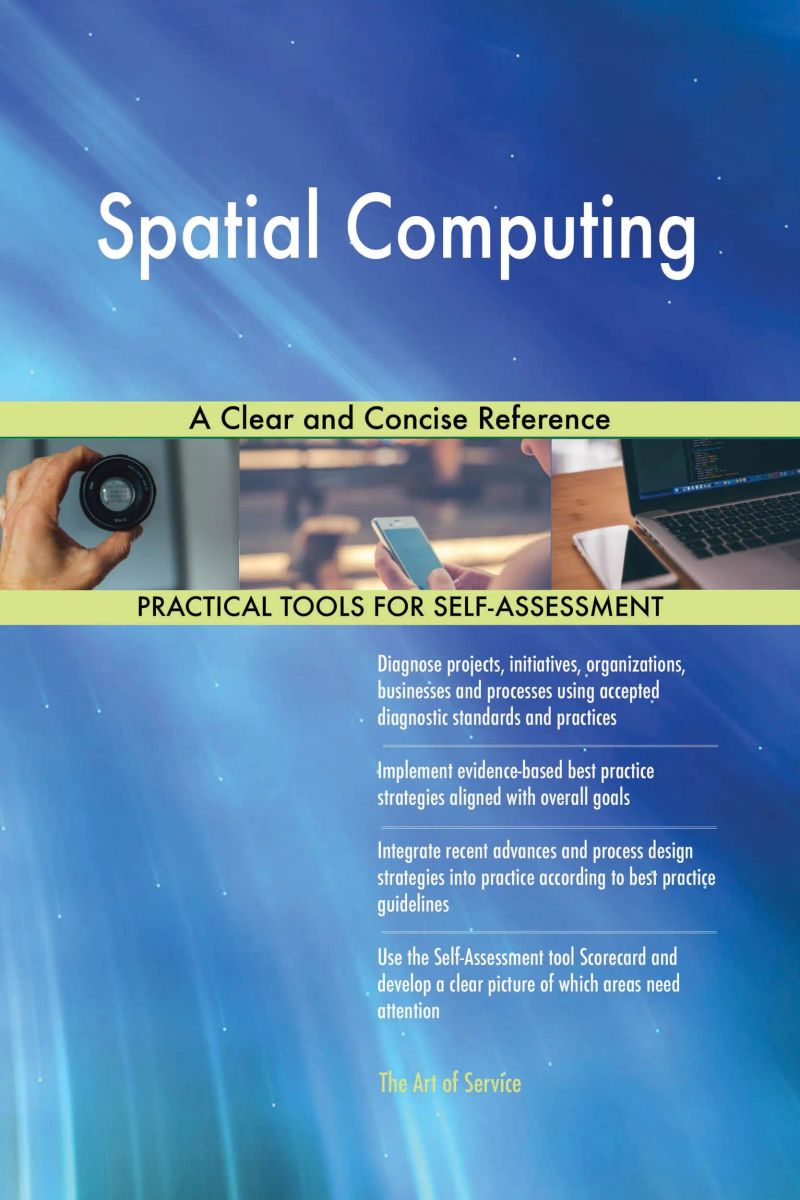
Spatial Computing A Clear and Concise Reference
By Gerardus Blokdyk


Length4h 7m
About this audiobook
Who sets the Spatial Computing standards? What threat is Spatial Computing addressing? How do you manage and improve your Spatial Computing work systems to deliver customer value and achieve organizational success and sustainability? Does Spatial Computing appropriately measure and monitor risk? How much are sponsors, customers, partners, stakeholders involved in Spatial Computing? In other words, what are the risks, if Spatial Computing does not deliver successfully?
Defining, designing, creating, and implementing a process to solve a challenge or meet an objective is the most valuable role… In EVERY group, company, organization and department.
Unless you are talking a one-time, single-use project, there should be a process. Whether that process is managed and implemented by humans, AI, or a combination of the two, it needs to be designed by someone with a complex enough perspective to ask the right questions. Someone capable of asking the right questions and step back and say, 'What are we really trying to accomplish here? And is there a different way to look at it?'
This Self-Assessment empowers people to do just that - whether their title is entrepreneur, manager, consultant, (Vice-)President, CxO etc... - they are the people who rule the future. They are the person who asks the right questions to make Spatial Computing investments work better.
This Spatial Computing All-Inclusive Self-Assessment enables You to be that person.
All the tools you need to an in-depth Spatial Computing Self-Assessment. Featuring 675 new and updated case-based questions, organized into seven core areas of process design, this Self-Assessment will help you identify areas in which Spatial Computing improvements can be made.
In using the questions you will be better able to:
- diagnose Spatial Computing projects, initiatives, organizations, businesses and processes using accepted diagnostic standards and practices
- implement evidence-based best practice strategies aligned with overall goals
- integrate recent advances in Spatial Computing and process design strategies into practice according to best practice guidelines
Using a Self-Assessment tool known as the Spatial Computing Scorecard, you will develop a clear picture of which Spatial Computing areas need attention.
Your purchase includes access details to the Spatial Computing self-assessment dashboard download which gives you your dynamically prioritized projects-ready tool and shows your organization exactly what to do next. You will receive the following contents with New and Updated specific criteria:
- The latest quick edition of the book in PDF
- The latest complete edition of the book in PDF, which criteria correspond to the criteria in...
- The Self-Assessment Excel Dashboard, and...
- Example pre-filled Self-Assessment Excel Dashboard to get familiar with results generation
…plus an extra, special, resource that helps you with project managing.
INCLUDES LIFETIME SELF ASSESSMENT UPDATES
Every self assessment comes with Lifetime Updates and Lifetime Free Updated Books. Lifetime Updates is an industry-first feature which allows you to receive verified self assessment updates, ensuring you always have the most accurate information at your fingertips.
Audiobook details
GenreBusiness and Economics
Length4 hrs 7 mins
Narrated byListen with 1,000+ voices
FormateBook with Audio
Publish dateSep 5, 2018
LanguageEnglish
Table of contents
1About The Art of Service
2Acknowledgments
3Included Resources - how to access
4Your feedback is invaluable to us
5Purpose of this Self-Assessment
Show all chaptersShow less
6How to use the Self-Assessment
7Spatial ComputingScorecard Example
8Spatial ComputingScorecard
9BEGINNING OF THE SELF-ASSESSMENT:
10CRITERION #1: RECOGNIZE
11CRITERION #2: DEFINE:
12CRITERION #3: MEASURE:
13CRITERION #4: ANALYZE:
14CRITERION #5: IMPROVE:
15CRITERION #6: CONTROL:
16CRITERION #7: SUSTAIN:
17Spatial Computing and Managing Projects, Criteria for Project Managers:
181.0 Initiating Process Group: Spatial Computing
191.1 Project Charter: Spatial Computing
201.2 Stakeholder Register: Spatial Computing
211.3 Stakeholder Analysis Matrix: Spatial Computing
222.0 Planning Process Group: Spatial Computing
232.1 Project Management Plan: Spatial Computing
242.2 Scope Management Plan: Spatial Computing
252.3 Requirements Management Plan: Spatial Computing
262.4 Requirements Documentation: Spatial Computing
272.5 Requirements Traceability Matrix: Spatial Computing
282.6 Project Scope Statement: Spatial Computing
292.7 Assumption and Constraint Log: Spatial Computing
302.8 Work Breakdown Structure: Spatial Computing
312.9 WBS Dictionary: Spatial Computing
322.10 Schedule Management Plan: Spatial Computing
332.11 Activity List: Spatial Computing
342.12 Activity Attributes: Spatial Computing
352.13 Milestone List: Spatial Computing
362.14 Network Diagram: Spatial Computing
372.15 Activity Resource Requirements: Spatial Computing
382.16 Resource Breakdown Structure: Spatial Computing
392.17 Activity Duration Estimates: Spatial Computing
402.18 Duration Estimating Worksheet: Spatial Computing
412.19 Project Schedule: Spatial Computing
422.20 Cost Management Plan: Spatial Computing
432.21 Activity Cost Estimates: Spatial Computing
442.22 Cost Estimating Worksheet: Spatial Computing
452.23 Cost Baseline: Spatial Computing
462.24 Quality Management Plan: Spatial Computing
472.25 Quality Metrics: Spatial Computing
482.26 Process Improvement Plan: Spatial Computing
492.27 Responsibility Assignment Matrix: Spatial Computing
502.28 Roles and Responsibilities: Spatial Computing
Cloud Risks A Complete Guide - 2019 EditionGerardus Blokdyk4h 29m$71
Release Process A Complete Guide - 2019 EditionGerardus Blokdyk4h 36m$71
Vendor Relationships A Complete Guide - 2021 EditionGerardus Blokdyk4h 37m$78
Asset Management Software A Complete Guide - 2019 EditionGerardus Blokdyk4h 47m$71
ISO 19770 A Complete Guide - 2021 EditionGerardus Blokdyk4h 37m$78
Tools for A B and Multivariate Testing Complete Self-Assessment GuideGerardus Blokdyk4h 22m$71
Statistical Techniques A Complete Guide - 2021 EditionGerardus Blokdyk4h 34m$78
Electronic Batch Records A Clear and Concise ReferenceGerardus Blokdyk4h 14m$71
Performance Guarantees Complete Self-Assessment GuideGerardus Blokdyk4h 10m$71
Stability testing The Ultimate Step-By-Step GuideGerardus Blokdyk3h 52m$42
Biometric ATMs Complete Self-Assessment GuideGerardus Blokdyk4h 7m$71
Stream processing Second EditionGerardus Blokdyk3h 54m$42
Continuous Monitoring A Complete Guide - 2024 EditionGerardus Blokdyk4h 34m$78
Data-driven instruction Complete Self-Assessment GuideGerardus Blokdyk1h 56m$42
Personal Knowledge Base A Complete Guide - 2020 EditionGerardus Blokdyk4h 33m$78
Business Economics A Complete Guide - 2020 EditionGerardus Blokdyk4h 31m$78
Inquiry Based Learning A Complete Guide - 2020 EditionGerardus Blokdyk4h 36m$78
IFRS For Insurance Contracts A Complete Guide - 2020 EditionGerardus Blokdyk4h 44m$78
Coworking Space A Complete Guide - 2021 EditionGerardus Blokdyk4h 31m$78

Never Split the DifferenceChris Voss, Tahl Raz8h 7m4.4 (277.7K)$26 · $0.00
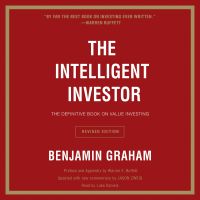
The Intelligent Investor Rev Ed.Benjamin Graham17h 48m4.3 (191.5K)$40 · $0.00
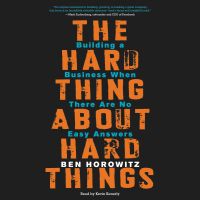
The Hard Thing About Hard ThingsBen Horowitz7h 57m4.2 (134.3K)$26 · $0.00
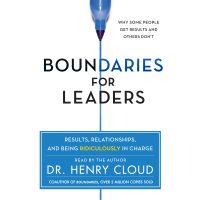
Boundaries for LeadersHenry Cloud7h 36m4.3 (3.6K)$26 · $0.00
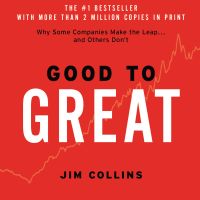
Good to GreatJim Collins9h 59m4.1 (325.2K)$29 · $0.00
The Way of ExcellenceBrad Stulberg6h 46m4.2 (1.1K)$24 · $0.00

Trillion Dollar CoachEric Schmidt, Jonathan Rosenberg, Alan Eagle5h 40m4.1 (22.2K)$24 · $0.00
Be ExceptionalJoe Navarro, Toni Sciarra Poynter9h 11m4.0 (1.3K)$29 · $0.00
The Power of the OtherHenry Cloud5h 52m4.2 (3.5K)$24 · $0.00

Progress and Poverty, Volumes I and II (Annotated)Henry George19h 21m4.6 (574)$1.99 · $0.00

Not Everything Counts but Everything Matters: The powerful and inspirational new book about leadership and achieving success from the visionary multi-premiership winning Panthers coachIvan Cleary6h 1m4.6 (680)$24 · $0.00
BuildTony Fadell11h 5m4.5 (14.3K)$8 · $0.00
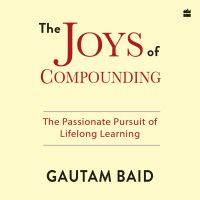
The Joys Of CompoundingGautam Baid17h 34m4.5 (2.5K)$18 · $0.00
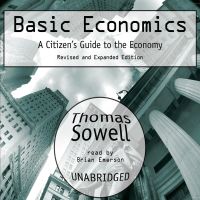
Basic EconomicsThomas Sowell18h 32m4.5 (29.3K)$28 · $0.00

The Ambuja StoryNarotam Sekhsaria13h 59m4.5 (830)$33 · $0.00

The Secret Door to SuccessFlorence Scovel Shinn2h 25m4.5 (2.1K)$1.20 · $0.00

This Is Going to HurtAdam Kay5h 47m4.4 (444.7K)$24 · $0.00

Big TrustShadé Zahrai, Fayçal Sekkouah8h 36m4.6 (406)$26 · $0.00
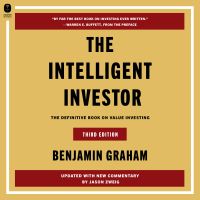
The Intelligent Investor Third EditionBenjamin Graham, Jason Zweig20h4.4 (156.6K)$46 · $0.00

Bottle of LiesKatherine Eban14h 25m4.4 (12K)$33 · $0.00
You may also like
Data-driven instruction Complete Self-Assessment GuideGerardus Blokdyk1h 56m$42
Electronic Batch Records A Clear and Concise ReferenceGerardus Blokdyk4h 14m$71
ITIL® 4 Essentials: Your essential guide for the ITIL 4 Foundation exam and beyond, second editionClaire Agutter4h4.2 (50)$40 · $0.00

HorizonsJames Poskett15h 18m3.7 (472)$33 · $0.00
Enhancing Deep Learning Performance Using Displaced Rectifier Linear UnitDavid Macêdo1h 49m$10 · $0.00

A High-Performance Adaptive Filter Instantiated from the GAADT Algorithm for Electrocardiogram Signal ProcessingAndrilene Ferreira Maciel2h 55m$13 · $0.00
The Client Wants AI, but Doesn't Know What They're Responsible For - How to Agree on the Scope of AI Use in a Project, Rules for Handling Data, and Ways to Verify Results Without Promising That the Tool Will Take Responsibility for MistakesMax Paradox6h 24m$5.10

Monetize your content with NFTsUnknown Author1h 5m$17 · $0.00

How to Profit from Google AdSenseAnthony Ekanem37m$4 · $0.00

From Zero To AutomaticSara Melo1h 25m$1.80 · $0.00

Blockchain for Business: Complete Guide to AdoptionUnknown Author1h 4m$17 · $0.00

Who Owns What? The Definitive Legal Guide for Musicians, Writers, Film-Makers and Content CreatorsXerxes Ranina3h 33m$18 · $0.00

Managing AI RiskAndrew Pattison2h 15m$22 · $0.00
Self Publishing: Optimize Your Entire Publishing Business With AI Assistants (How to Rise to the Top in Book Sales Through Creative Disruption)Peter Felts1h 8m$3.50 · $0.00
Freight Transport A Complete Guide - 2020 EditionGerardus Blokdyk4h 31m$78
Information Cards Third EditionGerardus Blokdyk4h 3m$42
Redbooth A Complete GuideGerardus Blokdyk3h 44m$42
Digital Research A Complete Guide - 2020 EditionGerardus Blokdyk4h 30m$78
Oracle Cloud Infrastructure Third EditionGerardus Blokdyk4h 14m$71

ITIL® 4 Create, Deliver and Support (CDS)Claire Agutter3h 36m4.6 (23)$40 · $0.00