
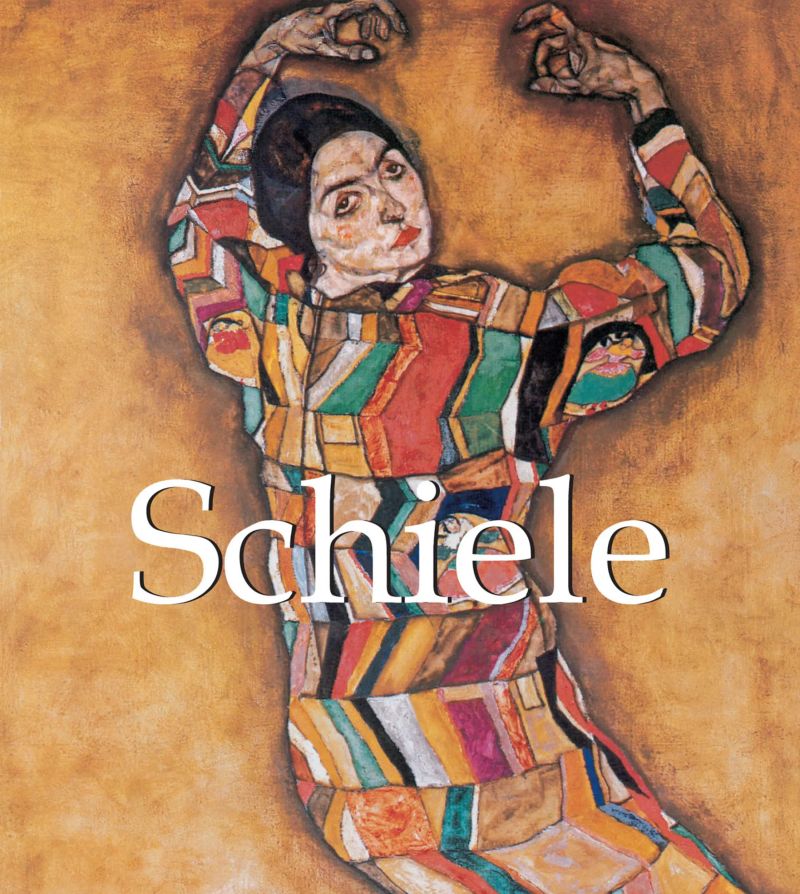
Schiele
By Jeanette Zwingenberger, Esther Selsdon, Ashley Bassie


Length1h 46m
About this audiobook
Egon Schiele's work is so distinctive that it resists categorisation. Admitted to the Vienna Academy of Fine Arts at just sixteen, he was an extraordinarily precocious artist, whose consummate skill in the manipulation of line, above all, lent a taut expressivity to all his work. Profoundly convinced of his own significance as an artist, Schiele achieved more in his abruptly curtailed youth than many other artists achieved in a full lifetime. His roots were in the Jugendstil of the Viennese Secession movement. Like a whole generation, he came under the overwhelming influence of Vienna's most charismatic and celebrated artist, Gustav Klimt. In turn, Klimt recognised Schiele's outstanding talent and supported the young artist, who within just a couple of years, was already breaking away from his mentor's decorative sensuality. Beginning with an intense period of creativity around 1910, Schiele embarked on an unflinching exposé of the human form – not the least his own – so penetrating that it is clear he was examining an anatomy more psychological, spiritual and emotional than physical. He painted many townscapes, landscapes, formal portraits and allegorical subjects, but it was his extremely candid works on paper, which are sometimes overtly erotic, together with his penchant for using under-age models that made Schiele vulnerable to censorious morality. In 1912, he was imprisoned on suspicion of a series of offences including kidnapping, rape and public immorality. The most serious charges (all but that of public immorality) were dropped, but Schiele spent around three despairing weeks in prison. Expressionist circles in Germany gave a lukewarm reception to Schiele's work. His compatriot, Kokoschka, fared much better there. While he admired the Munich artists of Der Blaue Reiter, for example, they rebuffed him. Later, during the First World War, his work became better known and in 1916 he was featured in an issue of the left-wing, Berlin-based Expressionist magazine Die Aktion. Schiele was an acquired taste. From an early stage he was regarded as a genius. This won him the support of a small group of long-suffering collectors and admirers but, nonetheless, for several years of his life his finances were precarious. He was often in debt and sometimes he was forced to use cheap materials, painting on brown wrapping paper or cardboard instead of artists' paper or canvas. It was only in 1918 that he enjoyed his first substantial public success in Vienna. Tragically, a short time later, he and his wife Edith were struck down by the massive influenza epidemic of 1918 that had just killed Klimt and millions of other victims, and they died within days of one another. Schiele was just twenty-eight years old.
Audiobook details
Rating★★★★ 4.1 (229)
Includes Amazon, Goodreads, LibraryThing
GenreOther
Length1 hr 46 mins
Narrated byListen with 1,000+ voices
FormateBook with Audio
Publish dateJul 1, 2011
LanguageEnglish
Table of contents
1Schiele Schiele
2© Parkstone Press International, New York, USA © Confidential Concepts, worldwide, USA
3Schiele on his deathbed, 1918
4New Art group (Neukunstgruppe) along with artists like Anton Peschka and Hans
5Foreword
Show all chaptersShow less
6precocious artist, whose consummate skill in the
71907 Oil on cardboard, 32.4 x 31.2 cm Private collection
8communicate with the Spanish flu-infected Schiele
91907 Oil on canvas, 149.8 x 49.7 cm Private collection
101907 Oil on paper, 21.7 x 28 cm Private collection
11innermost psychic life of his subjects as well as his
12process of artistic creation.
131907 Oil on card, 17.5 x 22.5 cm Private collection
14resonant communication between the artist and
151908 Oil on carboard, 44 x 33 cm Niederösterreichisches Landesmuseum, Vienna
161909 Oil and metallic paint, 110.2 x 100 cm Private collection
17Portrait of Gerti Schiele
18repressed pleasure principles of upper-class
19Self-Portrait with Spread Fingers
20Schiele’s Childhood
21Seated Female Nude with Raised Right Arm (Gertrude Schiele)
22Nude Girl with Folded Arms (Gertrude Schiele)
23Czihaczek, chief inspector of the imperial and royal
241910 Gouache, watercolour and pencil 44.3 x 30.5 cm Albertina, Vienna
25Reclining Male Nude with Yellow Pillow
261910 Oil and gouache, 152.5 x 150 cm Leopold Museum, Vienna
27bed, no chair, only the provocative gesture of his
28Klimt’s Paternity
29emergence of a proletariat in the suburbs, while
30The Scornful Woman (Gertrude Schiele)
31Schönberg and Alban Berg for the periodical Ver
321910 Pencil, 55.2 x 35.3 cm Albertina, Vienna
33effervescence, the two major figures of Austrian
341910 Gouache, watercolour and pencil 55.6 x 36.5 cm Wien Museum, Vienna
35Nude Self-Portrait
36because “the depiction of the nude grossly
371910 Oil on canvas, 100 x 100 cm Österreichische Galerie Belvedere, Vienna
38A crucial turning point in Viennese artistic life
39The Painter Max Oppenheimer
401910 Pencil, 35 x 50 cm Private collection
41time at the 1908 Kunstschau in a special room, the
421910 Watercolour and charcoal, 44.5 x 31 cm Private collection
431910 Watercolour and charcoal, 46 x 32 cm Private collection
44Female Nude
451911 Oil on canvas, 80.1 x 79.7 cm Leopold Museum, Vienna
461911 Gouache, watercolour and pencil, 48 x 32.1 cm Albertina, Vienna
47Schiele’s vision, a petrified stiffness as the nun
48presses herself rigidly against the cardinal’s body
491911 Oil on wood, 40 x 31.7 cm Wien Museum, Vienna
501911 Oil on canvas, 27.5 x 34 cm Wien Museum, Vienna
More from Jeanette Zwingenberger, Esther Selsdon, Ashley Bassie
Hans Holbein the youngerJeanette Zwingenberger2h 22m4.6 (13)$15 · $0.00
Egon Schiele und KunstwerkeJeanette Zwingenberger, Esther Selsdon, Ashley Bassie1h 52m4.2 (128)$15 · $0.00
Egon Schiele and artworksJeanette Zwingenberger, Esther Selsdon, Ashley Bassie1h 22m4.2 (120)$15 · $0.00
Egon Schiele y obras de arteJeanette Zwingenberger, Esther Selsdon, Ashley Bassie1h 50m4.3 (32)$15 · $0.00
SchieleJeanette Zwingenberger, Esther Selsdon, Ashley Bassie1h 55m4.2 (144)$13.50 · $0.00

SchieleJeanette Zwingenberger, Esther Selsdon, Ashley Bassie2h 1m4.2 (128)$13.50 · $0.00
SchieleJeanette Zwingenberger, Esther Selsdon, Ashley Bassie2h 8m4.3 (49)$13.50 · $0.00
Mere ChristianityC. S. Lewis7h 7m4.4 (519.7K)$24 · $0.00

Her Daily BreadKate Wood12h 57m4.6 (153)$33 · $0.00
The Holy Bible - 1 SamuelKing James2h 13m4.8 (1.6K)$3 · $0.00
The American Standard Bible — The Gospel of MatthewMatthew3h 56m4.7 (3K)$2 · $0.00

Bad Fat Black GirlSesali Bowen6h 32m4.7 (2.8K)$24 · $0.00
The King James Audio Bible New Testament CompleteChristopher Glyn20h 2m4.7 (2.6K)$12 · $0.00
Faiths CheckbookCharles Spurgeon12h 44m4.7 (3.2K)$11 · $0.00
Ten Things I Wish You Knew About Your Child's Mental HealthDr. Billy Garvey4h 53m4.7 (2.4K)$20 · $0.00

Designing Terry Pratchett’s DiscworldPaul Kidby3h 52m4.7 (343)$20 · $0.00
The Chosen Book OneAmanda Jenkins, Kristen Hendricks, Dallas Jenkins3h 8m4.6 (4.9K)$10 · $0.00
The Lives of BrianBrian Johnson9h 45m4.6 (3.5K)$29 · $0.00
Expository Thoughts on the Gospel of LukeJ.C. Ryle27h 13m4.7 (536)$18 · $0.00

CrossroadsKaleb Dahlgren7h 56m4.6 (4.9K)$26 · $0.00

Across the RiverKent Babb11h 40m4.6 (927)$29 · $0.00

Brain Training for RidersAndrea Monsarrat Waldo5h 56m4.7 (550)$19 · $0.00

My Effin' LifeGeddy Lee17h 11m4.6 (13.1K)$40 · $0.00

Kings and PawnsHoward Bryant10h 9m4.6 (678)$29 · $0.00

The Elementia Chronicles #2: The New OrderSean Fay Wolfe11h 17m4.6 (841)$29 · $0.00
The ActsLuke2h 55m4.6 (19.7K)$12 · $0.00

New Testament - Easy NavigationWorld English Bible19h 35m4.6 (1.3K)$1.30 · $0.00
You may also like
To Have and to HoldMolly Millwood9h 1m4.4 (4.9K)$29 · $0.00

Holler If You Hear MeMichael Eric Dyson9h 32m4.1 (2.1K)$20
But You Seemed So HappyKimberly Harrington7h 10m3.9 (2.1K)$24 · $0.00
Albert EinsteinKathleen Krull2h 35m4.1 (334)$15
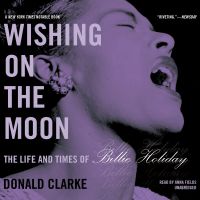
Wishing on the MoonDonald Clarke17h 45m4.2 (715)$28
Bad FeministRoxane Gay11h 47m4.0 (127.1K)$29 · $0.00
The Family ClauseJonas Hassen Khemiri10h3.9 (4.5K)$20 · $0.00

You Better Believe I'm Gonna Talk About ItLisa Rinna6h 50m3.6 (13.4K)$24 · $0.00

Irreversible DamageAbigail Shrier9h 2m4.2 (26.6K)$20

The Toilet SeatLatha4h 17m4.1 (1.2K)$20 · $0.00
DrinkAnn Dowsett Johnston8h 47m3.9 (5.1K)$29 · $0.00

Get It TogetherJesse Watters11h 33m4.0 (1.2K)$29 · $0.00

The Awakening, and selected Short StoriesKate Chopin7h 10m3.9 (27.9K)$2.30
BuddenbrooksThomas Mann24h 56m4.3 (128.1K)$0.99 · $0.00
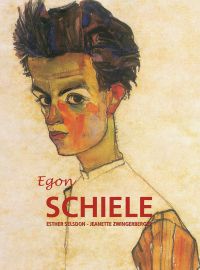
Egon SchieleEsther Selsdon, Jeanette Zwingerberger2h 14m3.9 (107)$13 · $0.00
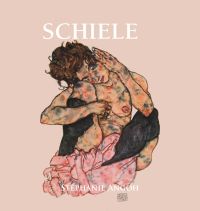
SchieleStéphanie Angoh1h 7m4.4 (20)$8 · $0.00
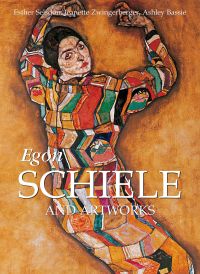
SchieleJeanette Zwingenberger, Esther Selsdon, Ashley Bassie1h 15m4.2 (120)$15 · $0.00
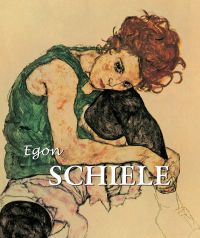
Egon SchieleEsther Selsdon, Jeanette Zwingenberger2h 55m3.9 (107)$16 · $0.00
MunchElizabeth Ingles1h 32m4.1 (62)$13.50 · $0.00
MunchPatrick Bade1h 19m$7 · $0.00