
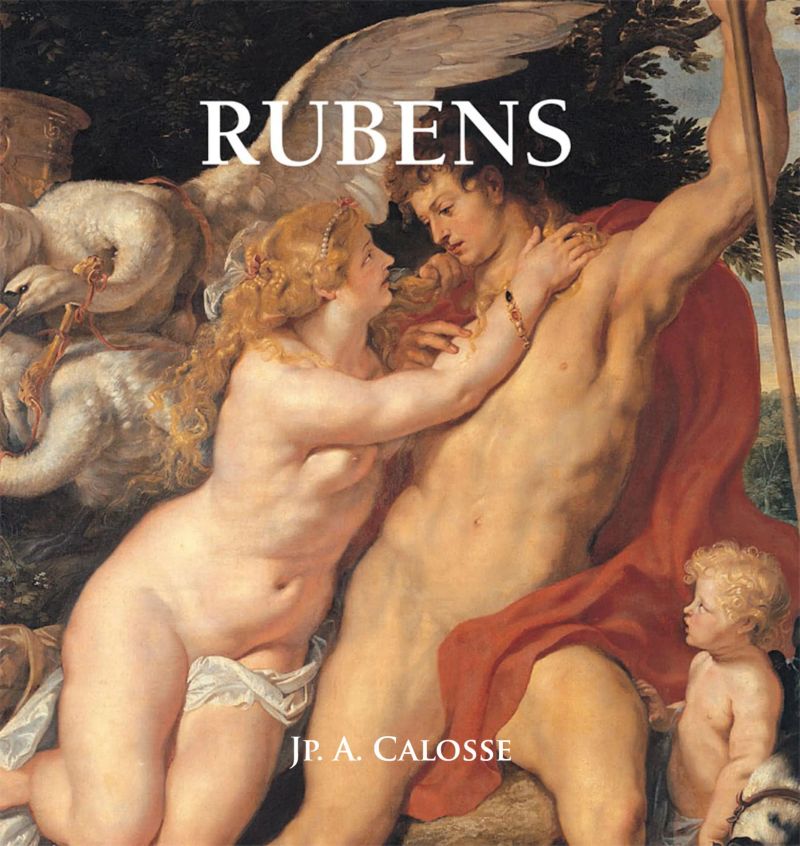


Length56m
About this audiobook
The eclectic art of which the Carracci family dreamed was realised by Rubens with the ease of genius. However, the problem was much more complicated for a man of the north, who wished to add to it a fusion of the Flemish and Latin spirits, of which the rather pedantic attempts of Romanism had illustrated the difficulties. He achieved it without losing anything of his overflowing personality, his questing imagination, and the enchanting discoveries of the greatest colourist known to painting. Rubens, the greatest master of Baroque painting's exuberance, took from the Italian Renaissance what could be of use to him, and then built upon it a style of his own. It is distinguished by a wonderful mastery of the human form and an amazing wealth of splendidly lighted colour. He was a man of much intellectual poise and was accustomed to court life, travelling from court to court, with pomp, as a trusted envoy. Rubens was one of those rare mortals who do real honour to humanity. He was handsome, good and generous, and he loved virtue. His laborious life was well ordered. The creator of so many delightful pagan feasts went each morning to mass before proceeding to his studio. He was the most illustrious type of happy and perfectly balanced genius, and combined in his personage passion and science, ardour and reflection. Rubens expressed drama as well as joy, since nothing human was foreign to him, and he could command at will the pathos of colour and expression which he required in his religious masterpieces. It might be said that he was as prolific in the representation of the joy and exuberance of life as Michelangelo was in the representation of passionate emotions.
Audiobook details
Rating★★★★ 4.1 (29)
Includes Amazon, Goodreads
GenreOther
Length56 mins
Narrated byListen with 1,000+ voices
FormateBook with Audio
Publish dateDec 22, 2011
LanguageEnglish
Table of contents
11. The Adoration of the Shepherds. 1608,
22. Self-Portrait. 1640,
33. Head of an Old Man. around 1609,
44. The Coronation of the Virgin. Around 1609-1611,
55. Virgin and Child in a Garland.
Show all chaptersShow less
66. Roman Charity. Around 1612,
77. Christ with the Crown of Thorns (Ecce homo). Before 1612,
88. Jupiter and Callisto. 1613,
99. The Descent from the Cross. Around 1612-1614,
1010. Venus and Adonis. Around 1614,
1111. Three Graces Adorning Nature. 1615,
1212. Statue of Ceres. Around 1615,
1313. Bacchanalia. Around 1615,
1414. Two Satyrs.
1515. Drunken Heracles.
1616. Hagar Leaves the House of Abraham. 1615-1617,
1717. Portrait of a Young Man. 1616-1617,
1818. Portrait of a Young Man.
1919. The Head of the Franciscan. 1615-1617,
2020. Albert and Nicolas Rubens.
2121. The Descent from the Cross. 1618,
2222. The Descent from the Cross.
2323. The Union of Earth and Water. Around 1618,
2424. Four Parts of the World.
2525. Feast at the House of Simon the Pharisee. 1620 (?),
2626. The Carters. Around 1620,
2727. Lion Hunt. Around 1621,
2828. The Garden of Love.
2929. Portrait of Charles de Longueval. 1621,
3030. Perseus and Andromeda. Early 1620s,
3131. Portrait of Marie de’ Médici.
3232. Marie de’ Médici Represented as Pallas. 1622,
3333. The Coronation of Marie de’ Médici.
3434. The Birth of Louis XIII.
3535. The Entry into Lyons. 1622,
3636. The Birth of the Dauphin. 1622,
3737. The Coronation of the Queen. 1622,
3838. The Death of Henri IV and the Proclamation of the Regency. 1622,
39BIOGRAPHY
4039. Self-Portrait with his wife Isabelle Brandt.
4140. Portrait of a Lady-in-Waiting to the Infanta Isabella. 1623-1625,
4241. The Unification of Great-Britain. Around 1630,
4342. Helene Fourment. 1630-1631,
4443. The Vision of St. Ildefonso.
4544. The Vision of St. Ildefonso. 1630-1631,
4645. The Last Supper. 1631-1632,
4746. Landscape with a Rainbow. 1632-1635,
4847. Felicitations on the Arrival of the Infante Ferdinand in Antwerp. 1634-1635,
4948. The Arch of Ferdinand. 1634,
5049. The Temple of Janus. 1634,
Edgar Degas et œuvres d'artJp. A. Calosse1h 17m$15 · $0.00
Pablo Picasso 1881 - 1914Jp. A. Calosse1h 23m4.6 (11)$8 · $0.00
Paul Gauguin und KunstwerkeJp. A. Calosse2h 1m$15 · $0.00

Van GoghJp. A. Calosse1h 10m$8 · $0.00
Nudes 120 illustrationsJp. A. Calosse1h 27m3.4 (17)$15 · $0.00
Paul Gauguin et œuvres d'artJp. A. Calosse3h 30m$15 · $0.00
Goya et œuvres d'artJp. A. Calosse1h 43m4.2 (23)$15 · $0.00
Goya 1746-1828Jp. A. Calosse39m3.7 (13)$15 · $0.00
LoveJp. A. Calosse1h 24m4.4 (12)$15 · $0.00
Love 120 illustrationsJp. A. Calosse1h 43m$15 · $0.00
The Origin of the WorldJp. A. Calosse, Hans-Jürgen Döpp1h 26m3.8 (30)$15 · $0.00
Desnudos 120 ilustracionesJp. A. Calosse1h 35m4.3 (10)$15 · $0.00

Der Ursprung der WeltJp. A. Calosse, Hans-Jürgen Döpp1h 44m3.4 (14)$15 · $0.00
Paul Gauguin și opere de artăJp. A. Calosse1h 32m3.8 (37)$15 · $0.00
Paul Gauguin y obras de arteJp. A. Calosse1h 30m4.1 (18)$15 · $0.00
Die Kupferstecher der RenaissanceJp. A. Calosse5h 7m$18 · $0.00
Le Nu 120 illustrationsJp. A. Calosse1h 35m$15 · $0.00
Leonardo da VinciJp. A. Calosse1h 34m4.0 (49)$8 · $0.00

James McNeill WhistlerJp. A. Calosse1h 27m4.1 (17)$8 · $0.00
Leonard Da VinciJp. A. Calosse1h 40m4.2 (46)$8 · $0.00
Mere ChristianityC. S. Lewis7h 7m4.4 (519.7K)$24 · $0.00

Her Daily BreadKate Wood12h 57m4.6 (153)$33 · $0.00
The Holy Bible - 1 SamuelKing James2h 13m4.8 (1.6K)$3 · $0.00
The American Standard Bible — The Gospel of MatthewMatthew3h 56m4.7 (3K)$2 · $0.00

Bad Fat Black GirlSesali Bowen6h 32m4.7 (2.8K)$24 · $0.00
The King James Audio Bible New Testament CompleteChristopher Glyn20h 2m4.7 (2.6K)$12 · $0.00

Faiths CheckbookCharles Spurgeon12h 44m4.7 (3.2K)$11 · $0.00

Ten Things I Wish You Knew About Your Child's Mental HealthDr. Billy Garvey4h 53m4.7 (2.4K)$20 · $0.00

Designing Terry Pratchett’s DiscworldPaul Kidby3h 52m4.7 (343)$20 · $0.00
The Chosen Book OneAmanda Jenkins, Kristen Hendricks, Dallas Jenkins3h 8m4.6 (4.9K)$10 · $0.00
The Lives of BrianBrian Johnson9h 45m4.6 (3.5K)$29 · $0.00
Expository Thoughts on the Gospel of LukeJ.C. Ryle27h 13m4.7 (536)$18 · $0.00

CrossroadsKaleb Dahlgren7h 56m4.6 (4.9K)$26 · $0.00

Across the RiverKent Babb11h 40m4.6 (927)$29 · $0.00

Brain Training for RidersAndrea Monsarrat Waldo5h 56m4.7 (550)$19 · $0.00

My Effin' LifeGeddy Lee17h 11m4.6 (13.1K)$40 · $0.00
Kings and PawnsHoward Bryant10h 9m4.6 (678)$29 · $0.00

The Elementia Chronicles #2: The New OrderSean Fay Wolfe11h 17m4.6 (841)$29 · $0.00
The ActsLuke2h 55m4.6 (19.7K)$12 · $0.00
New Testament - Easy NavigationWorld English Bible19h 35m4.6 (1.3K)$1.30 · $0.00
You may also like

The American FutureSimon Schama15h 59m3.9 (1.4K)$33 · $0.00

Practicing HistoryBarbara W. Tuchman12h 52m4.2 (2.3K)$23

The Big ChangeFrederick Lewis Allen11h 48m4.2 (607)$2 · $0.00

The Philosophy of EpictetusEpictetus31m4.4 (277)$4 · $0.00
THE COMPLETE WORKS OF PLATOPlato141h 50m4.5 (15.6K)$1.99 · $0.00

The American Language: Development of English in the United StatesH. L. Mencken18h 36m4.3 (597)$1.99 · $0.00
Lives of the Most Excellent Painters, Sculptors and Architects (Annotated)Giorgio Vasari96h 46m4.4 (2.4K)$2 · $0.00

First PrinciplesThomas E. Ricks11h 56m4.3 (5.5K)$29 · $0.00
The Nation That Never WasKermit Roosevelt III9h 8m4.5 (473)$20

Ark of the LibertiesTed Widmer13h 36m3.4 (18)$23
History of the Phoenician CivilizationGeorge Rawlinson16h 50m3.8 (134)$1 · $0.00

A History of Chinese LiteratureHerbert Allen Giles9h 44m4.0 (10)$1 · $0.00

A History of the United StatesCecil Chesterton11h 26m3.7 (195)$1 · $0.00

The uncivilized races of men in all countries of the world; vol. 1 of 2J. G. Wood57h 15m$2 · $0.00

The Universal Rights of Man and of CitizensGeorg Jellinek2h 27m4.0 (55)$1.99 · $0.00

History of Human SocietyFrank W. Blackmar16h 59m$1 · $0.00

Beautiful Philippines: A Handbook of General InformationPhilippine Islands. Commission of Independence8h 24m$1 · $0.00

Diary in America, Series OneFrederick Marryat17h 49m$1 · $0.00

Eating One’s Own: Examining Civil War - A Conversation with David ArmitageHoward Burton1h 48m$3 · $0.00

The Ideals of the EastOkakura Kakuzo4h 30m3.8 (224)$21 · $0.00