
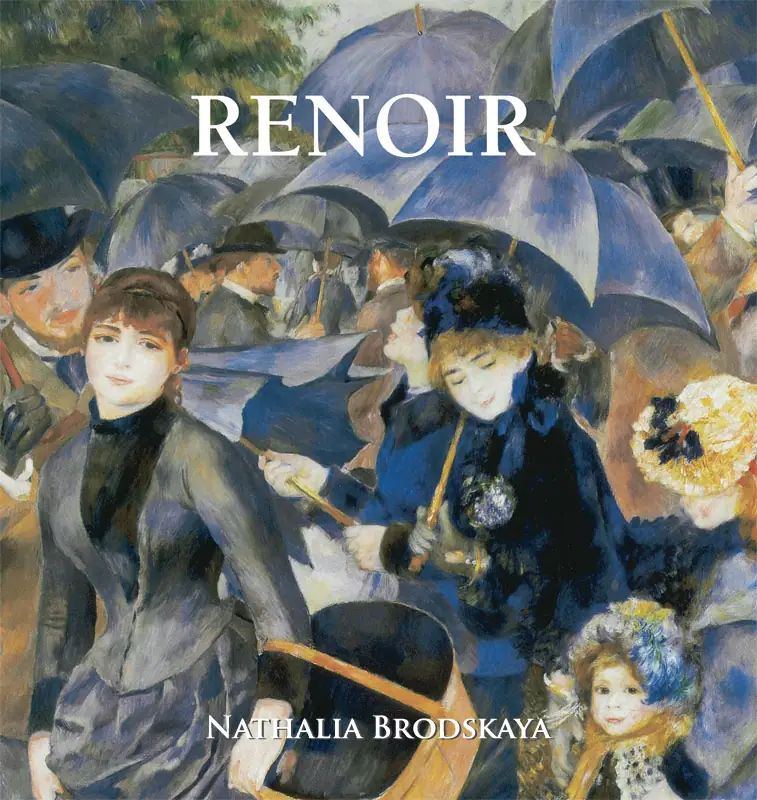


Length1h 1m
About this audiobook
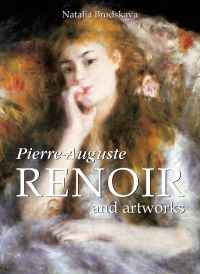
Pierre-Auguste Renoir was born in Limoges on 25 February 1841. In 1854, the boy’s parents took him from school and found a place for him in the Lévy brothers’ workshop, where he was to learn to paint porcelain. Renoir’s younger brother Edmond had this to say this about the move: “From what he drew in charcoal on the walls, they concluded that he had the ability for an artist’s profession. That was how our parents came to put him to learn the trade of porcelain painter.” One of the Lévys’ workers, Emile Laporte, painted in oils in his spare time. He suggested Renoir makes use of his canvases and paints. This offer resulted in the appearance of the first painting by the future impressionist. In 1862 Renoir passed the examinations and entered the Ecole des Beaux-Arts and, simultaneously, one of the independent studios, where instruction was given by Charles Gleyre, a professor at the Ecole des Beaux-Arts. The second, perhaps even the first, great event of this period in Renoir’s life was his meeting, in Gleyre’s studio, with those who were to become his best friends for the rest of his days and who shared his ideas about art. Much later, when he was already a mature artist, Renoir had the opportunity to see works by Rembrandt in Holland, Velázquez, Goya and El Greco in Spain, and Raphael in Italy. However, Renoir lived and breathed ideas of a new kind of art. He always found his inspirations in the Louvre. “For me, in the Gleyre era, the Louvre was Delacroix,” he confessed to Jean. For Renoir, the First Impressionist Exhibition was the moment his vision of art and the artist was affirmed. This period in Renoir’s life was marked by one further significant event. In 1873 he moved to Montmartre, to the house at 35 Rue Saint-Georges, where he lived until 1884. Renoir remained loyal to Montmartre for the rest of his life. Here he found his “plein-air” subjects, his models and even his family. It was in the 1870s that Renoir acquired the friends who would stay with him for the remainder of his days. One of them was the art-dealer Paul Durand-Ruel, who began to buy his paintings in 1872. In summer, Renoir continued to paint a great deal outdoors together with Monet. He would travel out to Argenteuil, where Monet rented a house for his family. Edouard Manet sometimes worked with them too. In 1877, at the Third Impressionist Exhibition, Renoir presented a panorama of over twenty paintings. They included landscapes created in Paris, on the Seine, outside the city and in Claude Monet’s garden; studies of women’s heads and bouquets of flowers; portraits of Sisley, the actress Jeanne Samary, the writer Alphonse Daudet and the politician Spuller; and also The Swing and The Ball at the Moulin de la Galette. Finally, in the 1880s Renoir hit a “winning streak”. He was commissioned by rich financiers, the owner of the Grands Magasins du Louvre and Senator Goujon. His paintings were exhibited in London and Brussels, as well as at the Seventh International Exhibition held at Georges Petit’s in Paris in 1886. In a letter to Durand-Ruel, then in New York, Renoir wrote: “The Petit exhibition has opened and is not doing badly, so they say. After all, it’s so hard to judge about yourself. I think I have managed to take a step forward towards public respect. A small step, but even that is something.”
Audiobook details
GenreOther
Length1 hr 1 min
Narrated byListen with 1,000+ voices
FormateBook with Audio
LanguageEnglish
Table of contents
1Introduction
21. Self-Portrait, ca. 1875.
32. Jules Le Cœur Walking in the Fontainebleau Forest with his Dogs, 1866.
43. La Grenouillère, 1869.
54. At the Inn of Mother Anthony, 1866.
Show all chaptersShow less
65. Alfred Sisley and his Wife, 1868.
76. Lisa (Woman with a Parasol), 1867.
87. Odalisque (Woman of Alger), 1870.
98. Interior of a Harem in Montmartre (Parisian Women Dressed in Algerian costumes), 1872.
109. Bather with a Griffon.
1110. The Algerian (Madame Clémentine Stora in an Algerian costume), 1870.
1211. Diane the Huntress, 1867.
1312. The Promenade, 1870.
1413. Half-naked Woman Lying Down: the Rose, ca. 1872.
1514. Riders in the Bois de Boulogne, (Madame Henriette Darras), 1873.
1615. The Parisienne (Henriette Heriot), 1874.
1716. The Box, 1874.
1817. Nude in the Sun, 1875.
1918. The Lovers, ca. 1875.
2019. Garden in the Rue Cortot, Montmartre, 1876.
2120. In the Garden, “La Tonnelle”.
2221. The Swing, 1876.
2322. The Ball at the Moulin de la Galette, 1876.
2423. Lady in Black, ca. 1876.
2524. The Reading of the Part, 1874-1876.
2625. Young Woman Sewing, ca. 1879.
2726. The Thought, ca. 1876-1877.
2827. Woman with Cat, ca. 1875,
2928. The Nude, 1876.
3029. The First Outing, ca. 1876.
3130. The First Step, 1876.
3231. Jeanne Samary, 1877.
3332. Portrait of the actress Jeanne Samary, 1878,
3433. The Exit of the Conservatory, 1877.
3534. La Place Clichy, ca. 1880,
3635. Young Girl with a Cat, 1880.
3736. The Lunch of the Boaters, 1880-1881.
3837. Blond Bather, 1881.
3938. The Umbrellas (After the Rainfall), ca. 1881-1885.
4039. Miss Marie-Thérèse Durand-Ruel Sewing, 1882.
4140. A Woman’s Bust, Yellow Corsage, ca. 1883.
4241. La Coiffeuse (Bather Arranging her Hair), 1885.
4342. Maternity – The Child Breastfed (Aline and Pierre), Third version, 1886.
4443. The Braid (Suzanne Valadon), 1884-1886.
4544. The Great Bathers, 1887.
4645. Young Woman Bathing, 1888.
4746. Young Girl with Daisies, 1889.
4847. Young Girls at the Piano, 1892.
4948. Yvonne and Chistine Lerolle at the Piano, 1897.
5049. Young Woman Playing the Guitar, 1896-1897.
Series

SisleyNathalia Brodskaya57m4.2 (22)$3.50 · $0.00
ImpressionismusNathalia Brodskaya8h 27m4.1 (206)$18 · $0.00
MonetNathalia Brodskaya57m4.2 (244)$3.50 · $0.00

PissarroNathalia Brodskaya1h 19m$8 · $0.00
Toulouse-LautrecNathalia Brodskaya57m$3.50 · $0.00
MonetNathalia Brodskaya1h 3m4.0 (69)$8 · $0.00

CézanneNathalia Brodskaya1h 11m4.3 (37)$15 · $0.00
The FauvesNathalia Brodskaya3h 50m$15 · $0.00

ManetNathalia Brodskaya2h 11m4.2 (59)$15 · $0.00

PissaroNathalia Brodskaya1h 19m4.2 (29)$3.50 · $0.00

Paul Cézanne et œuvres d'artNathalia Brodskaya1h 27m4.3 (34)$15 · $0.00
Edgar DegasNathalia Brodskaya, Edgar Degas3h 53m4.3 (37)$16 · $0.00
PissarroNathalia Brodskaya1h 16m4.5 (32)$8 · $0.00

Edgar DegasNathalia Brodskaya, Edgar Degas3h 38m4.2 (25)$16 · $0.00
PostimpressionismusNathalia Brodskaya8h 25m4.2 (26)$18 · $0.00

SisleyNathalia Brodskaya59m4.5 (14)$8 · $0.00

RenoirNathalia Brodskaya1h 15m$15 · $0.00
Naive ArtNathalia Brodskaya1h 6m3.8 (41)$15 · $0.00
GauguinNathalia Brodskaya1h 5m4.3 (31)$8 · $0.00
Mere ChristianityC. S. Lewis7h 7m4.4 (519.7K)$24 · $0.00

Her Daily BreadKate Wood12h 57m4.6 (153)$33 · $0.00
The Holy Bible - 1 SamuelKing James2h 13m4.8 (1.6K)$3 · $0.00

The American Standard Bible — The Gospel of MatthewMatthew3h 56m4.7 (3K)$2 · $0.00

Bad Fat Black GirlSesali Bowen6h 32m4.7 (2.8K)$24 · $0.00

The King James Audio Bible New Testament CompleteChristopher Glyn20h 2m4.7 (2.6K)$12 · $0.00

Faiths CheckbookCharles Spurgeon12h 44m4.7 (3.2K)$11 · $0.00

Ten Things I Wish You Knew About Your Child's Mental HealthDr. Billy Garvey4h 53m4.7 (2.4K)$20 · $0.00

Designing Terry Pratchett’s DiscworldPaul Kidby3h 52m4.7 (343)$20 · $0.00
The Chosen Book OneAmanda Jenkins, Kristen Hendricks, Dallas Jenkins3h 8m4.6 (4.9K)$10 · $0.00

The Lives of BrianBrian Johnson9h 45m4.6 (3.5K)$29 · $0.00
Expository Thoughts on the Gospel of LukeJ.C. Ryle27h 13m4.7 (536)$18 · $0.00

CrossroadsKaleb Dahlgren7h 56m4.6 (4.9K)$26 · $0.00

Across the RiverKent Babb11h 40m4.6 (927)$29 · $0.00

Brain Training for RidersAndrea Monsarrat Waldo5h 56m4.7 (550)$19 · $0.00

My Effin' LifeGeddy Lee17h 11m4.6 (13.1K)$40 · $0.00

Kings and PawnsHoward Bryant10h 9m4.6 (678)$29 · $0.00

The Elementia Chronicles #2: The New OrderSean Fay Wolfe11h 17m4.6 (841)$29 · $0.00

The ActsLuke2h 55m4.6 (19.7K)$12 · $0.00

New Testament - Easy NavigationWorld English Bible19h 35m4.6 (1.3K)$1.30 · $0.00
You may also like

Louisa May Alcott: Little Women, Little Men & Jo's Boys (Illustrated Edition)Louisa May Alcott43h 36m4.4 (4.8K)$1.99 · $0.00

Pat in the CityPatricia Field7h 10m4.0 (660)$24 · $0.00
JunoniaKevin Henkes2h 43m3.8 (3.5K)$18 · $0.00

EMILY STAR - Complete Collection: Emily of New Moon + Emily Climbs + Emily's QuestLucy Maud Montgomery32h 55m4.4 (13.1K)$2.99 · $0.00

Summer Term at St. Clare'sEnid Blyton5h 1m4.1 (9.4K)$2 · $0.00

New KidJerry Craft1h 59m4.3 (92.6K)$16 · $0.00

Mary JaneJessica Anya Blau9h 45m4.2 (166.6K)$29 · $0.00
EMILEJean-Jacques Rousseau26h 16m4.0 (19.3K)$1.99 · $0.00

Harvard Classics: Complete 51-Volume AnthologyJohann Wolfgang von Goethe, Gotthold Ephraim Lessing, Thomas Carlyle, Plato, René Descartes, Immanuel Kant, Charles Darwin, Martin Luther, Robert Louis Stevenson, William Shakespeare, Dante Alighieri, Euripides, Percy Bysshe Shelley, Charles Lamb, Henry David Thoreau, Samuel Johnson, John Stuart Mill, David Hume, Joseph Addison, John Locke, John Fletcher, Francis Beaumont, Leigh Hunt, Epictetus, Thomas De Quincey, Samuel Taylor Coleridge, Jonathan Swift, Christopher Marlowe, Jacob Grimm, Wilhelm Grimm, William Hazlitt, Marcus Tullius Cicero, Daniel Defoe, Aesop, Richard Henry Dana, John Dryden, Philip Massinger, Pedro Calderón de la Barca, John Ruskin, Oliver Wendell Holmes, Ernest Renan, Robert Burns, David Garrick, Ralph Waldo Emerson, John Webster, Izaak Walton, John Bunyan, James Russell Lowell, Charles Augustin Sainte-Beuve, Homer, Edmund Burke, Plutarch, Molière, Aeschylus, Michael Faraday, Sophocles, William Makepeace Thackeray, Benjamin Franklin, Pierre Corneille, Jean Racine, Voltaire, Robert Browning, Oliver Goldsmith, Thomas Dekker, John Milton, Aristophanes, Blaise Pascal, Virgil, Simon Newcomb, William Penn, Walter Bigges, Philip Sidney, Herodotus, Walter Raleigh, Francis Bacon, Giuseppe Mazzini, Francis Pretty, George Berkeley, Thomas Hobbes, Adam Smith, Alessandro Manzoni, Abraham Cowley, Michel de Montaigne, Ben Jonson, John Woolman, Benvenuto Cellini, Sydney Smith, Jean Froissart, William Henry Harrison, William Harvey, Marcus Aurelius, Hans Christian Andersen, Thomas Malory, George Gordon Byron, Thomas à Kempis, Richard Steele, Thomas Browne, Archibald Geikie, Thomas Babington Macaulay, Tacitus, William Roper, Hippocrates, Miguel de Cervantes, Thomas More, Friedrich von Schiller, Philip Nichols, Louis Pasteur, Joseph Lister, Jean Jacques Rousseau, Pliny the Younger, Edgar Alan Poe, Saint Augustine, Brinsley Sheridan, Hermann Ludwig Ferdinand von Helmholtz, Francis Drake, Edward Haies, Niccolo Machiavelli, Ambroise Paré, William A. Neilson1000h 27m4.5 (1.9K)$1 · $0.00

Worse Than WeirdJody J. Little5h 45m4.1 (358)$24 · $0.00

North and SouthElizabeth Cleghorn Gaskell19h 34m4.3 (244.9K)$2.30 · $0.00

The Complete Emily Starr TrilogyLucy Maud Montgomery34h 42m4.5 (2.6K)$2 · $0.00
RenoirNathalia Brodskaïa1h 13m4.3 (41)$15 · $0.00
Pierre-Auguste Renoir and artworksNatalia Brodskaya1h 19m3.8 (45)$15 · $0.00

The OutsiderUnknown Author9h 26m$24 · $0.00

A little Swiss boyJohanna Spyri4h 8m4.2 (11)$2 · $0.00

e-Pedia: Zayn MalikWikipedia contributors160h 36m$1 · $0.00

The Little School-MothersL. T. Meade9h 6m3.7 (12)$2 · $0.00

A Texas Blue BonnetCaroline Emilia Jacobs10h 19m3.8 (136)$1 · $0.00

How Ethel Hollister Became a Campfire GirlIrene Elliott Benson3h 18m3.5 (10)$1 · $0.00