
Edgar Degas
Ballet, Movement, and IntrospectionBy Nathalia Brodskaya, Edgar Degas


Length3h 37m
About this audiobook
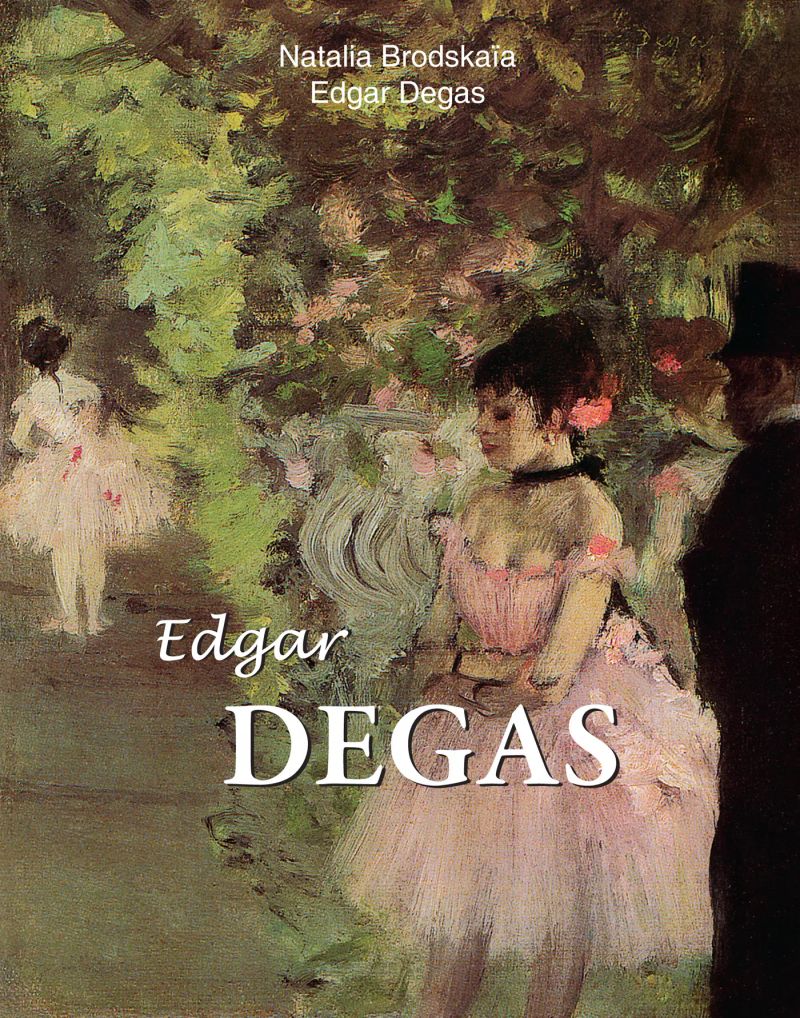
Degas was closest to Renoir in the impressionist’s circle, for both favoured the animated Parisian life of their day as a motif in their paintings. Degas did not attend Gleyre’s studio; most likely he first met the future impressionists at the Café Guerbois. He started his apprenticeship in 1853 at the studio of Louis-Ernest Barrias and, beginning in 1854, studied under Louis Lamothe, who revered Ingres above all others, and transmitted his adoration for this master to Edgar Degas. Starting in 1854 Degas travelled frequently to Italy: first to Naples, where he made the acquaintance of his numerous cousins, and then to Rome and Florence, where he copied tirelessly from the Old Masters. His drawings and sketches already revealed very clear preferences: Raphael, Leonardo da Vinci, Michelangelo, and Mantegna, but also Benozzo Gozzoli, Ghirlandaio, Titian, Fra Angelico, Uccello, and Botticelli. During the 1860s and 1870s he became a painter of racecourses, horses and jockeys. His fabulous painter’s memory retained the particularities of movement of horses wherever he saw them. After his first rather complex compositions depicting racecourses, Degas learned the art of translating the nobility and elegance of horses, their nervous movements, and the formal beauty of their musculature. Around the middle of the 1860s Degas made yet another discovery. In 1866 he painted his first composition with ballet as a subject, Mademoiselle Fiocre dans le ballet de la Source (Mademoiselle Fiocre in the Ballet ‘The Spring’) (New York, Brooklyn Museum). Degas had always been a devotee of the theatre, but from now on it would become more and more the focus of his art. Degas’ first painting devoted solely to the ballet was Le Foyer de la danse à l’Opéra de la rue Le Peletier (The Dancing Anteroom at the Opera on Rue Le Peletier) (Paris, Musée d’Orsay). In a carefully constructed composition, with groups of figures balancing one another to the left and the right, each ballet dancer is involved in her own activity, each one is moving in a separate manner from the others. Extended observation and an immense number of sketches were essential to executing such a task. This is why Degas moved from the theatre on to the rehearsal halls, where the dancers practised and took their lessons. This was how Degas arrived at the second sphere of that immediate, everyday life that was to interest him. The ballet would remain his passion until the end of his days.
Audiobook details
Rating★★★★ 4.2 (25)
Includes Goodreads, Amazon
GenreOther
Length3 hrs 37 mins
Narrated byListen with 1,000+ voices
FormateBook with Audio
LanguageEnglish
Table of contents
1Introduction
26To Ludovic Halévy
2EDGAR DEGAS AND HIS WORKS
27To Bartholomé
3LETTERS BY DEGAS
28To Bartholomé
4To Frölich[1]
29To Durand-Ruel
5To Henri Rouart
30To Durand-Ruel
Show all chaptersShow less
6To Henri Rouart
31To Henri Rouart
7To Faure[2]
32To Henri Rouart
8To Bracquemond[3]
33To Henri Rouart
9To Bracquemond
34To Bartholomé
10To Bracquemond
35To Ludovic Halévy
11To Bracquemond
36To Ludovic Halévy
12To Camille Pissarro
37To Ludovic Halévy
13To Henri Rouart
38To Bartholomé
14To Alexis Rouart[5]
39To Henri Rouart
15To J.E. Blanche
40To Faure
16To Bartholomé
41To Faure
17To Bartholomé
42To Faure
18To Henri Rouart
43To Madame Fleury
19To Ludovic Halévy
44To Bartholomé
20To Madame Bartholomé (née de Fleury)
45To Bartholomé
21To Bartholomé
46To Henri Rouart
22To Henry Lerolle
47To Ludovic Halévy
23To Henri Rouart
48To Bartholomé
24To Ludovic Halévy
49To Bartholomé
25To Henri Rouart
50To Boldini[7]
Series

SisleyNathalia Brodskaya57m4.2 (22)$3.50 · $0.00
ImpressionismusNathalia Brodskaya8h 27m4.1 (206)$18 · $0.00
MonetNathalia Brodskaya57m4.2 (244)$3.50 · $0.00

PissarroNathalia Brodskaya1h 19m$8 · $0.00
Toulouse-LautrecNathalia Brodskaya57m$3.50 · $0.00
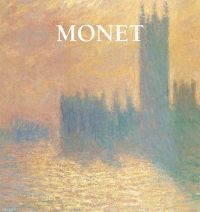
MonetNathalia Brodskaya1h 3m4.0 (69)$8 · $0.00

CézanneNathalia Brodskaya1h 11m4.3 (37)$15 · $0.00
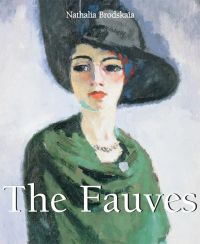
The FauvesNathalia Brodskaya3h 50m$15 · $0.00
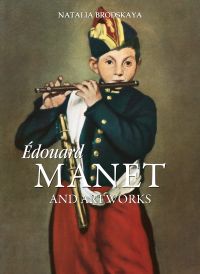
ManetNathalia Brodskaya2h 11m4.2 (59)$15 · $0.00

PissaroNathalia Brodskaya1h 19m4.2 (29)$3.50 · $0.00
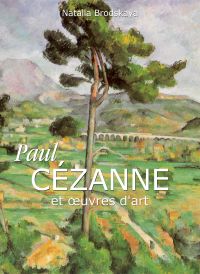
Paul Cézanne et œuvres d'artNathalia Brodskaya1h 27m4.3 (34)$15 · $0.00

RenoirNathalia Brodskaya1h 2m$8 · $0.00
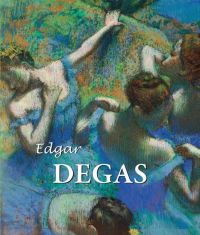
Edgar DegasNathalia Brodskaya, Edgar Degas3h 53m4.3 (37)$16 · $0.00
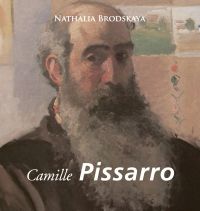
PissarroNathalia Brodskaya1h 16m4.5 (32)$8 · $0.00
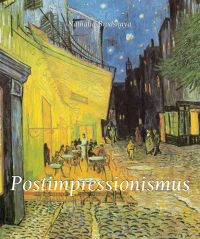
PostimpressionismusNathalia Brodskaya8h 25m4.2 (26)$18 · $0.00

SisleyNathalia Brodskaya59m4.5 (14)$8 · $0.00

RenoirNathalia Brodskaya1h 15m$15 · $0.00
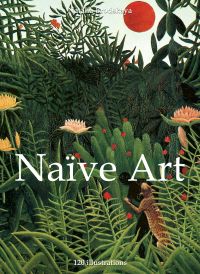
Naive ArtNathalia Brodskaya1h 6m3.8 (41)$15 · $0.00

GauguinNathalia Brodskaya1h 5m4.3 (31)$8 · $0.00
Mere ChristianityC. S. Lewis7h 7m4.4 (519.7K)$24 · $0.00

Her Daily BreadKate Wood12h 57m4.6 (153)$33 · $0.00
The Holy Bible - 1 SamuelKing James2h 13m4.8 (1.6K)$3 · $0.00

The American Standard Bible — The Gospel of MatthewMatthew3h 56m4.7 (3K)$2 · $0.00

Bad Fat Black GirlSesali Bowen6h 32m4.7 (2.8K)$24 · $0.00
The King James Audio Bible New Testament CompleteChristopher Glyn20h 2m4.7 (2.6K)$12 · $0.00
Faiths CheckbookCharles Spurgeon12h 44m4.7 (3.2K)$11 · $0.00
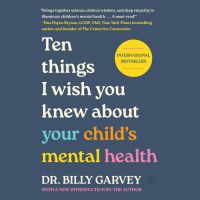
Ten Things I Wish You Knew About Your Child's Mental HealthDr. Billy Garvey4h 53m4.7 (2.4K)$20 · $0.00

Designing Terry Pratchett’s DiscworldPaul Kidby3h 52m4.7 (343)$20 · $0.00
The Chosen Book OneAmanda Jenkins, Kristen Hendricks, Dallas Jenkins3h 8m4.6 (4.9K)$10 · $0.00
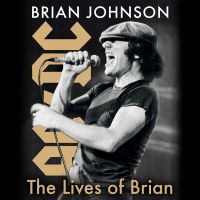
The Lives of BrianBrian Johnson9h 45m4.6 (3.5K)$29 · $0.00
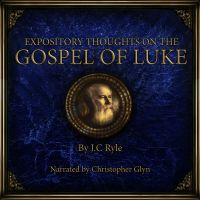
Expository Thoughts on the Gospel of LukeJ.C. Ryle27h 13m4.7 (536)$18 · $0.00

CrossroadsKaleb Dahlgren7h 56m4.6 (4.9K)$26 · $0.00

Across the RiverKent Babb11h 40m4.6 (927)$29 · $0.00

Brain Training for RidersAndrea Monsarrat Waldo5h 56m4.7 (550)$19 · $0.00
My Effin' LifeGeddy Lee17h 11m4.6 (13.1K)$40 · $0.00

Kings and PawnsHoward Bryant10h 9m4.6 (678)$29 · $0.00

The Elementia Chronicles #2: The New OrderSean Fay Wolfe11h 17m4.6 (841)$29 · $0.00
The ActsLuke2h 55m4.6 (19.7K)$12 · $0.00

New Testament - Easy NavigationWorld English Bible19h 35m4.6 (1.3K)$1.30 · $0.00
You may also like

THE LETTERS OF F. SCOTT FITZGERALDF. Scott Fitzgerald22h 23m4.2 (710)$1.99 · $0.00

MisophoniaDana Vowinckel11h 17m4.2 (3.2K)$29 · $0.00
Kant in 90 MinutesPaul Strathern1h 23m3.6 (2K)$7
The Professor's HouseWilla Cather7h 58m3.9 (15.2K)$1.99 · $0.00
The Getting of WisdomHenry Handel Richardson7h 19m3.6 (2.3K)$17
Some Thoughts Concerning EducationJohn Locke9h 17m3.9 (5.3K)$1 · $0.00

Fathers and SonsAlexander Waugh16h 36m4.0 (539)$25 · $0.00

American NegraNatasha S. Alford10h 39m4.3 (474)$29 · $0.00
The Portrait of a LadyHenry James26h 5m3.9 (116.7K)$1.20 · $0.00

The Favorite GameLeonard Cohen7h 45m4.0 (5K)$20 · $0.00

Lucky LoserMichael Kosta8h 25m4.1 (1K)$7 · $0.00

These Precious DaysAnn Patchett11h 14m4.5 (45.2K)$29 · $0.00

The Complete Works: Novels, Short Stories, Plays, Essays, Memoirs and Letters (Annotated)Henry James758h 45m$2 · $0.00

Baby Milestones- A Pathway to Discovering Your Baby's PotentialAurora Brooks1h 24m$3.50 · $0.00

Baby Milestones- Why Every Parent Should Be Paying AttentionAurora Brooks1h 22m$3.50 · $0.00

Look Homeward, Angel & Of Time and the RiverThomas Wolfe70h 6m4.3 (204)$2 · $0.00

The Science Behind Baby Milestones- What Researchers Are DiscoveringAurora Brooks1h 23m$3.50 · $0.00

Films of EndearmentMichael Koresky9h 30m3.9 (401)$29 · $0.00

Why Your Baby's Milestones Are Worth CelebratingAurora Brooks1h 13m$3.50 · $0.00
Our Friend John BurroughsClara Barrus5h 30m$2 · $0.00