
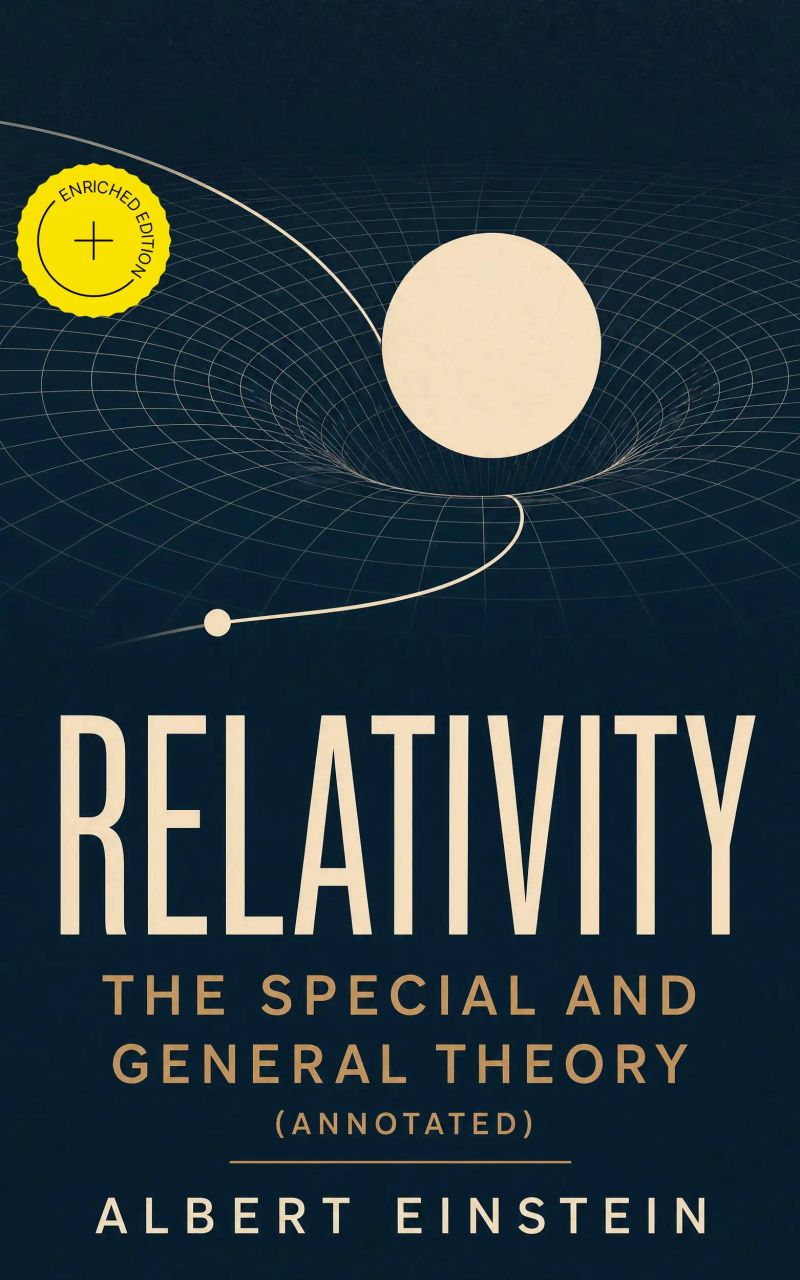
Relativity: The Special and General Theory (Annotated)
Enriched Edition. A Non-Mathematical Introduction to Spacetime, Gravitation, and Modern PhysicsBy Albert Einstein


Length5h 9m
About this audiobook
Albert Einstein's Relativity: The Special and General Theory is a lucid exposition of one of the great intellectual revolutions of modern science. Written for readers without advanced mathematical training, the book explains special relativity, general relativity, spacetime, gravitation, and the limits of Newtonian mechanics with remarkable conceptual clarity. Its style is patient, analogical, and rigorously logical, placing it within the tradition of popular scientific writing while preserving the philosophical depth of theoretical physics. Einstein, already celebrated for his 1905 papers and later for his general theory of relativity, wrote this work to make his ideas accessible beyond professional physicists. His background in mathematics, patent-office analysis, and deep engagement with questions about light, motion, and measurement shaped both the theory and its presentation. The book reflects his conviction that profound scientific truths can be communicated through clear reasoning rather than technical display. This volume is highly recommended for readers seeking a historically important and intellectually disciplined introduction to relativity. It rewards students, general readers, and scholars of science alike, offering direct access to Einstein's own explanation of ideas that transformed physics and modern thought.
This enriched edition has been carefully crafted to add value to your reading experience.
- A succinct Introduction situates the work's timeless appeal and themes.
- The Synopsis outlines the central plot, highlighting key developments without spoiling critical twists.
- A detailed Historical Context immerses you in the era's events and influences that shaped the writing.
- An Author Biography reveals milestones in the author's life, illuminating the personal insights behind the text.
- A thorough Analysis dissects symbols, motifs, and character arcs to unearth underlying meanings.
- Reflection questions prompt you to engage personally with the work's messages, connecting them to modern life.
- Hand‐picked Memorable Quotes shine a spotlight on moments of literary brilliance.
- Interactive footnotes clarify unusual references, historical allusions, and archaic phrases for an effortless, more informed read.
Audiobook details
Rating★★★★ 4.4 (1.1K)
Includes Amazon, Goodreads, LibraryThing
GenreScience and Nature
Length5 hrs 9 mins
Narrated byListen with 1,000+ voices
FormateBook with Audio
Publish dateJan 2, 2020
LanguageEnglish
Table of contents
1Introduction
2Introduction
3Synopsis
4Historical Context
5Author Biography
Show all chaptersShow less
6Relativity: The Special and General Theory
7Preface
8PART I The Special Theory of Relativity
9I Physical Meaning of Geometrical Propositions
10II The System of Co-ordinates
11III Space and Time in Classical Mechanics
12IV The Galileian System of Co-ordinates
13V The Principle of Relativity in the Restricted Sense
14VI The Theorem of the Addition of Velocities Employed in Classical Mechanics
15VII The Apparent Incompatibility of the Law of Propagation of Light with the Principle of Relativity
16VIII On the Idea of Time in Physics
17IX The Relativity of Simultaneity
18X On the Relativity of the Conception of Distance
19XI The Lorentz Transformation
20XII The Behaviour of Measuring-Rods and Clocks in Motion
21XIII Theorem of the Addition of Velocities. The Experiment of Fizeau
22XIV The Heuristic Value of the Theory of Relativity
23XV General Results of the Theory
24XVI Experience and the Special Theory of Relativity
25XVII Minkowski’s Four-Dimensional Space
26PART II The General Theory of Relativity
27XVIII Special and General Principle of Relativity
28XIX The Gravitational Field
29XX The Equality of Inertial and Gravitational Mass as an Argument for the General Postulate of Relativity
30XXI In What Respects Are the Foundations of Classical Mechanics and of the Special Theory of Relativity Unsatisfactory?
31XXII A Few Inferences from the General Principle of Relativity
32XXIII Behaviour of Clocks and Measuring-Rods on a Rotating Body of Reference
33XXIV Euclidean and Non-Euclidean Continuum
34XXV Gaussian Co-Ordinates
35XXVI The Space-Time Continuum of the Special Theory of Relativity Considered as a Euclidean Continuum
36XXVII The Space-Time Continuum of the General Theory of Relativity is Not a Euclidean Continuum
37XXVIII Exact Formulation of the General Principle of Relativity
38XXIX The Solution of the Problem of Gravitation on the Basis of the General Principle of Relativity
39PART III Considerations on the Universe as a Whole
40XXX Cosmological Difficulties of Newton’s Theory
41XXXI The Possibility of a “Finite” and yet “Unbounded” Universe
42XXXII The Structure of Space According to the General Theory of Relativity
43APPENDIX ISimple Derivation of the Lorentz Transformation [Supplementary to Section XI]
44APPENDIX IIMinkowski’s Four-Dimensional Space (“World”) [Supplementary to Section XVII]
45APPENDIX IIIThe Experimental Confirmation of the General Theory of Relativity
46(a) Motion of the Perihelion of Mercury
47(b) Deflection of Light by a Gravitational Field
48(c) Displacement of Spectral Lines Towards the Red
49APPENDIX IVThe Structure of Space According to the General Theory of Relativity [Supplementary to Section XXXII]
50Analysis
The Principle of RelativityAlbert Einstein, H. Minkowski7h 43m4.4 (1.4K)$1 · $0.00
Relativity: The Special and General Theory (Summarized Edition)Albert Einstein1h 52m4.4 (12)$2

Wie ich die Welt seheAlbert Einstein5h 1m4.3 (5.9K)$1 · $0.00
Albert Einstein - Gesammelte WerkeAlbert Einstein28h 34m4.4 (35)$1 · $0.00
The Theory of RelativityAlbert Einstein5h 6m4.2 (28.5K)$1.99 · $0.00

3500 ultimes citazioniAlbert Einstein, Platon, Baruch Spinoza, Arthur Schopenhauer, Fyodor Dostoievski, Cicero, Confucius, Socrate, Friedrich Nietzsche, Immanuel Kant, Bouddha, Laozi, Leonardo da Vinci, Gandhi, Marcus Aurelius, Martin Luther King, William Shakespeare, Marcel Proust, Jane Austen, Anne Frank, Antoine de Saint Exupéry, Napoleon Bonaparte, Winston Churchill, Abraham Lincoln, Charles de Gaulle, Oscar Wilde, Charles Louis de Montesquieu, Soren Kierkegaard, Ralph Waldo Emerson, Henry-David Thoreau, Denis Diderot, Georg Christoph Lichtenberg, Nicolas de Chamfort, Pierre Augustin Caron de Beaumarchais, Voltaire14h 43m4.3 (11)$24 · $0.00

3500 citações ultimesAlbert Einstein, Platon, Baruch Spinoza, Arthur Schopenhauer, Fyodor Dostoievski, Cicero, Confucius, Socrate, Friedrich Nietzsche, Immanuel Kant, Bouddha, Laozi, Leonardo da Vinci, GandhiMarcus Aurelius, Martin Luther King, William Shakespeare, Marcel Proust, Jane Austen, Anne Frank, Antoine de Saint Exupéry, Napoleon Bonaparte, Winston Churchill, Abraham Lincoln, Charles de Gaulle, Oscar Wilde, Charles Louis de Montesquieu, Soren Kierkegaard, Ralph Waldo Emerson, Henry-David Thoreau, Denis Diderot, Georg Christoph Lichtenberg, Pierre Augustin Caron de Beaumarchais, Nicolas de Chamfort, Voltaire14h 10m4.1 (11)$24 · $0.00

500 citaten om de creativiteit te stimulerenAlbert Einstein, Léonardo da Vinci, Antoine de Saint Exupéry, Oscar Wilde, William Shakespeare, Léonardo Vinci, Antoine Saint Exupéry1h 59m$8 · $0.00

100 citat från Albert EinsteinAlbert Einstein24m$5 · $0.00

Warum Krieg?Albert Einstein, Sigmund Freud43m4.0 (3.7K)$6 · $0.00

3500 ultimat citatAlbert Einstein, Platon, Baruch Spinoza, Arthur Schopenhauer, Fyodor Dostoievski, Cicero, Confucius, Socrate, Friedrich Nietzsche, Immanuel Kant, Bouddha, Laozi, Leonardo da Vinci, GandhiMarcus Aurelius, Martin Luther King, William Shakespeare, Marcel Proust, Jane Austen, Anne Frank, Antoine de Saint Exupéry, Napoleon Bonaparte, Winston Churchill, Abraham Lincoln, Charles de Gaulle, Oscar Wilde, Voltaire, Charles Louis de Montesquieu, Soren Kierkegaard, Ralph Waldo Emerson, Henry-David Thoreau, Denis Diderot, Georg Christoph Lichtenberg, Nicolas de Chamfort, Pierre Augustin Caron de Beaumarchais14h 17m$24 · $0.00

500 citas para estimular la creatividadAlbert Einstein, Léonardo da Vinci, Antoine de Saint Exupéry, Oscar Wilde, William Shakespeare1h 51m$8 · $0.00

100 Citazioni sulla scienzaAlbert Einstein, Nikola Tesla, Isaac Asimov, Friedrich Nietzsche, Isaac Newton, Charles Darwin, Walt Whitman, Stephen Hawking, Claude Lévi-Strauss35m$5 · $0.00

100 citazioni umoristicheAlbert Einstein, Frank Zappa, Groucho Marx, Steve Martin, Mark Twain, Charles M. Schulz, Woody Allen, Charles Bukowski24m$5 · $0.00
Mein WeltbildAlbert Einstein7h 22m4.0 (10.1K)$15 · $0.00

100 citações de Albert EinsteinAlbert Einstein25m4.6 (11)$5 · $0.00

3500 citas ultimasAlbert Einstein, Carl Jung, Baruch Spinoza, Arthur Schopenhauer, Anton Chekov, Cicero, Confucius, Emil Cioran, Friedrich Nietzsche, Immanuel Kant, Bouddha, Laozi, Leonardo da Vinci, Gandhi, Marcus Aurelius, Johann Wolfgang von Goethe, William Shakespeare, Marcel Proust, Jane Austen, Anne Frank, Antoine de Saint Exupéry, Napoleon Bonaparte, Winston Churchill, Abraham Lincoln, Charles de Gaulle, Oscar Wilde, Voltaire, Charles Louis de Montesquieu, Soren Kierkegaard, Ralph Waldo Emerson, Henry-David Thoreau, Denis Diderot, Georg Christoph Lichtenberg, Nicolas de Chamfort, Pierre Augustin Caron de Beaumarchais14h 37m$24 · $0.00

100 citações humorísticasAlbert Einstein, Frank Zappa, Groucho Marx, Steve Martin, Mark Twain, Charles M. Schulz, Woody Allen, Charles Bukowski26m$5 · $0.00

2000 siste sitaterAlbert Einstein, Carl Jung, Baruch Spinoza, Arthur Schopenhauer, Anton Chekov, Cicero, Confucius, Emil Cioran, Friedrich Nietzsche, Immanuel Kant, Bouddha, Laozi, Leonardo da Vinci, Gandhi, Marcus Aurelius, Johann Wolfgang von Goethe, William Shakespeare, Marcel Proust, Jane Austen, Anne Frank8h 22m$18 · $0.00

A Brief History of IntelligenceMax S. Bennett12h 18m4.6 (6.6K)$29 · $0.00
The Story of BirdsSteve Brusatte11h 49m4.6 (401)$29 · $0.00

Craig & FredCraig Grossi8h 6m4.5 (9.6K)$26 · $0.00

Celebrating BirdsNatalia Rojas, Ana Maria Martinez6h 47m4.6 (330)$24 · $0.00

Saving JemimaJulie Zickefoose4h 59m4.5 (749)$20 · $0.00

Will's Red CoatTom Ryan8h 23m4.5 (2.3K)$26 · $0.00

Of Time and TurtlesSy Montgomery10h 34m4.5 (5K)$29 · $0.00

Zen and the Art of Saving the PlanetThich Nhat Hanh9h 20m4.5 (3.9K)$29 · $0.00

BLACK BEAUTY (With Original Illustrations)Anna Sewell7h 31m4.5 (1.3K)$1.99 · $0.00

Bottle of LiesKatherine Eban14h 25m4.4 (12K)$33 · $0.00

IngrainedCallum Robinson8h 10m4.5 (1.1K)$26 · $0.00

The Lion Tracker's Guide To LifeBoyd Varty3h 1m4.4 (4.8K)$18 · $0.00

Born for LoveBruce D. Perry, Maia Szalavitz11h 42m4.4 (4K)$29 · $0.00

The Mountains of California (With Original Drawings & Photographs) (Annotated)John Muir11h 35m4.5 (1.1K)$2 · $0.00

The New GuysMeredith Bagby16h 50m4.4 (1.2K)$40 · $0.00

Blue PasturesMary Oliver3h 23m4.4 (3.8K)$18 · $0.00
The Rise and Reign of the MammalsSteve Brusatte13h 26m4.4 (11.1K)$33 · $0.00

VaccinatedPaul A. Offit8h 30m4.4 (3.7K)$26 · $0.00

The Light EatersZoë Schlanger10h 57m4.4 (22.8K)$29 · $0.00

Where the Lost Dogs GoSusannah Charleson11h 7m4.5 (699)$23 · $0.00
You may also like
The Theory of RelativityAlbert Einstein5h 6m4.2 (28.5K)$1.99 · $0.00

PICASSO (Annotated)Gertrude Stein3h 25m3.9 (1.9K)$2 · $0.00
Tertium OrganumP. D. Ouspensky14h 49m4.3 (1.1K)$20 · $0.00
Death by Black Hole, and Other Cosmic QuandariesNeil deGrasse Tyson12h 5m4.2 (40.7K)$23
Neutrino HuntersRay Jayawardhana6h 4m4.1 (955)$17
Making Sense of ChaosJ. Doyne Farmer9h 38m4.3 (1.1K)$23
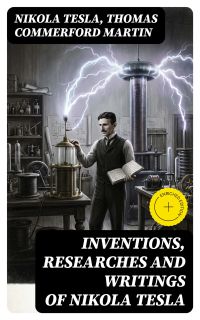
Inventions, Researches and Writings of Nikola TeslaNikola Tesla, Thomas Commerford Martin21h 46m4.2 (2.1K)$2 · $0.00
Astrophysics for Young People in a HurryNeil deGrasse Tyson3h 32m4.3 (15.1K)$15
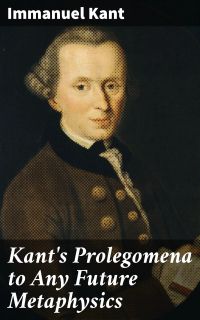
Kant's Prolegomena to Any Future MetaphysicsImmanuel Kant4h 21m4.1 (12.1K)$1 · $0.00
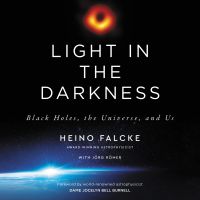
Light in the DarknessHeino Falcke10h 40m4.1 (711)$29 · $0.00
The New Physics and Its EvolutionLucien Poincaré6h 18m3.7 (87)$1 · $0.00

InventologyPagan Kennedy7h 48m3.9 (728)$26 · $0.00
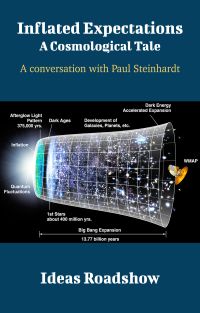
Inflated Expectations: A Cosmological Tale - A Conversation with Paul SteinhardtHoward Burton1h 57m$3 · $0.00
From Newton to Einstein - The Changing Conceptions of the UniverseBenjamin Harrow, Albert Einstein, Arthur Stanley Eddington, Joseph Sweetman Ames, Joseph John Thomson, Frank Watson Dyson3h 8m$1.99 · $0.00

KandinskyMikhaïl Guerman1h 10m4.2 (38)$8 · $0.00

KandinskyMikhaïl Guerman1h 47m3.8 (46)$13 · $0.00
The Theory of Relativity and Its Influence on Scientific ThoughtArthur Eddington2h 28m$2 · $0.00

You, a Kindle Bestselling Author?Tom Corson-Knowles, Bryan Heathman13h 15m4.2 (26)$40

The Pull of the Stars - A Conversation with Claudia de RhamHoward Burton1h 26m$3 · $0.00
The Problems of Physics, Reconsidered - A Conversation with Tony LeggettHoward Burton1h 43m$3 · $0.00