
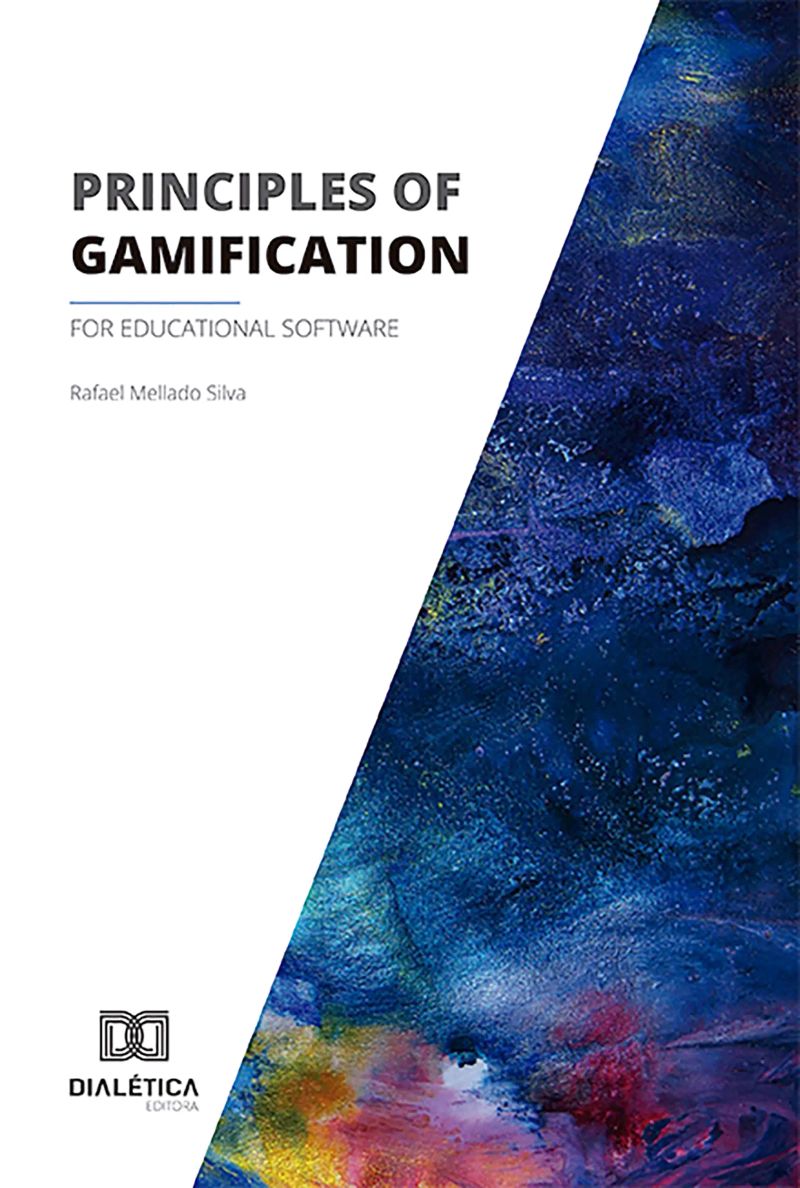
Principles of gamification for educational software
By Rafael Mellado


Length3h 59m
About this audiobook
"Principles of Gamification for Educational Software" is an essential guide for educators and designers seeking to transform learning through gamification. With a multidisciplinary approach, this book explores the theoretical and practical foundations of applying game elements in technology-mediated educational environments.
Through a comprehensive literature review and case studies, the authors analyze the principles, mechanics, and dynamics that make gamification an effective strategy for increasing student motivation, engagement, and learning. Additionally, they address the psychological, pedagogical, and social aspects that influence the design and implementation of gamified experiences.
With a practical focus, the book offers concrete tools and guides for designing gamified educational software, including examples, templates, and recommendations. The authors also provide a critical and reflective perspective on gamification's potential risks and limitations, promoting a responsible and well-founded use of this strategy.
"Principles of Gamification for Educational Software" is a valuable resource for anyone interested in exploring new teaching and learning methods in the digital age. Whether you are a teacher, instructional designer, or education enthusiast, this book will provide the tools and knowledge necessary to embark on the fascinating world of gamification applied to education.
Audiobook details
GenreEducation and Learning
Length3 hrs 59 mins
Narrated byListen with 1,000+ voices
FormateBook with Audio
Publish dateJul 3, 2024
LanguageEnglish
Table of contents
1PROLOGUE
21 INTRODUCTION
32 GAMIFICATION
42.1 Definitions
52.1.1 Principles
Show all chaptersShow less
62.1.1.1 Principles with a Technological Character
72.1.1.2 Principles of the Macro-process
82.1.1.3 Principles of Real Work
92.1.1.4 Principles of Educational Environments
102.1.2 Life Cycle
112.1.3 Players
122.1.3.1 Classification of Players in Gamification
132.1.3.2 Technology Acceptance: TAM Model
142.1.3.3 User Experience
152.1.4 Psychological Aspects
162.1.4.1 Behavioral Aspects
172.1.4.2 Cognitive and Constructivist Aspects
182.1.4.3 Humanistic Aspects
192.1.4.4 Motivation
202.2 Gamification in Education
212.2.1 Benefits
222.2.2 Impact
233 MOTIVATION IN GAMIFICATION
243.1 General Aspects
253.2 Types of Motivation
263.3 Motivation and Educational Software
273.4 Motivation and Gamification
283.4.1 Educational Software with Gamification
293.4.2 Motivational Risks
304 EXISTING EXPERIENCES
314.1 Gamification
324.2 Gamification in Higher Education
334.3 Frameworks
345 CONCLUSIONS
355.1 Gamification
365.2 Impact on Educational Software
375.3 Psychological Aspects in Implementing Gamification
385.4 Motivation and Gamification
395.5 Risks and Considerations
405.6 Frameworks and Models
415.7 General Conclusions
425.8 Gaps and Limitations
More from Rafael Mellado


A Brief History of IntelligenceMax S. Bennett12h 18m4.6 (6.6K)$29 · $0.00

HomeschooledStefan Merrill Block7h 10m3.6 (18.5K)$28 · $0.00

Life on the BridgeKaelynn Partlow5h 40m4.6 (1.1K)$24 · $0.00

EXPERIENCE AND EDUCATION – Premium Edition (Including Democracy & Education) (Annotated)John Dewey19h 17m4.6 (1K)$2 · $0.00

WitnessAriel Burger8h 1m4.6 (1.3K)$20 · $0.00

EducationEllen G. White9h 41m4.6 (1.5K)$2 · $0.00

Parents and Children (Annotated)Charlotte Mason9h 23m4.6 (988)$2 · $0.00

Children Under FireJohn Woodrow Cox10h 17m4.5 (1.6K)$29 · $0.00

The State Must ProvideAdam Harris7h 15m4.5 (775)$24 · $0.00

The Call of the Wild and FreeAinsley Arment9h 7m4.4 (21.2K)$29 · $0.00

The Freelance WayRobert Vlach19h 48m4.5 (528)$40 · $0.00

Race to the BottomLuke Rosiak9h 20m4.5 (600)$29 · $0.00

They Came for the SchoolsMike Hixenbaugh9h 5m4.5 (2.6K)$8 · $0.00

Find Me UnafraidKennedy Odede, Jessica Posner11h 11m4.5 (2.7K)$29 · $0.00

Asking for ItKate Harding8h 55m4.4 (5.3K)$20 · $0.00

Defining Moments in Black HistoryDick Gregory7h 37m4.4 (6K)$26 · $0.00

The Emerald Tablets of Thoth the AtlanteanMaurice Doreal3h 4m4.4 (8.8K)$6 · $0.00

Learning AmericaLuma Mufleh6h 37m4.4 (564)$24 · $0.00
Math-ishJo Boaler7h 21m4.4 (588)$24 · $0.00

Daddy-Long-LegsJean Webster12h 18m4.2 (91K)$0.99 · $0.00
You may also like

A Sense of the MysteriousAlan Lightman5h 23m4.0 (761)$20

Great Pianists on Piano Playing (Annotated)James Francis Cooke8h 13m4.2 (264)$2 · $0.00

On ColorDavid Scott Kastan5h 54m3.9 (1.1K)$20

The Six EnneadsPlotinus34h 13m4.3 (4.3K)$21 · $0.00

Acquired TastesPeter Mayle4h 55m3.8 (2.5K)$20

The CurtainMilan Kundera4h 40m4.0 (3.8K)$20 · $0.00

The Critique of Practical ReasonImmanuel Kant6h 52m4.2 (14.9K)$3.50 · $0.00

The Honest Truth About DishonestyDan Ariely8h 36m4.0 (20.9K)$26 · $0.00

Influence, New and ExpandedRobert B. Cialdini20h 44m4.3 (186.5K)$46 · $0.00

How We ThinkJohn Dewey7h 6m4.0 (1.1K)Free

On the Genealogy of MoralityFriedrich Nietzsche4h 31m4.3 (72.5K)Free
The Four-Dimensional HumanLaurence Scott9h 35m3.6 (663)$20

Universe And RealityAlder D'pass2h$7 · $0.00

Virtual NegotiationJutta Portner7h 41m$33 · $0.00

Metapysical MeditationsAlder D'pass4h 36m$7 · $0.00

Head In The GameBrandon Sneed10h 42m4.0 (192)$29 · $0.00

Objects of Desire - The Eroticism of TouchHans-Jürgen Döpp37m$8 · $0.00

You are the Simulation (Translated)Dimitri Sokolov1h 27m$5.60 · $0.00

Business Englisch lernen Audio – Business Skills: ZeitmanagementMelita Cameron-Wood54m$17

The Kama Sutra of VatsyayanaAle.mar.sas, Vatsyayana6h 9m$4.50 · $0.00