
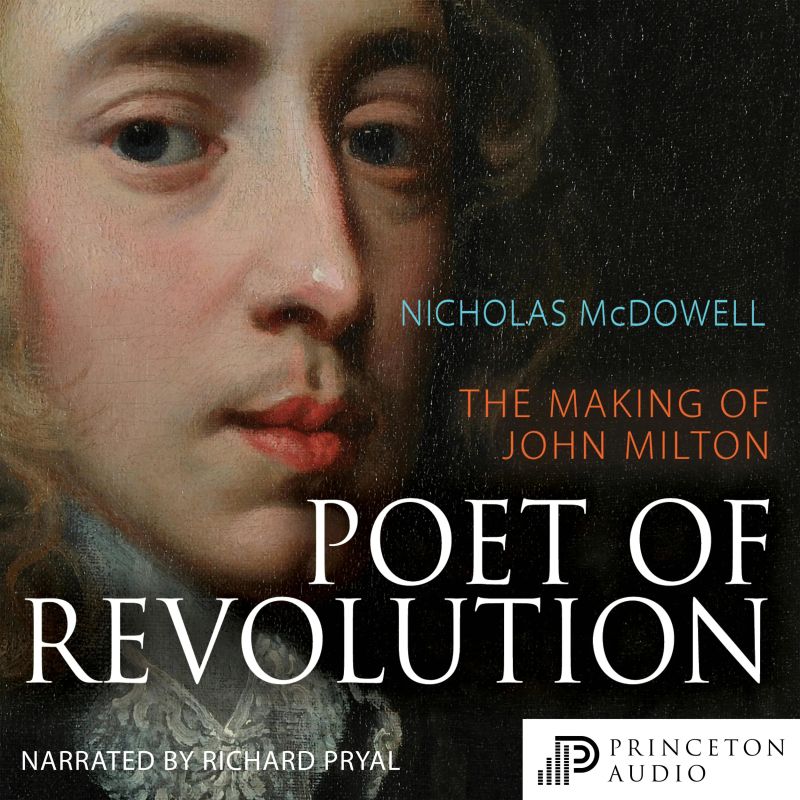
Audio only


Length15h 56m
About this audiobook
This audiobook narrated by Richard Pryal brings Milton's formative years to life, providing an entirely new account of the poet's political radicalization
John Milton (1608–1674) has a unique claim on literary and intellectual history as the author of both
Paradise Lost, the greatest narrative poem in English, and prose defences of the execution of Charles I that influenced the French and American revolutions. Tracing Milton's literary, intellectual, and political development with unprecedented depth and understanding,
Poet of Revolution is an unmatched biographical account of the formation of the mind that would go on to create
Paradise Lost—but would first justify the killing of a king.
Biographers of Milton have always struggled to explain how the young poet became a notorious defender of regicide and other radical ideas such as freedom of the press, religious toleration, and republicanism. In this groundbreaking intellectual biography of Milton's formative years, Nicholas McDowell draws on recent archival discoveries to reconcile at last the poet and polemicist. He charts Milton's development from his earliest days as a London schoolboy, through his university life and travels in Italy, to his emergence as a public writer during the English Civil War. At the same time, McDowell presents fresh, richly contextual readings of Milton's best-known works from this period, including the "Nativity Ode," "L'Allegro" and "Il Penseroso,"
Comus, and "Lycidas."
Challenging biographers who claim that Milton was always a secret radical,
Poet of Revolution shows how the events that provoked civil war in England combined with Milton's astonishing programme of self-education to instil the beliefs that would shape not only his political prose but also his later epic masterpiece.
Audiobook details
GenreBiography and Memoir, Literary Classics
Length15 hrs 56 mins
Narrated byRichard Pryal
FormatAudiobook
Publish dateOct 27, 2020
LanguageEnglish
Table of contents
1Opening Anno, Introduction: Two University Scenes
10Chapter 9, In Pursuit of Patronage, 'Pluto's Helmet'
2Part 1, London and St Paul's School, 1608–25, Chapter 1 - Londiniensis
11Chapter 10 - Many Are the Shapes of Things Daemonic, Pagan Virtue
3Chapter 2 - Pure Chaste Eloquence
12Part 4, Horton and Italy, 1635-9, Chapter 11 - The Circle of Studies, Identity and Belief in 1636
4Chapter 3 - The Pursuit of Universal Learning
13Chapter 12 - Love and Death in 'Lycidas', Two Sorts of Shepherd
5Part 2, Cambridge and Christ's College, 1625–9, Chapter 4 - Philology and Philosophy: 'Whip't Him'
14Chapter 13 - Writing and Society in 'Lycidas', 'Run Amarillis Run'
Show all chaptersShow less
6Chapter 5 - Beginning as a Poet
15Chapter 14 - Come un Virtuoso, In Circe's Court
7Chapter 6 - Heroes and Daemons, Miscellany Poet
16Part 5, London and Aldersgate Street, 1639-42, Chapter 15 - Becoming a Polemicist, The Method of History
8Chapter 7 - The Poetics of Play and Devotion, 'His Hand Unstained'
17Chapter 16 - The Poetics of Polemic, 'Struggle of Contrarieties'
9Part 3, Cambridge and Hammersmith, 1629-35, Chapter 8 - Laudian Poet?, 'Tenet of the Apocalyptical Beast'
18Epilogue: Towards Regicide and Epic, Closing Anno
Left for DeadEbony Canion5h 34m$17

Invisible StormJason Kander6h 48m$24 · $0.00

Forever BoyKate Swenson9h 27m$29 · $0.00

You Are Worth ItKyle Carpenter, Don Yaeger8h 53m$29 · $0.00

The Happiest Man on EarthEddie Jaku3h 48m$7 · $0.00
MotherlandJulia Ioffe17h 52m$40 · $0.00
Evidence Not SeenDarlene Deibler Rose11h 11m$29 · $0.00

A Bridge Not Too FarDeepak Ohri4h 55m$15

Where Cowards Go to DieBenjamin Sledge8h 42m$20 · $0.00

Will You Love Me?Cathy Glass9h 5m$29 · $0.00
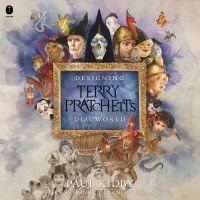
Designing Terry Pratchett’s DiscworldPaul Kidby3h 52m$20 · $0.00

HostageEli Sharabi5h 25m$24 · $0.00
A Narrative of Some of the Lord's Dealings With George Müller (The Complete Four-Volume Edition)George Müller43h 39m$2 · $0.00
Finding MeViola Davis9h 15m5 (1)$29 · $0.00
Scandal Between the Sheets & Stranded with the Tempting StrangerBrenda Jackson9h 22m$24 · $0.00

The Boys and MeMark Miller8h 32m$23

The Dangerous Truth about Today’s MarijuanaLaura Stack CSP, MBA9h 57m$20 · $0.00

Birdie & HarlowTaylor Wolfe7h 50m$26 · $0.00
The Lives of BrianBrian Johnson9h 45m$29 · $0.00
I Am The StormJanice Dean9h$8 · $0.00

L. M. Montgomery – Premium Collection: Novels, Short Stories, Poetry & MemoirsLucy Maud Montgomery155h 55m$2 · $0.00
MARK TWAIN: 12 Novels, 195 Short Stories, Autobiography, 10 Travel Books, 160+ Essays & Speeches (Illustrated)Mark Twain416h 24m5 (2)$2 · $0.00
The Great Gatsby: Original 1925 Edition (An F. Scott Fitzgerald Classic NovelFrancis Scott Fitzgerald4h 45m$18 · $0.00
The Complete Works of TolstoyLeo Tolstoy412h 44m$1 · $0.00
Louisa May Alcott: 16 Novels in One Volume (Illustrated Edition)Louisa May Alcott141h 35m$2 · $0.00
The Fire Next TimeJames Baldwin2h 25m$15
The Complete Works of Oscar WildeOscar Wilde80h 38m$1 · $0.00
The Complete Books of F. Scott Fitzgerald (all his 5 novels + all 4 short story collections published during his lifetime)F. Scott Fitzgerald86h 48m$2 · $0.00
The Count of Monte Cristo (With Original Illustrations)Alexandre Dumas54h 7m$1 · $0.00
Braving the TruthRachel Held Evans11h 31m$29 · $0.00

Richard Wagamese SelectedRichard Wagamese3h 14m$15
Shōgun, Part OneJames Clavell24h 19m$35
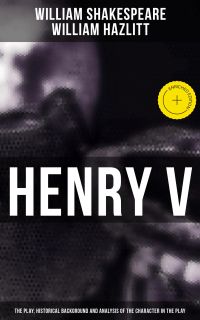
Henry V (The Play, Historical Background and Analysis of the Character in the Play)William Shakespeare, William Hazlitt8h 40m$1 · $0.00
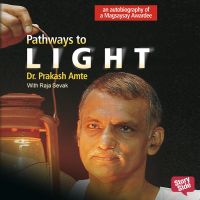
Pathways to LightPrakash Amte7h 6m$8

The North American Indian (Illustrated Edition)Edward S. Curtis, Frederick Webb Hodge6h$2 · $0.00
The Holy BibleKing James99h 50m$12 · $0.00
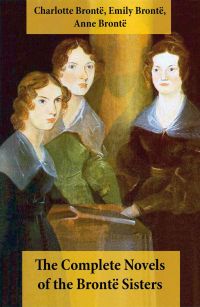
The Complete Novels of the Brontë Sisters (8 Novels: Jane Eyre, Shirley, Villette, The Professor, Emma, Wuthering Heights, Agnes Grey and The Tenant of Wildfell Hall)Charlotte Brontë, Emily Brontë, Anne Brontë118h 9m$2 · $0.00
The Greatest Works of Jules VerneJules Verne247h 39m$2 · $0.00

The Complete Works of G. K. ChestertonG. K. Chesterton421h 4m$2 · $0.00
Time RegainedMarcel Proust15h 54m$2 · $0.00
You may also like
A Man and His PresidentsAlvin S. Felzenberg17h 28m$25
A History of the Arab PeoplesAlbert Hourani21h 5m$32

Bank of Japan ActThe Government of Japan1h 21m$1 · $0.00
Democratic JusticeBrad Snyder37h 44m$30

History of the United StatesCharles A. Beard, Mary R. Beard21h 35m$1 · $0.00
The Grand Old ManRichard B. Cook11h 11m$2 · $0.00
Religion and the Rise of CapitalismR. H. Tawney10h 12m$2.30

The Grandes DamesStephen Birmingham11h 32m$27 · $0.00
Aspects of Modern Oxford, by a Mere DonA. D. Godley2h 33m$2 · $0.00
British Supremacy & Canadian Self-Government, 1839-1854J. L. Morison4h 44m$2 · $0.00

Englisch lernen Audio - Wie gut ist Ihr Englisch?Spotlight Verlag1h 2m$13
1968Richard Vinen13h 15m$33 · $0.00
The Life of Napoleon Bonaparte (Vol. 1-4)William Milligan Sloane58h 22m$1 · $0.00

How to Test Negative for StupidJohn Kennedy8h 13m$28 · $0.00
Cocked & BoozyBrooke Barbier8h 18m$23

On My Terms: From the Grassroots to the Corridors of PowerSharad Pawar11h 29m$12

The Rise of SportFrederic L. Paxson53m$8

The Federation of Canada 1867-1917George M. Wrong, Sir John Willison, Zebulon Aiton Lash, R. A. Falconer3h 27m$2 · $0.00
The Story of the Bank of England (A History of English Banking, and a Sketch of the Money Market)Henry Warren5h 38m$2 · $0.00
The American Nation: A History, Vol. 12Edward Channing, PhD6h 48m$17