
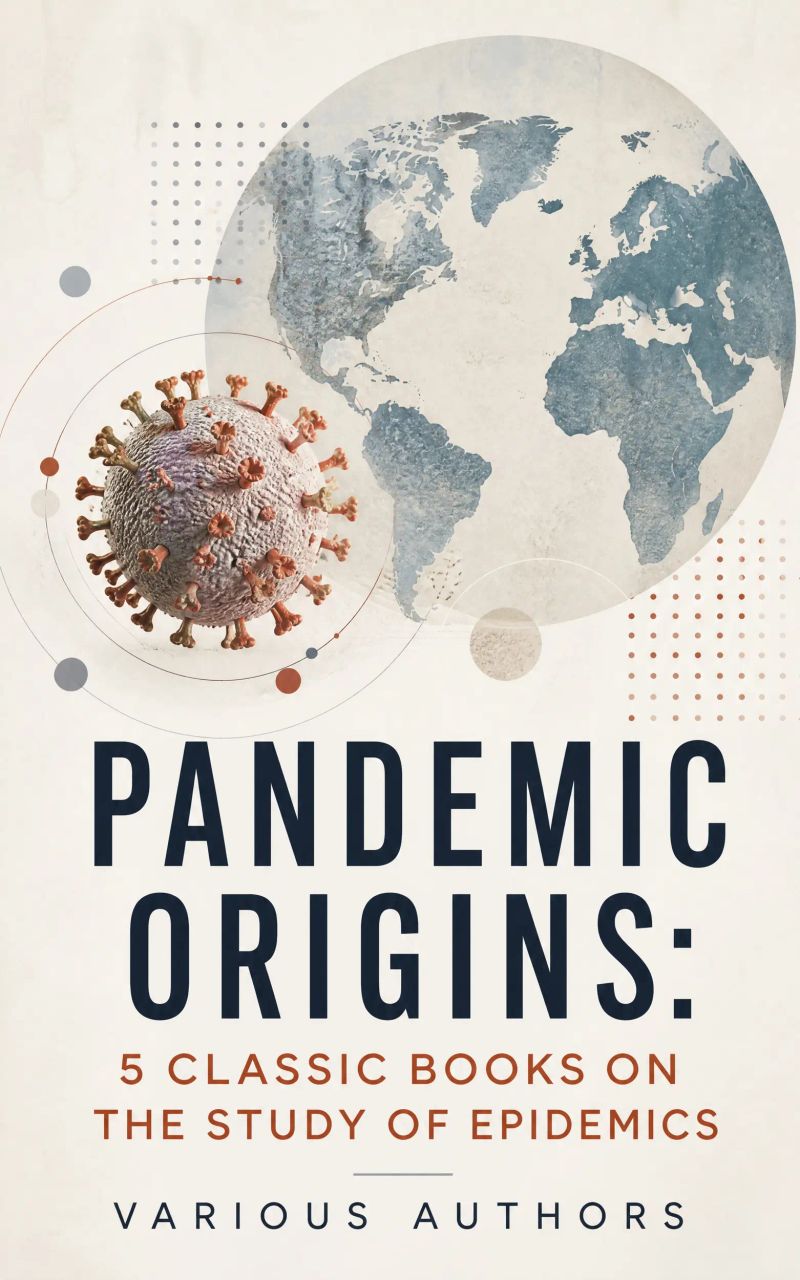
Pandemic Origins: 5 Classic Books on the Study of Epidemics
Classic Writings on Plague, Contagion, Public Health, and SocietyBy Frank P. McNamara, Isabel M. Wason, M. C. Winternitz, John Caius, J. F. C. Hecker, John H. Stokes, University of Pittsburgh. School of Medicine, Provincial Board of Health of Ontario


Length36h 39m
About this audiobook
Pandemic Origins gathers five foundational studies of epidemics into a capacious archive of medical inquiry, public-health observation, and historical interpretation. Across clinical description, epidemiological argument, administrative report, and retrospective analysis, the volume traces how communities have sought to identify contagion, map transmission, and govern collective risk. Its juxtaposition of classic texts illuminates the shifting vocabularies through which epidemic disease became an object of scientific investigation and civic concern. The contributors—Frank P. McNamara, Isabel M. Wason, M. C. Winternitz, John Caius, J. F. C. Hecker, and John H. Stokes—represent distinct moments in the development of medical and historical writing on disease. Their work is complemented by materials associated with the University of Pittsburgh School of Medicine and Ontario's Provincial Board of Health, institutions that underscore the connection between scholarship, clinical practice, and public administration. Together, these voices situate epidemic thought within the long transition from early modern accounts of pestilence to modern bacteriological and public-health frameworks. Recommended for students, historians of medicine, and readers seeking context for contemporary pandemic debates, this collection offers an unusually rich encounter with the intellectual origins of epidemiology. It rewards close reading by placing diverse methods and assumptions in dialogue, revealing both continuities and transformations in how societies understand disease, evidence, and responsibility.
Audiobook details
GenreHistory, Literary Classics
Length36 hrs 39 mins
Narrated byListen with 1,000+ voices
FormateBook with Audio
Publish dateMar 4, 2025
LanguageEnglish
Table of contents
1The Epidemics of the Middle Ages
2THE BLACK DEATH.
3CHAPTER I
4CHAPTER II
5CHAPTER III
Show all chaptersShow less
6CHAPTER IV
7CHAPTER V
8CHAPTER VI
9THE DANCING MANIA.
10CHAPTER II. DANCING MANIA IN ITALY.
11CHAPTER III. DANCING MANIA IN ABYSSINIA.
12CHAPTER IV. SYMPATHY.
13THE SWEATING SICKNESS. (pt. 1)
14THE SWEATING SICKNESS. (pt. 2)
15THE SWEATING SICKNESS. (pt. 3)
16THE SWEATING SICKNESS. (pt. 4)
17The Third Great Plague
18The Third Great Plague
19The Third Great Plague
20Chapter IV
21Chapter VIII
22Chapter XI
23Chapter XIV
24The pathology of influenza
25INTRODUCTION
26THE PATHOLOGY OF THE RESPIRATORY TRACT IN INFLUENZA
27II. INFLUENCE OF THE RESPIRATORY COMPLICATION OF INFLUENZA UPON TUBERCULOSIS OF THE LUNG
28III. EXTRARESPIRATORY LESIONS IN INFLUENZA
29IV. COMPARISON BETWEEN THE RESPIRATORY LESIONS OF INFLUENZA AND THOSE INITIATED BY THE INHALATION OF POISONOUS GASES
30V. PECULIARITIES OF THE HISTOLOGY OF INFLUENZAL PNEUMONIA
31VI. INFECTION AS A POSSIBLE ETIOLOGICAL FACTOR FOR MALIGNANT NEW GROWTHS
32VII. THE BACTERIOLOGY OF INFLUENZAL PNEUMONIA
33VIII. CONCLUSIONS
34Studies on Epidemic Influenza: Comprising Clinical and Laboratory Investigations
35Studies on Epidemic Influenza: Comprising Clinical and Laboratory Investigations
36PREFACE
37HISTORY AND EPIDEMIOLOGY OF INFLUENZA
38A CLINICAL DESCRIPTION OF INFLUENZA AS IT APPEARED IN THE EPIDEMIC OF 1918–1919
39THE URINE AND BLOOD IN EPIDEMIC INFLUENZA
40THE TREATMENT OF INFLUENZA
41THE PREVENTION OF EPIDEMIC INFLUENZA WITH SPECIAL REFERENCE TO VACCINE PROPHYLAXIS (pt. 1)
42THE PREVENTION OF EPIDEMIC INFLUENZA WITH SPECIAL REFERENCE TO VACCINE PROPHYLAXIS (pt. 2)
43PHYSIOLOGICAL AND PHYSIOLOGICAL CHEMICAL OBSERVATIONS IN EPIDEMIC INFLUENZA
44THE BACTERIOLOGY OF EPIDEMIC INFLUENZA WITH A DISCUSSION OF B. INFLUENZÆ AS THE CAUSE OF THIS AND OTHER INFECTIVE PROCESSES
45THE PATHOLOGY OF EPIDEMIC INFLUENZA (pt. 1)
46THE PATHOLOGY OF EPIDEMIC INFLUENZA (pt. 2)
47EXPLANATION OF PLATES
48Influenza
49I. Breaking the channels of communication.
50MISCELLANEOUS CONSIDERATIONS.

A Brief History of IntelligenceMax S. Bennett12h 18m4.6 (6.6K)$29 · $0.00

The Happiest Man on EarthEddie Jaku3h 48m4.6 (178K)$7 · $0.00
MotherlandJulia Ioffe17h 52m4.7 (2.5K)$40 · $0.00

Where Cowards Go to DieBenjamin Sledge8h 42m4.7 (351)$20 · $0.00
RevolutionariesSanjeev Sanyal11h 23m4.6 (2.6K)$29 · $0.00

We Crossed a Bridge and It TrembledWendy Pearlman6h4.6 (5.2K)$24 · $0.00

Unbroken Bonds of BattleJohnny Joey Jones8h 31m4.6 (2.6K)$8 · $0.00
The Daughter of AuschwitzTova Friedman, Malcolm Brabant7h 54m4.6 (16.7K)$26 · $0.00
Lily's PromiseLily Ebert, Dov Forman8h 54m4.6 (16.1K)$29 · $0.00
On Democracies and Death CultsDouglas Murray10h 38m4.6 (6.5K)$29 · $0.00

Across the RiverKent Babb11h 40m4.6 (927)$29 · $0.00

Balcony Over Jerusalem: A Middle East Memoir - Israel, Palestine and BeyondJohn Lyons12h 37m4.6 (1.4K)$33 · $0.00

BeyondStephen Walker15h 39m4.6 (3.2K)$33 · $0.00
Kings and PawnsHoward Bryant10h 9m4.6 (678)$29 · $0.00

No EscapeNury Turkel9h 30m4.6 (809)$28 · $0.00

Jubal Stone: U.S. Marshal: Blood Trail To Hell: A Western Adventure NovelCasey Nash3h 42m4.6 (3.2K)$18 · $0.00

Fall and RiseMitchell Zuckoff17h 23m4.6 (9.8K)$40 · $0.00
The SurvivorJosef Lewkowicz, Michael Calvin9h 22m4.6 (2.5K)$29 · $0.00

Always FaithfulThomas Schueman, Zainullah Zaki12h 12m4.6 (977)$29 · $0.00

The State of Society in France Before the Revolution of 1789 (Annotated)Alexis de Tocqueville17h 25m4.6 (1.2K)$2 · $0.00

To Kill a MockingbirdHarper Lee12h 18m4.5 (7.4M)$29 · $0.00

These Precious DaysAnn Patchett11h 14m4.5 (45.2K)$29 · $0.00

This Side of Paradise - The Original 1920 Edition (Annotated)F. Scott Fitzgerald11h 30m4.6 (1.6K)$2 · $0.00
The Great Gatsby: Original 1925 Edition (An F. Scott Fitzgerald Classic NovelFrancis Scott Fitzgerald4h 45m4.6 (9.3K)$18 · $0.00
TWELFTH NIGHTWilliam Shakespeare, Sidney Lee16h 38m4.6 (2.8K)$1.99 · $0.00

The Complete Histories / History Plays of William Shakespeare (Annotated)William Shakespeare29h 42m4.6 (2.3K)$1.99 · $0.00

Braving the TruthRachel Held Evans11h 31m4.7 (359)$29 · $0.00

The Old Man and the Sea (Annotated)Ernest Hemingway4h 27m4.6 (1.4K)$2 · $0.00
Henry V (The Play, Historical Background and Analysis of the Character in the Play)William Shakespeare, William Hazlitt8h 50m4.6 (1.3K)$1.99 · $0.00

H. P. LOVECRAFT Ultimate Collection: Novellas, Short Stories, Poetry & Essays (Annotated)H. P. Lovecraft12h 28m4.6 (2.3K)$2 · $0.00
Time RegainedMarcel Proust16h 8m4.5 (10.6K)$1.99 · $0.00
The Mis-Education of the NegroCarter Goodwin Woodson4h 32m4.5 (28.4K)$10 · $0.00
Lessons in TruthH. Emilie3h 50m4.6 (1.4K)$4.70 · $0.00

TORAH - Bilingual Edition: English/Hebrew (Annotated)Max Margolis, JPS28h 26m4.6 (1K)$2 · $0.00

Betty Crocker picture cooky bookBetty Crocker, Inc. General Mills2h 13m4.5 (6.5K)$1 · $0.00

The Complete Tales of Beatrix PotterBeatrix Potter3h 36m4.5 (75K)$3 · $0.00

Anne of Green GablesL. M. Montgomery11h 1m4.5 (1.2M)$2.30 · $0.00

Crime and Punishment (The Unabridged Garnett Translation) (Annotated)Fyodor Dostoevsky24h 25m4.5 (15.4K)$1.99 · $0.00

The North American IndianEdward S. Curtis, Frederick Webb Hodge6h4.5 (1.2K)$2 · $0.00

The Picture of Dorian Gray: The Uncensored 13 Chapter Version + The Revised 20 Chapter Version (Annotated)Oscar Wilde16h 12m4.5 (2.8K)$1.99 · $0.00
You may also like
DialoguesSeneca22h 48m4.4 (2.1K)$0.60 · $0.00
Cicero's Tusculan DisputationsMarcus Tullius Cicero13h 15m4.1 (586)$1 · $0.00
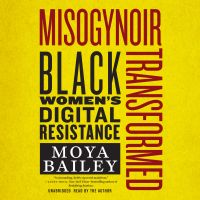
Misogynoir TransformedMoya Bailey9h 13m4.4 (307)$20 · $0.00
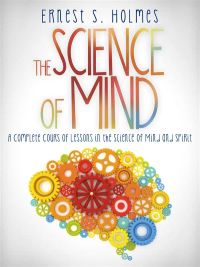
The Science of Mind - A Complete Course of Lessons in the Science of Mind and SpiritErnest S. Holmes11h 52m4.5 (16.5K)$1.70 · $0.00

CHANAKYANEETIB K Chaturvedi5h 45m4.0 (6.4K)$8

The Birthmark (Psychological Thriller)Nathaniel Hawthorne4h 46m3.9 (7.4K)$2 · $0.00
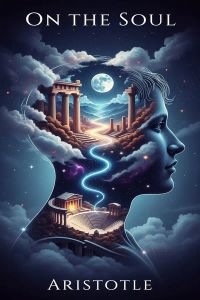
On the SoulAristotle3h 26m4.2 (8.1K)$1.80 · $0.00

ReligionArthur Schopenhauer3h 11m4.0 (1.2K)$21 · $0.00

The World as Will and Idea (Vol. 1-3) (Annotated)Arthur Schopenhauer57h 59m4.4 (1.9K)$2 · $0.00
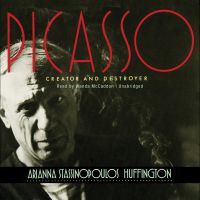
PicassoArianna Huffington19h 30m3.9 (1.4K)$25 · $0.00
The Collected Works (Annotated)Thomas More40h 17m4.5 (11)$2 · $0.00

Aromatherapy UnlockedMei Lin Zhang8h 9m$6.40 · $0.00

The Keys Of HecateValen Aethyr / Virginia Santos5h 39m$9 · $0.00
Accept Criticism - Hypnosis and Guided MeditationJohn Flatcher14m$4 · $0.00

Letter From China: The Worst Chinese New Year EverRICE media26m$6 · $0.00

Chronicles And Letters - First PartFrancisco C. Xavier; Irmão X1h 31m$7 · $0.00
Dancing In The BreezeOSHO17h 18m4.6 (74)$22 · $0.00

The Exhausted MindFarah Zidan1h 58m$5.70 · $0.00

History of the Intellectual Development of Europe (Annotated)John William Draper36h 15m4.1 (192)$1.99 · $0.00
De Medicina (All 8 Volumes) (Annotated)Aulus Cornelius Celsus22h 6m$1.99 · $0.00