
Audio only
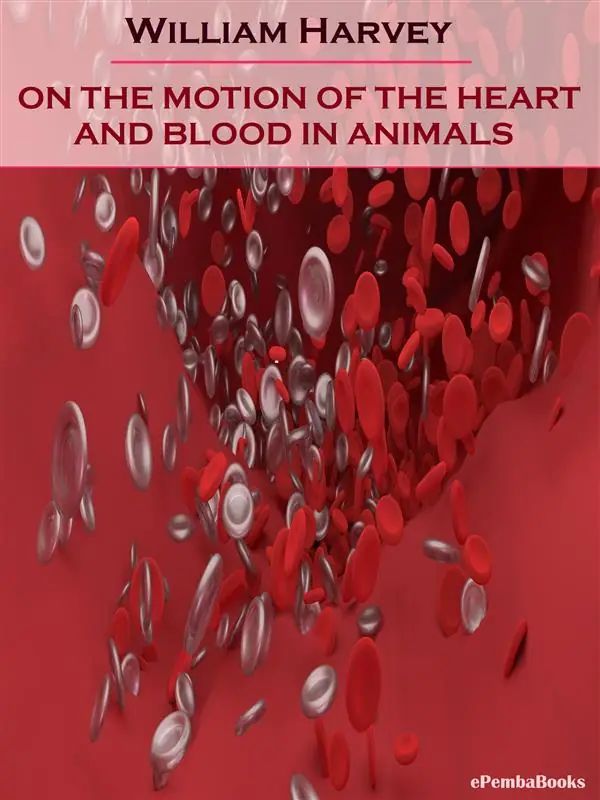
On the Motion of the Heart and Blood in Animals (Annotated)
By William Harvey


Length3h 30m
About this audiobook
This edition includes the following editor's contextual introduction: William Harvey and the study of blood circulation
First published in 1628, “On the Motion of the Heart and Blood in Animals” (Exercitatio Anatomica de Motu Cordis et Sanguinis in Animalibus) is the best-known work of the physician William Harvey, which established the circulation of blood throughout the body.
“On the Motion of the Heart and Blood in Animals” is a landmark in the history of physiology, with Harvey combining observations, experiments, measurements, and hypotheses in an extraordinary fashion to arrive at his doctrine. His work is a model of its kind and had an immediate and far-reaching influence on Harvey's contemporaries.
In his study, Harvey investigated the effect of ligatures on blood flow. The book also argued that blood was pumped around the body in a "double circulation", where after being returned to the heart, it is recirculated in a closed system to the lungs and back to the heart, where it is returned to the main circulation.
“On the Motion of the Heart and Blood in Animals” was originally published in Latin. It was translated into English by Robert Willis (1799-1878) and published in 1847 by the Sydenham Society.
Audiobook details
Rating★★★★ 4.0 (742)
Includes Goodreads, LibraryThing, Amazon, StoryGraph
GenreScience and Nature, Health and Wellness, Psychology
Length3 hrs 30 mins
Narrated byListen with 1,000+ voices
FormateBook with Audio
Publish dateFeb 7, 2022
LanguageEnglish
Table of contents
1William Harvey and the study of blood circulation
2Dedication
3Introduction
4Chapter 1. The Author’s Motives For Writing
5Chapter 2. On The Motions Of The Heart As Seen In The Dissection Of Living Animals
Show all chaptersShow less
6Chapter 3. Of The Motions Of The Arteries, As Seen In The Dissection Of Living Animals
7Chapter 4. Of The Motion Of The Heart And Its Auricles, As Seen In The Bodies Of Living Animals
8Chapter 5. Of The Motion, Action And Office Of The Heart
9Chapter 6. Of The Course By Which The Blood Is Carried From The Vena Cava Into The Arteries, Or From The Right Into The Left Ventricle Of The Heart
10Chapter 7. The Blood Passes Through The Substance Of The Lungs From The Right Ventricle Of The Heart Into The Pulmonary Veins And Left Ventricle
11Chapter 8. Of The Quantity Of Blood Passing Through The Heart From The Veins To The Arteries; And Of The Circular Motion Of The Blood
12Chapter 9. That There Is A Circulation Of The Blood Is Confirmed From The First Proposition
13Chapter 10. The First Position: Of The Quantity Of Blood Passing From The Veins To The Arteries. And That There Is A Circuit Of The Blood, Freed From Objections, And Farther Confirmed By Experiment
14Chapter 11. The Second Position Is Demonstrated
15Chapter 12. That There Is A Circulation Of The Blood Is Shown From The Second Position Demonstrated
16Chapter 13. The Third Position Is Confirmed: And The Circulation Of The Blood Is Demonstrated From It
17Chapter 14. Conclusion Of The Demonstration Of The Circulation
18Chapter 15. The Circulation Of The Blood Is Further Confirmed By Probable Reasons
19Chapter 16. The Circulation Of The Blood Is Further Proved From Certain Consequences
20Chapter 17. The Motion And Circulation Of The Blood Are Confirmed From The Particulars Apparent In The Structure Of The Heart, And From Those Things Which Dissection Unfolds

A Brief History of IntelligenceMax S. Bennett12h 18m4.6 (6.6K)$29 · $0.00
The Story of BirdsSteve Brusatte11h 49m4.6 (401)$29 · $0.00

Black Earth WisdomLeah Penniman11h 54m4.6 (577)$8 · $0.00

Total Cat MojoJackson Galaxy10h 13m4.5 (8.4K)$23 · $0.00

My Life Among the UnderdogsTia Torres5h 51m4.5 (4K)$24 · $0.00

What It Takes to Save a LifeKwane Stewart6h4.6 (556)$24 · $0.00

Pastoral SongJames Rebanks8h 35m4.5 (12K)$26 · $0.00
How Stella Learned to TalkChristina Hunger7h4.5 (10.9K)$24 · $0.00

Craig & FredCraig Grossi8h 6m4.5 (9.6K)$26 · $0.00
Celebrating BirdsNatalia Rojas, Ana Maria Martinez6h 47m4.6 (330)$24 · $0.00

Saving JemimaJulie Zickefoose4h 59m4.5 (749)$20 · $0.00

Will's Red CoatTom Ryan8h 23m4.5 (2.3K)$26 · $0.00
Of Time and TurtlesSy Montgomery10h 34m4.5 (5K)$29 · $0.00

THE WOLF TRILOGY: Call of the Wild, White Fang & The Son of the WolfJack London17h 31m4.5 (2.4K)$1.99 · $0.00

Zen and the Art of Saving the PlanetThich Nhat Hanh9h 20m4.5 (3.9K)$29 · $0.00

BLACK BEAUTY (With Original Illustrations)Anna Sewell7h 31m4.5 (1.3K)$1.99 · $0.00

Bottle of LiesKatherine Eban14h 25m4.4 (12K)$33 · $0.00
IngrainedCallum Robinson8h 10m4.5 (1.1K)$26 · $0.00

The Lion Tracker's Guide To LifeBoyd Varty3h 1m4.4 (4.8K)$18 · $0.00

Born for LoveBruce D. Perry, Maia Szalavitz11h 42m4.4 (4K)$29 · $0.00

A Plague Upon Our HouseScott W. Atlas MD10h 37m4.5 (3.4K)$20 · $0.00

The Cancer CodeDr. Jason Fung10h 48m4.5 (5.3K)$29 · $0.00

The Gift of TherapyIrvin Yalom7h 39m4.5 (38.8K)$26 · $0.00

EarlySarah DiGregorio9h 47m4.5 (1.3K)$29 · $0.00
Bottle of LiesKatherine Eban14h 25m4.4 (12K)$33 · $0.00
The 36-Hour DayNancy L. Mace, Peter V. Rabins17h 13m4.4 (9.2K)$28 · $0.00

FlooredSara Reardon10h 36m4.5 (1K)$29 · $0.00

Radical RemissionKelly A. Turner9h 26m4.4 (8.1K)$29 · $0.00
The Sinatra SolutionStephen T. Sinatra MD9h4.5 (899)$20 · $0.00

The Songaminute ManSimon McDermott6h 12m4.5 (280)$24 · $0.00
Sometimes BrilliantLarry Brilliant12h 27m4.5 (954)$29 · $0.00

Live Your LifeAmanda Kloots, Anna Kloots10h 54m4.4 (13.7K)$29 · $0.00

All in Her HeadElizabeth Comen13h 25m4.4 (18.2K)$33 · $0.00
The Wisdom of Your BodyHillary McBride9h 14m4.4 (6.7K)$29 · $0.00

The Alzheimer's SolutionDean Sherzai, Ayesha Sherzai9h 47m4.4 (1.9K)$29 · $0.00
Rewire Your MindsetBrian Keane6h 49m4.5 (896)$23 · $0.00

Tuning The Human Biofield: Healing With Vibrational MedicineCENTER FOR SOUND THERAPY13h 28m4.4 (2.5K)$35 · $0.00

VaccinatedPaul A. Offit8h 30m4.4 (3.7K)$26 · $0.00

Hot and UnbotheredYana Tallon-Hicks10h 44m4.5 (600)$29 · $0.00
MetabolicalRobert H. Lustig12h 4m4.4 (12.8K)$29 · $0.00
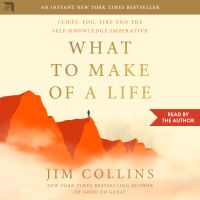
What to Make of a LifeJim Collins13h 31m4.4 (794)$33 · $0.00

Invisible StormJason Kander6h 48m4.7 (3.2K)$24 · $0.00

I Am The StormJanice Dean9h4.6 (1.5K)$8 · $0.00

On Democracies and Death CultsDouglas Murray10h 38m4.6 (6.5K)$29 · $0.00

TerraformPropaganda5h 39m4.7 (594)$24 · $0.00

Southern Horrors: Lynch Law in All Its Phases (Annotated)Ida B. Wells-Barnett2h 44m4.6 (1.3K)$2 · $0.00
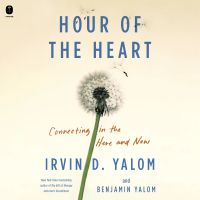
Hour of the HeartIrvin D. Yalom, Benjamin Yalom8h 19m4.6 (2.3K)$26 · $0.00

Braving the TruthRachel Held Evans11h 31m4.7 (359)$29 · $0.00
Level UpRob Dial7h 42m4.6 (3.3K)$26 · $0.00

As a JewSarah Hurwitz8h 36m4.6 (1.2K)$26 · $0.00
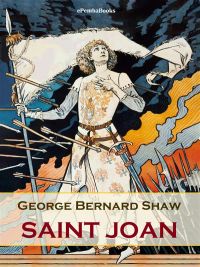
Saint Joan (Annotated)George Bernard Shaw6h 20m4.6 (1.2K)$1.20 · $0.00

Burn the HaystackJennie Young, PhD9h 30m4.6 (543)$29 · $0.00

Woman and the New Race (Annotated)Margaret Sanger6h 30m4.6 (1K)$1.99 · $0.00

Good InsideBecky Kennedy9h 55m4.5 (59.3K)$29 · $0.00
The Mis-Education of the NegroCarter Godwin Woodson5h 4m4.5 (29.4K)$1.20 · $0.00

Du Bois: EssaysW.E.B. Du Bois6h 22m4.6 (1.5K)$1 · $0.00

The North American Indian (Illustrated Edition)Edward S. Curtis, Frederick Webb Hodge5h 59m4.6 (1.4K)$2 · $0.00

Valley of the BirdtailAndrew Stobo Sniderman, Douglas Sanderson10h 1m4.6 (2.4K)$29 · $0.00
Lies My Therapist Told MeGreg E. Gifford9h 3m4.6 (503)$29 · $0.00
Disturbed in Their NestsAlephonsion Deng, Judy A. Bernstein11h 22m4.6 (595)$23 · $0.00
You may also like
The Age of WonderSir Richard Holmes21h 27m4.2 (19.5K)$32

The New OrganonFrancis Bacon9h 3m3.9 (2.3K)$0.60 · $0.00
The Principle of RelativityAlbert Einstein, H. Minkowski7h 43m4.4 (1.4K)$1 · $0.00

Soap-Bubbles and the Forces Which Mould ThemC. V. Boys2h 16m4.2 (340)$2 · $0.00

The Fundamentals of BacteriologyCharles Bradfield Morrey8h 48m$1.99 · $0.00
The Copernicus of Antiquity (Aristarchus of Samos)Thomas Little Sir Heath2h 42m4.1 (18)$1 · $0.00

A Manual of the Antiquity of ManJ. P. MacLean4h 43m$1 · $0.00
The Dragon SeekersChristopher McGowan8h 12m$17

The Letter of Petrus Peregrinus on the Magnet, A.D. 1269De Maricourt active 13th century Pierre1h 41m$2 · $0.00
The Cyclic Universe - A Conversation with Roger PenroseHoward Burton2h 20m4.3 (39)$3 · $0.00

The Chemistry of CookeryW. Mattieu Williams10h 50m$2 · $0.00
Experiments on the Absence of Mechanical Connexion between Ether and MatterOliver Joseph Lodge1h 34m$1 · $0.00

The Analysis of Beauty (Annotated)William Hogarth6h 26m3.9 (139)$2 · $0.00
The Copernicus of Antiquity (Aristarchus of Samos) (Annotated)Thomas Little Sir Heath2h 49m4.1 (18)$2 · $0.00

Radio-Active Substances (Annotated)Marie Curie5h 54m4.4 (105)$2 · $0.00
The Changing Conceptions of the Universe - From Newton to Einstein -Benjamin Harrow, Albert Einstein, Arthur Stanley Eddington, Joseph Sweetman Ames, Joseph John Thomson, Frank Watson Dyson3h 11m3.6 (16)$1.99 · $0.00

Hannibal Crosses the AlpsCecil Torr1h 17m$1 · $0.00
Groundwork of the Metaphysics of Morals (Annotated)Immanuel Kant5h 5m$2 · $0.00

On the Philosophy of Discovery, Chapters Historical and CriticalWilliam Whewell21h 23m$1 · $0.00

Charles Lyell and Modern GeologyT. G. Bonney6h 48m$1 · $0.00