
On English Homophones
Society for Pure English, Tract 02By Robert Bridges


Length2h 22m
About this audiobook
In "On English Homophones," Robert Bridges offers a meticulous exploration of the intricacies and nuances of homophones in the English language. Through a combination of scholarly analysis and poetic finesse, Bridges examines how these often-misunderstood words shape both meaning and communication. His prose is characterized by a blend of clarity and lyrical elegance, drawing connections between phonetic sound and linguistic representation, thus placing homophones within the broader literary and linguistic context of his time. The book stands as a testament to the complexities of language, inviting readers to orchestrate a deeper understanding of pronunciation and its implications for meaning. Robert Bridges (1844-1930), a poet laureate and influential figure in the English literary community, wrote "On English Homophones" during a period of burgeoning interest in phonetics and linguistics. His background in medicine and passion for poetry likely fueled his affinity for the subtleties of language and sound. Bridges' scholarly pursuits reflect his desire to enhance literary clarity and precision, unveiling the power of homophonic relationships in English through an astute linguistic lens. This book is a must-read for linguists, poets, and lovers of the English language alike. By delving into the fascinating realm of homophones, Bridges challenges readers to rethink their understanding of language, offering insights that resonate far beyond the page. Engage with this enlightening text, and discover how sound constructs meaning in profound and often surprising ways.
Audiobook details
GenreOther
Length2 hrs 22 mins
Narrated byListen with 1,000+ voices
FormateBook with Audio
Publish dateSep 4, 2022
LanguageEnglish
Table of contents
1Introduction
2S.P.E.
3BY
4ENGLISH HOMOPHONES
5II. All the following examples involve wh. > w.5
Show all chaptersShow less
6III. Group of Homophones caused by loss of trilled R.6
7IV. The name of a species (of animals, plants, &c.) is often a homophone. Where there is only one alternative meaning, this causes so little inconvenience that the following names (being in that condition) have been excluded from List I.7
8V. The suffix er added to a root often makes homophones. The following are examples. (And see in List VI.)
9VI. Words excluded from the main list for various reasons, their homophony being rightly questioned by many speakers.
10VII. Homophones due only to an inflected form of a word. Comparatives of adjectives, &c.
11VIII. 'False homophones' [see p. 4], doubtful doublets, &c.
12IX. The following words were not admitted into the main class chiefly on account of their unimportance.
131. That homophones are a nuisance.
142. That English is exceptionally burdened with homophones.
154. That the loss due to homophony threatens to impoverish the language.
165. That the South English dialect is a direct and chief cause of homophones.
176. That the mischief is being propagated by phoneticians.
187. On the claim that Southern English has to represent all British speech.
19SUMMARY
More from Robert Bridges

Mere ChristianityC. S. Lewis7h 7m4.4 (519.7K)$24 · $0.00

Her Daily BreadKate Wood12h 57m4.6 (153)$33 · $0.00
The Holy Bible - 1 SamuelKing James2h 13m4.8 (1.6K)$3 · $0.00

The American Standard Bible — The Gospel of MatthewMatthew3h 56m4.7 (3K)$2 · $0.00

Bad Fat Black GirlSesali Bowen6h 32m4.7 (2.8K)$24 · $0.00
The King James Audio Bible New Testament CompleteChristopher Glyn20h 2m4.7 (2.6K)$12 · $0.00
Faiths CheckbookCharles Spurgeon12h 44m4.7 (3.2K)$11 · $0.00
Ten Things I Wish You Knew About Your Child's Mental HealthDr. Billy Garvey4h 53m4.7 (2.4K)$20 · $0.00
Designing Terry Pratchett’s DiscworldPaul Kidby3h 52m4.7 (343)$20 · $0.00
The Chosen Book OneAmanda Jenkins, Kristen Hendricks, Dallas Jenkins3h 8m4.6 (4.9K)$10 · $0.00
The Lives of BrianBrian Johnson9h 45m4.6 (3.5K)$29 · $0.00
Expository Thoughts on the Gospel of LukeJ.C. Ryle27h 13m4.7 (536)$18 · $0.00

CrossroadsKaleb Dahlgren7h 56m4.6 (4.9K)$26 · $0.00

Across the RiverKent Babb11h 40m4.6 (927)$29 · $0.00

Brain Training for RidersAndrea Monsarrat Waldo5h 56m4.7 (550)$19 · $0.00

My Effin' LifeGeddy Lee17h 11m4.6 (13.1K)$40 · $0.00
Kings and PawnsHoward Bryant10h 9m4.6 (678)$29 · $0.00

The Elementia Chronicles #2: The New OrderSean Fay Wolfe11h 17m4.6 (841)$29 · $0.00
The ActsLuke2h 55m4.6 (19.7K)$12 · $0.00

New Testament - Easy NavigationWorld English Bible19h 35m4.6 (1.3K)$1.30 · $0.00
You may also like

Trickle Up PovertyMichael Savage12h 23m4.0 (1.6K)$29 · $0.00

The Authoritarian MomentBen Shapiro6h 12m4.2 (5.8K)$24 · $0.00
After the Ivory Tower FallsWill Bunch11h 12m4.2 (1.3K)$29 · $0.00
It’s Even Worse Than It LooksThomas E. Mann, Norman J. Ornstein6h 43m4.0 (4.6K)$18 · $0.00

Beautiful Country Burn AgainBen Fountain14h 34m4.1 (1K)$33 · $0.00
Outrage, Inc.Derek Hunter7h 51m4.3 (1.3K)$26 · $0.00

The War on WarriorsPete Hegseth8h 10m4.3 (8.2K)$26 · $0.00

AzadiArundhati Roy6h 15m4.2 (5.1K)$17 · $0.00

The Breakdown of Higher EducationJohn M. Ellis7h 47m4.2 (296)$17 · $0.00

The Despot’s ApprenticeBrian Klaas9h 22m4.3 (778)$20

China UnboundJoanna Chiu10h 7m4.2 (912)$20 · $0.00

Rebel City: Hong Kong's Year Of Water And FireSouth China Morning Post Team14h 51m3.8 (68)$15 · $0.00

Alsace-Lorraine under German RuleCharles Downer Hazen6h 10m3.8 (10)$1 · $0.00
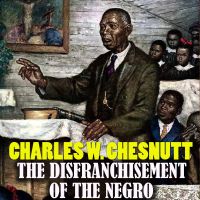
The Disfranchisement of the NegroCharles W. Chesnutt1h 4m4.4 (33)$2 · $0.00
A Lecture The Review of a Century, The Fruit of Five Thousand YearsVictoria Claflin Woodhull1h 51m$2.30

The dawn in RussiaHenry Woodd Nevinson9h 27m$2 · $0.00
Red State UprisingErick Erickson, Lewis K. Uhler6h 37m3.6 (23)$14 · $0.00
The Alternative: A Separate Nationality; or, The Africanization of the SouthWilliam H. Holcombe33m$2 · $0.00

Federalist vs. Anti-Federalist: ALL Essays and Articles in One EditionAlexander Hamilton, James Madison, John Jay, Patrick Henry, Samuel Bryan20h 46m4.5 (133)$0.99 · $0.00

Ten Years Hard LabourChris Williamson12h 13m4.1 (26)$24