
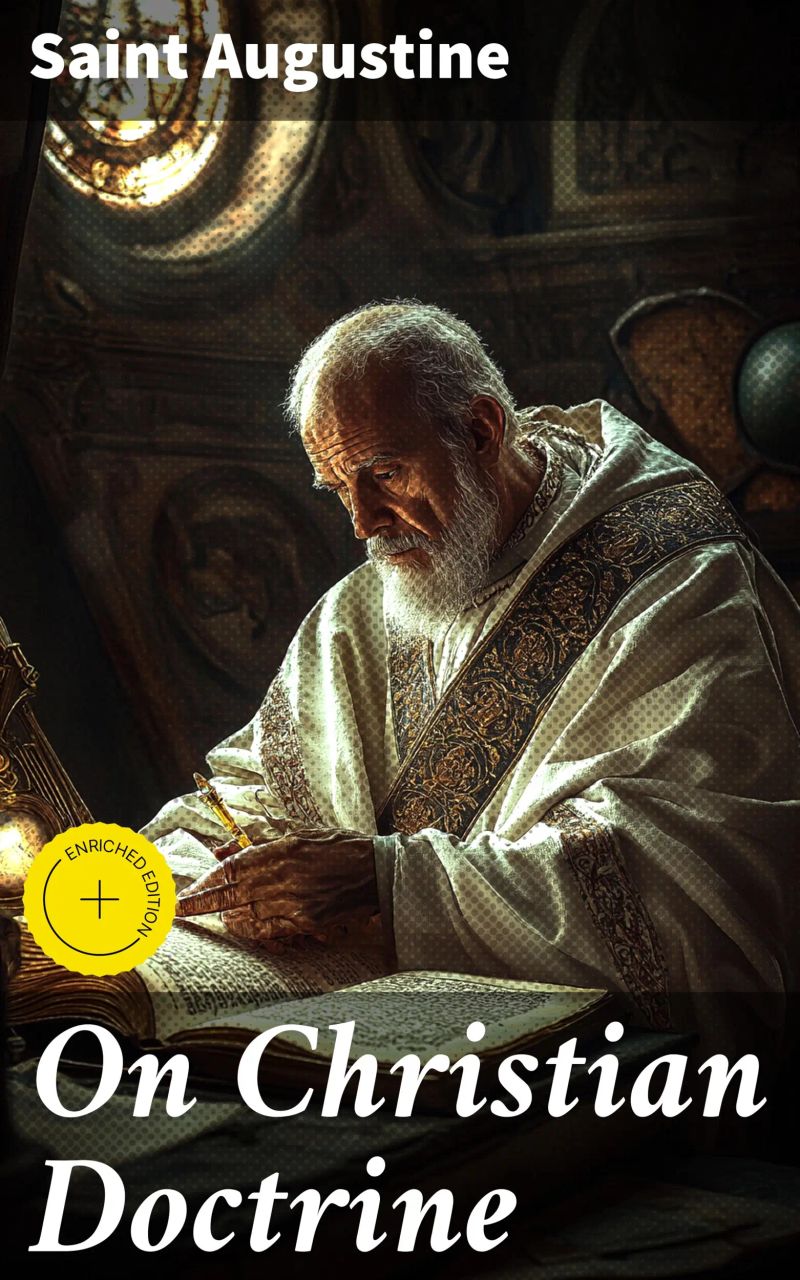
On Christian Doctrine
Enriched edition. Theological Treatise on the Teachings of ScripturesBy Saint Augustine


Length8h 28m
About this audiobook
In "On Christian Doctrine," Saint Augustine offers a profound exploration of Christian theology and its implications for interpreting scripture. Written in a contemplative yet accessible style, Augustine delves into the principles of biblical interpretation, presenting a harmonious blend of faith and reason. The work is framed within the socio-historical context of the late Roman Empire, addressing the challenges faced by Christians in a predominantly pagan society, and serving as both a guide for clerical education and a manifesto for understanding divine truth through scripture. Saint Augustine of Hippo, one of the most influential theologians in Western Christianity, penned this essential text during a time of personal and ecclesiastical self-reflection. His own tumultuous journey from a secular existence to a profound faith informs the heartfelt urgency with which he addresses the need for a proper understanding of Christian doctrine. His background in rhetoric and philosophy underpins the intellectual depth of the work, as he skillfully navigates the complexities of language and divine meaning. This seminal work is recommended for scholars, theologians, and lay readers alike, as it provides invaluable insights into the nature of Christian teaching and the interpretative approach toward scripture. Augustine's synthesis of faith and intellect is not merely historical; it invites readers to engage with their own beliefs critically, offering reflections that resonate with contemporary spiritual and ethical dilemmas.
In this enriched edition, we have carefully created added value for your reading experience:
- A succinct Introduction situates the work's timeless appeal and themes.
- The Synopsis outlines the central plot, highlighting key developments without spoiling critical twists.
- A detailed Historical Context immerses you in the era's events and influences that shaped the writing.
- An Author Biography reveals milestones in the author's life, illuminating the personal insights behind the text.
- A thorough Analysis dissects symbols, motifs, and character arcs to unearth underlying meanings.
- Reflection questions prompt you to engage personally with the work's messages, connecting them to modern life.
- Hand‐picked Memorable Quotes shine a spotlight on moments of literary brilliance.
- Interactive footnotes clarify unusual references, historical allusions, and archaic phrases for an effortless, more informed read.
Audiobook details
Rating★★★★ 4.2 (7.3K)
Includes Goodreads, LibraryThing, Amazon, StoryGraph
GenreSpirituality and Religion
Length8 hrs 28 mins
Narrated byListen with 1,000+ voices
FormateBook with Audio
Publish dateDec 16, 2023
LanguageEnglish
Table of contents
1Introduction
2Introduction
3Synopsis
4Historical Context
5Author Biography
Show all chaptersShow less
6Preface.
7Book I.
8Chapter 1. The Interpretation of Scripture Depends on the Discovery and Enunciation of the Meaning, and is to Be Undertaken in Dependence on God’s Aid.
9Chapter 2. What a Thing Is, and What A Sign.
10Chapter 3. Some Things are for Use, Some for Enjoyment.
11Chapter 4. Difference of Use and Enjoyment.
12Chapter 5. The Trinity the True Object of Enjoyment.
13Chapter 6. In What Sense God is Ineffable.
14Chapter 7. What All Men Understand by the Term God.
15Chapter 8. God to Be Esteemed Above All Else, Because He is Unchangeable Wisdom.
16Chapter 9. All Acknowledge the Superiority of Unchangeable Wisdom to that Which is Variable.
17Chapter 10. To See God, the Soul Must Be Purified.
18Chapter 11. Wisdom Becoming Incarnate, a Pattern to Us of Purification.
19Chapter 12. In What Sense the Wisdom of God Came to Us.
20Chapter 13. The Word Was Made Flesh.
21Chapter 14. How the Wisdom of God Healed Man.
22Chapter 15. Faith is Buttressed by the Resurrection and Ascension of Christ, and is Stimulated by His Coming to Judgment.
23Chapter 16. Christ Purges His Church by Medicinal Afflictions.
24Chapter 17. Christ, by Forgiving Our Sins, Opened the Way to Our Home.
25Chapter 18. The Keys Given to the Church.
26Chapter 19. Bodily and Spiritual Death and Resurrection.
27Chapter 20. The Resurrection to Damnation.
28Chapter 21. Neither Body Nor Soul Extinguished at Death.
29Chapter 22. God Alone to Be Enjoyed.
30Chapter 23. Man Needs No Injunction to Love Himself and His Own Body.
31Chapter 24. No Man Hates His Own Flesh, Not Even Those Who Abuse It.
32Chapter 25. A Man May Love Something More Than His Body, But Does Not Therefore Hate His Body.
33Chapter 26. The Command to Love God and Our Neighbor Includes a Command to Love Ourselves.
34Chapter 27. The Order of Love.
35Chapter 28. How We are to Decide Whom to Aid.
36Chapter 29. We are to Desire and Endeavor that All Men May Love God.
37Chapter 30. Whether Angels are to Be Reckoned Our Neighbors.
38Chapter 31. God Uses Rather Than Enjoys Us.
39Chapter 32. In What Way God Uses Man.
40Chapter 33. In What Way Man Should Be Enjoyed.
41Chapter 34. Christ the First Way to God.
42Chapter 35. The Fulfillment and End of Scripture is the Love of God and Our Neighbor.
43Chapter 36. That Interpretation of Scripture Which Builds Us Up in Love is Not Perniciously Deceptive Nor Mendacious, Even Though It Be Faulty. The Interpreter, However, Should Be Corrected.
44Chapter 37. Dangers of Mistaken Interpretation.
45Chapter 38. Love Never Faileth.
46Chapter 39. He Who is Mature in Faith, Hope and Love, Needs Scripture No Longer.
47Chapter 40. What Manner of Reader Scripture Demands.
48Book II.
49Chapter 1. Signs, Their Nature and Variety.
50Chapter 2. Of the Kind of Signs We are Now Concerned with.
More from Saint Augustine
The City of GodSaint Augustine49h 39m4.2 (21.5K)$1.99 · $0.00
Saint Augustine: On Christian DoctrineSaint Augustine9h 14m4.1 (4.3K)$1.99 · $0.00
The Greatest Books of Spiritual WisdomSaint Augustine, Pope Gregory I, Martin Luther, Friedrich Nietzsche, Thomas Paine, Leo Tolstoy, Athanasius of Alexandria, Gregory of Nyssa, Basil the Great, John of Damascus, Saint Thomas Aquinas, Thomas à Kempis, St. Teresa of Ávila, Brother Lawrence, David Hume, Ludwig Feuerbach, Charles Spurgeon, Andrew Murray, G. K. Chesterton, Arthur Pink, John Stuart Mill, Ralph Waldo Emerson, H. Emilie Cady, James Allen, Prentice Mulford, Florence Scovel Shinn, Wallace D. Wattles476h 59m4.5 (120)$1.99 · $0.00
Philosophy of Religion: A 50-Book AnthologySaint Augustine, Athanasius of Alexandria, Basil the Great, Gregory of Nyssa, Pope Gregory I, John of Damascus, Thomas Aquinas, St. Anselm of Canterbury, Thomas à Kempis, Ignatius of Loyola, St. Teresa of Ávila, Thomas Paine, Jonathan Edwards, Martin Luther, John Calvin, Thomas More, Blaise Pascal, David Hume, R. A. Torrey, George Müller, Nicolas Notovitch, Levi H. Dowling, Ludwig Feuerbach, Friedrich Nietzsche, Charles Spurgeon, Andrew Murray, G. K. Chesterton, Arthur Pink, Fyodor Dostoyevsky, Leo Tolstoy, George MacDonald, Miguel de Unamuno, Stephen Charnock, William Mitchell Ramsay, H. G. Wells, William Blake, John of the Cross, William James, Emanuel Swedenborg, Charles Fillmore, John Donne, John Wesley914h 33m4.4 (17)$1.99

50 Spiritual ClassicsSaint Augustine, U. G. Krishnamurti, Leo Tolstoy, C. H. Spurgeon, William Blake, Kahlil Gibran, John of the Cross, Ignatius of Loyola, Ralph Waldo Emerson, Thomas Browne, Basil the Great, Gregory of Nyssa, St. Teresa of Ávila, Thomas à Kempis, Thomas More, Blaise Pascal, George Müller, Ludwig Feuerbach, Jonathan Edwards, Evelyn Underhill, Charles Spurgeon, G. K. Chesterton, Fyodor Dostoyevsky, George MacDonald, Miguel de Unamuno, Reynold A. Nicholson, Frances Ridley Havergal, H. Emilie Cady, Anne Catherine Emmerich, Henry Scougal, Florence Scovel Shinn, Andrew Murray, Henry Drummond, Epictetus, Mahatma Gandhi, William James, Emanuel Swedenborg, William Walker Atkinson, Joseph Benner, Charles Fillmore, Edwin Sir Arnold, Ignatius of Antioch, John Donne, John Wesley, Helena Blavatsky481h 11m4.1 (677)$1.99
On Christian Doctrine (Annotated)Saint Augustine9h 15m$2 · $0.00

The Battles of Wisdom and Humility (Annotated)Saint Augustine, Pope Gregory I, Martin Luther, Friedrich Nietzsche, Thomas Paine, Leo Tolstoy, Athanasius of Alexandria, Gregory of Nyssa, Basil the Great, John of Damascus, Saint Thomas Aquinas, Thomas à Kempis, St. Teresa of Ávila, Brother Lawrence, David Hume, Ludwig Feuerbach, Charles Spurgeon, Andrew Murray, G. K. Chesterton, Arthur Pink, John Stuart Mill, Ralph Waldo Emerson, H. Emilie Cady, James Allen, Prentice Mulford, Florence Scovel Shinn, Wallace D. Wattles477h 15m$3 · $0.00
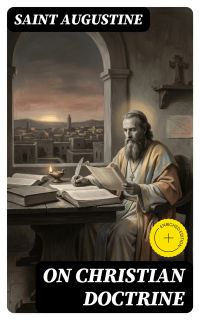
On Christian DoctrineSaint Augustine9h 8m4.2 (6.3K)$2 · $0.00
A Little God Time for Women Morning & Evening DevotionalBroadStreet Publishing Group LLC15h 15m4.9 (1.2K)$10 · $0.00
The Chosen Presents: A Blended Harmony of the GospelsSteve Laube, Amanda Jenkins, Dallas Jenkins7h 8m4.9 (823)$10 · $0.00
Prayers from the Throne RoomBrian Simmons8h 55m4.9 (256)$10 · $0.00
31 Decrees of Blessing for Your LifePatricia King2h 38m4.8 (1.4K)$10 · $0.00

Loved BabySarah Philpott4h 51m4.8 (1.4K)$10 · $0.00

The QuranAllah23h 7m4.7 (136.1K)$1 · $0.00
The Secret of the RosaryLouis de Montfort6h 1m4.7 (16K)$2 · $0.00
The Holy Qur-an: Text, Translation and CommentaryAbdullah Yusuf Ali22h 16m4.7 (133K)$1 · $0.00
All of Grace (Annotated)Charles Spurgeon5h 1m4.7 (1.3K)$1.99 · $0.00
Steps to ChristEllen G. White3h 12m4.7 (13.8K)$2 · $0.00
The Doctrine and Selected CovenantsJoseph Smith13h 53m4.7 (10.4K)$1.99 · $0.00
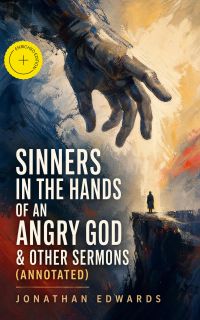
Sinners in the Hands of an Angry God & Other Sermons (Annotated)Jonathan Edwards7h 51m4.7 (1.5K)$2 · $0.00
Swayam Ki AwaazPrem Rawat8h 34m4.7 (1.1K)$26 · $0.00

Behind the BadgeAdam Davis10h 18m4.7 (2.7K)$10 · $0.00
The New Human Revolution, vol. 1Daisaku Ikeda7h 46m4.7 (669)$12 · $0.00

You Are Worth ItKyle Carpenter, Don Yaeger8h 53m4.7 (4.8K)$29 · $0.00
Praying GraceDavid A. Holland3h 2m4.7 (658)$10 · $0.00
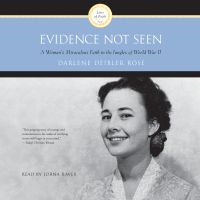
Evidence Not SeenDarlene Deibler Rose11h 11m4.6 (11.9K)$29 · $0.00
The Christ KeyChad Bird, Chad Bird7h 33m4.7 (592)$17.40 · $0.00
He and IGabrielle Bossis10h 12m4.7 (554)$17 · $0.00
You may also like
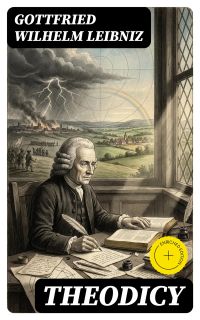
TheodicyGottfried Wilhelm Leibniz19h 32m4.1 (3.4K)$2 · $0.00

EthicsBaruch Spinoza9h 38m4.1 (24.3K)$2 · $0.00
The Works of Dionysius the Areopagite (Annotated)Dionysius the Areopagite11h 37m4.4 (951)$2 · $0.00
Purpose in PrayerE. M. Bounds4h 7m4.4 (1.7K)$12
The Problem of PainC. S. Lewis3h 58m4.3 (135.8K)$12
Reasonable Faith, Third EditionWilliam Lane Craig18h 54m4.4 (5.6K)$23
Systematic TheologyJohn M. Frame50h 1m4.5 (951)$30
Book of ColossiansUnknown Author16m4.7 (1.2K)$8

Ethics (Complete Edition)Baruch Spinoza9h 53m4.2 (27K)$1 · $0.00
Love Divine, All Loves ExcellingBill Brown Jr.13m4.8 (12)$1
The Creator, and what we may know of the method of creationW. H. Dallinger2h 56m$1 · $0.00
Beneath the Cross of JesusBill Brown Jr.14m$1
The Dublin DebateJohn Warwick Montgomery, John Warwick Montgomery1h 17m$6 · $0.00

The titheElmer Bryan Stewart2h 27m$2 · $0.00
Fairest Lord JesusBill Brown Jr.13m$1
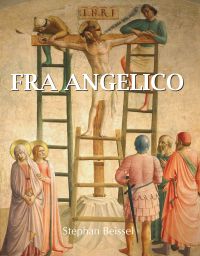
Fra AngelicoStephan Beissel5h 41m$18 · $0.00
Return of the God HypothesisStephen C. Meyer18h 50m$40 · $0.00
Philosophy Talk, Vol. 6John Perry, Ken Taylor8h 18m$20
What is Darwinism?Charles Hodge5h 5m3.9 (143)$1 · $0.00

London Lectures of 1907Annie Besant4h 22m$2 · $0.00