


Length1h 6m
About this audiobook
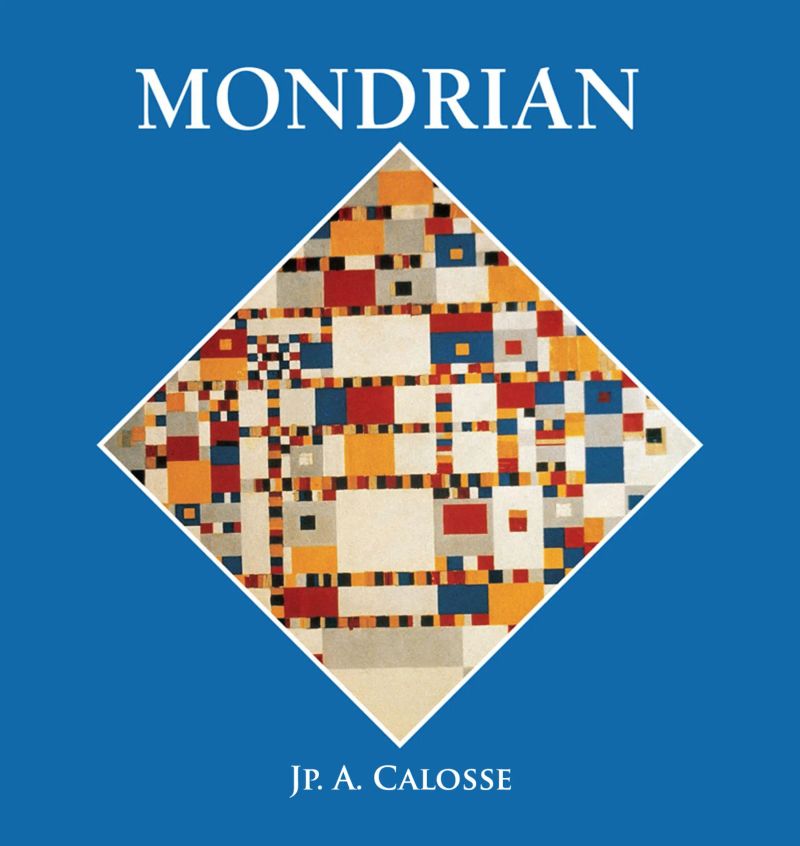
Piet Mondrian (1872-1944), who can be assigned to the school of classical modernism, was born in Amersfort, Netherlands. After studying in Amsterdam, he started his artist´s career in the impressionist style as a figure and landscape painter. His works from these years showed the influence of Vincent Van Gogh (1853-1890) and of Fauvism, a French school from the beginning of the 20th century. When he traveled to Paris in 1911, he discovered Pablo Picasso´s works (1881-1973) and, with that, Cubism. He thereafter became a pioneer of abstract painting in the Netherlands. From the 1920s on, his paintings show a vertical and horizontal composition that, combined with the oppositions of blue, yellow, red, and noncolored spaces, turned into his trademark. His art was very appreciated in New York, where he spent his last years. Mondrian was not only a painter but also an art theoretician and cofounder of the art school De Stijl.
Audiobook details
Rating★★★★ 3.5 (12)
Includes Goodreads
GenreOther
Length1 hr 6 mins
Narrated byListen with 1,000+ voices
FormateBook with Audio
Publish dateDec 22, 2011
LanguageEnglish
Table of contents
11. Victory Boogie-Woogie, 1943-44.
2The Beginning: 1872-1925
32. Last photograph of Mondrian in New York, 1944,
43. The Mill at Domburg, 1909
54. Dune II, 1909.
Show all chaptersShow less
65. Dune, c.1910
76. The Mill, 1907-08.
87. Windmill in the Sunlight, c.1911
98. The Red Tree, 1908.
109. The Grey Tree, 1911
1110. The Tree, 1912.
1211. Nude, c.1912
1312. Composition n°3 with Color Planes, 1917
1413. Oval Composition, 1914.
1514. Composition on White Ground A, 1917.
16The Years Between: 1925-1940
1715. Composition on White Ground B, 1917.
1816. Self-portrait, 1918
1917. Checkerboard, Bright Colors, 1919
2018. Still Life with Ginger Pot, 1911-12.
2119. Composition, Bright Color Planes with Grey Lines, 1919.
2220. Composition with Grey, Red, Yellow and Blue, 1920.
2321. Painting II, 1921-25.
2422. Composition I, 1921.
2523. Composition with Red, Yellow and Blue, 1922.
2624. Composition with Yellow Lines, 1933.
27The Metropolis: 1940-1944
2825. Mondrian’s Rue du Départ studio
2926. Composition II with Blue Square.1936-42.
3027. Painting I, 1926.
3128. Mondrian entry pages in Katherine Dreier’s catalog for Brooklyn Exhibition, New York, 1926
3229. Composition with Blue and Yellow.
3330. Opposition of Lines: Red and Yellow, 1937.
3431. Composition with Red, Yellow and Blue, 1939-42.
3532. Composition with Red, Yellow and Blue, 1939-42.
3633. New York City II (unfinished), 1942.
3734. First page of article: “Twelve Artists in U.S. Exile,” Fortune Magazine,
3835. New York City, 1941-1942.
3936. Photograph of Mondrian in his first New York studio, fall 1941
4037. New York City III (unfinished), 1942.
41Mondrian's New York Works: Theory and Practice
4239. Place de la Concorde, 1938-43.
4340. Broadway Boogie-Woogie, 1942-43.
4441. Mondrian’s sketch for Victory Boogie-Woogie, c.1943.
4542. Trafalgar Square, 1939-43.
4643. View in first American Abstract Artists Exhibition, Squibb Galleries, 1937
4744. Composition I with Blue and Yellow, 1925.
4845. Composition in White, Black and Red, 1936.
49The Immediate Followers
5046. Composition with Red, Yellow and Blue.
Edgar Degas et œuvres d'artJp. A. Calosse1h 17m$15 · $0.00
Pablo Picasso 1881 - 1914Jp. A. Calosse1h 23m4.6 (11)$8 · $0.00
Paul Gauguin und KunstwerkeJp. A. Calosse2h 1m$15 · $0.00
Van GoghJp. A. Calosse1h 10m$8 · $0.00
Nudes 120 illustrationsJp. A. Calosse1h 27m3.4 (17)$15 · $0.00
Paul Gauguin et œuvres d'artJp. A. Calosse3h 30m$15 · $0.00
Goya et œuvres d'artJp. A. Calosse1h 43m4.2 (23)$15 · $0.00
Goya 1746-1828Jp. A. Calosse39m3.7 (13)$15 · $0.00
LoveJp. A. Calosse1h 24m4.4 (12)$15 · $0.00
Love 120 illustrationsJp. A. Calosse1h 43m$15 · $0.00
The Origin of the WorldJp. A. Calosse, Hans-Jürgen Döpp1h 26m3.8 (30)$15 · $0.00
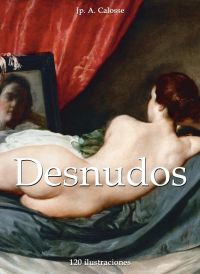
Desnudos 120 ilustracionesJp. A. Calosse1h 35m4.3 (10)$15 · $0.00

Der Ursprung der WeltJp. A. Calosse, Hans-Jürgen Döpp1h 44m3.4 (14)$15 · $0.00
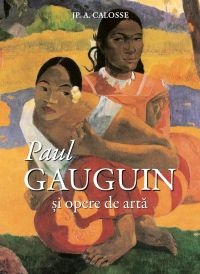
Paul Gauguin și opere de artăJp. A. Calosse1h 32m3.8 (37)$15 · $0.00
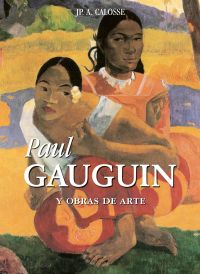
Paul Gauguin y obras de arteJp. A. Calosse1h 30m4.1 (18)$15 · $0.00
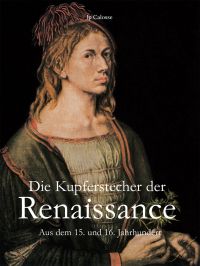
Die Kupferstecher der RenaissanceJp. A. Calosse5h 7m$18 · $0.00
Le Nu 120 illustrationsJp. A. Calosse1h 35m$15 · $0.00
Leonardo da VinciJp. A. Calosse1h 34m4.0 (49)$8 · $0.00

James McNeill WhistlerJp. A. Calosse1h 27m4.1 (17)$8 · $0.00
Leonard Da VinciJp. A. Calosse1h 40m4.2 (46)$8 · $0.00
Mere ChristianityC. S. Lewis7h 7m4.4 (519.7K)$24 · $0.00

Her Daily BreadKate Wood12h 57m4.6 (153)$33 · $0.00
The Holy Bible - 1 SamuelKing James2h 13m4.8 (1.6K)$3 · $0.00

The American Standard Bible — The Gospel of MatthewMatthew3h 56m4.7 (3K)$2 · $0.00

Bad Fat Black GirlSesali Bowen6h 32m4.7 (2.8K)$24 · $0.00

The King James Audio Bible New Testament CompleteChristopher Glyn20h 2m4.7 (2.6K)$12 · $0.00

Faiths CheckbookCharles Spurgeon12h 44m4.7 (3.2K)$11 · $0.00

Ten Things I Wish You Knew About Your Child's Mental HealthDr. Billy Garvey4h 53m4.7 (2.4K)$20 · $0.00

Designing Terry Pratchett’s DiscworldPaul Kidby3h 52m4.7 (343)$20 · $0.00
The Chosen Book OneAmanda Jenkins, Kristen Hendricks, Dallas Jenkins3h 8m4.6 (4.9K)$10 · $0.00

The Lives of BrianBrian Johnson9h 45m4.6 (3.5K)$29 · $0.00
Expository Thoughts on the Gospel of LukeJ.C. Ryle27h 13m4.7 (536)$18 · $0.00

CrossroadsKaleb Dahlgren7h 56m4.6 (4.9K)$26 · $0.00

Across the RiverKent Babb11h 40m4.6 (927)$29 · $0.00

Brain Training for RidersAndrea Monsarrat Waldo5h 56m4.7 (550)$19 · $0.00

My Effin' LifeGeddy Lee17h 11m4.6 (13.1K)$40 · $0.00
Kings and PawnsHoward Bryant10h 9m4.6 (678)$29 · $0.00

The Elementia Chronicles #2: The New OrderSean Fay Wolfe11h 17m4.6 (841)$29 · $0.00

The ActsLuke2h 55m4.6 (19.7K)$12 · $0.00

New Testament - Easy NavigationWorld English Bible19h 35m4.6 (1.3K)$1.30 · $0.00
You may also like

Mavericks At WorkWilliam C. Taylor, Polly G. LaBarre5h 54m3.8 (1K)$24 · $0.00

As I see the world (Translated)Albert Einstain3h 6m4.2 (29.4K)$6.80 · $0.00
The Economy of CitiesJane Jacobs8h 59m4.2 (1.6K)$20

How the Internet HappenedBrian McCullough13h 28m4.3 (2.7K)$23 · $0.00
A History of Video Games in 64 ObjectsWorld Video Game Hall of Fame7h 41m4.1 (477)$26 · $0.00
Leonardo Da VinciKathleen Krull2h 14m4.1 (371)$15
Inventions, Researches and Writings of Nikola TeslaNikola Tesla, Thomas Commerford Martin21h 46m4.2 (2.1K)$2 · $0.00

Crushing It!Gary Vaynerchuk8h 2m4.2 (15.2K)$26 · $0.00
The Speed of SoundScott Eyman13h 39m4.2 (368)$23

Come Fly The WorldJulia Cooke7h 33m3.9 (16.7K)$26 · $0.00

The American LanguageH. L. Mencken10h 52m4.1 (554)$2 · $0.00

Where Are Your Boys Tonight?Chris Payne13h 54m4.4 (5.3K)$33 · $0.00
The Man Who Designed the FutureB. Alexandra Szerlip16h 49m3.6 (95)$23

Prince in the StudioJake Brown5h 46m3.7 (103)$20

The Story of Men's UnderwearShaun Cole9h 28m$18 · $0.00
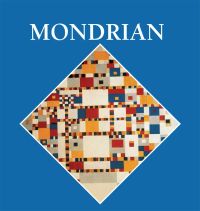
MondrianJp. A. Calosse1h 2m3.5 (12)$8 · $0.00
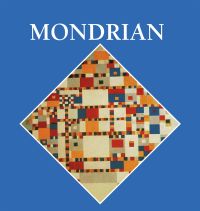
MondrianJp. A. Calosse1h 3m3.5 (12)$8 · $0.00

THE FUTURE IN AMERICA (Illustrated)H. G. Wells6h 48m3.3 (16)$2 · $0.00
Type and Presses in AmericaFrederick W. Hamilton1h 14m$2.30
The Theory of Relativity and Its Influence on Scientific ThoughtArthur Eddington2h 28m$2 · $0.00