

Lord Milner's Work in South Africa
From its Commencement in 1897 to the Peace of Vereeniging in 1902By W. Basil Worsfold


Length12h 24m
About this audiobook
In "Lord Milner's Work in South Africa," W. Basil Worsfold offers an incisive examination of Alfred Milner's pivotal role in shaping South African politics during the early 20th century, particularly in the aftermath of the Second Anglo-Boer War. The book employs a critical historical narrative style, meticulously weaving together extensive primary sources and personal anecdotes that illuminate Milner's policies and their profound implications on British Imperial ambitions. Worsfold situates Milner within the broader context of imperialist thought, highlighting the complexities of governance, economic exploitation, and social transformation during a tumultuous era marked by conflict and colonial expansion. Worsfold, an acclaimed historian with a focus on British imperialism, draws upon his extensive background in political history and engagement with contemporary colonial debates to articulate nuanced perspectives on Milner's character and influence. His scholarly rigor reflects years of accessible research and analysis, making this work not only a biography of a crucial historical figure but also an insightful critique of imperial ideology and its ramifications on South African society. For readers intrigued by imperial history and its lasting legacies, Worsfold's insightful text serves as an essential addition to the canon of colonial studies. This book is a must-read for anyone seeking to understand the intricate dynamics of power, governance, and national identity within the context of South Africa's colonial past.
Audiobook details
GenreHistory
Length12 hrs 24 mins
Narrated byListen with 1,000+ voices
FormateBook with Audio
Publish dateNov 22, 2022
LanguageEnglish
Table of contents
1CHAPTER II
7CHAPTER VIII
2CHAPTER III
8CHAPTER IX
3CHAPTER IV
9CHAPTER X
4CHAPTER V
10CHAPTER XI
5CHAPTER VI
11CHAPTER XII (pt. 1)
Show all chaptersShow less
6CHAPTER VII
12CHAPTER XII (pt. 2)
More from W. Basil Worsfold

A Brief History of IntelligenceMax S. Bennett12h 18m4.6 (6.6K)$29 · $0.00

Where Cowards Go to DieBenjamin Sledge8h 42m4.7 (351)$20 · $0.00

RevolutionariesSanjeev Sanyal11h 23m4.6 (2.6K)$29 · $0.00

We Crossed a Bridge and It TrembledWendy Pearlman6h4.6 (5.2K)$24 · $0.00

Unbroken Bonds of BattleJohnny Joey Jones8h 31m4.6 (2.6K)$8 · $0.00

The Daughter of AuschwitzTova Friedman, Malcolm Brabant7h 54m4.6 (16.7K)$26 · $0.00

Lily's PromiseLily Ebert, Dov Forman8h 54m4.6 (16.1K)$29 · $0.00

On Democracies and Death CultsDouglas Murray10h 38m4.6 (6.5K)$29 · $0.00

Across the RiverKent Babb11h 40m4.6 (927)$29 · $0.00

Balcony Over Jerusalem: A Middle East Memoir - Israel, Palestine and BeyondJohn Lyons12h 37m4.6 (1.4K)$33 · $0.00

BeyondStephen Walker15h 39m4.6 (3.2K)$33 · $0.00
Kings and PawnsHoward Bryant10h 9m4.6 (678)$29 · $0.00

No EscapeNury Turkel9h 30m4.6 (809)$28 · $0.00

Jubal Stone: U.S. Marshal: Blood Trail To Hell: A Western Adventure NovelCasey Nash3h 42m4.6 (3.2K)$18 · $0.00

Fall and RiseMitchell Zuckoff17h 23m4.6 (9.8K)$40 · $0.00

The SurvivorJosef Lewkowicz, Michael Calvin9h 22m4.6 (2.5K)$29 · $0.00

Always FaithfulThomas Schueman, Zainullah Zaki12h 12m4.6 (977)$29 · $0.00

The State of Society in France Before the Revolution of 1789 (Annotated)Alexis de Tocqueville17h 25m4.6 (1.2K)$2 · $0.00

All the Gallant MenDonald Stratton, Ken Gire5h 55m4.6 (11.8K)$24 · $0.00
Saint Joan (Annotated)George Bernard Shaw6h 20m4.6 (1.2K)$1.20 · $0.00
You may also like

The Cold War's Killing FieldsPaul Thomas Chamberlin22h 31m4.3 (939)$46 · $0.00
HellenicaXenophon15h 2m4.2 (4.4K)$1 · $0.00

Capital and IdeologyThomas Piketty48h 57m4.4 (7.2K)$40

History of the United States During Thomas Jefferson's Administrations (Complete 4 Volumes)Henry Adams52h 49m4.4 (362)$1.99 · $0.00

The Iraq WarJohn Keegan8h 6m3.7 (1.3K)$17
On The Duty of Civil DisobedienceDavid Thoreau1h 6m4.0 (115K)$1 · $0.00
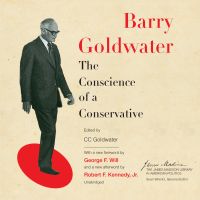
The Conscience of a ConservativeBarry Goldwater, CC Goldwater4h 7m4.0 (14.7K)$20

The Trump CenturyLou Dobbs10h 43m4.2 (1.3K)$29 · $0.00

How to Test Negative for StupidJohn Kennedy8h 13m4.7 (9.7K)$28 · $0.00

The Communist ManifestoKarl Marx, Friedrich Engels2h 13m3.9 (252.7K)$2 · $0.00
The Poverty of PhilosophyKarl Marx6h 21m4.0 (1.9K)$24 · $0.00

Debunking Howard ZinnMary Grabar11h 45m3.9 (2K)$23

Lord Milner's Work in South AfricaW. Basil Worsfold12h 25m$1 · $0.00

History of the United States of America, Volume IIIGeorge Bancroft20h 9m3.9 (26)$30

Black America: A Study Of The Ex-Slave And His Late MasterSir W. Laird Clowes6h 24m$3

The Great ConspiracyJohn Alexander Logan26h 53m3.8 (17)$1.99 · $0.00

The Struggle for Imperial Unity: Recollections & ExperiencesGeorge T. Denison8h 42m$2 · $0.00

West Pointers and the Civil WarWayne Wei-siang Hsieh8h 58m3.6 (30)$20

The Foundation of one NationThomas Paine, Alexander Hamilton, James Madison, John Jay26h 31m$1.99 · $0.00

A Century of WrongJan Christiaan Smuts6h 34m$1 · $0.00