
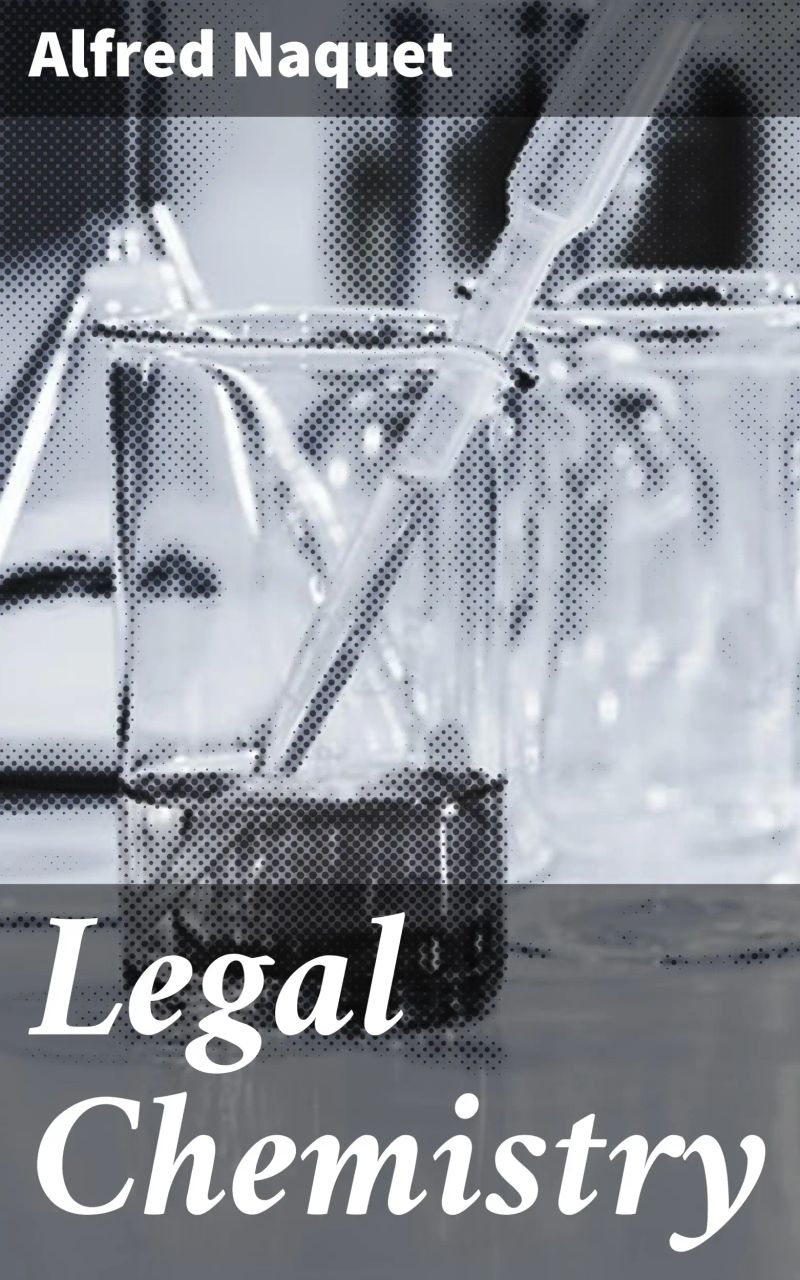
Legal Chemistry
A Guide to the Detection of Poisons, Examination of Tea, Stains, Etc., as Applied to Chemical JurisprudenceBy Alfred Naquet


Length5h 52m
About this audiobook
In "Legal Chemistry," Alfred Naquet masterfully merges the realms of science and law, providing a groundbreaking analysis of the implications of chemistry in the legal context of the late 19th century. The book explores the nascent intersection of forensic science and legal studies, illustrating how chemical analysis could serve as pivotal evidence in legal proceedings. Naquet employs a clear, didactic style that aids accessibility while maintaining a scholarly rigor, situating his discourse within the intellectual currents of his time, marked by rapid advancements in both chemistry and legal frameworks. Alfred Naquet, a prominent chemist and legal scholar, was at the forefront of advocating for the integration of scientific methodology into legal practice. His extensive academic background in chemistry, coupled with his experiences navigating the judicial system, inspired him to articulate the necessity of scientific precision in legal matters. Naquet's contributions to both fields highlight his commitment to fostering a greater understanding of how chemistry can enhance justice and truth. This seminal work is recommended for scholars of both law and science who seek to understand the foundational principles of forensic chemistry. Naquet's insights remain relevant today, illuminating the enduring relationship between scientific inquiry and legal accountability.
Audiobook details
GenrePolitics and Government
Length5 hrs 52 mins
Narrated byListen with 1,000+ voices
FormateBook with Audio
Publish dateDec 10, 2019
LanguageEnglish
Table of contents
1PREFACE.
2I. METHODS OF DESTRUCTION OF THE ORGANIC SUBSTANCES.: DIALYSIS.
3II. DETECTION OF POISONS, THE PRESENCE OF WHICH IS SUSPECTED.
4DETECTION OF ARSENIC.
5METHOD USED PRIOR TO MARSH'S TEST.
Show all chaptersShow less
6MARSH'S TEST.
7RASPAIL'S METHOD.
8DETECTION OF ANTIMONY.
9APPARATUS PROPOSED BY FLANDIN AND DANGER.
10NAQUET'S APPARATUS.
11DETECTION OF MERCURY.
12SMITHSON'S PILE.
13APPARATUS PROPOSED BY FLANDIN AND DANGER.
14DETECTION OF PHOSPHORUS.
15ORFILA'S METHOD.
16MITSCHERLICH'S METHOD.
17DUSART'S METHOD, AS MODIFIED BY BLONDLOT.
18METHOD PROPOSED BY FRESENIUS AND NEUBAUER.
19DETECTION OF PHOSPHORUS BY THE USE OF BISULPHIDE OF CARBON.
20DETECTION OF PHOSPHOROUS ACID.
21ESTIMATION OF PHOSPHORUS.
22DETECTION OF ACIDS.
23HYDROCHLORIC ACID.
24NITRIC ACID.
25SULPHURIC ACID.
26PHOSPHORIC ACID.
27OXALIC ACID.
28ACETIC ACID.
29HYDROCYANIC ACID.
30ALKALIES AND ALKALINE EARTHS.
31DETECTION OF CHLORINE, BROMINE, AND IODINE.
32CHLORINE AND BLEACHING CHLORIDES.
33BROMINE.
34IODINE.
35DETECTION OF METALS.
36TREATMENT OF RESIDUE A.
37TREATMENT OF FILTRATE B.
38DETECTION OF ALKALOIDS AND SOME ILL-DEFINED ORGANIC SUBSTANCES.[L]
39STAS'S METHOD.
40MODIFICATIONS TO STAS'S METHOD, PROPOSED BY OTTO.
41MODIFICATIONS TO STAS'S METHOD, PROPOSED BY USLAR AND ERDMAN.
42RODGERS AND GIRDWOOD'S METHOD.
43PROLLIUS'S METHOD.
44GRAHAM AND HOFMAN'S METHOD.
45APPLICATION OF DIALYSIS IN THE DETECTION OF ALKALOIDS.
46IDENTIFICATION OF THE ALKALOID.
47IDENTIFICATION OF DIGITALINE, PICROTOXINE AND COLCHICINE.
48III. METHODS TO BE EMPLOYED, WHEN NO CLEW TO THE NATURE OF THE POISON PRESENT CAN BE OBTAINED.
49INDICATIVE TESTS.
50THE SUBSTANCE POSSESSES AN ACID REACTION.
RiggedMollie Hemingway12h 48m4.6 (4.2K)$23 · $0.00

SledgehammerDavid Friedman8h 21m4.7 (589)$26 · $0.00
Citizenship in a Republic (Annotated)Theodore Roosevelt2h 44m4.6 (1.4K)$2 · $0.00
No EscapeNury Turkel9h 30m4.6 (809)$28 · $0.00

Always FaithfulThomas Schueman, Zainullah Zaki12h 12m4.6 (977)$29 · $0.00
UnthinkableJamie Raskin15h 8m4.5 (9.3K)$8 · $0.00
My Fourth Time, We DrownedSally Hayden13h 59m4.6 (2.9K)$23 · $0.00
A Revolution of Common SenseScott Jennings9h 29m4.6 (528)$29 · $0.00
Statement From the Dock at the Rivonia TrialNelson Mandela2h 18m4.6 (1.3K)$1 · $0.00
Lessons from the EdgeMarie Yovanovitch17h 11m4.5 (5.9K)$40 · $0.00
To Rescue the American SpiritBret Baier10h 12m4.5 (2.7K)$8 · $0.00

StonewalledSharyl Attkisson15h 19m4.5 (4.3K)$33 · $0.00
The World According to Orwell: 1984 & Animal FarmGeorge Orwell15h 42m4.6 (1.1K)$1 · $0.00
Basic EconomicsThomas Sowell18h 32m4.5 (29.3K)$28 · $0.00
To Rescue the RepublicBret Baier, Catherine Whitney11h 42m4.5 (8.6K)$29 · $0.00
Modern WarriorsPete Hegseth7h 10m4.5 (4.7K)$24 · $0.00
Philosophy and Opinions of Marcus Garvey (Annotated)Marcus Mosiah Garvey4h 42m4.5 (1.7K)$1.99 · $0.00

A Plague Upon Our HouseScott W. Atlas MD10h 37m4.5 (3.4K)$20 · $0.00

One Bright MoonAndrew Kwong12h 21m4.5 (813)$29 · $0.00
CredibleDeborah Tuerkheimer8h 5m4.6 (551)$26 · $0.00
You may also like

The Middle Temple MurderJ. S. Fletcher8h 25m3.9 (1.1K)$2 · $0.00
The Seven Dials MysteryAgatha Christie8h 18m3.9 (62.6K)$1.99 · $0.00
Mystery in the ChannelFreeman Wills Crofts8h 49m3.8 (1.8K)$2 · $0.00

GanglandJared Savage9h 21m4.4 (1.4K)$29 · $0.00

The Pale HorseAgatha Christie6h 43m4.0 (46.3K)$24 · $0.00
The Middle Temple MurderJ. S. Fletcher8h 24m3.8 (1.2K)$2.30
The Seven Dials MysteryAgatha Christie7h 47m3.9 (49.9K)$26 · $0.00
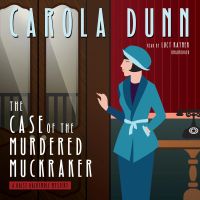
The Case of the Murdered MuckrakerCarola Dunn8h 3m3.7 (3.9K)$20
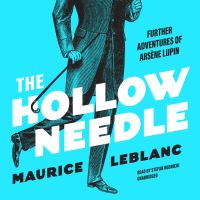
The Hollow NeedleMaurice Leblanc7h 22m4.0 (8.8K)$17
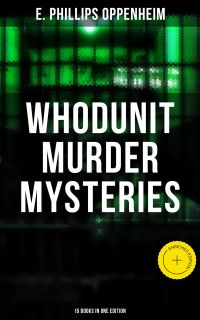
Whodunit Murder Mysteries: 15 Books in One EditionE. Phillips Oppenheim110h4.0 (17)$1.99 · $0.00
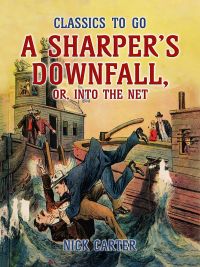
A Sharper's Downfall, or, Into the NetNick Carter7h 16m$2.30
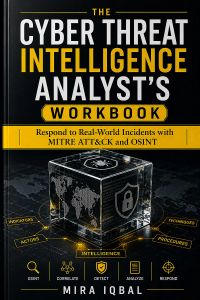
The Cyber Threat Intelligence Analyst's WorkbookMira Iqbal7h 44m$5 · $0.00
TRUE CRIME: British Murder MysteriesArthur Conan Doyle5h 42m3.9 (22)$2 · $0.00
The Master Detective: Being Some Further Investigations of Christopher QuarlesPercy James Brebner7h 7m3.7 (11)$1 · $0.00
Final Proof; Or, The Value of EvidenceRodrigues Ottolengui7h 41m3.8 (16)$2 · $0.00
The Greatest Works of J. S. Fletcher (64+ Titles in One Illustrated Edition)J. S. Fletcher222h 12m4.4 (11)$2.99 · $0.00
The Pit-Prop SyndicateFreeman Wills Crofts10h 40m3.7 (777)$2.30
DETECTIVE CALEB SWEETWATER MYSTERIES (Thriller Trilogy)Anna Katharine Green29h 13m4.3 (12)$1.99 · $0.00
The Greatest Murder Mysteries of Émile GaboriauÉmile Gaboriau177h 34m$1.99 · $0.00
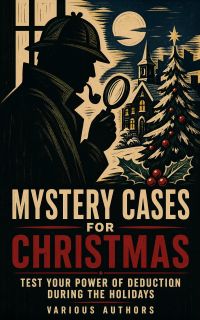
Mystery Cases For Christmas – Test your Power of Deduction During the HolidaysArthur Conan Doyle, Edgar Wallace, O. Henry, R. Austin Freeman, G. K. Chesterton, Emmuska Orczy, Arthur Cheney Train, Wilkie Collins, Fred M White, Thomas Hardy, Sabine Baring-Gould, Robert Barr, Katherine Rickford, Catherine L. Pirkis13h 44m$1.99 · $0.00