
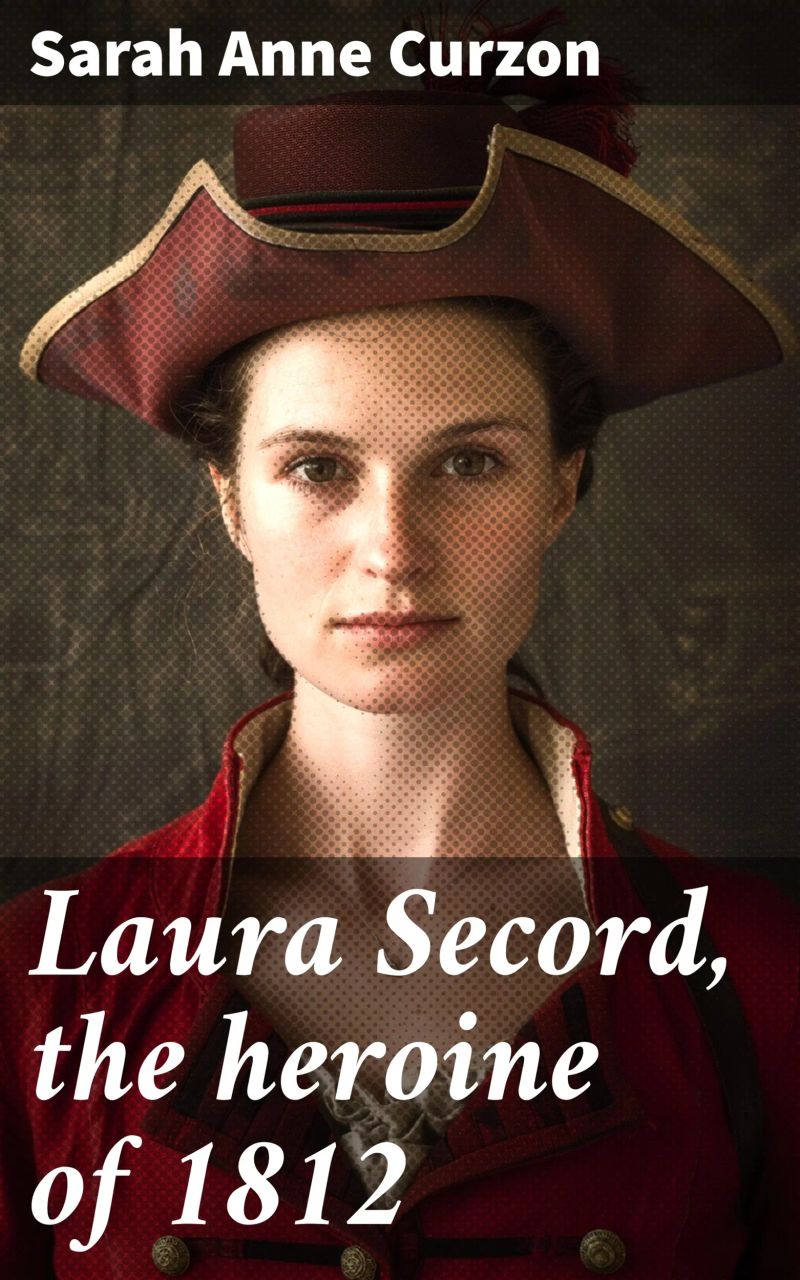
Laura Secord, the heroine of 1812
A Drama; and Other PoemsBy Sarah Anne Curzon


Length5h 22m
About this audiobook
In "Laura Secord, the Heroine of 1812," Sarah Anne Curzon crafts a compelling narrative that interweaves historical fact with rich character development, illuminating the pivotal role played by Laura Secord during the War of 1812. Through a vivid literary style characterized by dynamic prose and vivid imagery, Curzon portrays Secord not merely as a passive figure of her era but as a determined protagonist whose bravery and tenacity shaped the outcome of key events. The book situates Secord within broader themes of nationalism and female agency, reflecting the burgeoning Canadian identity amid conflict and the undercurrent of feminist thought prevalent in the 19th century. Sarah Anne Curzon, a Canadian author and poet, was inspired by the romanticized tales of patriotism and valor she encountered in her youth. Educated in a rapidly evolving Canada, Curzon's writings frequently explore the intersections of gender and history. Her deep admiration for Secord reflects an understanding of both the societal limitations faced by women of her time and their extraordinary capabilities, pushing Curzon to bring this historical figure to the forefront of Canadian consciousness. This book is a must-read for anyone interested in Canadian history, women's studies, or the literary explorations of wartime narratives. Curzon'Äôs work not only revives interest in a vital historical figure but also encourages reflections on bravery, resilience, and the often-overlooked contributions of women to national narratives.
Audiobook details
GenreHistory
Length5 hrs 22 mins
Narrated byListen with 1,000+ voices
FormateBook with Audio
Publish dateNov 17, 2023
LanguageEnglish
Table of contents
1SCENE 2.—The same place and the same hour.
2SCENE 3.—Mrs. Secord's bedroom. She is walking up and down in much agitation.
3SCENE 4—Daybreak on the 23rd June, 1813.
4SCENE 5.—The Road at the foot of Queenston Heights.
5SCENE 1.—The great kitchen at St. David's Mill. Breakfast-time.
Show all chaptersShow less
6SCENE 2.—A beautiful glade.
7SCENE 3—A thick wood through which runs a forest path, leading to a high beech ridge.
8SCENE 4.—The forest, with the sun nearly below the horizon, its rays illuminate the tops of the trees, while all below is dark and gloomy. Bats are on the wing, the night-hawk careers above the trees, fire-flies flit about, and the death-bird calls.
9SCENE 1.—Decau's house, a stone edifice of some pretensions. The parlour, with folding doors which now stand a little apart. A sentry is visible, on the other side of them. The parlour windows are barricaded within, but are set open, and a branch of a climbing rose with flowers upon it, swings in. The sun is setting, and gilds the arms that are piled in one corner of the room. A sword in its scabbard lies across the table, near which, in an arm-chair, reclines Lieutenant Fitzgibbon, a tall man of fine presence; in his right hand, which rests negligently on the back of the chair, he holds a newspaper of four pages, "The Times," from which he has been reading. Several elderly weather-beaten non-commissioned officers and privates, belonging to the 49th, 104th, and 8th regiments, together with a few militiamen and two cadets share the society of their superior officer, and all are very much at their ease both in appointments and manner, belts and stocks are unloosed, and some of the men are smoking.
10SCENE 2.—Morning twilight. A little wayside tavern at a cross-road.
11SCENE 3.—The beech ridge. Frequent firing. The Indian war-whoop. Bugles sounding the advance.
12A BALLAD OF 1812.
13THE QUEEN'S JUBILEE, JUNE 21ST, 1887.
14THE HERO OF ST. HELEN'S ISLAND. CANADA'S TRIBUTE TO THE TWENTY-FOURTH (2ND WARWICKSHIRE) REGIMENT.
15OCTOBER 13TH, 1872. A PLEA FOR THE VETERANS OF 1812.
16LOYAL.
17ON QUEENSTON HEIGHTS.
18NEW ORLEANS, MONROE, MAYOR, APRIL 29, 1862. THE HAULING DOWN OF THE STATE FLAG FROM OVER THE CITY HALL.
19THE EMIGRANT'S SONG.
20TO THE INDIAN SUMMER.
21IN JUNE.
22LIVINGSTONE. OBIT MAY 1ST, 1883.
23ON SEEING THE ENGRAVING "THE FIRST VISIT OF QUEEN VICTORIA TO HER WOUNDED SOLDIERS ON THEIR RETURN FROM THE CRIMEA."
24TO A CHILD SINGING "JESUS LOVES ME, THIS I KNOW."
25HOME.
26LOST WITH HIS BOAT.
27LIFE IN DEATH.
28INVOCATION TO RAIN. MAY, 1874.
29REMONSTRANCE WITH "REMONSTRANCE." (IN "CANADIAN MONTHLY," APRIL, 1874.)
30THE ABSENT ONES.
31AWAY.
32POOR JOE.
33"I WISH YOU A HAPPY NEW YEAR."
34THE LIFE-BOAT MAN.
35SCENE 1.—Scugog.
36SCENE 2.—A lady's bedroom.
37SCENE 3.—The same room. Evening.
38SCENE 1.—A bedroom in a Toronto boarding-house. KATE BLOGGS in bed.
39SCENE 1.—The same as Scene 2, Act I.
40SCENE 1.—A boarding-house dining-room richly decorated with flowers and plants. Twenty gentlemen, among whom is Mr. Tom Christopher, each accompanying a lady, one of whom is Miss Blaggs. The cloth is drawn, and dessert is on the table.
41SCENE 2.—The same.
42THE CHOICE.
43INSINCERITY.
44THE TWO TREES. FROM THE FRENCH OF P. LE MAY.
45FABLE AND TRUTH.
46THE CALIPH.
47THE BLIND MAN AND THE PARALYTIC.
48DEATH.
49THE HOUSE OF CARDS.
50THE BULLFINCH AND THE RAVEN.

A Brief History of IntelligenceMax S. Bennett12h 18m4.6 (6.6K)$29 · $0.00

The Gulag Archipelago Volume 3Aleksandr I. Solzhenitsyn21h 56m4.7 (8.9K)$46 · $0.00
Pearl of Great PriceJoseph Smith3h 8m4.7 (7.2K)$1.20 · $0.00

The Happiest Man on EarthEddie Jaku3h 48m4.6 (178K)$7 · $0.00

MotherlandJulia Ioffe17h 52m4.7 (2.5K)$40 · $0.00

Where Cowards Go to DieBenjamin Sledge8h 42m4.7 (351)$20 · $0.00

RevolutionariesSanjeev Sanyal11h 23m4.6 (2.6K)$29 · $0.00

We Crossed a Bridge and It TrembledWendy Pearlman6h4.6 (5.2K)$24 · $0.00

Unbroken Bonds of BattleJohnny Joey Jones8h 31m4.6 (2.6K)$8 · $0.00

The Daughter of AuschwitzTova Friedman, Malcolm Brabant7h 54m4.6 (16.7K)$26 · $0.00
Lily's PromiseLily Ebert, Dov Forman8h 54m4.6 (16.1K)$29 · $0.00
On Democracies and Death CultsDouglas Murray10h 38m4.6 (6.5K)$29 · $0.00

Across the RiverKent Babb11h 40m4.6 (927)$29 · $0.00

Balcony Over Jerusalem: A Middle East Memoir - Israel, Palestine and BeyondJohn Lyons12h 37m4.6 (1.4K)$33 · $0.00
BeyondStephen Walker15h 39m4.6 (3.2K)$33 · $0.00
Kings and PawnsHoward Bryant10h 9m4.6 (678)$29 · $0.00

No EscapeNury Turkel9h 30m4.6 (809)$28 · $0.00
Jubal Stone: U.S. Marshal: Blood Trail To Hell: A Western Adventure NovelCasey Nash3h 42m4.6 (3.2K)$18 · $0.00

Fall and RiseMitchell Zuckoff17h 23m4.6 (9.8K)$40 · $0.00

The SurvivorJosef Lewkowicz, Michael Calvin9h 22m4.6 (2.5K)$29 · $0.00
You may also like
The Memoir of P. H. SheridanPhilip Henry Sheridan23h 40m4.2 (928)$1.99 · $0.00

The Book of Five RingsMusashi Miyamoto1h 45m4.1 (88.1K)$1.20 · $0.00

The Other Side of the Mountain: Mujahideen Tactics in the Soviet-Afghan WarAli Ahmad Jalali13h 13m4.3 (669)$1 · $0.00

Witness to GettysburgRichard Wheeler9h 12m4.0 (300)$20
Animal HeroesErnest Thompson Seton5h 57m4.3 (430)$2.30

American History StoriesMara L. Pratt12h 57m4.2 (385)$25
An Autobiography of Buffalo BillWilliam Frederick Cody "Buffalo Bill"8h 51m3.9 (1.9K)$2 · $0.00

Weapon of ChoiceCombat Studies Institute, United States Department of Defense20h 1m4.3 (68)$1 · $0.00

Forgotten Heroes of the Civil War - 20 Book CollectionHenry H. Meacham, Frank M. Myers, Theron Wilber Haight, Sarah Ellen Blackwell, S. B. Barron, William H. Osborne, Alfred S. Roe, W. W. Goldsborough, Carlton McCarthy, Samuel Scoville, Richard L. Maury, David Lathrop, James Harrison Wilson, Dudley Landon Vaill, Francis J. Parker, George C. Sumner, William Young Warren Ripley, Basil Wilson Duke, Jewett Palmer, William E. Barton163h 47m$1.99
Baden-Powell of MafekingJ. S. Fletcher4h 50m$1 · $0.00
The Yankee Tea-party; Or, Boston in 1773Henry C. Watson4h 24m$2 · $0.00
The Officer's Manual: Napoleon's Maxims of WarEmperor of the French Napoleon I3h 10m$1 · $0.00

Weapon of Choice: The Operations of U.S. Army Special Forces in AfghanistanCombat Studies Institute, United States Department of Defense20h 14m4.3 (16)$1.99 · $0.00
Daniel Boone: The Pioneer of Kentucky (Summarized Edition)John S. C. Abbott3h 8m$2

The Campaign of 1760 in CanadaJames Johnstone chevalier de Johnstone56m$1 · $0.00
From Warriors To SoldiersRuben Ygua6h 55m$8 · $0.00
Friedrich the Great (Vol.1-21)Thomas Carlyle145h 59m3.8 (34)$1.99 · $0.00
The Iron Furnace; or, Slavery and SecessionJohn H. Aughey4h 3m$1 · $0.00

The Thirteen ColoniesSantiago Machain4h 1m$21 · $0.00
The Tree of AppomattoxJoseph A. Altsheler10h 35m4.1 (60)$2 · $0.00