
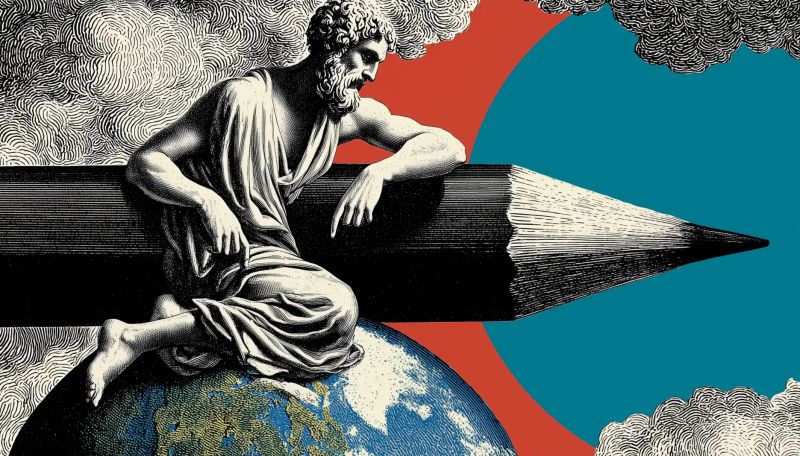
How Tools Shape How We See the World
By Dan Shipper / Chain of Thought

Length13m
About this audiobook
Was this newsletter forwarded to you?Sign upto get it in your inbox.Over the past weeks we’ve looked at the dominance of the old Western worldview and where it reached its limits. We’ve talked about thepotential of language modelsto help usher in a new worldview, and how this new worldview changes how we might approachscience,business, andcreativity. We’ve talked about the importance of connectedness and context, participation and paradox, and to close the series, I want to elaborate a bit on the core premise, that our tools shape how we see the world.But first, I want to share more of my own personal context.As a teenager, the one place I felt the most myself was in my room.I could go to my room and write, or code, or run experiments, and no one could tell me what to do. It’s from this room that I started my first internet business in high school, called Convenience Software, selling Blackberry and iPhone apps. I coded at night and spent lunch at school in the library answering customer service emails. That’s how I paid for gas and food.My room is also where I fell in love with writing. When I wrote something—diary entries, short stories, little essays—I could pin down the world. I could know what was true about myself.That desire to pin things down, to make them permanent and knowable, continued as I got to college. I studied philosophy, and each week I was enchanted by a famous system of thought, likePlato’s forms orDescartes’ mind-body dualism, and felt sure that it explained everything. Then the next week, I would encounter a thinker who came just after them—AristotleorHobbes—and find that they effortlessly tore down the previous system, which had seemed so perfect, and replaced it with their own. But I kept reading anyway, hoping to find a philosophy that would last.During this time, I also started myfirst real startup, and I loved it.I was also gripped the whole time by the feeling that I didn’t know enough. I read voraciously and sought advice wherever I could get it. I talked to my dad, who ran the family cemetery and funeral home business, almost every day on the phone. I thought of myself as an information processing machine: If I could just knowmoreabout the world, more about business, more about technology, then I could make my company succeed. But I constantly dreaded that the things I learned would slip through my grasp. If I could only record them, I felt, then I’d have them when I needed them.So I began taking copious notes. In a little black notebook I kept in the back of my jeans, I recorded everything from meetings to what books I was reading to my daily spending. I grew my company for a few years and sold it (I flew straight from my college graduation ceremony to Boston to finish negotiating the deal), then spent years figuring out what I wanted to do next. I traveled the world, worked at an incubator, and invested in startups. All the while I had even more time to refine my note-taking system.But the perfect system remained elusive. Each new tool or method I tried seemed promising at first, but each one broke as I tried to use it for new things. I bounced between Evernote, Notion, and countless other apps, creating increasingly complex workflows. It felt like I was jumping from one fad diet to another, just as I had jumped from one system of philosophy to another as an undergraduate.I had a hunch that there was something backwards about these organizational systems. The right system depended very much on what you wanted to use the information for, but note-taking is implicitly for information whose use is open-ended—that’s why notebooks come with blank pages instead of preprinted agendas.I became convinced that if that perfect tool wasn’t already out there, I could build it. I envisioned a system that would adapt to how people actually think and work, rather than forcing them into rigid structures. The software would understand context, relationships, and the fluid nature of human thought.The default startup advice was to find a problem to solve—people buy drills because they want to make holes. But I was trying to build something to solve many different kinds of problems. The task felt more like trying to invent a new language—one that could express anything—rather than trying to make a drill.It was overwhelming. But I knew there were other people using these systems and probably doing it much more successfully than I was. Maybe if I interviewed them, if I talked to 50 top performers in different fields about what makes them tick, then I’d be able to derive a set of first principles, the physics of how knowledge organization worked. If I turned those interviews into a newsletter, I could also use the newsletter to build the audience for my eventual product. At the very least, it’d be an excuse to get interesting people to talk to me.The interviews resonated—tens of thousands of people subscribed to learn how others organized their thoughts and work. Eventually that newsletter,Superorganizers, grew into this company, Every. If you’re reading this now, maybe that’s how you first found my writing.What I didn’t expect from those interviews was learning that the experience I was going through—looking for the perfect organizational system—was common among the people I talked to. Many of them also had the same feeling that if they could just prepare enough, they could eliminate the uncertainty of failure. They’d say the right thing, or make the right decision at the right time—and that would make all the difference.I wasn’t the only one who wished I was a machine.Looking back, I realized there was a common thread to my attempts to find the perfect note-taking system, the perfect argument, the perfect philosophy. Those problems looked a lot like the problems we encountered when we tried tobuild an AI scheduling assistantat the beginning of this series: We can get by with a mechanical system of rules, but any system of rules can only capture a slice of reality.Still, I didn’t know of any alternative. I couldn’t name the metaphor I was operating under. And that’s why, almost as soon as I triedGPT-3and began to learn how it worked, it took my breath away...Become apaid subscriber to Everyto unlock this piece and learn about:• Every age models intelligence on its newest tools—from Plato’s wax tablets to today’s neural networks• Language models break with 2,000 years of reductive thinking by embodying irreducible complexity• New tools reveal what old ones hid, reshaping how we understand reality itselfUpgrade to paidClick hereto read the full postWant the full text of all articles in RSS?Become a subscriber, orlearn more.
Audiobook details
GenreBusiness and Economics
Length13 mins
Narrated byListen with 1,000+ voices
FormateBook with Audio
Publish dateOct 31, 2025
LanguageEnglish
Never Split the DifferenceChris Voss, Tahl Raz8h 7m4.4 (277.7K)$26 · $0.00
The Intelligent Investor Rev Ed.Benjamin Graham17h 48m4.3 (191.5K)$40 · $0.00
The Hard Thing About Hard ThingsBen Horowitz7h 57m4.2 (134.3K)$26 · $0.00
Boundaries for LeadersHenry Cloud7h 36m4.3 (3.6K)$26 · $0.00

The Ambuja StoryNarotam Sekhsaria13h 59m4.5 (830)$33 · $0.00

This Is Going to HurtAdam Kay5h 47m4.4 (444.7K)$24 · $0.00

Big TrustShadé Zahrai, Fayçal Sekkouah8h 36m4.6 (406)$26 · $0.00
The Intelligent Investor Third EditionBenjamin Graham, Jason Zweig20h4.4 (156.6K)$46 · $0.00

Bottle of LiesKatherine Eban14h 25m4.4 (12K)$33 · $0.00

The Antiracist Business BookTrudi Lebrón6h 10m4.6 (275)$17 · $0.00
The FormulaJoshua Robinson, Jonathan Clegg10h 41m4.4 (6.9K)$29 · $0.00

Let Them LeadJohn U. Bacon7h 10m4.5 (1.4K)$24 · $0.00

Secrets of the Millionaire MindT. Harv Eker5h 11m4.4 (301.4K)$24 · $0.00

The Person You Mean to BeDolly Chugh9h 6m4.4 (7.2K)$29 · $0.00
BoundlessNick Kostov, Sean McLain9h 17m4.5 (1.1K)$29 · $0.00

Everyday DharmaSuneel Gupta5h 2m4.5 (761)$20 · $0.00

Let's Talk Mutual FundsMonika Halan7h 5m4.4 (2.4K)$16 · $0.00
The Law of Success in Sixteen LessonsNapoleon Hill2h 39m4.4 (17.2K)$2 · $0.00

Barbarians at the GateBryan Burrough, John Helyar3h 3m4.4 (52.7K)$18 · $0.00
JumpSteve Harvey4h 24m4.4 (4.5K)$20 · $0.00
You may also like

Knowing What We KnowSimon Winchester14h 19m3.9 (2.5K)$33 · $0.00
A Brief History of IntelligenceMax S. Bennett12h 18m4.6 (6.6K)$29 · $0.00
UltralearningScott H. Young7h 46m4.0 (29K)$26 · $0.00

The Creativity CodeMarcus du Sautoy9h 54m4.0 (2.2K)$20 · $0.00
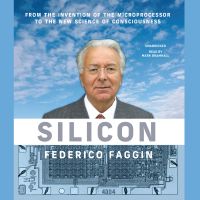
SiliconFederico Faggin9h 46m4.2 (376)$20
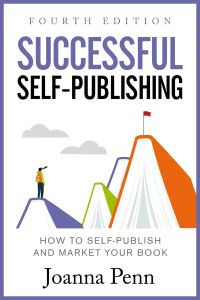
Successful Self-Publishing: How to Self-Publish and Market Your BookJoanna Penn3h 23m4.4 (2.9K) Only with Ultra
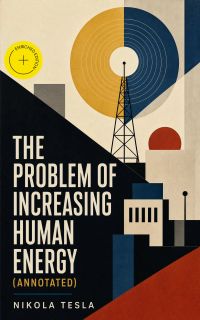
The Problem of Increasing Human Energy (Annotated)Nikola Tesla6h 44m4.2 (3.2K)$2 · $0.00

Jab, Jab, Jab, Right HookGary Vaynerchuk5h 42m4.1 (36.7K)$17 · $0.00
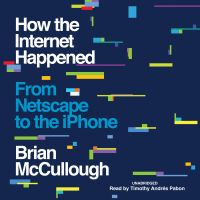
How the Internet HappenedBrian McCullough13h 28m4.3 (2.7K)$23 · $0.00
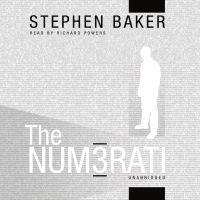
The NumeratiStephen Baker7h 55m3.6 (2K)$17 · $0.00

Inventions, Researches and Writings of Nikola TeslaNikola Tesla, Thomas Commerford Martin21h 46m4.2 (2.1K)$2 · $0.00

Baby, UnpluggedSophie Brickman9h 59m4.0 (818)$29 · $0.00
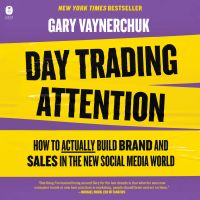
Day Trading AttentionGary Vaynerchuk8h 25m4.3 (1.8K)$28 · $0.00

The Collected Works of Nikola Tesla (Annotated)Nikola Tesla48h 48m4.4 (430)$1.99 · $0.00
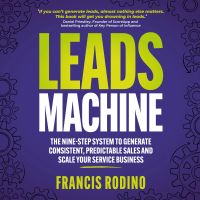
Leads MachineFrancis Rodino6h 30m4.9 (39)$27 · $0.00

Art DecoVictoria Charles, Klaus Carl5h 10m3.5 (142)$15 · $0.00
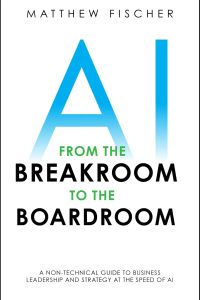
AI: From the Breakroom to the BoardroomMatthew Fischer3h 8m4.5 (132)$14.99

Tesla's Experiments with Alternating Currents (Annotated)Nikola Tesla10h 30m$2 · $0.00
Forget That!Roger Flax PhD6h 44m$23

Digital HumanitiesUnknown Author15h 31m3.7 (170)$8 · $0.00