

History of the 1/ 4th Battalion Duke of Wellington's (West Riding) Regiment, 1914-1919
The Valor of a WWI Battalion: Stories from the Duke of Wellington's RegimentBy P. G. Bales


Length12h 57m
About this audiobook
In "History of the 1/4th Battalion Duke of Wellington's (West Riding) Regiment, 1914-1919," P. G. Bales meticulously chronicles the experiences of a key military unit during World War I, blending rigorous historical analysis with poignant narratives that highlight the human cost of war. Written in an engaging style that balances scholarly rigor with accessibility, the book employs primary source documents, personal letters, and regiment reports to illuminate the battalion's campaigns and its role in the broader context of the war. Bales'Äôs work is steeped in historical accuracy, providing a vivid tableau of wartime experiences that speaks to both military history enthusiasts and general readers alike. P. G. Bales, an esteemed historian with a profound interest in military studies, draws upon extensive archival research and personal accounts to reconstruct the vivid tapestry of the 1/4th Battalion'Äôs experiences. His academic background and passion for preserving the memories of soldiers have fueled his dedication to documenting this particular segment of military history. Bales's expertise ensures a compelling narrative that pays respect to the soldiers who served, often leaving their stories untold. This book is highly recommended for anyone interested in World War I, military history, or the social dynamics of the time. Bales's eloquent prose and insightful commentary provide not just a record of events, but an exploration of the courage and resilience displayed by the men of the 1/4th Battalion, making this work an indispensable addition to the history of the Great War.
Audiobook details
GenreHistory
Length12 hrs 57 mins
Narrated byListen with 1,000+ voices
FormateBook with Audio
Publish dateAug 21, 2022
LanguageEnglish
Table of contents
1LIST OF MAPS.
2CHAPTER I. MOBILISATION AND TRAINING.
3CHAPTER II. FLEURBAIX.
4CHAPTER III. YPRES, 1915.
5(a) July to October.
Show all chaptersShow less
6(b) October 16th.
7(c) The Wet Months.
8(d) December 19th.
9CHAPTER IV. JANUARY TO JUNE, 1916.
10CHAPTER V. THE BATTLE Of THE SOMME.
11(a) July and August, 1916.
12(b) September 3rd, 1916.
13(c) The Leipsig Redoubt.
14CHAPTER VI. WITH THE THIRD ARMY.
15(a) Hannescamps.
16(b) Fonquevillers.
17(c) Halloy.
18(d) Berles.
19(e) Riviére.
20CHAPTER VII. WITH THE FIRST ARMY.
21(a) Ferme du Bois Sector.
22(b) The Cordonnerie Sector.
23(c) St. Elie Sector.
24CHAPTER VIII. THE COAST.
25(a) St. Pol and Ghyvelde.
26(b) The Lombartzyde Sector.
27(c) Coast Defence and Training.
28(d) En Route for Ypres.
29CHAPTER IX. THE BELLE VUE SPUR.
30(a) October 4th–8th.
31(b) October 9th.
32(c) Rest and Reorganisation.
33CHAPTER X. WINTER ON THE PASSCHENDAELE RIDGE.
34(a) Molenaarelsthoek and Keerselaarhoek.
35(b) Work and Training.
36(c) Reutel Sector.
37CHAPTER XI. THE ENEMY SPRING OFFENSIVE.
38(a) Erquinghem and Le Veau.
39(b) Nieppe.
40(c) Bailleul.
41(d) St. Jans Cappel.
42(e) Poperinghe.
43(f) Kemmel.[18]
44CHAPTER XII. THE LAST OF YPRES.
45(a) May, 1918.
46(b) Zillebeke Sector.
47(c) The Zillebeke Raid.
48(d) Quiet Days in the Ypres Salient.
49CHAPTER XIII. THE LAST STAGE.
50(a) Movements and Training.

A Brief History of IntelligenceMax S. Bennett12h 18m4.6 (6.6K)$29 · $0.00

The Happiest Man on EarthEddie Jaku3h 48m4.6 (178K)$7 · $0.00

MotherlandJulia Ioffe17h 52m4.7 (2.5K)$40 · $0.00

Where Cowards Go to DieBenjamin Sledge8h 42m4.7 (351)$20 · $0.00

RevolutionariesSanjeev Sanyal11h 23m4.6 (2.6K)$29 · $0.00

We Crossed a Bridge and It TrembledWendy Pearlman6h4.6 (5.2K)$24 · $0.00

Unbroken Bonds of BattleJohnny Joey Jones8h 31m4.6 (2.6K)$8 · $0.00

The Daughter of AuschwitzTova Friedman, Malcolm Brabant7h 54m4.6 (16.7K)$26 · $0.00

Lily's PromiseLily Ebert, Dov Forman8h 54m4.6 (16.1K)$29 · $0.00

On Democracies and Death CultsDouglas Murray10h 38m4.6 (6.5K)$29 · $0.00

Across the RiverKent Babb11h 40m4.6 (927)$29 · $0.00

Balcony Over Jerusalem: A Middle East Memoir - Israel, Palestine and BeyondJohn Lyons12h 37m4.6 (1.4K)$33 · $0.00

BeyondStephen Walker15h 39m4.6 (3.2K)$33 · $0.00
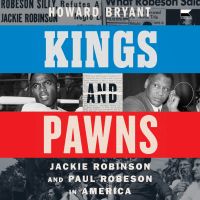
Kings and PawnsHoward Bryant10h 9m4.6 (678)$29 · $0.00

No EscapeNury Turkel9h 30m4.6 (809)$28 · $0.00

Jubal Stone: U.S. Marshal: Blood Trail To Hell: A Western Adventure NovelCasey Nash3h 42m4.6 (3.2K)$18 · $0.00

Fall and RiseMitchell Zuckoff17h 23m4.6 (9.8K)$40 · $0.00
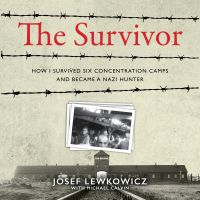
The SurvivorJosef Lewkowicz, Michael Calvin9h 22m4.6 (2.5K)$29 · $0.00

Always FaithfulThomas Schueman, Zainullah Zaki12h 12m4.6 (977)$29 · $0.00

The State of Society in France Before the Revolution of 1789 (Annotated)Alexis de Tocqueville17h 25m4.6 (1.2K)$2 · $0.00
You may also like

The Irish Guards in the Great WarRudyard Kipling25h 26m4.2 (304)$2 · $0.00

THE IRISH GUARDS: The First & the Second Battalion in the Great War (Complete Edition)Rudyard Kipling25h 43m4.3 (294)$1.99 · $0.00

Brave MenErnie Pyle20h 3m4.5 (3.8K)$2 · $0.00

Diary of a Nursing Sister on the Western Front, 1914-1915Anonymous Anonymous6h 38m4.2 (328)$2.30

The Diary of a Napoleonic Foot SoldierJakob Walter2h 38m4.1 (1.8K)$2.99 · $0.00
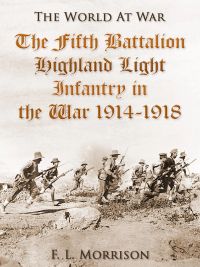
The Fifth Battalion Highland Light Infantry in the War 1914-1918F. L. Morrison8h 54m$2.30
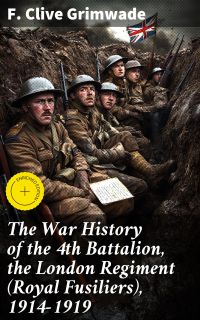
The War History of the 4th Battalion, the London Regiment (Royal Fusiliers), 1914-1919F. Clive Grimwade21h 21m$1 · $0.00
The Fourth Battalion, The King's Own (Royal Lancaster Regiment) and the Great WarJ. Crossley, W. F. A. Wadham6h 51m$1 · $0.00
The Sherwood Foresters in the Great War 1914 - 1919 / History of the 1/8th BattalionW. C. C. Weetman10h 59m$2.30
The 28th: A Record of War Service in the Australian Imperial Force, 1915-19, Vol. IHerbert Brayley Collett9h 32m$2.30

Personal Recollections of the Civil WarJames Madison Stone2h 37m4.0 (83)$1 · $0.00
A Short History of the 6th Division Aug. 1914-March 1919Sir Thomas Owen Marden4h 17m$2.30

The "Twenty-Seventh"Winthrop Dudley Sheldon4h 2m$1 · $0.00
The Fifth LeicestershireJohn David Hills10h 10m$2 · $0.00
Paths of Glory: Impressions of War Written at and Near the FrontIrvin S. Cobb10h 57m4.1 (23)$2 · $0.00
Five Months at AnzacJoseph Lievesley Beeston1h 3m4.1 (15)$1 · $0.00

The Doings of the Fifteenth Infantry BrigadeLord Edward Gleichen6h$2.30
Five Months at AnzacJoseph Lievesley Beeston2h3.6 (36)$2.30
The history of Company B, 311th Infantry in the World WarVarious Authors7h 39m$1 · $0.00

The History of the 9th (Scottish) DivisionM. C. Ewing14h 45m$2.40