HELENA BLAVATSKY Premium Collection
Enriched edition. Isis Unveiled, The Secret Doctrine, The Key to Theosophy, The Voice of the Silence, Studies in Occultism, Nightmare Tales (Illustrated)By Helena BlavatskyLength183h 10m
About this audiobook
In "HELENA BLAVATSKY Premium Collection," readers are presented with a comprehensive anthology of her seminal works, which blend esoteric philosophy, mysticism, and spirituality. Known for her innovative literary style that often employs allegory and myth, Blavatsky meticulously explores themes of the occult, ancient wisdom, and the synthesis of Eastern and Western thought. Within the broader context of the late 19th century's spiritual awakening, Blavatsky challenges prevailing materialist ideologies, advocating instead for a united understanding of universal truths across diverse cultures and religious traditions. Helena Blavatsky, a pivotal figure in the Theosophical Society, drew from her extensive travels and studies of various spiritual practices, which deeply informed her writings. Her unique perspective as a Russian noblewoman who defied societal norms to pursue her spiritual quest offers a rich backdrop to her works. This context not only enhances our understanding of her philosophy but also illustrates her role as a precursor to modern New Age movements, bridging ancient wisdom with contemporary spiritual discourse. This collection is an indispensable resource for anyone seeking to delve into the depths of metaphysical inquiry and the intersections of spirituality, making it essential reading for scholars, practitioners, and seekers alike.
In this enriched edition, we have carefully created added value for your reading experience:
- A comprehensive Introduction outlines these selected works' unifying features, themes, or stylistic evolutions.
- The Author Biography highlights personal milestones and literary influences that shape the entire body of writing.
- A Historical Context section situates the works in their broader era—social currents, cultural trends, and key events that underpin their creation.
- A concise Synopsis (Selection) offers an accessible overview of the included texts, helping readers navigate plotlines and main ideas without revealing critical twists.
- A unified Analysis examines recurring motifs and stylistic hallmarks across the collection, tying the stories together while spotlighting the different work's strengths.
- Reflection questions inspire deeper contemplation of the author's overarching message, inviting readers to draw connections among different texts and relate them to modern contexts.
- Lastly, our hand‐picked Memorable Quotes distill pivotal lines and turning points, serving as touchstones for the collection's central themes.
Audiobook details
GenreSpirituality and Religion
Length183 hrs 10 mins
Narrated byListen with 1,000+ voices
FormateBook with Audio
Publish dateDec 3, 2023
LanguageEnglish
Table of contents
1Introduction
179Section III. The Origin of Magic.
2Introduction
180Section IV. The Secresy of Initiates.
3Author Biography
181Section V. Some Reasons for Secresy.
4Historical Context
182Section VI. The Dangers of Practical Magic.
5Synopsis (Selection)
183Section VII. Old Wine in New Bottles.
Show all chaptersShow less
6Isis Unveiled
184Section VIII. The Book of Enoch the Origin and the Foundation of Christianity.
7PREFACE.
185Section IX. Hermetic and Kabalistic Doctrines.
8BEFORE THE VEIL.
186Section X. Various Occult Systems of Interpretations of Alphabets and Numerals.
9CHAPTER I.
187Section XI. The Hexagon with the Central Point, or the Seventh Key.
10CHAPTER II
188Section XII. The Duty of the True Occultist toward Religions.
11CHAPTER III.
189Section XIII. Post-Christian Adepts and their Doctrines.
12CHAPTER IV.
190Section XIV. Simon and his Biographer Hippolytus.
13CHAPTER V.
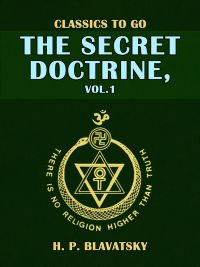
191Section XV. St. Paul the real Founder of present Christianity.
14CHAPTER VI.
192Section XVI. Peter a Jewish Kabalist, not an Initiate.
15CHAPTER VII.
193Section XVII. Apollonius of Tyana.
16CHAPTER VIII.
194Section XVIII. Facts underlying Adept Biographies.
17CHAPTER IX.
195Section XIX. St. Cyprian of Antioch.
18CHAPTER X.
196Section XX. The Eastern Gupta Vidya & the Kabalah.
19CHAPTER XI.
197Section XXI. Hebrew Allegories.
20CHAPTER XII.
198Section XXII. The “Zohar” on Creation and the Elohim.
21CHAPTER XIII. (pt. 1)
199Section XXIII. What the Occultists and Kabalists have to say.
22CHAPTER XIII. (pt. 2)
200Section XXIV. Modern Kabalists in Science and Occult Astronomy.
23CHAPTER XIV. (pt. 1)
201Section XXV. Eastern and Western Occultism.
24CHAPTER XIV. (pt. 2)
202Section XXVI. The Idols and the Teraphim.
25CHAPTER XV. (pt. 1)
203Section XXVII. Egyptian Magic.
26CHAPTER XV. (pt. 2)
204Section XXVIII. The Origin of the Mysteries.
27CHAPTER I.
205Section XXIX. The Trial of the Sun Initiate.
28CHAPTER II. (pt. 1)
206Section XXX. The Mystery “Sun of Initiation.”
29CHAPTER II. (pt. 2)
207Section XXXI. The Objects of the Mysteries.
30CHAPTER III.
208Section XXXII. Traces of the Mysteries.
31CHAPTER IV.
209Section XXXIII. The Last of the Mysteries in Europe.
32CHAPTER V.
210Section XXXIV. The Post-Christian Successors to the Mysteries.
33CHAPTER VI.
211Section XXXV. Symbolism of Sun and Stars.
34CHAPTER VII. (pt. 1)
212Section XXXVI. Pagan Sidereal Worship, or Astrology.
35CHAPTER VII. (pt. 2)
213Section XXXVII. The Souls of the Stars—Universal Heliolatry.
36CHAPTER VIII. (pt. 1)
214Section XXXVIII. Astrology and Astrolatry.
37CHAPTER VIII. (pt. 2)
215Section XXXIX. Cycles and Avataras.
38CHAPTER IX. (pt. 1)
216Section XL. Secret Cycles.
39CHAPTER IX. (pt. 2)
217Section XLI. The Doctrine of Avataras.
40CHAPTER X. (pt. 1)
218Section XLII. The Seven Principles.
41CHAPTER X. (pt. 2)
219Section XLIII. The Mystery of Buddha.
42CHAPTER XI. (pt. 1)
220Section XLIV. “Reincarnations” of Buddha.
43CHAPTER XI. (pt. 2)
221Section XLV. An Unpublished Discourse of Buddha.
44CHAPTER XII. (pt. 1)
222Section XLVI. Nirvana-Moksha.
45CHAPTER XII. (pt. 2)
223Section XLVII. The Secret Books of “Lam-Rin” and Dzyan.
46The Secret Doctrine
224Section XLVIII. Amita Buddha Kwan-Shai-yin, and Kwan-yin.—What the “Book of Dzyan” and the Lamaseries of Tsong-Kha-pa say.
47Preface To The First Edition.
225Section XLIX. Tsong-Kha-pa.—Lohans in China.
48Introductory.
226Section L. A few more Misconceptions Corrected.
49Proem: Pages From A Pre-Historic Record.
227Section LI. The “Doctrine of the Eye” & the “Doctrine of the Heart,” or the “Heart's Seal.”
50Part I. Cosmic Evolution.
228Some Papers On The Bearing Of Occult Philosophy On Life.
51Seven Stanzas From The “Book Of Dzyan”
229Note.
52Stanza I.
230Paper I. A Warning.
53Stanza II.
231Paper II. An Explanation.
54Stanza III.
232Paper III. A Word Concerning the Earlier Papers.
55Stanza IV.
233Notes On Some Oral Teachings.
56Stanza V.
234PREFACE
57Stanza VI.
235I. THEOSOPHY AND THE THEOSOPHICAL SOCIETY.
58Stanza VII.
236THE MEANING OF THE NAME.
59Commentaries On The Seven Stanzas And Their Terms, According To Their Numeration, In Stanzas And Shlokas.
237THE POLICY OF THE THEOSOPHICAL SOCIETY.
60Stanza I.
238THE WISDOM-RELIGION ESOTERIC IN ALL AGES.
61Stanza II.
239THEOSOPHY IS NOT BUDDHISM.
62Stanza III.
240II. EXOTERIC AND ESOTERIC THEOSOPHY.
63Stanza IV.
241WHAT THE MODERN THEOSOPHICAL SOCIETY IS NOT.
64Stanza V.
242THEOSOPHISTS AND MEMBERS OF THE “T.S.”
65Stanza VI. (pt. 1)
243THE DIFFERENCE BETWEEN THEOSOPHY AND SPIRITUALISM.
66Stanza VI. (pt. 2)
244THE DIFFERENCE BETWEEN THEOSOPHY AND SPIRITUALISM.
67Stanza VII. (pt. 1)
245WHY IS THEOSOPHY ACCEPTED?
68Stanza VII. (pt. 2)
246III. THE WORKING SYSTEM OF THE T.S.10
69Part II. The Evolution Of Symbolism.
247THE OBJECTS OF THE SOCIETY.
70Section I. Symbolism and Ideographs.
248THE COMMON ORIGIN OF MAN.
71Section II. The Mystery Language and Its Keys.
249OUR OTHER OBJECTS.
72Section III. Primordial Substance and Divine Thought.
250ON THE SACREDNESS OF THE PLEDGE.
73Section IV. Chaos: Theos: Kosmos.
251IV. THE RELATIONS OF THE THEOSOPHICAL SOCIETY TO THEOSOPHY.
74Section V. On the Hidden Deity, Its Symbols and Glyphs.
252ON SELF-IMPROVEMENT.
75Section VI. The Mundane Egg.
253THE ABSTRACT AND THE CONCRETE.
76Section VII. The Days and Nights of Brahmâ.
254V. THE FUNDAMENTAL TEACHINGS OF THEOSOPHY.
77Section VIII. The Lotus, as a Universal Symbol.
255ON GOD AND PRAYER.
78Section IX. The Moon; Deus Lunus, Phœbe.
256IS IT NECESSARY TO PRAY?
79Section X. Tree, Serpent, and Crocodile Worship.
257PRAYER KILLS SELF RELIANCE.
80Section XI. Demon est Deus Inversus.
258ON THE SOURCE OF THE HUMAN SOUL.
81Section XII. The Theogony of the Creative Gods.
259THE BUDDHIST TEACHINGS ON THE ABOVE.
82Section XIII. The Seven Creations.
260VI. THEOSOPHICAL TEACHINGS AS TO NATURE AND MAN.
83Section XIV. The Four Elements.
261THE UNITY OF ALL IN ALL.
84Section XV. On Kwan-Shi-Yin and Kwan-Yin.
262EVOLUTION AND ILLUSION.
85Part III. Addenda. On Occult And Modern Science.
263ON THE SEPTENARY CONSTITUTION OF OUR PLANET.
86Section I. Reasons for These Addenda.
264THE SEPTENARY NATURE OF MAN.
87Section II. Modern Physicists are Playing at Blind Man's Buff.
265THE DISTINCTION BETWEEN SOUL AND SPIRIT.
88Section III. Is Gravitation a Law?
266THE GREEK TEACHINGS.
89Section IV. The Theories of Rotation in Science.
267VII. ON THE VARIOUS POST MORTEM STATES.
90Section V. The Masks of Science. Physics Or Metaphysics?
268THE PHYSICAL AND THE SPIRITUAL MAN.
91Section VI. An Attack on the Scientific Theory of Force by a Man of Science.
269ON ETERNAL REWARD AND PUNISHMENT; AND ON NIRVANA.
92Section VII. Life, Force, or Gravity.
270ON THE VARIOUS “PRINCIPLES” IN MAN.
93Section VIII. The Solar Theory.
271VIII. ON RE-INCARNATION OR REBIRTH.
94Section IX. The Coming Force. Its Possibilities And Impossibilities.
272WHAT IS MEMORY ACCORDING TO THEOSOPHICAL TEACHING?
95Section X. On the Elements and Atoms.
273WHY DO WE NOT REMEMBER OUR PAST LIVES?
96Section XI. Ancient Thought in Modern Dress.
274ON INDIVIDUALITY AND PERSONALITY.36
97Section XII. Scientific and Esoteric Evidence for, and Objections to, the Modern Nebular Theory.
275ON THE REWARD AND PUNISHMENT OF THE EGO.
98Section XIII. Forces—Modes of Motion or Intelligences?
276IX. ON THE KAMA-LOKA AND DEVACHAN.
99Section XIV. Gods, Monads and Atoms.
277ON THE FATE OF THE LOWER “PRINCIPLES.”
100Section XV. Cyclic Evolution and Karma.
278WHY THEOSOPHISTS DO NOT BELIEVE IN THE RETURN OF PURE “SPIRITS.”
101Section XVI. The Zodiac and its Antiquity.
279A FEW WORDS ABOUT THE SKANDHAS.
102Section XVII. Summary of the Position.
280ON POST-MORTEM AND POST-NATAL CONSCIOUSNESS.41
103Preliminary Notes on The Archaic Stanzas, and the Four Pre-Historic Continents.
281WHAT IS REALLY MEANT BY ANNIHILATION.
104Part I. Anthropogenesis.
282DEFINITE WORDS FOR DEFINITE THINGS.
105Text.
283X. ON THE NATURE OF OUR THINKING PRINCIPLE.
106Stanza I.
284THE MYSTERY OF THE EGO.
107Stanza II.
285THE COMPLEX NATURE OF MANAS.
108Stanza III.
286THE DOCTRINE IS TAUGHT IN ST. JOHN’S GOSPEL.
109Stanza IV.
287XI. ON THE MYSTERIES OF RE-INCARNATION.
110Stanza V.
288PERIODICAL REBIRTHS.
111Stanza VI.
289WHAT IS KARMA?
112Stanza VII.
290WHO ARE THOSE WHO KNOW?
113Stanza VIII.
291THE DIFFERENCE BETWEEN FAITH AND KNOWLEDGE; OR, BLIND AND REASONED FAITH.
114Stanza IX.
292HAS GOD THE RIGHT TO FORGIVE?
115Stanza X.
293XII. WHAT IS PRACTICAL THEOSOPHY?
116Stanza XI.
294DUTY.
117Stanza XII.
295THE RELATIONS OF THE T.S. TO POLITICAL REFORMS.
118Commentaries On the Twelve Stanzas and Their Terms, According To Their Numeration, In Stanzas And Shlokas.
296ON SELF-SACRIFICE.
119Stanza I. Beginnings of Sentient Life.
297ON CHARITY.
120Stanza II. Nature Unaided Fails.
298THEOSOPHY FOR THE MASSES.
121Stanza III. Attempts To Create Man.
299HOW MEMBERS CAN HELP THE SOCIETY.
122Stanza IV. Creation Of The First Races.
300WHAT A THEOSOPHIST OUGHT NOT TO DO.
123Stanza V. The Evolution of the Second Race.
301XIII. ON THE MISCONCEPTIONS ABOUT THE THEOSOPHICAL SOCIETY.
124Stanza VI. The Evolution Of The “Sweat-Born.”
302THEOSOPHY AND ASCETICISM.
125Stanza VII. From The Semi-Divine Down To The First Human Races.
303THEOSOPHY AND MARRIAGE.
126Stanza VIII. Evolution Of The Animal Mammalians: The First Fall.
304THEOSOPHY AND EDUCATION.
127Stanza IX. The Final Evolution Of Man.
305WHY, THEN, IS THERE SO MUCH PREJUDICE AGAINST THE T.S.?
128Stanza X. The History Of The Fourth Race. (pt. 1)
306IS THE THEOSOPHICAL SOCIETY A MONEY-MAKING CONCERN?
129Stanza X. The History Of The Fourth Race. (pt. 2)
307THE WORKING STAFF OF THE T.S.
130Stanza XI. The Civilization And Destruction Of The Fourth And Fifth Races.
308XIV. THE “THEOSOPHICAL MAHATMAS.”
131Stanza XII. The Fifth Race And Its Divine Instructors. (pt. 1)
309ARE THEY “SPIRITS OF LIGHT” OR “GOBLINS DAMN’D”?
132Stanza XII. The Fifth Race And Its Divine Instructors. (pt. 2)
310THE ABUSE OF SACRED NAMES AND TERMS.
133Conclusion.
311CONCLUSION. THE FUTURE OF THE THEOSOPHICAL SOCIETY.
134Part II. The Archaic Symbolism Of The World-Religions.
312The Voice of the Silence
135Section I. Esoteric Tenets Corroborated in Every Scripture.
313Preface
136Section II. Adam=Adami.
314Fragment I The Voice Of The Silence
137Section III. The “Holy of Holies.” Its Degradation.
315Fragment II The Two Paths
138Section IV. On the Myth of the “Fallen Angels” in its Various Aspects.
316Fragment III The Seven Portals
139A. The Evil Spirit: Who, And What?
317Studies in Occultism
140B. The Gods Of Light Proceed From The Gods Of Darkness.
318PRACTICAL OCCULTISM
141C. The Many Meanings Of The “War In Heaven.”
319OCCULTISM VERSUS THE OCCULT ARTS
142Section V. Is Plerôma Satan's Lair?
320THE BLESSINGS OF PUBLICITY
143Section VI. Prometheus, the Titan.
321Translator's Preface
144His Origin In Ancient India.
322In Bombay
145Section VII. Enoïchion-Henoch.
323On The Way To Karli
146Section VIII. The Symbolism of the Mystery-Names Iao and Jehovah, with their Relation to the Cross and Circle.
324In The Karli Caves
147A. Cross And Circle.
325Vanished Glories
148B. The Fall Of The Cross Into Matter.
326A City Of The Dead
149Section IX. The Upanishads in Gnostic Literature.
327Brahmanic Hospitalities
150Section X. The Cross and the Pythagorean Decad.
328A Witch's Den
151Section XI. The Mysteries of the Hebdomad.
329God's Warrior
152A. Saptaparna.
330The Banns Of Marriage
153B. The Tetraktys In Relation To The Heptagon.
331The Caves Of Bagh
154C. The Septenary Element In The Vedas.
332An Isle of Mystery
155D. The Septenary In The Exoteric Works.
333Jubblepore
156E. Seven In Astronomy, Science, And Magic.
334Nightmare Tales
157F. The Seven Souls Of The Egyptologists.
335Introduction
158Part III. Addenda. Science And The Secret Doctrine Contrasted.
336I The Stranger’s Story
159Section I. Archaic, or Modern Anthropology?
337II The Mysterious Visitor
160Section II. The Ancestors Mankind is Offered by Science.
338III Psychic Magic
161Plastidular Souls, And Conscious Nerve-Cells.
339IV A Vision of Horror
162Section III. The Fossil Relics of Man and the Anthropoid Ape.
340V Return of Doubts
163A. Geological Facts Bearing On The Question Of Their Relationship.
341VI I Depart—But Not Alone
164B. Western Evolutionism: The Comparative Anatomy Of Man And The Anthropoid In No Way A Confirmation Of Darwinism.
342VII Eternity in a Short Dream
165C. Darwinism And The Antiquity Of Man: The Anthropoids And Their Ancestry.
343VIII A Tale of Woe
166Section IV. Duration of the Geological Periods, Race Cycles, and the Antiquity of Man.
344THE CAVE OF THE ECHOES A Strange but True Story
167A. Modern Scientific Speculations About The Ages Of The Globe, Animal Evolution, And Man.
345THE LUMINOUS SHIELD
168B. On Chains Of Planets And Their Plurality.
346FROM THE POLAR LANDS (A Christmas Story)
169C. Supplementary Remarks On Esoteric Geological Chronology.
347THE ENSOULED VIOLIN
170Section V. Organic Evolution and Creative Centres.
348I
171A. The Origin And Evolution Of The Mammalia: Science And Esoteric Phylogeny.
349II
172B. The European Palæolithic Races: Whence, And How Distributed.
350III
173Section VI. Giants, Civilizations, and Submerged Continents Traced in History.
351IV
174A. Some Statements About The Sacred Islands And Continents In The Classics, Explained Esoterically.
352V
175Section VII. Scientific and Geological Proofs of the Existence of Several Submerged Continents.
353VI
176Introductory.
354Analysis
177Section I. Preliminary Survey.
355Reflection
178Section II. Modern Criticism and the Ancients.
356Memorable Quotes