
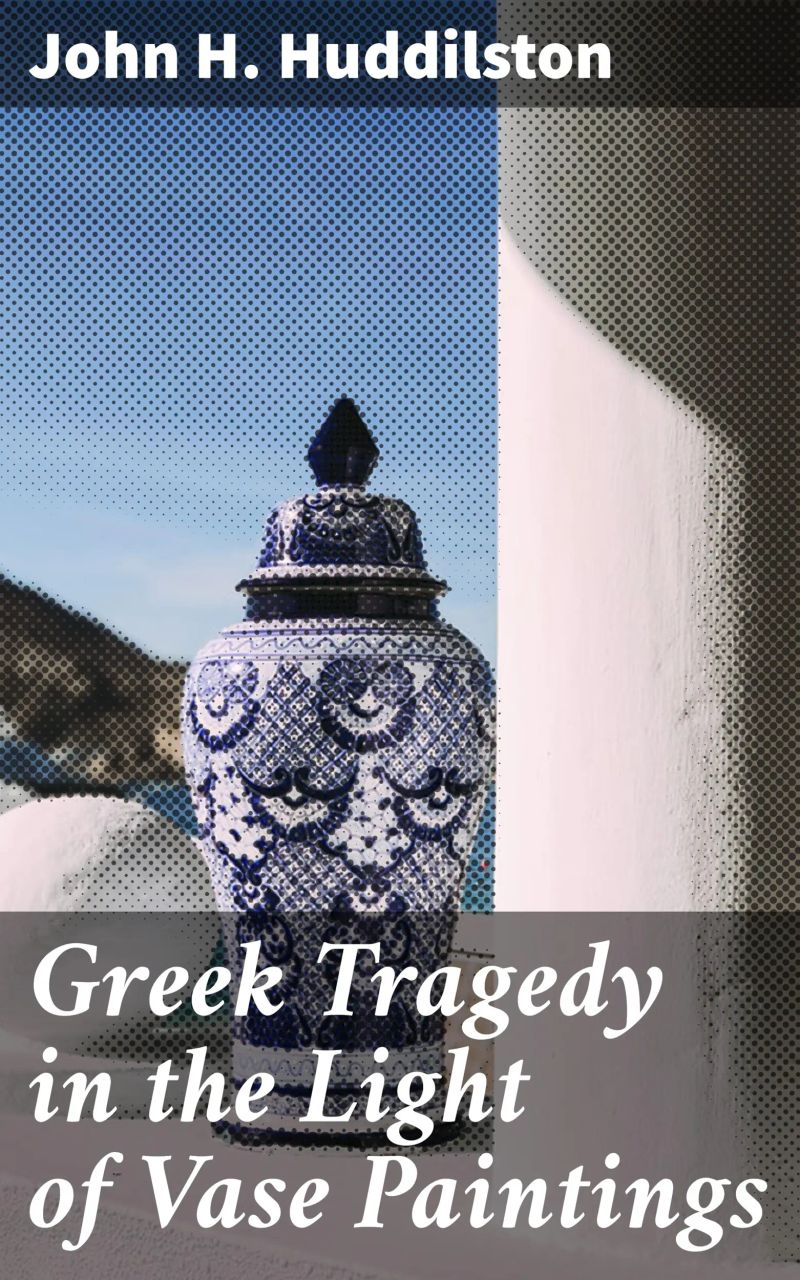
Greek Tragedy in the Light of Vase Paintings
Exploring the Influence of Vase Paintings on Greek TragedyBy John H. Huddilston


Length5h
About this audiobook
In "Greek Tragedy in the Light of Vase Paintings," John H. Huddilston explores the intricate relationship between visual art and theatrical narratives in ancient Greece. Through a meticulous analysis of vase paintings, Huddilston uncovers how these artistic expressions illuminate the themes, characters, and dramatical conventions of Greek tragedy. His scholarly approach combines iconographic analysis with a rich understanding of historical context, demonstrating how vase art not only complements but also enhances our comprehension of the tragedies penned by playwrights like Aeschylus and Sophocles. The work is marked by a keen attention to detail and an engaging prose style that invites readers into a dialogue between two vibrant forms of classical expression. John H. Huddilston is a distinguished classicist and art historian whose extensive research in the field of ancient Greek culture has earned him a reputation as a leading authority. His interest in the visual arts, combined with his passion for theatre, stems from his academic training at renowned institutions where he delved into the interplay between art and narrative. Huddilston's expertise is evident in how he articulates the significance of vase paintings in enhancing our understanding of classical tragedies, bridging visual and dramatic forms. Readers interested in the intersections of art and literature will find Huddilston's work invaluable. This book is not only a scholarly resource but also a captivating exploration for anyone intrigued by ancient Greek culture. It offers profound insights for students, historians, and enthusiasts alike, providing a fresher lens through which to appreciate the complexity and richness of Greek tragedy.
Audiobook details
GenreLiterary Classics
Length5 hrs
Narrated byListen with 1,000+ voices
FormateBook with Audio
Publish dateNov 5, 2021
LanguageEnglish
Table of contents
1PREFACE
2THE COMMON ABBREVIATIONS USED IN THE NOTES
3CHAPTER I THE INFLUENCE OF GREEK TRAGEDY UPON ANCIENT ART OUTSIDE OF THE VASES
4§ 1. Introductory.
5§ 2. Tragic Influences in Sculpture.
Show all chaptersShow less
61. Greek Sculpture.
72. The Etruscan Ash-urns.
83. Roman Sarcophagi.
9§ 3. The Influence of Tragedy on Painting.
101. On Greek Painting.
112. The Wall Paintings of Pompeii and Herculaneum.
12§ 4. Tragic Elements on the Etruscan Mirrors.
13§ 5. Greek Tragedy and the ‘Megarian Bowls.’
14CHAPTER II THE INFLUENCE OF GREEK TRAGEDY ON VASE PAINTING.
15§ 1. Theories advanced for the Earliest Point of Contact.
16§ 2. Earliest Evidence.
17§ 3. Fifth Century.
18§ 4. The Fourth Century and the Conditions in Lower Italy.
19CHAPTER III AISCHYLOS AND THE VASE PAINTINGS
20§ 1. Introduction.
21§ 2. Choephoroi.
22§ 3. Eumenides.
23§ 4. The lost Plays.
24Lykurgeia.
25Phrygians.
26CHAPTER IV SOPHOKLES AND HIS RELATION TO VASE PAINTING
27CHAPTER V EURIPIDES AND VASE PAINTING
28§ 1. Introduction.
29§ 2. Andromache.
30§ 3. Bakchai.
31§ 4. Hekabe.
32§ 5. Hippolytos.
33§ 6. Iphigeneia at Aulis.
34§ 7. Iphigeneia among the Taurians.
35§ 8. Kyklops.
36§ 9. Medeia.
37§ 10. Phoinissai.
38§ 11. Supplementary.
39Alkestis.
40Andromache.
41Elektra.
42Herakles Furens.
43Hippolytos.
44Ion.
45Iphigeneia at Aulis.
46Euripides’ Lost Plays.
47Aiolos.
48Alkmene.
49Andromeda.
50Antigone.

To Kill a MockingbirdHarper Lee12h 18m4.5 (7.4M)$29 · $0.00

These Precious DaysAnn Patchett11h 14m4.5 (45.2K)$29 · $0.00

This Side of Paradise - The Original 1920 Edition (Annotated)F. Scott Fitzgerald11h 30m4.6 (1.6K)$2 · $0.00
The Great Gatsby: Original 1925 Edition (An F. Scott Fitzgerald Classic NovelFrancis Scott Fitzgerald4h 45m4.6 (9.3K)$18 · $0.00
TWELFTH NIGHTWilliam Shakespeare, Sidney Lee16h 38m4.6 (2.8K)$1.99 · $0.00

The Complete Histories / History Plays of William Shakespeare (Annotated)William Shakespeare29h 42m4.6 (2.3K)$0.99 · $0.00

Braving the TruthRachel Held Evans11h 31m4.7 (359)$29 · $0.00

The Old Man and the Sea (Annotated)Ernest Hemingway4h 27m4.6 (1.4K)$2 · $0.00

Henry V (The Play, Historical Background and Analysis of the Character in the Play)William Shakespeare, William Hazlitt8h 50m4.6 (1.3K)$1.99 · $0.00
H. P. LOVECRAFT Ultimate Collection: Novellas, Short Stories, Poetry & Essays (Annotated)H. P. Lovecraft12h 28m4.6 (2.3K)$2 · $0.00
Time RegainedMarcel Proust16h 8m4.5 (10.6K)$1.99 · $0.00

The Mis-Education of the NegroCarter Goodwin Woodson4h 32m4.5 (28.4K)$10 · $0.00

TORAH - Bilingual Edition: English/Hebrew (Annotated)Max Margolis, JPS28h 26m4.6 (1K)$2 · $0.00

Betty Crocker picture cooky bookBetty Crocker, Inc. General Mills2h 13m4.5 (6.5K)$1 · $0.00

The Complete Tales of Beatrix PotterBeatrix Potter3h 36m4.5 (75K)$3 · $0.00

Anne of Green GablesL. M. Montgomery11h 1m4.5 (1.2M)$2.30 · $0.00

Crime and Punishment (The Unabridged Garnett Translation) (Annotated)Fyodor Dostoevsky24h 25m4.5 (15.4K)$0.99 · $0.00

The North American IndianEdward S. Curtis, Frederick Webb Hodge6h4.5 (1.2K)$2 · $0.00

The Picture of Dorian Gray: The Uncensored 13 Chapter Version + The Revised 20 Chapter Version (Annotated)Oscar Wilde16h 12m4.5 (2.8K)$0.99 · $0.00
Grimoire Of The Everyday WitchIsadora Lys / Virginia Santos5h 35m4.5 (3.9K)$9 · $0.00
You may also like
Iamblichus on the mysteries of the Egyptians, Chaldeans, and AssyriansIamblichus7h 1m4.1 (368)$1 · $0.00
An Exact Exposition of the Orthodox Faith: The Early Church FathersJohn of Damascus11h 5m4.5 (611)$1.99 · $0.00
The Temple (Annotated)Alfred Edersheim12h 37m4.3 (2.3K)$2 · $0.00
The Corpus HermeticumG. R. S. Mead3h 34m4.3 (1.7K)$4.10 · $0.00

The Pearl of Great PriceJoseph Smith Jr.3h 11m4.5 (10K)$1.99 · $0.00
The First and Second Books of Adam and EveChristopher Glyn4h 47m4.5 (1.2K)$12 · $0.00
The Poetic Edda & The Prose EddaSnorri Sturluson, Saemund Sigfusson9h 34m4.5 (4K)$1 · $0.00

Japanese MythologyF. Hadland Davis12h 25m4.0 (1.8K)$1.99 · $0.00
Myths and Legends of Ancient EgyptLewis Spence10h 45m4.0 (1.8K)$2.30
The Historical ChristF. C. Conybeare7h 31m$2 · $0.00
Slavic MythologyJan Hanuš Máchal3h 59m3.6 (54)$2 · $0.00
Ophiolatreia or Serpent WorshipEdward Sellon4h 37m3.9 (74)$2.30

Biology versus TheologyJulian2h 49m$1 · $0.00
The Origin of the World According to Revelation and ScienceJohn William Sir Dawson13h 5m$2 · $0.00
The Cherubim and the Flaming SwordPastor Philip13m$14 · $0.00
Art of the DevilArturo Graf7h 19m$18 · $0.00

Work, Death and SicknessLeo Tolstoy6m3.5 (130)$2.30

German PaintingKlaus H. Carl5h 59m$18 · $0.00
The Masculine Cross and Ancient Sex WorshipSha Rocco1h 52m$0.60 · $0.00
No Refuge but in TruthGoldwin Smith41m$2 · $0.00