
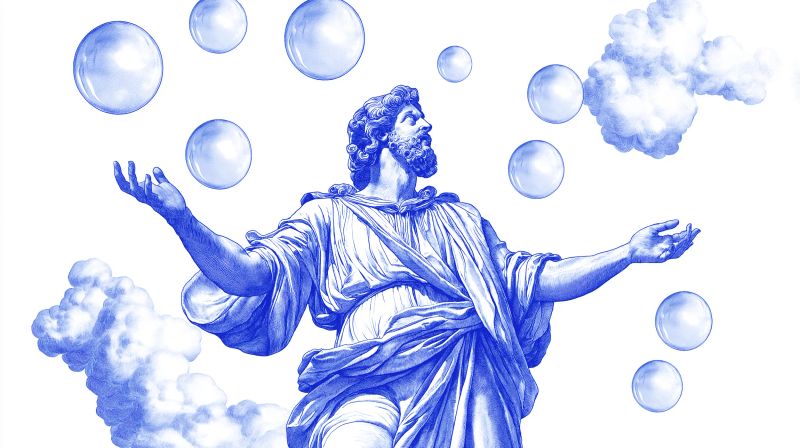
God Is in the Bubbles
By Evan Armstrong / Napkin Math


Length20m
About this audiobook
Before we get started, I wanted to let you know that I'm teaching a new cohort of my course,How to Write With AI. Take it from me: There is no higher ROI activity you can engage in than writing. If you make writing a serious practice, your career will flourish and your intellect will thrive. But writing ishard. Thankfully, AI tools like ChatGPT, Claude, Spiral, and Lex make it far easier to transform blank pages into powerful content. I will teach you how and show you my exact workflow for writing this column.The four-week cohort-based class runs from Feb. 13 through Mar. 6 and includes:4 live lecturesand hands-on workshopsA writing groupoverseen by an Every-trained editorInterviews with successful internet writersincluding Every CEO and cofounder Dan Shipper30 daysof quick writing exercisesYour own, customized LLM promptfor improving your draftsA chance to share your writingwith Every’s 90,000-plus readersOver 90 students—including founders, aspiring writers, engineers, and professors—have already taken it. Check out thecourse websitefor more information and to enroll. Act quickly: There's a $300 early bird discount, and if you register byJan. 23, you’ll jump ahead of the nearly 10,000-person waitlist for our new AI email toolCora:Register for How to Write With AIAnd now, on to my piece...On Monday, tech is taking over Washington, D.C.When he begins his second term in office, Donald Trump’s administration will be teeming with Silicon Valley personalities. Vice President-elect J.D. Vance is a Peter Thielprotégé. Sriram Krishnan, who’s been named asenior advisor for AI, is a former Andreessen Horowitz partner. David Sacks, the incoming White HouseAI and crypto czar, is an influential venture capitalist andAll-Inpodcast host. And then there’s whatever Elon Musk is doing with DOGE, a new government efficiency commission.The East and West Coast power centers seem to be merging more each day. Marc Andreessen himself is nowrecruitingfor government positions, while others in the Thiel-ian orbit will occupy the positions of Deputy Secretary of Health and Human Services (Jim O’Neill), ambassador to Denmark (Ken Howery, who will presumably try to help Trump buy Greenland), and Under Secretary of State (Jacob Helberg). Surely more will join.Reading this list may make you caw like a bald eagle and shoot a firework out of your window. Alternatively, it may make you spontaneously combust. What matters more than your opinion of these men is how they are positioned to affect policy in the United States and abroad. Regulation on crypto, open-source AI, energy policy—all of it seems up for revision during this administration. It’s safe to assume these Trump whisperers will influence tech regulation—or deregulation—directly.While considering the looming eastward migration of tech luminaries, I found myself interested in a new book published by Stripe Press calledBoom: Bubbles and the End of Stagnationby Byrne Hobart and Tobias Huber. (We’ll call them H&H.) Hobart (with whom I haveco-written a piece) writes a popular business and tech newsletter and has an intellect that makes me feel dumb. Huber is an angel investor and a partner at aventure capital fundthat I don’t know personally.Their work examines how bubbles—which have a popular reputation for being stupid, wasteful, and harmful to investors—can actually accelerate technological progress. (We’ll get to this later, but they don’t exactly define bubbles.) The book ends with a section on how the “techno-scientific sublime…invokes a spiritual or religious experience of transcendence.” In other words, technology can be viewed as a form of religion. That’s all to say this book takes on the ambitious task of redefining an established economic phenomenon and writing a bible for progress at the same time.Both Andreessen and Thiel blurbed it. Andreessen said thatBoom“makes the case that humanity’s greatest risk is not climate change or misaligned superintelligent Al but not making enough progress.” Thiel said, “The dot-com bubble looked like the peak of delusion, but the truly deluded were those who wanted to indefinitely defer the future.” Shoot, even the book’s philosophical section is mostly couched in the frameworks of René Girard, Thiel’sfavorite philosopher.Boomacts as a handy guide to the ideological underpinning of this new fusion of political and technological power. It is an amalgamation of hyper-influential, relatively niche ideas that have been quietly driving much of the libertarian discourse around Silicon Valley for the last decade. By studying it, I hoped to gain some insight into what the next few years of tech influence in Washington may hold.What is a bubble, anyhoo?H&H’s argument can be compressed into three components:...Become apaid subscriber to Everyto unlock this piece and learn about:The fusion of tech wealth and political influenceProgress as religion: The ideological framework driving new tech policyRedefining bubbles to justify speculative excessWhen innovation benefits insiders but socializes riskUpgrade to paidClick hereto read the full postWant the full text of all articles in RSS?Become a subscriber, orlearn more.
Audiobook details
Rating★★ 2.0 (1)
GenreBusiness and Economics
Length20 mins
Narrated byListen with 1,000+ voices
FormateBook with Audio
Publish dateJan 16, 2025
LanguageEnglish

Never Split the DifferenceChris Voss, Tahl Raz8h 7m4.4 (277.7K)$26 · $0.00
The Intelligent Investor Rev Ed.Benjamin Graham17h 48m4.3 (191.5K)$40 · $0.00
The Hard Thing About Hard ThingsBen Horowitz7h 57m4.2 (134.3K)$26 · $0.00
Boundaries for LeadersHenry Cloud7h 36m4.3 (3.6K)$26 · $0.00
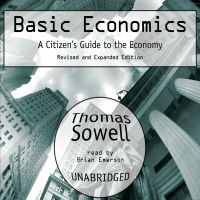
Basic EconomicsThomas Sowell18h 32m4.5 (29.3K)$28 · $0.00

Poor Charlie’s AlmanackGrover Gardener, Charles T. Munger13h 9m4.5 (24.7K)$18 · $0.00

The Ambuja StoryNarotam Sekhsaria13h 59m4.5 (830)$33 · $0.00

The Secret Door to SuccessFlorence Scovel Shinn2h 25m4.5 (2.1K)$1.20 · $0.00

This Is Going to HurtAdam Kay5h 47m4.4 (444.7K)$24 · $0.00

Big TrustShadé Zahrai, Fayçal Sekkouah8h 36m4.6 (406)$26 · $0.00
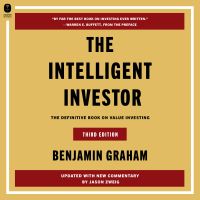
The Intelligent Investor Third EditionBenjamin Graham, Jason Zweig20h4.4 (156.6K)$46 · $0.00

Bottle of LiesKatherine Eban14h 25m4.4 (12K)$33 · $0.00

The Antiracist Business BookTrudi Lebrón6h 10m4.6 (275)$17 · $0.00
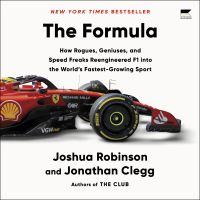
The FormulaJoshua Robinson, Jonathan Clegg10h 41m4.4 (6.9K)$29 · $0.00

Let Them LeadJohn U. Bacon7h 10m4.5 (1.4K)$24 · $0.00
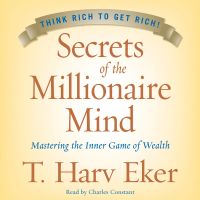
Secrets of the Millionaire MindT. Harv Eker5h 11m4.4 (301.4K)$24 · $0.00

The Person You Mean to BeDolly Chugh9h 6m4.4 (7.2K)$29 · $0.00
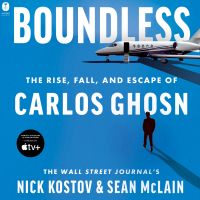
BoundlessNick Kostov, Sean McLain9h 17m4.5 (1.1K)$29 · $0.00
Everyday DharmaSuneel Gupta5h 2m4.5 (761)$20 · $0.00
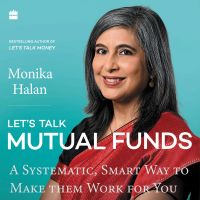
Let's Talk Mutual FundsMonika Halan7h 5m4.4 (2.4K)$16 · $0.00
You may also like
Big DataViktor Mayer-Schönberger, Kenneth Cukier9h 41m4.0 (27.3K)$29 · $0.00
The Theory of Business EnterpriseThorstein Veblen11h 28m4.1 (276)$1.99 · $0.00
Making SenseSam Harris22h 27m4.1 (3K)$46 · $0.00

The Hour of the PredatorGiuliano da Empoli3h 9m4.2 (5.6K)$5 · $0.00
The Dream of EnlightenmentAnthony Gottlieb10h 2m4.2 (1.9K)$20 · $0.00
Homo DeusYuval Noah Harari14h 54m4.3 (363K)$33 · $0.00
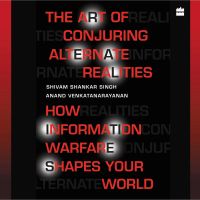
The Art Of Conjuring Alternate RealitiesShivam Shankar Singh, Anand Venkatanarayanan9h 50m4.3 (371)$29 · $0.00

Ignorance Is Strengthvarious authors, John Joseph Adams, Hugh Howey, Christie Yant11h 32m4.2 (301)$20
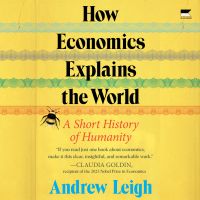
How Economics Explains the WorldAndrew Leigh5h 19m3.9 (3K)$7 · $0.00

The Green MillenniumFritz Leiber6h 58m3.6 (1.7K)$2.30
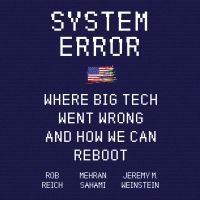
System ErrorRob Reich, Mehran Sahami, Jeremy M. Weinstein11h 29m4.0 (1.6K)$29 · $0.00

The Information TradeAlexis Wichowski8h 56m3.9 (156)$29 · $0.00

Timotheus; or, the future of the theatreBonamy Dobrée56m$2 · $0.00

The Global Vision - The True About The System - Volume 2Weslley Silva De Oliveira2h 42m$6 · $0.00
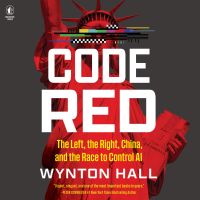
Code RedWynton Hall8h 21m4.3 (72)$24 · $0.00

Technology vs. TruthScientific American4h 33m$15

American Health — Who Gets PaidRobin Blackstone MD1h 31m$15
The Power Of Mass PersuasionEdivaldo Ascaneo28m$6 · $0.00

Digital EarthSarah Katz2h 12m$22 · $0.00
Error 404Richard Ferrer6h 26m4.2 (20)$18 · $0.00