


Length1h 58m
About this audiobook
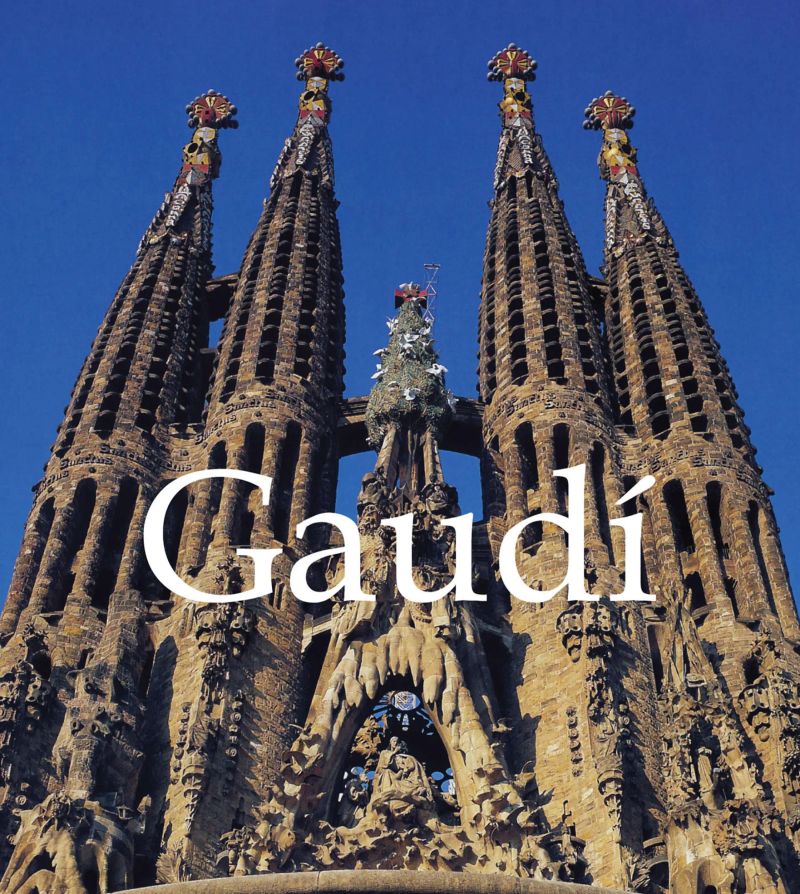
Spanish architect and designer, Antoni Gaudí (1852-1926) was an important and influential figure in the history of contemporary Spanish art. His use of colour, application of a range of materials and the introduction of organic forms into his constructions were an innovation in the realm of architecture. In his journal, Gaudí freely expressed his own feelings on art, "the colours used in architecture have to be intense, logical and fertile." His completed works (the Casa Batlló, 1905-1907 and the Casa Milà, 1905-1910) and his incomplete works (the restoration of the Poblet Monastery and the altarpiece of Alella in Barcelona) illustrate the importance of this philosophy. His furniture designs were conceived with the same philosophy, as shown, for example, in his own office (1878) or the lamps in the Plaza Real in Barcelona. The Sagrada Familia (1882-1926) was a monumental project which eventually took over his life (it was still incomplete at the time of his death).
Audiobook details
Rating★★★★ 4.0 (261)
Includes Amazon, Goodreads, LibraryThing
GenreOther
Length1 hr 58 mins
Narrated byListen with 1,000+ voices
FormateBook with Audio
Publish dateJul 1, 2011
LanguageEnglish
Table of contents
1Gaudí
2Biography
3The death of his elder brother Francesc and his mother Antonia.
41891: Gaudí travels to Tangiers and prepares designs for a Franciscan Mission.
51911: Gaudí contracts brucellosis.
Show all chaptersShow less
6The ongoing celebrations and constructions of
7Chimney
8The notion of Gaudí and his architecture with which
9‘prophet’ or precursor of the aesthetics and ideas of that
10Detail of stained glass windows
11extraordinary force, faith, and technical capacity…
12Coat of arms detail on façade
13View from behind
14View of the West side
15to his career: architecture, especially the Gothic;
16Catalan history and culture; Catholic doctrine and
17piety; and, finally, the forms and colours of the natural
18of other regions of Spain.
19Eduardo Toda and José Ribera Sans, Gaudí visited the
20Rib structures of the ceiling on the second floor
21two compulsory courses of his secondary education at
22Detail of trilobite arches in parabolic form in the first attic
23found
24Lobby
25languages as well as literature.
26South side
27Perhaps more
28In conjunction with these taught courses students
29candelabrum, a water tower and, most notably, a
30In the course of his student career he would also
31Brick work columns on the first floor
32Despite the classical simplicity of the 1875 design for
33Six angels line the sides of the archway, the two
34Crucifixion with the Virgin and St. John the Baptist.
35The addition of the flaming beacons on the four
36the correct procedure for an architect!
37elaborate lakeside pier, with steps to the water to
38elaborate arcade of Gothic arches above which rise
39Cloister arches
40along these lines, in terms of the latest theories of
41European
42two types: men of words and men of action. The first
43Main entrance
44View of façade, window detail
45Entrance hall
46Theresan College
47Window
48The friendships and professional relationships Gaudí
49As well as Gaudí’s headstrong character and
50youthful interest in the history of Catalonia Gaudí

1000 Meisterwerke der Angewandten KunstVictoria Charles9h 41m$15.50 · $0.00
1000 Portraits de génieVictoria Charles, Klaus H. Carl12h 6m4.0 (10)$18 · $0.00
Art Deco. The world of Art Deco unveiledVictoria Charles1h 28m3.4 (65)$13 · $0.00
El RenacimientoVictoria Charles3h 32m3.8 (44)$15 · $0.00
El libro definitivo sobre PicassoVictoria Charles, Anatoli Podoksik7h 13m4.8 (10)$19 · $0.00
Caspar David Friedrich. Mystique et NatureVictoria Charles3h 2m4.4 (25)$16 · $0.00
1000 Retratos de los Grandes MaestrosVictoria Charles, Klaus H. Carl10h 6m4.1 (18)$18 · $0.00
Salvador DalíVictoria Charles2h 41m$13 · $0.00
Salvador DalíVictoria Charles2h 38m4.3 (35)$13 · $0.00

Albrecht Dürer 1471-1528Victoria Charles2h 36m3.3 (25)$16 · $0.00
Pablo Picasso - El minotauro de la pinturaVictoria Charles, Anatoli Podoksik4h 52m$16 · $0.00
Salvador Dalí «Yo soy el surrealismo»Victoria Charles, Eric Shanes4h 41m4.6 (11)$16 · $0.00
Das ultimative Buch über PicassoVictoria Charles, Anatoli Podoksik7h 20m4.2 (163)$19 · $0.00
Medieval Art in the Christian WestVictoria Charles, Klaus H. Carl7h 57m$19 · $0.00
GotikVictoria Charles, Klaus H. Carl4h 43m4.0 (34)$15 · $0.00
Dalí 1904-1989Victoria Charles46m3.6 (54)$15 · $0.00
Francisco Goya: Uma vida na arteVictoria Charles1h 20m4.1 (19)$8 · $0.00
Sandro BotticelliVictoria Charles1h 24m4.2 (36)$8 · $0.00
Sandro BotticelliVictoria Charles1h 38m4.2 (26)$8 · $0.00
BotticelliVictoria Charles1h 34m4.2 (26)$8 · $0.00
Mere ChristianityC. S. Lewis7h 7m4.4 (519.7K)$24 · $0.00

Her Daily BreadKate Wood12h 57m4.6 (153)$33 · $0.00
The Holy Bible - 1 SamuelKing James2h 13m4.8 (1.6K)$3 · $0.00

The American Standard Bible — The Gospel of MatthewMatthew3h 56m4.7 (3K)$2 · $0.00

Bad Fat Black GirlSesali Bowen6h 32m4.7 (2.8K)$24 · $0.00
The King James Audio Bible New Testament CompleteChristopher Glyn20h 2m4.7 (2.6K)$12 · $0.00

Faiths CheckbookCharles Spurgeon12h 44m4.7 (3.2K)$11 · $0.00

Ten Things I Wish You Knew About Your Child's Mental HealthDr. Billy Garvey4h 53m4.7 (2.4K)$20 · $0.00

Designing Terry Pratchett’s DiscworldPaul Kidby3h 52m4.7 (343)$20 · $0.00
The Chosen Book OneAmanda Jenkins, Kristen Hendricks, Dallas Jenkins3h 8m4.6 (4.9K)$10 · $0.00
The Lives of BrianBrian Johnson9h 45m4.6 (3.5K)$29 · $0.00
Expository Thoughts on the Gospel of LukeJ.C. Ryle27h 13m4.7 (536)$18 · $0.00

CrossroadsKaleb Dahlgren7h 56m4.6 (4.9K)$26 · $0.00

Across the RiverKent Babb11h 40m4.6 (927)$29 · $0.00

Brain Training for RidersAndrea Monsarrat Waldo5h 56m4.7 (550)$19 · $0.00
My Effin' LifeGeddy Lee17h 11m4.6 (13.1K)$40 · $0.00

Kings and PawnsHoward Bryant10h 9m4.6 (678)$29 · $0.00

The Elementia Chronicles #2: The New OrderSean Fay Wolfe11h 17m4.6 (841)$29 · $0.00
The ActsLuke2h 55m4.6 (19.7K)$12 · $0.00

New Testament - Easy NavigationWorld English Bible19h 35m4.6 (1.3K)$1.30 · $0.00
You may also like

Emile, or On EducationJean-Jacques Rousseau26h 3m3.8 (7.2K)$1 · $0.00

Wealth, Poverty, and PoliticsThomas Sowell8h 27m4.5 (7.8K)$20
The Elements of Drawing, in three Letters to BeginnersJohn Ruskin7h 39m4.1 (1.6K)$2.30
The Moral SenseJames Q. Wilson10h 41m4.1 (315)$21 · $0.00

StanleySyd Hoff8m4.1 (458)$4 · $0.00

The Diary of John EvelynJohn Evelyn33h 51m4.0 (508)$1 · $0.00

How Sex WorksSharon Moalem8h 11m3.9 (1.2K)$26 · $0.00
Emile, or On EducationJean-Jacques Rousseau26h 3m3.9 (8.2K)$2 · $0.00
The Autobiography of Charles DarwinCharles Darwin2h 24m4.0 (6.5K)$3.50 · $0.00
The Autobiography of Charles DarwinCharles Darwin2h 24m4.1 (6.4K)$3.50 · $0.00

Why Do Men Fall Asleep After SexMark Leyner, Billy Goldberg6h 32m3.7 (2.2K)$24 · $0.00

The Expression of the Emotions in Man and Animals (Annotated)Charles Darwin9h 27m4.1 (13.5K)$1.99 · $0.00

A Conflict of VisionsThomas Sowell7h 8m4.4 (16K)$17

How to Design a Montessori-Inspired Nursery for Your BabyAurora Brooks1h 10m$3.50 · $0.00
The Greatest Works of John DeweyJohn Dewey168h 56m4.5 (18)$1.99 · $0.00
The Golden AgeKenneth Grahame3h 59m4.0 (642)$2 · $0.00

Danish TalesJ. P. Jacobsen3h 40m3.8 (610)$1.99 · $0.00

Work and Play in Girls' SchoolsLucy Helen Muriel Soulsby, J. F. Dove, Dorothea Beale12h 13m$2 · $0.00

Leonardo da VinciHenry S. Gillette4h 50m3.9 (168)$20

A Memoir of Thomas Bewick. Written by himselfThomas Bewick8h 58m3.8 (22)$1 · $0.00