
Fugitive Slaves (1619-1865)
Escaping the Chains of Oppression: Stories of Freedom and ResistanceBy Marion Gleason McDougall


Length7h 25m
About this audiobook
In "Fugitive Slaves (1619-1865)," Marion Gleason McDougall meticulously chronicles the harrowing journeys of enslaved individuals seeking freedom in the context of American slavery. This historical account combines comprehensive research with vivid narrative techniques, emphasizing the resilience and agency of these individuals against a backdrop of systemic oppression. McDougall skillfully weaves primary sources, including slave narratives and contemporary accounts, into a compelling tapestry that illuminates the socio-political dynamics of the era, engaging readers with both its historical accuracy and emotional depth. Marion Gleason McDougall, an esteemed scholar in American history, has dedicated her career to studying race relations and the struggles for freedom throughout American history. Her extensive background in both historiography and archival research drove her to explore the neglected stories of fugitive slaves, revealing how their experiences shaped the larger narrative of American identity. McDougall'Äôs insights are informed by her experiences teaching history and engaging with descendant communities, enriching her understanding of the subject matter. This book is essential for anyone interested in American history, race, and the enduring struggle for justice. It not only fills a critical gap within historical scholarship but also serves as a poignant reminder of the courage and agency possessed by those who dared to escape the bonds of slavery. Readers will find McDougall'Äôs work enlightening, moving, and a call to examine both the past and present through the lens of liberation.
Audiobook details
GenreHistory
Length7 hrs 25 mins
Narrated byListen with 1,000+ voices
FormateBook with Audio
Publish dateDec 18, 2019
LanguageEnglish
Table of contents
1CHAPTER I. LEGISLATION AND CASES BEFORE THE CONSTITUTION.
2Treatment of the Fugitives.
3Escapes in New England.
4Dutch and Intercolonial Regulations.
5Intercolonial Cases.
Show all chaptersShow less
6International Cases.
7English Law. Northwest Ordinance.
8Fugitive Question in Constitutional Conventions.
9CHAPTER II. LEGISLATION FROM 1789 TO 1850.
10The First Fugitive Slave Act.
11Propositions of 1797 and 1802.
12Propositions from 1817 to 1822.
13Period of the Missouri Compromise.
14Canada and Mexico Places of Refuge.
15Kidnapping from 1793-1850. Prigg Case.
16The Second Fugitive Slave Act.
17Arguments for the Bill.
18Arguments against the Bill.
19CHAPTER III. PRINCIPAL CASES FROM 1789 TO 1860.
20The First Case of Rescue.
21Kidnapping.
22Interference and Rescues.
23Interstate Relations.
24Prosecutions. Act of 1850.
25Sims and Burns.
26Garner and Shadrach.
27Rescues.
28Castner Hanway. John Brown.
29CHAPTER IV. FUGITIVES AND THEIR FRIENDS.
30Reasons for Escape.
31Escapes to the North.
32Fugitives disguised as Whites.
33The Underground Railroad.
34Operations "Underground."
35CHAPTER V. PERSONAL LIBERTY LAWS.
36Analysis.
37Review of the Acts by States.
38CHAPTER VI. THE END OF THE FUGITIVE SLAVE QUESTION (1860-1865).
39Enforcement. Slaves of Disloyal Men.
40Confiscation Bills.
41The Emancipation Proclamation.
42Fugitives from Loyal Slave States.
43District of Columbia.
44Repeal of the Acts proposed.
45Discussion of Repeal Bills.
46Repeal of the Acts.
47APPENDIX A. COLONIAL LAWS RELATIVE TO FUGITIVES.
481. New Netherlands:—Running away from Patroons. [§ 2].
492. Massachusetts:—Capture and protection of servants. [§ 4.]
503. New Netherlands:—Runaway servants. [§ 6.]
More from Marion Gleason McDougall

A Brief History of IntelligenceMax S. Bennett12h 18m4.6 (6.6K)$29 · $0.00

The Happiest Man on EarthEddie Jaku3h 48m4.6 (178K)$7 · $0.00

MotherlandJulia Ioffe17h 52m4.7 (2.5K)$40 · $0.00

Where Cowards Go to DieBenjamin Sledge8h 42m4.7 (351)$20 · $0.00

RevolutionariesSanjeev Sanyal11h 23m4.6 (2.6K)$29 · $0.00

Days of Love and Rage: A Story of RevolutionAnand Gopal22h 36m4.7 (584)$34 · $0.00

We Crossed a Bridge and It TrembledWendy Pearlman6h4.6 (5.2K)$24 · $0.00

Unbroken Bonds of BattleJohnny Joey Jones8h 31m4.6 (2.6K)$8 · $0.00

The Daughter of AuschwitzTova Friedman, Malcolm Brabant7h 54m4.6 (16.7K)$26 · $0.00

Lily's PromiseLily Ebert, Dov Forman8h 54m4.6 (16.1K)$29 · $0.00

On Democracies and Death CultsDouglas Murray10h 38m4.6 (6.5K)$29 · $0.00

Across the RiverKent Babb11h 40m4.6 (927)$29 · $0.00

Balcony Over Jerusalem: A Middle East Memoir - Israel, Palestine and BeyondJohn Lyons12h 37m4.6 (1.4K)$33 · $0.00

BeyondStephen Walker15h 39m4.6 (3.2K)$33 · $0.00
Kings and PawnsHoward Bryant10h 9m4.6 (678)$29 · $0.00

No EscapeNury Turkel9h 30m4.6 (809)$28 · $0.00

Jubal Stone: U.S. Marshal: Blood Trail To Hell: A Western Adventure NovelCasey Nash3h 42m4.6 (3.2K)$18 · $0.00

Fall and RiseMitchell Zuckoff17h 23m4.6 (9.8K)$40 · $0.00

The SurvivorJosef Lewkowicz, Michael Calvin9h 22m4.6 (2.5K)$29 · $0.00

Always FaithfulThomas Schueman, Zainullah Zaki12h 12m4.6 (977)$29 · $0.00
You may also like

Running a Thousand Miles for Freedom: The Escape of William and Ellen Craft From Slavery (Annotated)Ellen Craft, William Craft4h4.4 (2.6K)$1.99 · $0.00
The Great A&P and the Struggle for Small Business in America, Second EditionMarc Levinson12h 8m4.1 (892)$23 · $0.00

Notes from a Dead HouseFyodor Dostoevsky13h 32m4.2 (43.5K)$20

In Defense of the Second AmendmentLarry Correia6h 50m4.6 (866)$17

The History of the Jews (All Six Volumes)Heinrich Graetz118h 6m4.5 (274)$2.99 · $0.00
How to Survive AmericaD. L. Hughley, Doug Moe4h 4m4.3 (1K)$20 · $0.00

Running a 1000 Miles For Freedom (Annotated)Ellen Craft, William Craft4h 4m4.3 (3.1K)$0.99 · $0.00

PolostanNeal Stephenson11h 41m3.9 (9.9K)$29 · $0.00

Michelangelo da CaravaggioFélix Witting, M.L. Patrizi4h 44m4.0 (43)$16 · $0.00

The Critical Period of American HistoryJohn Fiske8h 55m4.0 (276)$1 · $0.00

The History of Trade Unionism (Revised edition, extended to 1920)Beatrice Webb, Sidney Webb34h 31m3.7 (26)$2 · $0.00
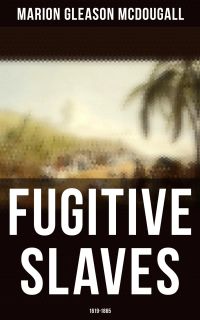
Fugitive Slaves (1619-1865)Marion Gleason McDougall7h 38m$1.99 · $0.00
Deep ConvictionSteven T. Collis12h 36m4.5 (163)$23
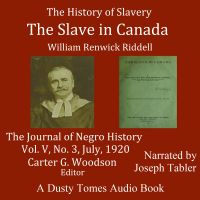
The Slave in CanadaWilliam Renwick Riddell3h 1m$20

Who's Got Mail?Linda Barrett Osborne3h 12m3.9 (158)$15

The United States of BeerDane Huckelbridge6h 47m4.0 (542)$24 · $0.00

The Hobo: The Sociology of the Homeless ManNels Anderson8h 48m3.9 (48)$2 · $0.00
The american revolutionJames R. Whitfield2h 20m$9 · $0.00

Second State of the Union AddressJames Buchanan3h 8m$1 · $0.00

The Underground Railroad from Slavery to FreedomWilbur Henry Siebert18h 21m4.3 (178)$1 · $0.00