
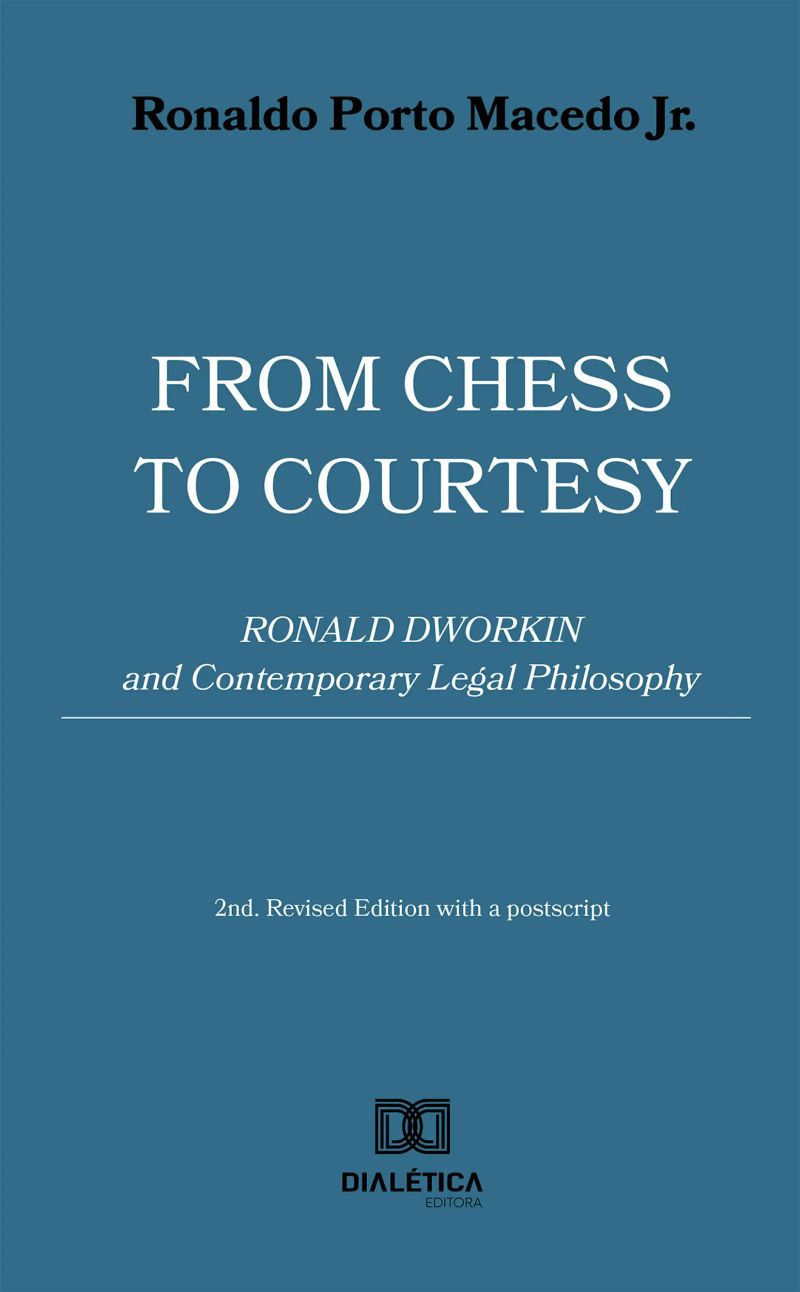
From Chess to Courtesy
Ronald Dworkin and Contemporary Legal PhilosophyBy Ronaldo P. Macedo Jr.


Length13h 53m
About this audiobook
What if law is less like a game of fixed rules and more like a practice of interpretation and judgment? In From Chess to Courtesy, Ronaldo Porto Macedo Jr. offers a clear, timely guide to Ronald Dworkin's legacy and to the "methodological turn" in legal theory. Revisiting the Hart–Dworkin debate with didactic rigor, the book explains why legal reasoning is inherently argumentative and principled, not merely rule-following. Along the way, it maps core themes—objectivity and truth in law, the role of principles, theoretical disagreement, and the limits of legal positivism—bridging insights from philosophy of language, hermeneutics, and adjudication. Written in accessible prose, From Chess to Courtesy is an essential roadmap for students, researchers, and practitioners who want to read Dworkin carefully, move beyond superficial takes, and adopt a coherent methodology for interpreting law today. Ideal for courses in legal theory, philosophy of law, and legal methodology.
Audiobook details
GenrePolitics and Government
Length13 hrs 53 mins
Narrated byListen with 1,000+ voices
FormateBook with Audio
Publish dateOct 27, 2025
LanguageEnglish
Table of contents
1New Preface to From Chess to Courtesy
2Acknowledgements
3Introduction – GENERAL OBJECTIVES OF THE WORK
4Chapter 1: Law and Philosophy – A NEW AGENDA IN THE THEORETICAL-LEGAL DEBATE
51.1 The Methodological Turn in Law and the Interconnection of Philosophical Domains
Show all chaptersShow less
61.2 Why Dworkin?
7Chapter 2 – THE METHODOLOGICAL TURN AND THE THEORY OF LAW
82.1 General Philosophy Invades the Theory of Law
92.2 The Absolute Conception of the World and Legal Physicalism
102.3 H. L. A. Hart’s Critique of Legal Physicalism and the New Objectivity
112.4 The Law as a Game of Chess
12Chapter 3 – TOWARDS THE HERMENEUTIC OF LEGAL PRACTICES: WEBER AND HART
133.1 Weber’s Chess
143.2 Hart’s Hermeneutics: Habits and Rules
153.3 The Question of Intentionality and the Descriptive Character of the Theory of Law
163.4 Hart’s New Legal Objectivity: Description and Evaluation
17Chapter 4 – THE CHALLENGE TO POSITIVISM
184.1 A First Draft of Dworkin’s Critique of Positivism: The First Round
194.2 The Two Fronts of Positivism: Inclusivists and Exclusivists
204.3 Law’s Empire Strikes Back: The Second Round
214.4 A Theory of Theoretical Disagreements:From Riggs to TVA
22Chapter 5 – DWORKIN AND THE THEORY OF INTERPRETATION
235.1 From Chess to Courtesy: A New Model for Law
245.2 Law as an Interpretive Practice
255.3 Interpretation According to Dworkin: The Intentionality of Practices and the Grammars of Concepts
265.4 The Stages of Interpretation
275.5 Intentions, Practices and Forms of Life
28Chapter 6 – DWORKIN’S NEW CONCEPTOGRAPHY
296.1 The Various Language Games of Concepts
306.2 The Semantic Stage of the Theory of Law
316.3 The Theoretical Legal Stage
326.4 The Doctrinal Stage
336.5 The Adjudicative Stage and the Planes of Theoretical Disagreements
34Conclusion
35Postscript – ELIMINATIVISM AND THE CRITIQUE OF ESSENTIALISM

HostageEli Sharabi5h 25m4.6 (10.8K)$24 · $0.00

KrantikariSanjeev Sanyal11h 44m4.6 (1.3K)$16 · $0.00

Unbroken Bonds of BattleJohnny Joey Jones8h 31m4.6 (2.6K)$8 · $0.00

On Democracies and Death CultsDouglas Murray10h 38m4.6 (6.5K)$29 · $0.00

Balcony Over Jerusalem: A Middle East Memoir - Israel, Palestine and BeyondJohn Lyons12h 37m4.6 (1.4K)$33 · $0.00

RiggedMollie Hemingway12h 48m4.6 (4.2K)$23 · $0.00

SledgehammerDavid Friedman8h 21m4.7 (589)$26 · $0.00

Citizenship in a Republic (Annotated)Theodore Roosevelt2h 44m4.6 (1.4K)$2 · $0.00

No EscapeNury Turkel9h 30m4.6 (809)$28 · $0.00

Always FaithfulThomas Schueman, Zainullah Zaki12h 12m4.6 (977)$29 · $0.00

UnthinkableJamie Raskin15h 8m4.5 (9.3K)$8 · $0.00

My Fourth Time, We DrownedSally Hayden13h 59m4.6 (2.9K)$23 · $0.00

A Revolution of Common SenseScott Jennings9h 29m4.6 (528)$29 · $0.00
Statement From the Dock at the Rivonia TrialNelson Mandela2h 18m4.6 (1.3K)$1 · $0.00

Lessons from the EdgeMarie Yovanovitch17h 11m4.5 (5.9K)$40 · $0.00

To Rescue the American SpiritBret Baier10h 12m4.5 (2.7K)$8 · $0.00

StonewalledSharyl Attkisson15h 19m4.5 (4.3K)$33 · $0.00

The World According to Orwell: 1984 & Animal FarmGeorge Orwell15h 42m4.6 (1.1K)$1 · $0.00

Basic EconomicsThomas Sowell18h 32m4.5 (29.3K)$28 · $0.00
To Rescue the RepublicBret Baier, Catherine Whitney11h 42m4.5 (8.6K)$29 · $0.00
You may also like

Taoist Teachings From the Book of Lieh TzŭLie Yukou2h 40m4.2 (1.3K)$1 · $0.00

The EthicsBenedict de Spinoza9h 35m4.2 (30.9K)$20 · $0.00

Structural Reinforced Concrete AnalysisHugo Villalobos16h 2m$99

How to Choose the Right Formula for Your BabyAurora Brooks1h 2m$3.50 · $0.00

AP Computer Science A Exam Study GuideMarie Peterson7h 6m$10

Disc GolfHarper B. Montgomery3h 21m$2.30 · $0.00

EconomicsKnowledge flow28m3.0 (16)$4.10 · $0.00

Whiskey WondersChef Emilia Santos5h 11m$6.40 · $0.00

Anatomy of the CatJacob Reighard, H. S. Jennings20h 53m$2 · $0.00

Drawing Dogs. Practical guide to drawing dogsRoberto Fabbretti14m4.4 (12)$10 · $0.00

Electrical Machinery in Power SystemsBogdan Ivashko17h 19m$85

Home Electrical Wiring and UpgradesWesley Brubaker14h 1m$70

Crayon PortraitureJerome A. Barhydt2h 15m$2 · $0.00
On the Execution of Music, and Principally of Ancient MusicCamille Saint-Saëns34m$1 · $0.00

Elements of Foreign Exchange: A Foreign Exchange PrimerFranklin Escher3h 36m4.1 (11)$1 · $0.00

Even IfBill Brown Jr.55m$5

Natural Stability and the Parachute Principle in AeroplanesW. LeMaitre2m$2 · $0.00

Inside the Event LoopElliot Farrell7h 52m$5 · $0.00
Lessons in Music Form (Annotated)Percy Goetschius5h 15m4.6 (16)$2 · $0.00
How to Play Chess (Annotated)Charlotte Boardman Rogers2h 43m4.1 (12)$2 · $0.00