
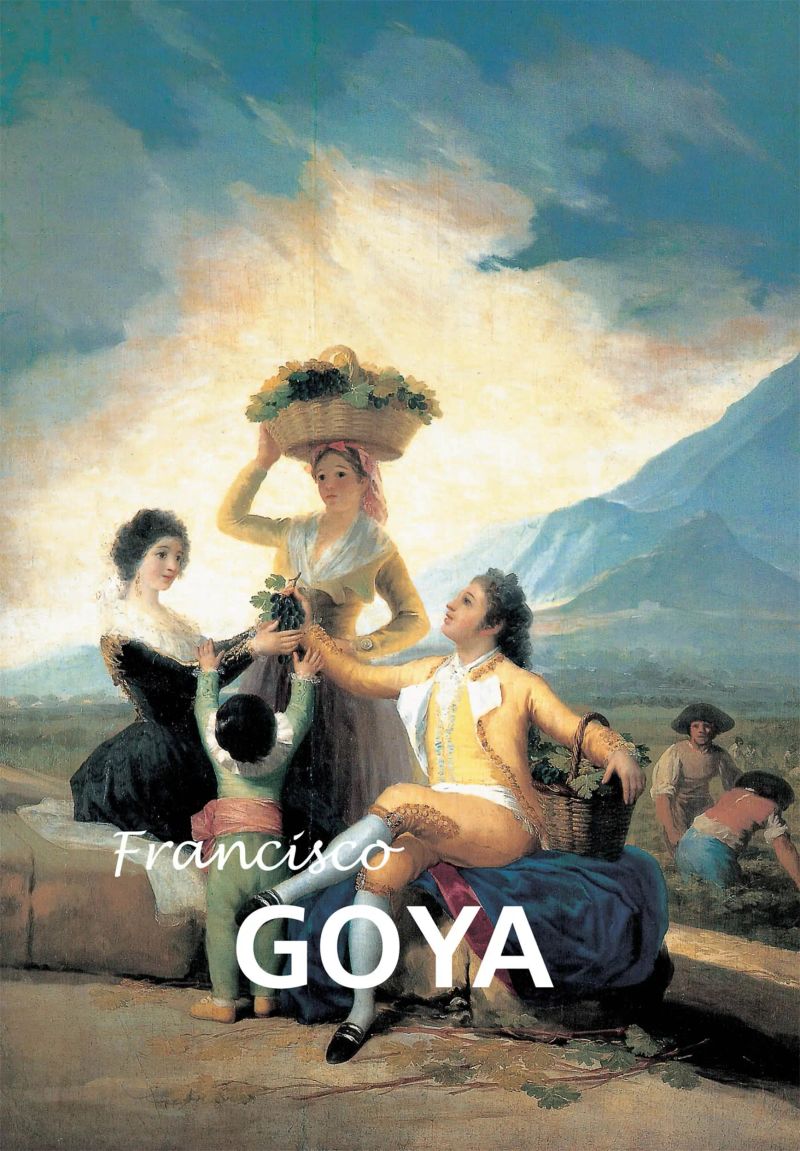


Length2h 24m
About this audiobook
Goya is perhaps the most approachable of painters. His art, like his life, is an open book. He concealed nothing from his contemporaries, and offered his art to them with the same frankness. The entrance to his world is not barricaded with technical difficulties. He proved that if a man has the capacity to live and multiply his experiences, to fight and work, he can produce great art without classical decorum and traditional respectability. He was born in 1746, in Fuendetodos, a small mountain village of a hundred inhabitants. As a child he worked in the fields with his two brothers and his sister until his talent for drawing put an end to his misery. At fourteen, supported by a wealthy patron, he went to Saragossa to study with a court painter and later, when he was nineteen, on to Madrid. Up to his thirty-seventh year, if we leave out of account the tapestry cartoons of unheralded decorative quality and five small pictures, Goya painted nothing of any significance, but once in control of his refractory powers, he produced masterpieces with the speed of Rubens. His court appointment was followed by a decade of incessant activity – years of painting and scandal, with intervals of bad health. Goya's etchings demonstrate a draughtsmanship of the first rank. In paint, like Velázquez, he is more or less dependent on the model, but not in the detached fashion of the expert in still-life. If a woman was ugly, he made her a despicable horror; if she was alluring, he dramatised her charm. He preferred to finish his portraits at one sitting and was a tyrant with his models. Like Velázquez, he concentrated on faces, but he drew his heads cunningly, and constructed them out of tones of transparent greys. Monstrous forms inhabit his black-and-white world: these are his most profoundly deliberated productions. His fantastic figures, as he called them, fill us with a sense of ignoble joy, aggravate our devilish instincts and delight us with the uncharitable ecstasies of destruction. His genius attained its highest point in his etchings on the horrors of war. When placed beside the work of Goya, other pictures of war pale into sentimental studies of cruelty. He avoided the scattered action of the battlefield, and confined himself to isolated scenes of butchery. Nowhere else did he display such mastery of form and movement, such dramatic gestures and appalling effects of light and darkness. In all directions Goya renewed and innovated.
Audiobook details
Rating★★★★ 4.0 (25)
Includes Goodreads, Amazon
GenreOther
Length2 hrs 24 mins
Narrated byListen with 1,000+ voices
FormateBook with Audio
Publish dateJul 1, 2011
LanguageEnglish
Table of contents
1Francisco
26Aula Dei, Saragossa.
2© Sirrocco, London, UK (English version) © Confidential Concepts, worldwide, USA
27San Antonio de la Florida, Madrid.
3Museum of Fine Arts, Bilbao.
281780-1781, fresco on the church’s
4Introduction
29Madrid.
551 x 46 cm, Royal Academy
30sacristy of the cathedral of Seville.
Show all chaptersShow less
6Ibercaja Collection, Saragossa.
31250 x 180 cm, church of St
7Madrid.
32Madrid.
842 x 28 cm, Museo de la Real
33Spanish Life
9Tabacalera, Madrid.
34Madrid.
10Portraits
35Banderillas de Fuego (Banderillas
11Madrid.
36Madrid.
12Bruce Collection, Washington.
37Prado Museum, Madrid.
13Corte di Mamiano, Foundation
38Madrid.
14Prado Museum, Madrid.
39Private Collection, Paris.
15New York.
40New York.
16Prado Museum, Madrid.
41Madrid.
17Madrid.
42Prado Museum, Madrid.
18National Gallery, Washington.
43Madrid.
19The Duchess of Alba Arranging Her
44Prado Museum, Madrid.
20Hispanic Society, New York.
45169 x 137 cm, Duke of
21Prado Museum, Madrid.
46Madrid.
22Religious Paintings
47169 x 100 cm, Duke of Montellano
23Adoration of the Name
48Prado Museum, Madrid.
24480 x 300 cm, San Francisco el
49Madrid.
25Grande, Madrid.
50Prado Museum, Madrid.
More from Sarah Carr-Gomm

Francisco GoyaSarah Carr-Gomm2h 26m3.9 (41)$13 · $0.00
Francisco GoyaSarah Carr-Gomm2h 55m3.7 (15)$13 · $0.00

Francisco GoyaSarah Carr-Gomm2h 28m3.7 (15)$13 · $0.00
Francisco GoyaSarah Carr-Gomm2h 45m4.1 (39)$10 · $0.00
Francisco GoyaSarah Carr-Gomm2h 36m3.9 (75)$10 · $0.00
Francisco GoyaSarah Carr-Gomm2h 43m3.7 (15)$13 · $0.00
Francisco GoyaSarah Carr-Gomm2h 20m4.0 (30)$13 · $0.00
Mere ChristianityC. S. Lewis7h 7m4.4 (519.7K)$24 · $0.00

Her Daily BreadKate Wood12h 57m4.6 (153)$33 · $0.00
The Holy Bible - 1 SamuelKing James2h 13m4.8 (1.6K)$3 · $0.00

The American Standard Bible — The Gospel of MatthewMatthew3h 56m4.7 (3K)$2 · $0.00

Bad Fat Black GirlSesali Bowen6h 32m4.7 (2.8K)$24 · $0.00
The King James Audio Bible New Testament CompleteChristopher Glyn20h 2m4.7 (2.6K)$12 · $0.00
Faiths CheckbookCharles Spurgeon12h 44m4.7 (3.2K)$11 · $0.00

Ten Things I Wish You Knew About Your Child's Mental HealthDr. Billy Garvey4h 53m4.7 (2.4K)$20 · $0.00

Designing Terry Pratchett’s DiscworldPaul Kidby3h 52m4.7 (343)$20 · $0.00
The Chosen Book OneAmanda Jenkins, Kristen Hendricks, Dallas Jenkins3h 8m4.6 (4.9K)$10 · $0.00

The Lives of BrianBrian Johnson9h 45m4.6 (3.5K)$29 · $0.00
Expository Thoughts on the Gospel of LukeJ.C. Ryle27h 13m4.7 (536)$18 · $0.00

CrossroadsKaleb Dahlgren7h 56m4.6 (4.9K)$26 · $0.00

Across the RiverKent Babb11h 40m4.6 (927)$29 · $0.00

Brain Training for RidersAndrea Monsarrat Waldo5h 56m4.7 (550)$19 · $0.00
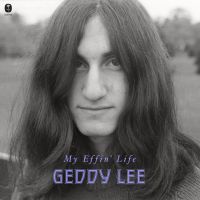
My Effin' LifeGeddy Lee17h 11m4.6 (13.1K)$40 · $0.00

Kings and PawnsHoward Bryant10h 9m4.6 (678)$29 · $0.00

The Elementia Chronicles #2: The New OrderSean Fay Wolfe11h 17m4.6 (841)$29 · $0.00

The ActsLuke2h 55m4.6 (19.7K)$12 · $0.00

New Testament - Easy NavigationWorld English Bible19h 35m4.6 (1.3K)$1.30 · $0.00
You may also like

A Diary from DixieMary Chesnut14h 27m3.9 (1.4K)$10 · $0.00

Three GuineasVirginia Woolf6h 7m4.1 (9.2K)$1.20 · $0.00

General Lee’s ArmyJoseph T. Glatthaar25h 17m4.3 (880)$35
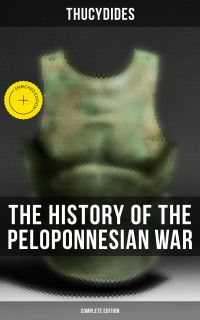
The History of the Peloponnesian War (Complete Edition)Thucydides23h 54m4.3 (41.8K)$1.99 · $0.00

The Jewish WarsFlavius Josephus28h 18m4.2 (7K)$2 · $0.00

Six Days of WarMichael B. Oren17h 54m4.4 (15.5K)$32

The Tuscarora WarDavid La Vere9h 53m4.1 (335)$20
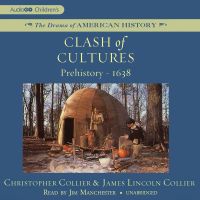
Clash of CulturesChristopher Collier, James Lincoln Collier1h 58m4.2 (410)$15

My Diary – North and South (Vol. 1&2)William Howard Russell27h 32m4.0 (335)$1 · $0.00

A Diary From Dixie (Civil War Memoir)Mary Boykin Chesnut15h 50m4.0 (1.9K)$1.99 · $0.00

The Downfall (La Débâcle)Émile Zola26h 39m4.1 (3K)$2 · $0.00

The 22 Immutable Laws of MarketingAl Ries, Jack Trout3h 7m4.1 (27.7K)$5 · $0.00

The Civil War: A Narrative, Vol. 2Shelby Foote52h 41m4.6 (11.7K)$30

Ashley's WarGayle Tzemach Lemmon10h 1m4.2 (7.4K)$29 · $0.00

Fatal DiscordMichael Massing34h 52m4.5 (1.3K)$53 · $0.00
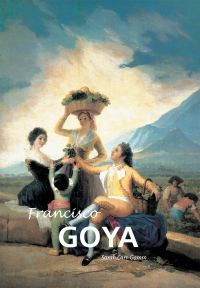
Francisco GoyaSarah Carr-Gomm2h 15m3.7 (15)$13 · $0.00

The Road to RevolutionSantiago Machain5h$21 · $0.00
Defenseless AmericaHudson Maxim5h 17m$1 · $0.00

Fighting for Freedom: Memoirs of Black Soldiers in the Civil WarJoseph Warren Keifer, Joseph T. Wilson, Thomas Wentworth Higginson, Frank A. Rollin, Joshua M. Addeman, Susie King Taylor68h 39m4.8 (11)$0.99

The Histories of Polybius (Vol.1&2) (Annotated)Polybius54h 1m4.1 (37)$2 · $0.00