
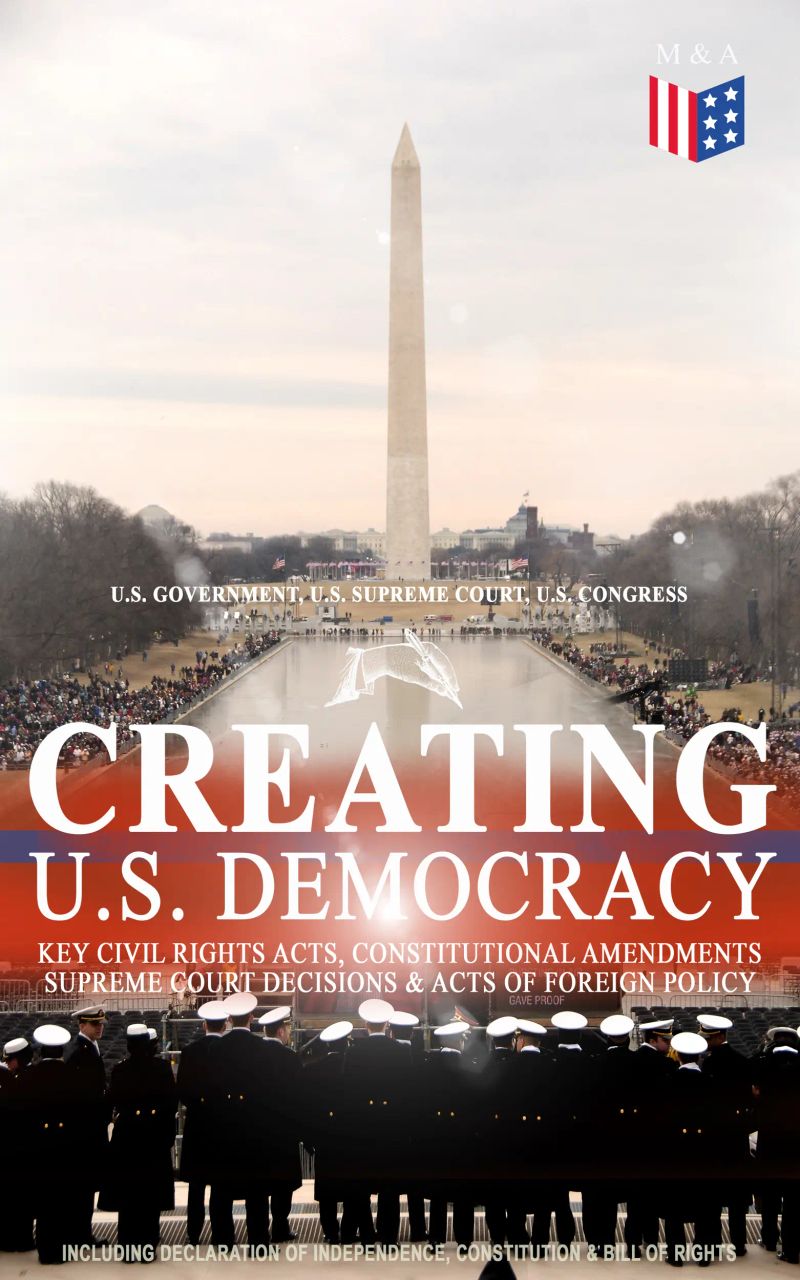
Forging U.S. Democracy
The Influence of Key Civil Rights Acts, Amendments, and Landmark DecisionsBy U.S. Government, U.S. Supreme Court, U.S. Congress


Length45h 36m
About this audiobook
This is a unique collection of U.S. Government legal documents that shaped and built the American democracy. From the Declaration of Independence to the Civil Rights Act of 1968, this collection contains 40 most important acts and decisions which forged the legal system and democratic principles of USA:
Declaration of Independence (1776)
U.S. Constitution (1787)
Bill of Rights (1791)
Amendments (1792-1991)
The Federalist Papers (1787-1788)
Marbury v. Madison (1803)
The Louisiana Purchase Treaty (1803)
Treaty of Ghent (1814)
Monroe Doctrine (1823)
Treaty of Guadalupe Hidalgo (1848)
Emancipation Proclamation (1863)
Gettysburg Address (1863)
The Civil Rights Act of 1866
Treaty of Fort Laramie/Sioux Treaty (1868)
The Enforcement Act of 1870
The Second Enforcement Act of 1871 (Ku Klux Klan Act of 1871)
Civil Rights Act of 1875
Interstate Commerce Act (1887)
Dawes Act (1887)
Sherman Anti-Trust Act (1890)
Plessy v. Ferguson (1896)
Keating-Owen Child Labor Act of 1916 (1916)
President Woodrow Wilson's 14 Point Program (1918)
National Industrial Recovery Act (1933)
Social Security Act (1935)
Lend-Lease Act (1941)
Brown v. Board of Education (1954)
Civil Rights Act of 1957
Civil Rights Act of 1960
Establishment of the Peace Corps (1961)
Test Ban Treaty (1963)
Equal Pay Act of 1963
Civil Rights Act of 1964
Tonkin Gulf Resolution (1964)
Heart of Atlanta Motel, Inc. v. United States (1964)
Voting Rights Act (1965)
Loving v. Virginia (1967)
Civil Rights Act of 1968
Rehabilitation Act of 1973
Pregnancy Discrimination Act of 1978
Audiobook details
GenrePolitics and Government
Length45 hrs 36 mins
Narrated byListen with 1,000+ voices
FormateBook with Audio
Publish dateFeb 10, 2017
LanguageEnglish
Table of contents
1Creating U.S. Democracy: Key Civil Rights Acts, Constitutional Amendments, Supreme Court Decisions & Acts of Foreign Policy
2Declaration of Independence (1776)
3U.S. Constitution (1787)
4PREAMBLE
5ARTICLE I: The Legislative Branch
Show all chaptersShow less
6ARTICLE II: The Executive Branch
7ARTICLE III: The Judicial Branch
8ARTICLE IV: The States
9ARTICLE V: Amendments
10ARICLE VI: Debts, Supremacy, Oaths
11ARTICLE VII: Ratification
12Bill of Rights (1791)
13Amendments (1792-1991)
14AMENDMENT XI: Judicial Limits
15AMENDMENT XII: Choosing the President, Vice-President
16AMENDMENT XIII: Slavery Abolished
17AMENDMENT XIV: Citizenship Rights
18AMENDMENT XV: Race No Bar to Vote
19AMENDMENT XVI: Status of Income Tax Clarified
20AMENDMENT XVII: Senators Elected by Popular Vote
21AMENDMENT XVIII: Liquor Abolished
22AMENDMENT XIX: Women’s Suffrage
23AMENDMENT XX: Presidential, Congressional Terms
24AMENDMENT XXI: Amendment XVIII Replaced
25AMENDMENT XXII: Presidential Term Limits
26AMENDMENT XXIII: Presidential Vote for District of Columbia
27AMENDMENT XXIV: Poll Tax Barred
28AMENDMENT XXV: Presidential Disability and Succession
29AMENDMENT XXVI: Voting Age Set to 18 Years
30AMENDMENT XXVII: Limiting Congressional Pay Increases
31The Federalist Papers (1787-1788)
32FEDERALIST I: General Introduction
33FEDERALIST II: Concerning Dangers From Foreign Force and Influence
34FEDERALIST III: The Same Subject Continued: Concerning Dangers From Foreign Force and Influence
35FEDERALIST IV: The Same Subject Continued: Concerning Dangers From Foreign Force and Influence
36FEDERALIST V: The Same Subject Continued: Concerning Dangers From Foreign Force and Influence
37FEDERALIST VI: Concerning Dangers From Dissensions Between the States
38FEDERALIST VII: The Same Subject Continued: Concerning Dangers From Dissensions Between the States
39FEDERALIST VII: The Consequences of Hostilities Between the States
40FEDERALIST IX: The Union as a Safeguard Against Domestic Faction and Insurrection
41FEDERALIST X: The Same Subject Continued: The Union as a Safeguard Against Domestic Faction and Insurrection
42FEDERALIST XI: The Utility of the Union in Respect to Commercial Relations and a Navy
43FEDERALIST XII: The Utility of the Union in Respect to Revenue
44FEDERALIST XIII: Advantage of the Union in Respect to Economy in Government
45FEDERALIST XIV: Objections to the Proposed Constitution From Extent of Territory Answered
46FEDERALIST XV: The Insufficiency of the Present Confederation to Preserve the Union
47FEDERALIST XVI: The Same Subject Continued: The Insufficiency of the Present Confederation to Preserve the Union
48FEDERALIST XVII: The Same Subject Continued: The Insufficiency of the Present Confederation to Preserve the Union
49FEDERALIST XVIII: The Same Subject Continued: The Insufficiency of the Present Confederation to Preserve the Union
50FEDERALIST XIX: The Same Subject Continued: The Insufficiency of the Present Confederation to Preserve the Union
More from U.S. Government, U.S. Supreme Court, U.S. Congress
The Legacy of LawU.S. Government, U.S. Supreme Court, U.S. Congress46h 36m$1.99 · $0.00
The Legacy of Obama's AchievementsU.S. Government7h 42m$1.99 · $0.00
Civil Rights Movement - Advancement Through LegislationU.S. Government, U.S. Supreme Court23h 57m$1.99 · $0.00
History of the United States DemocracyU.S. Government, U.S. Supreme Court, U.S. Congress46h 43m$1.99 · $0.00
The Warren Commission ReportU.S. Government, President's Commission on the Assassination of President Kennedy651h 57m3.8 (2.2K)$1 · $0.00

The Warren Commission Report: The Official Report on the Assassination of President KennedyU.S. Government, President's Commission on the Assassination of President Kennedy652h 37m4.0 (2.7K)$2 · $0.00
Eight Years vs. Three Weeks – Executive Orders Signed by Barack Obama and Donald TrumpU.S. Government, White House6h 1m$1 · $0.00

Path Towards Equality: Anti-Discrimination Acts & Most Important Supreme Court Decisions Against RacismU.S. Government, U.S. Supreme Court22h 52m$1 · $0.00

The Evolution of Civil Rights in USA: Enduring Fight Against Racism With LegislationU.S. Government, U.S. Supreme Court22h 53m$1.99 · $0.00
History of the Civil Rights LegislationU.S. Government, U.S. Supreme Court, U.S. Congress46h 48m$1.99 · $0.00
HONORING OBAMAU.S. Government7h 44m$1.99 · $0.00
How to Test Negative for StupidJohn Kennedy8h 13m4.7 (9.7K)$28 · $0.00

Black AF HistoryMichael Harriot15h 43m4.7 (14.6K)$33 · $0.00

The Gulag Archipelago Volume 3Aleksandr I. Solzhenitsyn21h 56m4.7 (8.9K)$46 · $0.00

MotherlandJulia Ioffe17h 52m4.7 (2.5K)$40 · $0.00

HostageEli Sharabi5h 25m4.6 (10.8K)$24 · $0.00

KrantikariSanjeev Sanyal11h 44m4.6 (1.3K)$16 · $0.00

Unbroken Bonds of BattleJohnny Joey Jones8h 31m4.6 (2.6K)$8 · $0.00

On Democracies and Death CultsDouglas Murray10h 38m4.6 (6.5K)$29 · $0.00

Balcony Over Jerusalem: A Middle East Memoir - Israel, Palestine and BeyondJohn Lyons12h 37m4.6 (1.4K)$33 · $0.00
RiggedMollie Hemingway12h 48m4.6 (4.2K)$23 · $0.00

SledgehammerDavid Friedman8h 21m4.7 (589)$26 · $0.00
Citizenship in a Republic (Annotated)Theodore Roosevelt2h 44m4.6 (1.4K)$2 · $0.00

No EscapeNury Turkel9h 30m4.6 (809)$28 · $0.00

Always FaithfulThomas Schueman, Zainullah Zaki12h 12m4.6 (977)$29 · $0.00

UnthinkableJamie Raskin15h 8m4.5 (9.3K)$8 · $0.00

My Fourth Time, We DrownedSally Hayden13h 59m4.6 (2.9K)$23 · $0.00
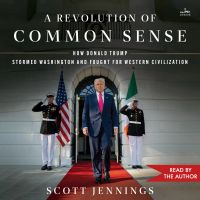
A Revolution of Common SenseScott Jennings9h 29m4.6 (528)$29 · $0.00

Statement From the Dock at the Rivonia TrialNelson Mandela2h 18m4.6 (1.3K)$1 · $0.00

Lessons from the EdgeMarie Yovanovitch17h 11m4.5 (5.9K)$40 · $0.00
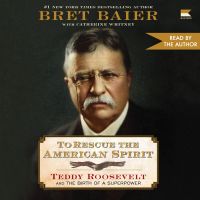
To Rescue the American SpiritBret Baier10h 12m4.5 (2.7K)$8 · $0.00
You may also like

Finish the Fight!Veronica Chambers, The Staff of The New York Times2h 53m4.4 (939)$18 · $0.00

When Kids Can't Read—What Teachers Can DoKylene Beers12h 31m4.4 (2.7K)$25

Girls Resist!KaeLyn Rich5h 48m4.3 (423)$20

Reclaiming Her TimeHelena Andrews-Dyer, R. Eric Thomas7h 9m4.2 (511)$24 · $0.00

My Own StoryEmmeline Pankhurst10h 29m4.4 (2.6K)$20

RFKRobert F. Kennedy, C. Richard Allen, Edwin O. Guthman14h 7m4.5 (363)$33 · $0.00
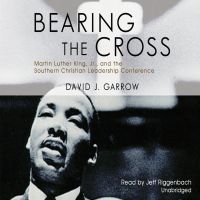
Bearing the CrossDavid J. Garrow34h 22m4.3 (2.5K)$28

Do it Like a WomanCaroline Criado-Perez8h 6m4.2 (1.5K)$20
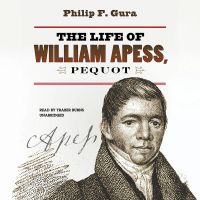
The Life of William Apess, PequotPhilip F. Gura7h 13m4.0 (18)$20 · $0.00
Iron And SilkMargaret Elspeth Harrington3h 55m$8 · $0.00

Sesame Street, PalestineDaoud Kuttab3h 30m3.8 (90)$15
Pioneering the VoteNeylan McBaine9h 8m4.2 (244)$20

Medical Women (Annotated)Sophia Jex-Blake6h 36m$1.99 · $0.00
IRON AND SILKMargaret Elspeth Harrington4h 57m$6 · $0.00
History of the Women's Suffrage Movement in America (Annotated)Harriot Stanton Blatch, Elizabeth Cady Stanton, Jane Addams, Ida Husted Harper, Anna Howard Shaw, Susan B. Anthony, Alice Stone Blackwell, Matilda Gage394h 51m$1.99 · $0.00

The Life and Work of Susan B. Anthony (Complete Illustrated Edition – Volumes 1&2) (Annotated)Ida Husted Harper46h 47m4.6 (115)$2 · $0.00

Fonda on FilmNelson Pressley9h 31m$23

Girls to the FrontNiña Mata1h 55m$16 · $0.00
Iron And SilkMargaret Elspeth Harrington4h 49m$7

RadicalMichelle Rhee8h 54m3.8 (903)$29 · $0.00