


Length1h 45m
About this audiobook
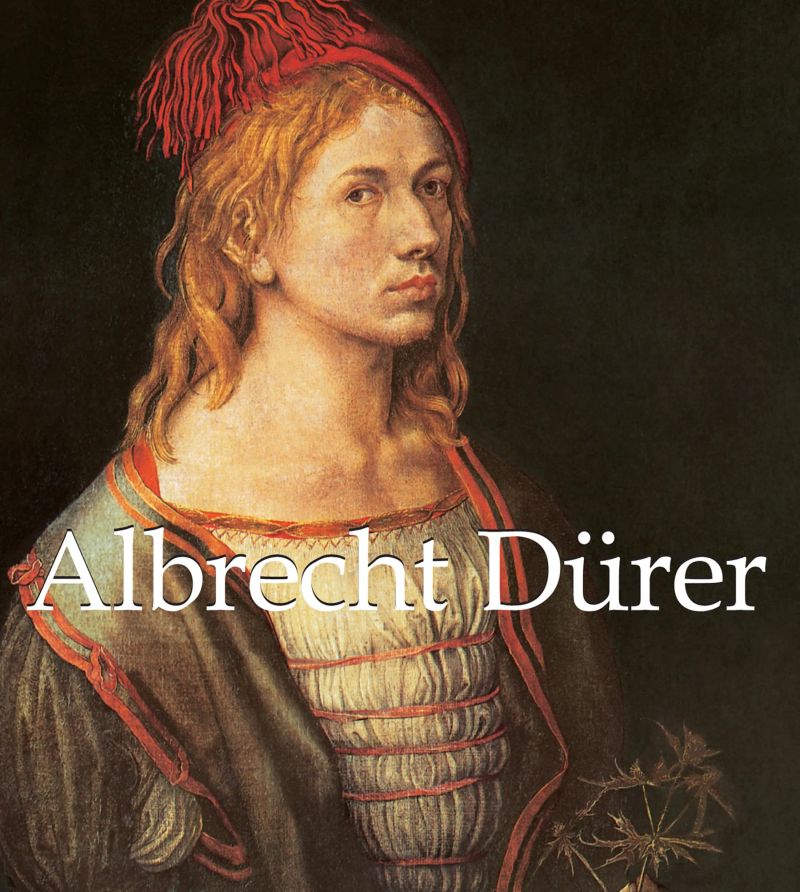
Dürer is the greatest of German artists and most representative of the German mind. He, like Leonardo, was a man of striking physical attractiveness, great charm of manner and conversation, and mental accomplishment, being well grounded in the sciences and mathematics of the day. His skill in draughtsmanship was extraordinary; Dürer is even more celebrated for his engravings on wood and copper than for his paintings. With both, the skill of his hand was at the service of the most minute observation and analytical research into the character and structure of form. Dürer, however, had not the feeling for abstract beauty and ideal grace that Leonardo possessed; but instead, a profound earnestness, a closer interest in humanity, and a more dramatic invention. Dürer was a great admirer of Luther; and in his own work is the equivalent of what was mighty in the Reformer. It is very serious and sincere; very human, and addressed the hearts and understanding of the masses. Nuremberg, his hometown, had become a great centre of printing and the chief distributor of books throughout Europe. Consequently, the art of engraving upon wood and copper, which may be called the pictorial branch of printing, was much encouraged. Of this opportunity Dürer took full advantage. The Renaissance in Germany was more a moral and intellectual than an artistic movement, partly due to northern conditions. The feeling for ideal grace and beauty is fostered by the study of the human form, and this had been flourishing predominantly in southern Europe. But Albrecht Dürer had a genius too powerful to be conquered. He remained profoundly Germanic in his stormy penchant for drama, as was his contemporary Mathias Grünewald, a fantastic visionary and rebel against all Italian seductions. Dürer, in spite of all his tense energy, dominated conflicting passions by a sovereign and speculative intelligence comparable with that of Leonardo. He, too, was on the border of two worlds, that of the Gothic age and that of the modern age, and on the border of two arts, being an engraver and draughtsman rather than a painter.
Audiobook details
Rating★★★★ 3.8 (35)
Includes Goodreads, Amazon
GenreOther
Length1 hr 45 mins
Narrated byListen with 1,000+ voices
FormateBook with Audio
Publish dateJul 1, 2011
LanguageEnglish
Table of contents
1Albrecht Dürer Albrecht Dürer
2Biography
3First graphics cycle with 15 woodcuts for Apocalypse.
4Portrait of Dürer’s Father
51484 Silverpoint on paper, 28.4 x 21.2 cm Albertina Museum, Vienna
Show all chaptersShow less
6The astronomer Johannes Kepler (1571-1630) and
7Warrior
8In contrast to the other artists of this epoch, an
91490 Oil on wood, 47 x 38 cm Germanisches Nationalmuseum, Nuremberg
10Death, and the Devil, and Melanchthon (1526).
111490 Oil on panel, 47.5 x 39.5 cm Galleria degli Uffizi, Florence
12of the Ship of Fools from the year 1494, but also
13Courtyard of the Castle in Innsbruck
14Holbein the elder (c. 1465-1524); or even the
15A Young Couple
16and his thoughts independent of other influences.
17During the turbulent transition from the
18fifteenth to the sixteenth century, when America
19The Wire Drawing Mill
20of Martin Schongauer (c. 1450-1491), and in his
21hometown, the council member Pirckheimer (1470-
22DÜRER’S LIFE
23c. 1494 Watercolour and gouache, 23.8 x 35.6 cm Kunsthalle, Bremen
24even more attached to his mother, whom he
25The Church and the Cemetery of Sankt Johann, near Nuremberg
261494 Watercolour on paper, 12.7 x 18.7 cm Albertina Museum, Vienna
27of the precious materials, and of course, the bases
28November 1486, at the age of fifteen, Dürer
29Lion
30printers as a graphic artist for woodcuts. Amongst
31Alpine Landscape
32woodcuts and copper engravings at the Frankfurt
33Later, during his travels to Venice, she
34travels, and some of his drawings from this time
351495 Watercolour on paper, 15.3 x 24.9 cm
361495 Watercolour, gouache, 26.3 x 35.5 cm Museum Boijmans Van Beuningen, Rotterdam
37Mantegna’s influence was The Virgin Worshipping
38distemper on canvas, with the Madonna in the
39Saint George with the slain dragon and Saint
40View of the Valley of Arco
41During these years of change from the
42commissions from the native patricians with
43The portraits of the Tucher family (1499), the
44during this period with laborious copperplate
45Spruce Tree (Picea abies)
46A little later, around 1500, the engraving
47Landscape Study of Water, Sky and Pine Trees
48Fisherman’s House on a Lake, near Nuremberg
49Portrait of a Woman with Hair Pinned Up
50them for the substantial annual salary of 200

1000 Meisterwerke der Angewandten KunstVictoria Charles9h 41m$15.50 · $0.00
1000 Portraits de génieVictoria Charles, Klaus H. Carl12h 6m4.0 (10)$18 · $0.00

Art Deco. The world of Art Deco unveiledVictoria Charles1h 28m3.4 (65)$13 · $0.00

El RenacimientoVictoria Charles3h 32m3.8 (44)$15 · $0.00

El libro definitivo sobre PicassoVictoria Charles, Anatoli Podoksik7h 13m4.8 (10)$19 · $0.00

Caspar David Friedrich. Mystique et NatureVictoria Charles3h 2m4.4 (25)$16 · $0.00

1000 Retratos de los Grandes MaestrosVictoria Charles, Klaus H. Carl10h 6m4.1 (18)$18 · $0.00
Salvador DalíVictoria Charles2h 41m$13 · $0.00
Salvador DalíVictoria Charles2h 38m4.3 (35)$13 · $0.00

Albrecht Dürer 1471-1528Victoria Charles2h 36m3.3 (25)$16 · $0.00
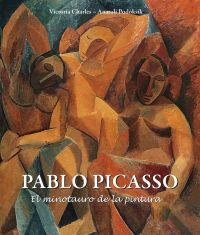
Pablo Picasso - El minotauro de la pinturaVictoria Charles, Anatoli Podoksik4h 52m$16 · $0.00
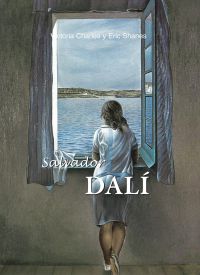
Salvador Dalí «Yo soy el surrealismo»Victoria Charles, Eric Shanes4h 41m4.6 (11)$16 · $0.00
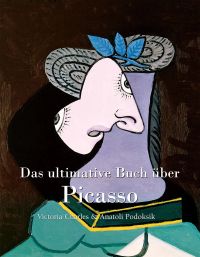
Das ultimative Buch über PicassoVictoria Charles, Anatoli Podoksik7h 20m4.2 (163)$19 · $0.00
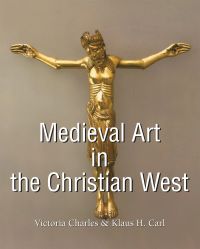
Medieval Art in the Christian WestVictoria Charles, Klaus H. Carl7h 57m$19 · $0.00

GotikVictoria Charles, Klaus H. Carl4h 43m4.0 (34)$15 · $0.00
Dalí 1904-1989Victoria Charles46m3.6 (54)$15 · $0.00
Francisco Goya: Uma vida na arteVictoria Charles1h 20m4.1 (19)$8 · $0.00
Sandro BotticelliVictoria Charles1h 24m4.2 (36)$8 · $0.00

Sandro BotticelliVictoria Charles1h 38m4.2 (26)$8 · $0.00

BotticelliVictoria Charles1h 34m4.2 (26)$8 · $0.00
Mere ChristianityC. S. Lewis7h 7m4.4 (519.7K)$24 · $0.00

Her Daily BreadKate Wood12h 57m4.6 (153)$33 · $0.00
The Holy Bible - 1 SamuelKing James2h 13m4.8 (1.6K)$3 · $0.00

The American Standard Bible — The Gospel of MatthewMatthew3h 56m4.7 (3K)$2 · $0.00

Bad Fat Black GirlSesali Bowen6h 32m4.7 (2.8K)$24 · $0.00

The King James Audio Bible New Testament CompleteChristopher Glyn20h 2m4.7 (2.6K)$12 · $0.00

Faiths CheckbookCharles Spurgeon12h 44m4.7 (3.2K)$11 · $0.00

Ten Things I Wish You Knew About Your Child's Mental HealthDr. Billy Garvey4h 53m4.7 (2.4K)$20 · $0.00

Designing Terry Pratchett’s DiscworldPaul Kidby3h 52m4.7 (343)$20 · $0.00
The Chosen Book OneAmanda Jenkins, Kristen Hendricks, Dallas Jenkins3h 8m4.6 (4.9K)$10 · $0.00
The Lives of BrianBrian Johnson9h 45m4.6 (3.5K)$29 · $0.00
Expository Thoughts on the Gospel of LukeJ.C. Ryle27h 13m4.7 (536)$18 · $0.00

CrossroadsKaleb Dahlgren7h 56m4.6 (4.9K)$26 · $0.00

Across the RiverKent Babb11h 40m4.6 (927)$29 · $0.00

Brain Training for RidersAndrea Monsarrat Waldo5h 56m4.7 (550)$19 · $0.00

My Effin' LifeGeddy Lee17h 11m4.6 (13.1K)$40 · $0.00

Kings and PawnsHoward Bryant10h 9m4.6 (678)$29 · $0.00

The Elementia Chronicles #2: The New OrderSean Fay Wolfe11h 17m4.6 (841)$29 · $0.00

The ActsLuke2h 55m4.6 (19.7K)$12 · $0.00

New Testament - Easy NavigationWorld English Bible19h 35m4.6 (1.3K)$1.30 · $0.00
You may also like

The Diary of John EvelynJohn Evelyn33h 59m4.0 (12K)$2.99 · $0.00

In the South SeasRobert Louis Stevenson10h 43m3.8 (1.1K)$1.20 · $0.00

A SHORT HISTORY OF THE WORLDH. G. Wells13h 43m4.0 (4.4K)$1.99 · $0.00

Taming the Potted BeastMolly Williams6h 14m4.1 (560)$17
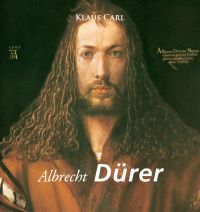
DürerKlaus Carl1h 21m4.4 (10)$8 · $0.00

Roundabout to Moscow: An Epicurean JourneyJohn Bell Bouton10h 2m$2 · $0.00
Exploring the essence of Gothic artVictoria Charles, Klaus H. Carl1h 37m4.0 (34)$13 · $0.00

A Bundle of Letters from over the SeaLouise B. Robinson6h 3m$2 · $0.00

Seeing Europe through the Eyes of the Famous Authors (Vol. 1-8)Victor Hugo, Henry James, Washington Irving, Nathaniel Hawthorne, William Howitt, William Makepeace Thackeray, Augustus J. C. Hare, Henry Wadsworth Longfellow, Bayard Taylor, Harriet Beecher Stowe, Percy Bysshe Shelley, Grant Allen, John Ruskin, Hippolyte Adolphe Taine, Johann Wolfgang von Goethe45h 33m$1.99 · $0.00

Bees, Shown to the ChildrenEllsion Hawks3h 1m$2.30

A road-book to old ChelseaG. B. Stuart45m$2 · $0.00

A Journey to Crete, Costantinople, Naples and Florence: Three Months AbroadAnnie Vivanti4h 29m$2 · $0.00

Leonardo Da Vinci - Artist, Thinker, and Man of ScienceEugène Müntz16h 56m3.6 (26)$19 · $0.00

Empires and Emperors of Russia, China, Korea, and JapanPéter Vay10h 2m$2 · $0.00

Fredericksburg, Virginia 1608-1908Author:Sylvanius Jackson Quinn13h 4m$1 · $0.00

The Suburbs of LondonHenry James44m$2.30 · $0.00
Wine TalksLaura Levy Shatkin11h 10m3.6 (28)$20

Motor Tours in Wales & the Border CountiesRodolph Mrs. Stawell5h 9m$2 · $0.00

Letters of the Right Honourable Lady M—y W—y M—eMary Wortley Lady Montagu7h 5m3.7 (60)$0.99 · $0.00

Afghan Hounds 101: The Ultimate Guide for Afghan Hound LoversSamantha D. Thompson9h 36m$3.50 · $0.00