
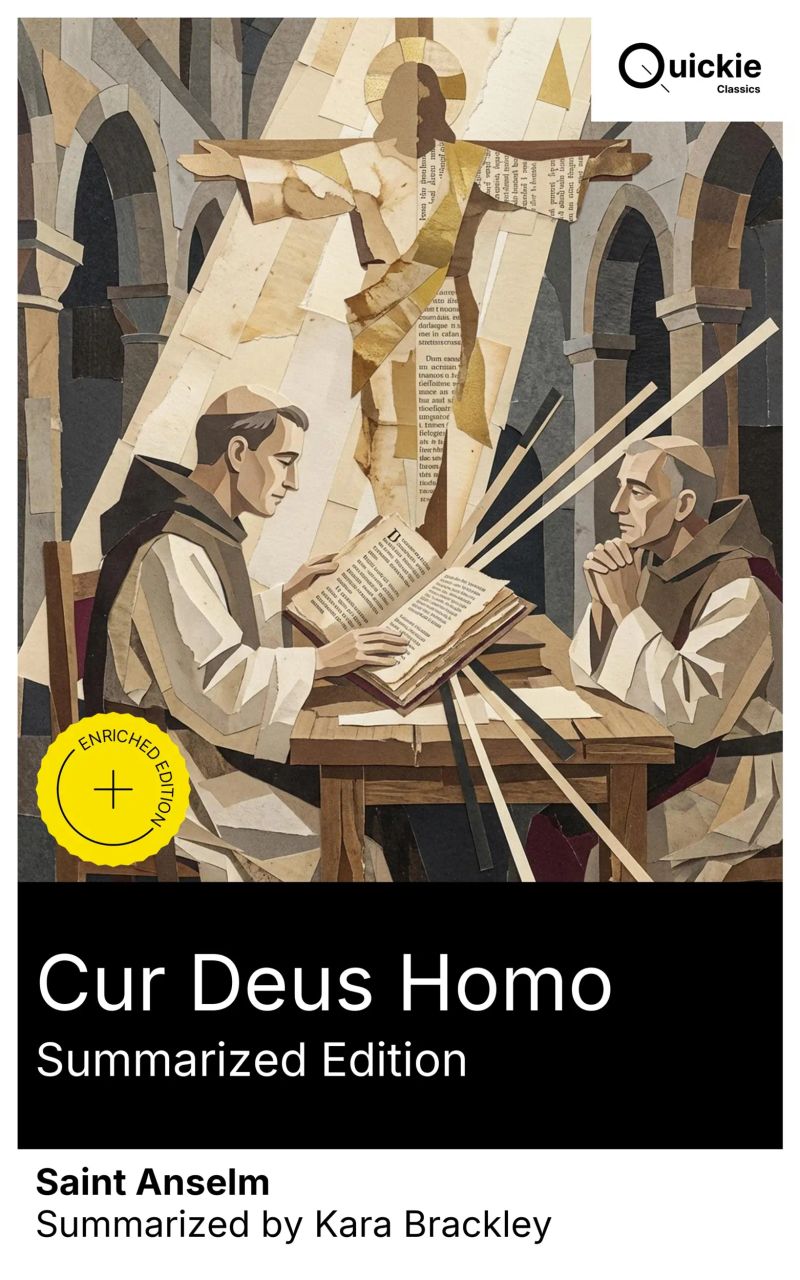
Cur Deus Homo (Summarized Edition)
Enriched edition. A Dialogue in Philosophical Theology on Divine Justice, Christ's Incarnation, Redemption, and Harmony of Faith and Reason in Medieval ScholasticismBy Saint Anselm


Length1h 46m
About this audiobook
Cur Deus Homo is Anselm's rigorous inquiry into why God became human, framed as a dialogue with the monk Boso. Eschewing appeal to bare authority, he articulates the satisfaction theory: sin incurs a debt no finite creature can pay, so only the God-man can restore justice and mercy. In lucid, tightly argued Latin, the treatise models early scholastic method while rooted in monastic devotion, and decisively shaped Western reflection on Incarnation and redemption. Benedictine monk and later Archbishop of Canterbury, Anselm brought to theology the philosophical discipline of the Monologion and Proslogion. Formed by Augustine and realist metaphysics, and writing amid ecclesial conflicts and pastoral care, he sought to render mysteries intelligible by reason for believers and questioners alike. His classroom habits - patient questioning, careful distinctions - govern the dialogue's progress. Scholars of theology, philosophy of religion, and medieval studies will find here a compact masterpiece. Whether you seek a seminal account of atonement or a classic of faith seeking understanding, Cur Deus Homo offers clarity, rigor, and spiritual seriousness in rare combination - an indispensable guide for probing the logic of the Incarnation.
Quickie Classics summarizes timeless works with precision, preserving the author's voice and keeping the prose clear, fast, and readable—distilled, never diluted. Enriched Edition extras: Introduction · Synopsis · Historical Context · Brief Analysis · 4 Reflection Q&As · Editorial Footnotes.
Audiobook details
GenreSpirituality and Religion
Length1 hr 46 mins
Narrated byListen with 1,000+ voices
FormateBook with Audio
Publish dateJan 10, 2026
LanguageEnglish
Table of contents
1Introduction
5Cur Deus Homo
2Introduction
6Analysis
3Synopsis
7Reflection
4Historical Context
More from Saint Anselm
A Little God Time for Women Morning & Evening DevotionalBroadStreet Publishing Group LLC15h 15m4.9 (1.2K)$10 · $0.00
The Chosen Presents: A Blended Harmony of the GospelsSteve Laube, Amanda Jenkins, Dallas Jenkins7h 8m4.9 (823)$10 · $0.00
Prayers from the Throne RoomBrian Simmons8h 55m4.9 (256)$10 · $0.00
31 Decrees of Blessing for Your LifePatricia King2h 38m4.8 (1.4K)$10 · $0.00
Loved BabySarah Philpott4h 51m4.8 (1.4K)$10 · $0.00

The QuranAllah23h 7m4.7 (136.1K)$1 · $0.00
The Secret of the RosaryLouis de Montfort6h 1m4.7 (16K)$2 · $0.00
The Holy Qur-an: Text, Translation and CommentaryAbdullah Yusuf Ali22h 16m4.7 (133K)$1 · $0.00
All of Grace (Annotated)Charles Spurgeon5h 1m4.7 (1.3K)$1.99 · $0.00
Steps to ChristEllen G. White3h 12m4.7 (13.8K)$2 · $0.00
The Doctrine and Selected CovenantsJoseph Smith13h 53m4.7 (10.4K)$1.99 · $0.00
Sinners in the Hands of an Angry God & Other Sermons (Annotated)Jonathan Edwards7h 51m4.7 (1.5K)$2 · $0.00
Swayam Ki AwaazPrem Rawat8h 34m4.7 (1.1K)$26 · $0.00

Behind the BadgeAdam Davis10h 18m4.7 (2.7K)$10 · $0.00
The New Human Revolution, vol. 1Daisaku Ikeda7h 46m4.7 (669)$12 · $0.00

You Are Worth ItKyle Carpenter, Don Yaeger8h 53m4.7 (4.8K)$29 · $0.00
Praying GraceDavid A. Holland3h 2m4.7 (658)$10 · $0.00
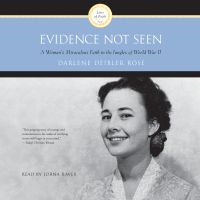
Evidence Not SeenDarlene Deibler Rose11h 11m4.6 (11.9K)$29 · $0.00
The Christ KeyChad Bird, Chad Bird7h 33m4.7 (592)$17.40 · $0.00
He and IGabrielle Bossis10h 12m4.7 (554)$17 · $0.00
You may also like
True Christian ReligionEmanuel Swedenborg43h 9m4.4 (541)$3.50 · $0.00
Letters from Heaven (2020 Edition)Brian Simmons6h 22m4.8 (401)$10 · $0.00
Paths to PowerA. W. Tozer1h 13m4.6 (542)$2 · $0.00
On the Incarnation (Annotated)Athanasius of Alexandria4h 47m4.4 (20.4K)$2 · $0.00
The Story of JesusBrian Simmons3h 10m4.8 (295)$3 · $0.00
A Catechism of Christian DoctrineAnonymous2h 24m4.5 (1.2K)$2 · $0.00
The Book of Romans (2020 Edition)Brian Simmons3h 3m4.8 (446)$10 · $0.00
The Legacy of Sovereign JoyJohn Piper3h 38m4.5 (2K)$17 · $0.00
The Way to GodDwight L. Moody4h 39m4.5 (714)$14
The End of ReligionBruxy Cavey6h 25m4.4 (1.2K)$20
Treatise On the IncarnationAthanasius of Alexandria4h 43m4.5 (19.9K)$1.99 · $0.00
The Repentant SinnerLeo Tolstoy6m4.2 (1.2K)$2.30
Cur Deus Homo (Annotated)Saint Anselm4h 21m$2 · $0.00
My Comfort Is JesusRay Comfort19h 12m4.7 (40)$10 · $0.00
Lectures on Revivals of Religion (Annotated)Charles G. Finney21h 38m4.2 (221)$1.99 · $0.00
The Ritual MovementJames Galloway Cowan1h 3m$2 · $0.00
5 Messages & Songs to Make Life BetterPastor Philip1h 10m$19
Where in the Church is the GospelRod Rosenbladt1h 49m$3 · $0.00
The Breadth, Freeness, and Yet Exclusiveness of the GospelEdward Hoare22m$2 · $0.00
Anthony: Words of Fire, Life of LightMadeline Pecora Nugent8h 42m4.2 (22)$21 · $0.00