
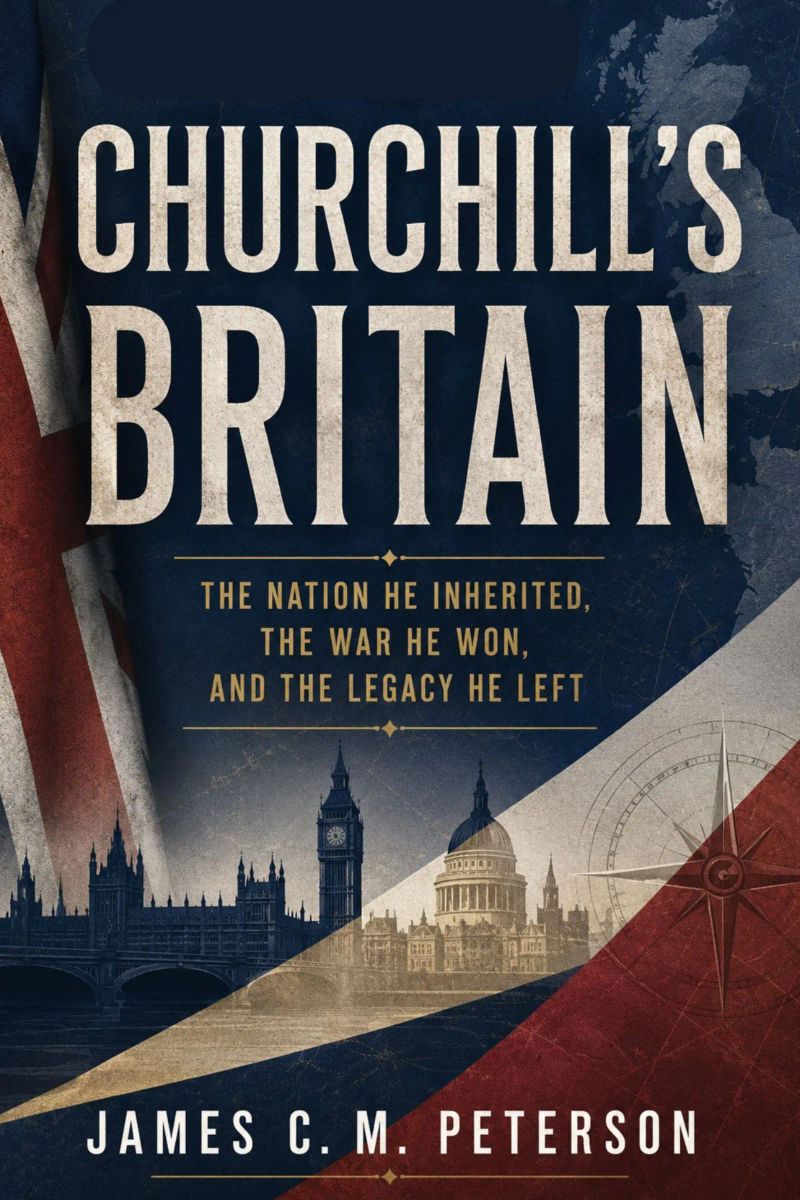
Churchill's Britain
The Nation He Inherited, the War He Won, and the Legacy He LeftBy James C. M. Peterson


Length7h 8m
About this audiobook
In the autumn of 1940, with France fallen and Germany's armies massed across the Channel, one man looked at the most powerful military force Europe had produced in a generation and refused to negotiate. That refusal changed the world. But Winston Churchill was not simply the defiant voice on the wireless, the raised fingers, and the promise that Britain would never surrender. He was also the product of an empire at its zenith, a Victorian aristocrat who absorbed his nation's confidence and its contradictions in equal measure, and who spent nine decades as the most vivid single expression of both.
Churchill's Britain traces the full arc of that extraordinary life against the nation it shaped and was shaped by. From the imperial certainties of the 1870s, through two world wars that exhausted the material foundations of British power, to the contested legacy that continues to divide opinion more than half a century after his death, this is a history of Churchill and Britain told as a single, inseparable story.
Part One follows the nation Churchill inherited: the empire at its peak, the social fault lines running beneath Victorian confidence, the Great War's scars, the Depression's damage, and the decade of appeasement that brought Europe to catastrophe. Part Two covers the war he won: the desperate cabinet debates of May 1940, the Battle of Britain, the Grand Alliance with Roosevelt and Stalin, El Alamein, D-Day, and the shattering electoral defeat that arrived within weeks of victory. Part Three confronts the legacy he left: the Iron Curtain speech that helped define the Cold War, a second premiership conducted in the shadow of declining national power, the twilight of an empire he had fought to preserve, and the long, unfinished argument over what Churchill truly means, conducted as fiercely today as it was in the decades immediately after his death.
Written with the sweep of major narrative history and the precision of serious scholarship, Churchill's Britain does not flatten its subject into either hero or villain. It holds both halves of Churchill's record in honest view: the man whose stubbornness in 1940 was possibly the most consequential individual decision of the twentieth century, and the man whose imperial convictions caused genuine harm to millions of people who have rarely appeared in the commemorative version of his story. The result is a portrait of an extraordinary human being, and of the extraordinary nation that produced him, that is as frank about the costs of British greatness as it is clear-eyed about its reality.
For readers of Andrew Roberts, Max Hastings, and Antony Beevor, Churchill's Britain is essential reading for anyone who wants to understand not only who Churchill was, but what Britain was, what it became, and what of both endures today.
Audiobook details
GenreHistory
Length7 hrs 8 mins
Narrated byListen with 1,000+ voices
FormateBook with Audio
LanguageEnglish
Table of contents
1Churchill's Britain
2Introduction: A Life Bound to a Nation's Fate
3Part One: The Nation He Inherited
4Chapter 1
5Victorian Foundations, Edwardian Twilight
Show all chaptersShow less
6Chapter 2
7Empire at Its Zenith
8Chapter 3
9A Young Man in a Hurry Churchill's Early Career
10Chapter 4
11The Great War and Its Scars
12Chapter 5
13Britain Between the Wars — Strikes, Slumps, and Shifting Power
14Chapter 6
15The Gathering Storm; Appeasement and the Road to 1939
16Chapter 7
17"Their Finest Hour" Churchill Becomes Prime Minister:
18Chapter 8
19The Battle of Britain and the Blitz
20Chapter 9
21Holding the Line — North Africa and the Mediterranean:
22Chapter 10
23The Grand Alliance; Roosevelt, Stalin, and Churchill
24Chapter 11
25Turning Tides; El Alamein, Stalingrad, and the Atlantic
26El Alamein: The End of Rommel's Advance
27Stalingrad: Hitler's Greatest Defeat
28The Battle of the Atlantic: The War's Lifeline
29The Convergence of Victory
30Chapter 12
31D-Day and the Liberation of Europe
32The Debate Over the Second Front
33Preparing for Operation Overlord
34D-Day: 6 June 1944
35The Battle for Normandy
36The Liberation of France
37Churchill's Changing Role
38The Battle of the Bulge
39Crossing the Rhine
40The Fall of Berlin and Hitler's Death
41Victory in Europe
42Chapter 13
43Yalta, Potsdam, and the Shape of the Postwar World
44The Wartime Alliance Under Strain
45Yalta: The Last Great Wartime Summit
46The Polish Question
47Why Churchill Could Not Secure More
48Germany and the Occupation Zones
49The United Nations
50Soviet Entry into the War Against Japan

A Brief History of IntelligenceMax S. Bennett12h 18m4.6 (6.6K)$29 · $0.00
Black AF HistoryMichael Harriot15h 43m4.7 (14.6K)$33 · $0.00

The Gulag Archipelago Volume 3Aleksandr I. Solzhenitsyn21h 56m4.7 (8.9K)$46 · $0.00

Pearl of Great PriceJoseph Smith3h 8m4.7 (7.2K)$1.20 · $0.00
The Happiest Man on EarthEddie Jaku3h 48m4.6 (178K)$7 · $0.00
MotherlandJulia Ioffe17h 52m4.7 (2.5K)$40 · $0.00

Where Cowards Go to DieBenjamin Sledge8h 42m4.7 (351)$20 · $0.00
RevolutionariesSanjeev Sanyal11h 23m4.6 (2.6K)$29 · $0.00

We Crossed a Bridge and It TrembledWendy Pearlman6h4.6 (5.2K)$24 · $0.00
Unbroken Bonds of BattleJohnny Joey Jones8h 31m4.6 (2.6K)$8 · $0.00
The Daughter of AuschwitzTova Friedman, Malcolm Brabant7h 54m4.6 (16.7K)$26 · $0.00
Lily's PromiseLily Ebert, Dov Forman8h 54m4.6 (16.1K)$29 · $0.00
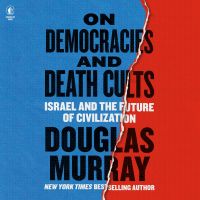
On Democracies and Death CultsDouglas Murray10h 38m4.6 (6.5K)$29 · $0.00

Across the RiverKent Babb11h 40m4.6 (927)$29 · $0.00
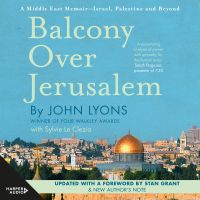
Balcony Over Jerusalem: A Middle East Memoir - Israel, Palestine and BeyondJohn Lyons12h 37m4.6 (1.4K)$33 · $0.00
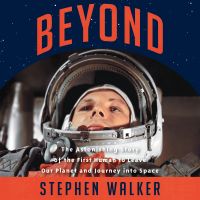
BeyondStephen Walker15h 39m4.6 (3.2K)$33 · $0.00
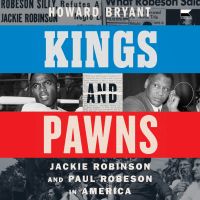
Kings and PawnsHoward Bryant10h 9m4.6 (678)$29 · $0.00
No EscapeNury Turkel9h 30m4.6 (809)$28 · $0.00
Jubal Stone: U.S. Marshal: Blood Trail To Hell: A Western Adventure NovelCasey Nash3h 42m4.6 (3.2K)$18 · $0.00
Fall and RiseMitchell Zuckoff17h 23m4.6 (9.8K)$40 · $0.00
You may also like
WarlordCarlo D’Este30h 4m4.3 (1.4K)$39
The Last Lion: Winston Spencer Churchill, Vol. 1William Manchester41h 20m4.4 (23K)$30
The Light of BattleMichel Paradis16h 43m4.4 (677)$8 · $0.00
Once an EagleAnton Myrer41h 21m4.5 (25.7K)$40
Harry S. TrumanRobert H. Ferrell21h 39m4.0 (268)$30
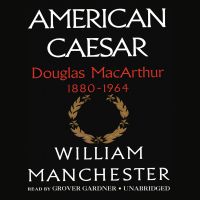
American CaesarWilliam Manchester31h 51m4.3 (18.8K)$35
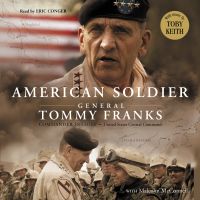
American SoldierTommy R. Franks19h 43m4.0 (2.3K)$40 · $0.00
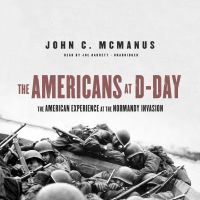
The Americans at D-DayJohn C. McManus13h 9m4.4 (471)$23
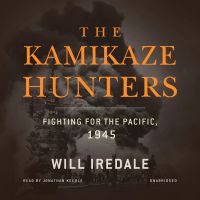
The Kamikaze HuntersWill Iredale12h 57m4.2 (2K)$23
The Last RepublicansMark K. Updegrove14h 25m4.0 (1.5K)$33 · $0.00
The Story of a Common Soldier of Army Life in the Civil WarLeander Stillwell10h 53m4.3 (1.3K)$1.99 · $0.00
Six Armies in NormandyJohn Keegan17h 26m4.2 (4.1K)$28

AliJonathan Eig22h 52m4.5 (5.8K)$46 · $0.00
Unsung EaglesJay A. Stout11h 28m4.6 (860)$20
War & PeaceLeo Tolstoy65h 22m4.4 (431.6K)$1 · $0.00
The Young Lieutenant; or, The Adventures of an Army OfficerOliver Optic9h 1m3.9 (10)$2 · $0.00
The Fighting PattonsBrian M. Sobel14h 14m4.3 (68)$25 · $0.00
Captain Lucy and Lieutenant BobAline Havard8h$2.30
Whitney StraightPaul Kenny11h 46m$25
The Remains of the Corps, Vol. 1Thomas W. Hebert, Will Remain11h 18m$20