
Mature
Audio only


Length16h 14m
About this audiobook
A classic book now available on audio
With narration by Phyllida Nash, who gives a captivating account of the legendary empire that made the modern Western world possible
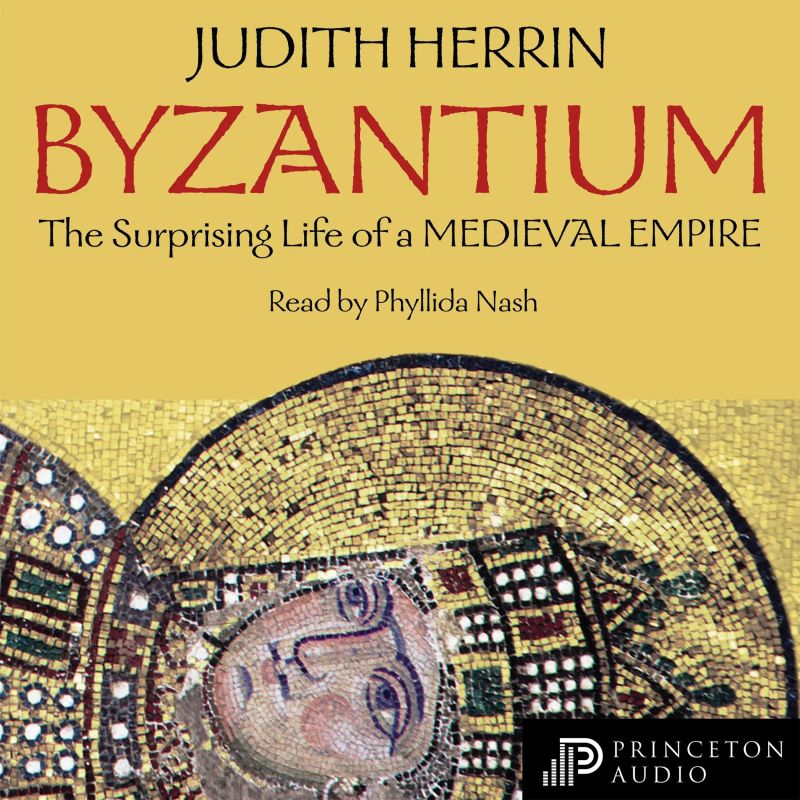
Byzantium. The name evokes grandeur and exoticism—gold, cunning, and complexity. In this unique book, Judith Herrin unveils the riches of a quite different civilization. Avoiding a standard chronological account of the Byzantine Empire's millennium—long history, she identifies the fundamental questions about Byzantium—what it was, and what special significance it holds for us today.
Bringing the latest scholarship to a general audience in accessible prose, Herrin focuses each short chapter around a representative theme, event, monument, or historical figure, and examines it within the full sweep of Byzantine history—from the foundation of Constantinople, the magnificent capital city built by Constantine the Great, to its capture by the Ottoman Turks.
She argues that Byzantium's crucial role as the eastern defender of Christendom against Muslim expansion during the early Middle Ages made Europe—and the modern Western world—possible. Herrin captivates us with her discussions of all facets of Byzantine culture and society. She walks us through the complex ceremonies of the imperial court. She describes the transcendent beauty and power of the church of Hagia Sophia, as well as chariot races, monastic spirituality, diplomacy, and literature. She reveals the fascinating worlds of military usurpers and ascetics, eunuchs and courtesans, and artisans who fashioned the silks, icons, ivories, and mosaics so readily associated with Byzantine art.
An innovative history written by one of our foremost scholars,
Byzantium reveals this great civilization's rise to military and cultural supremacy, its spectacular destruction by the Fourth Crusade, and its revival and final conquest in 1453.
Audiobook details
GenreHistory
Length16 hrs 14 mins
Narrated byPhyllida Nash
FormatAudiobook
Publish dateJan 24, 2023
LanguageEnglish
Table of contents
1Opening Anno, Introduction , A Different History of Byzantium
16Chapter 15 - Eunuchs
2Foundations of Byzantium, Chapter 1 , The City of Constantine
17Chapter 16 - The Imperial Court
3Chapter 2 - Constantinople, the Largest City in Christendom
18Chapter 17 - Imperial Children, 'Born in the Purple'
4Chapter 3 - The East Roman Empire
19Chapter 18 - Mount Athos
5Chapter 4 - Greek Orthodoxy
20Chapter 19 - Venice and the Fork
Show all chaptersShow less
6Chapter 5 - The Church of Hagia Sophia
21Chapter 20 - Basil II, 'The Bulgar-Slayer
7Chapter 6 - The Ravenna Mo
22Chapter 21 - Eleventh-Century Crisis
8Chapter 7 - Roman Law
23Chapter 22 - Anna Komnene
9Part 2 The Transition from Ancient to Medieval, Chapter 8, The Bulwark Against Islam
24Chapter 23 - A Cosmopolitan Society
10Chapter 9 - Icons, a New Christian Art Form
25Part 4 Varieties of Byzantium, Chapter 24, The Fulcrum of the Crusades
11Chapter 10 - Iconoclasm and Icon Veneration
26Chapter 25 - The Towers of Trebizond, Arta, Nicaea and Thessalonike
12Chapter 11 - A Literate and Articulate Society
27Chapter 26 - Rebels and Patrons
13Chapter 12 - Saints Cyril and Methodios, 'Apostles to the Slavs'
28Chapter 27 - Better the Turkish Turban than the Papal Tiara
14Part 3 Byzantium Becomes a Medieval State, Chapter 13 , Greek Fire
29Chapter 28 - The Siege of 145
15Chapter 14 - The Byzantine Economy
30Conclusion , Closing Anno

Frederick Douglass: All 3 Memoirs in One VolumeFrederick Douglass44h 9m$2 · $0.00
I've Been to the MountaintopMartin Luther King48m5 (1)$11 · $0.00

RevolutionariesSanjeev Sanyal11h 23m$29 · $0.00

We Crossed a Bridge and It TrembledWendy Pearlman6h$24 · $0.00

Unbroken Bonds of BattleJohnny Joey Jones8h 31m$8 · $0.00

The Red RecordIda B. Wells-Barnett2h 9m$2 · $0.00

The Daughter of AuschwitzTova Friedman, Malcolm Brabant7h 54m$26 · $0.00

Lily's PromiseLily Ebert, Dov Forman8h 54m$29 · $0.00

Saving My EnemyBob Welch9h 11m$20

On Democracies and Death CultsDouglas Murray10h 38m$29 · $0.00

Across the RiverKent Babb11h 40m$29 · $0.00
Balcony Over Jerusalem: A Middle East Memoir - Israel, Palestine and BeyondJohn Lyons12h 37m$33 · $0.00
The Fire Next TimeJames Baldwin2h 25m$15

EnduranceAlfred Lansing6h 1m$20

LES MISERABLES (Illustrated Edition)Victor Hugo66h 17m$1 · $0.00

BeyondStephen Walker15h 39m$33 · $0.00
Kings and PawnsHoward Bryant10h 9m$29 · $0.00

No EscapeNury Turkel9h 30m$28 · $0.00
The History of the Decline and Fall of the Roman Empire (Complete 6 Volume Edition)Edward Gibbon179h 45m$2 · $0.00

Jubal Stone: U.S. Marshal: Blood Trail To Hell: A Western Adventure NovelCasey Nash3h 42m$18 · $0.00
You may also like

The Byzantine AchievementRobert Byron9h 41m$2 · $0.00

Captive ParadiseJames L. Haley13h 32m$23
Empires of the SteppesKenneth W. Harl17h 13m$40 · $0.00
The History of Medieval EuropeLynn Thorndike24h 28m$1 · $0.00
The History of the Byzantine Empire: From Its Glory to Its DownfallCharles Oman9h 46m$2 · $0.00

Canada and its ProvincesVarious12h 10m$2 · $0.00
The History of the Decline and Fall of the Roman Empire (Complete 6 Volume Edition)Edward Gibbon179h 45m$2 · $0.00

The Story of MadrasGlyn Barlow$2 · $0.00
Ancient Greece: The History of Classical Greece from Its Earliest Beginnings to the Hellenistic Age (Summarized Edition)John Bagnell Bury8h 58m$2
History of the Byzantine Empire: From the Foundation until the Fall of Constantinople (328-1453)Charles Oman9h 46m$3 · $0.00

The Rise and Fall of Byzantine Empire: A 5-Volume AnthologyCharles Oman, J. B. Bury, William Gordon Holmes, Joseph François Michaud, Edwin Pears139h 47m$2
The History of Sassanian "New Persian" EmpireGeorge Rawlinson17h 19m$2 · $0.00

A History of American ChristianityLeonard Woolsey Bacon13h 20m$1 · $0.00
History of the Wars: The Gothic WarProcopius$1 · $0.00

Medieval EuropeChris Wickham14h 18m$23 · $0.00
The Persian WarsHerodotus26h 35m$1 · $0.00

Tides of History: The Fall of Rome, Vol. 1Patrick Wyman5h 27m$20

The Byzantine EmpireCharles Oman10h 39m$2 · $0.00
A History of the Later Roman Empire (Vol. 1&2)J. B. Bury46h 19m$2 · $0.00
The Arian ControversyHenry Melvill Gwatkin5h 24m$2 · $0.00