
Length9h 45m
About this audiobook
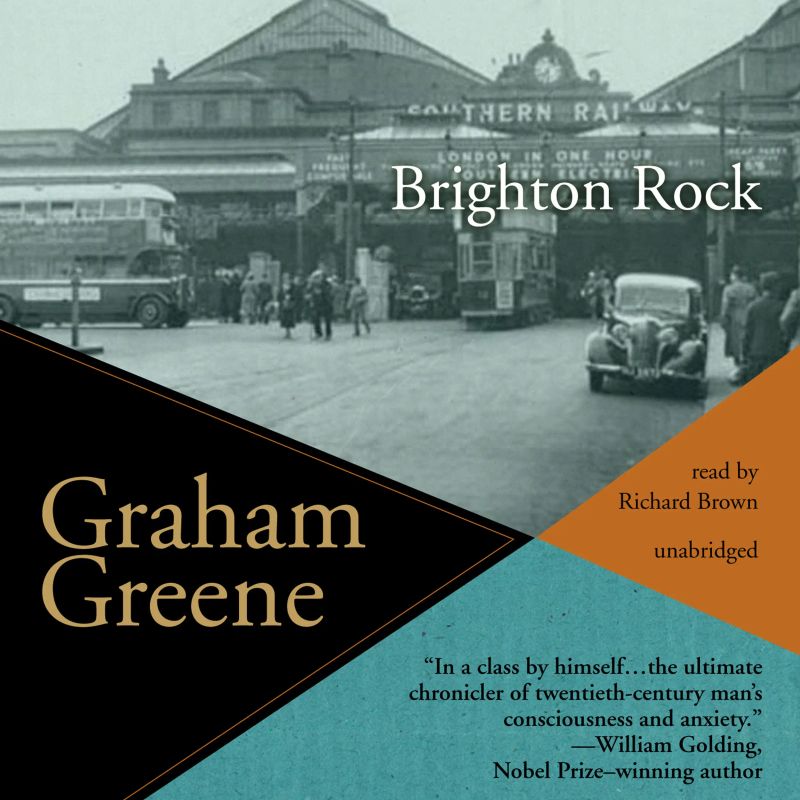
Originally published in 1938, Graham Greene’s chilling exposé of violence and gang warfare is a masterpiece of psychological realism and often considered Graham Greene’s best novel. It is a fascinating study of evil, sin, and the “appalling strangeness of the mercy of God,” a classic of its kind.
Set in Brighton, England, among the criminal rabble, the book depicts the tragic career of a seventeen-year-old boy named Pinkie whose primary ambition is to lead a gang to rival that of the wealthy and established Colleoni. Pinkie is devoid of compassion or human feeling, despising weakness of the spirit or of the flesh. Responsible for the razor slashes that killed Kite and also for the death of Hale, he is the embodiment of calculated evil. As a Catholic, however, he is convinced that his retribution does not lie in human hands.
He is therefore not prepared for Ida Arnold, Hale’s avenging angel. Ida, whose allegiance is with life, the here and now, has her own ideas about the circumstances surrounding Hale’s death. For the sheer joy of it she takes up the challenge of bringing the infernal Pinkie to an earthly kind of justice.
When finished, the listener is sure to ponder some lofty moral issues to which Greene, a Catholic writer, withholds easy judgments.
Audiobook details
Rating★★★★ 3.9 (45.9K)
Includes Goodreads, LibraryThing, StoryGraph, Amazon
GenreLiterary Classics, General Fiction
Length9 hrs 45 mins
Narrated byRichard Brown
FormatAudiobook
Publish dateMar 3, 2011
LanguageEnglish
More from Graham Greene
To Kill a MockingbirdHarper Lee12h 18m4.5 (7.4M)$29 · $0.00

These Precious DaysAnn Patchett11h 14m4.5 (45.2K)$29 · $0.00

This Side of Paradise - The Original 1920 Edition (Annotated)F. Scott Fitzgerald11h 30m4.6 (1.6K)$2 · $0.00
The Great Gatsby: Original 1925 Edition (An F. Scott Fitzgerald Classic NovelFrancis Scott Fitzgerald4h 45m4.6 (9.3K)$18 · $0.00
TWELFTH NIGHTWilliam Shakespeare, Sidney Lee16h 38m4.6 (2.8K)$1.99 · $0.00

The Complete Histories / History Plays of William Shakespeare (Annotated)William Shakespeare29h 42m4.6 (2.3K)$1.99 · $0.00

Braving the TruthRachel Held Evans11h 31m4.7 (359)$29 · $0.00

The Old Man and the Sea (Annotated)Ernest Hemingway4h 27m4.6 (1.4K)$2 · $0.00
Henry V (The Play, Historical Background and Analysis of the Character in the Play)William Shakespeare, William Hazlitt8h 50m4.6 (1.3K)$1.99 · $0.00
H. P. LOVECRAFT Ultimate Collection: Novellas, Short Stories, Poetry & Essays (Annotated)H. P. Lovecraft12h 28m4.6 (2.3K)$2 · $0.00
Time RegainedMarcel Proust16h 8m4.5 (10.6K)$1.99 · $0.00

The Mis-Education of the NegroCarter Goodwin Woodson4h 32m4.5 (28.4K)$10 · $0.00
Lessons in TruthH. Emilie3h 50m4.6 (1.4K)$4.70 · $0.00

TORAH - Bilingual Edition: English/Hebrew (Annotated)Max Margolis, JPS28h 26m4.6 (1K)$2 · $0.00

Betty Crocker picture cooky bookBetty Crocker, Inc. General Mills2h 13m4.5 (6.5K)$1 · $0.00

The Complete Tales of Beatrix PotterBeatrix Potter3h 36m4.5 (75K)$3 · $0.00
Anne of Green GablesL. M. Montgomery11h 1m4.5 (1.2M)$2.30 · $0.00
Crime and Punishment (The Unabridged Garnett Translation) (Annotated)Fyodor Dostoevsky24h 25m4.5 (15.4K)$1.99 · $0.00

The North American IndianEdward S. Curtis, Frederick Webb Hodge6h4.5 (1.2K)$2 · $0.00

The Picture of Dorian Gray: The Uncensored 13 Chapter Version + The Revised 20 Chapter Version (Annotated)Oscar Wilde16h 12m4.5 (2.8K)$1.99 · $0.00
WhistlerAnn Patchett10h 45m4.6 (4.6K)$29 · $0.00
Demon CopperheadBarbara Kingsolver21h 3m4.5 (949.4K)$46 · $0.00
To Kill a MockingbirdHarper Lee12h 18m4.5 (7.4M)$29 · $0.00

Remarkably Bright CreaturesShelby Van Pelt11h 17m4.4 (1.7M)$29 · $0.00
The Great Gatsby: Original 1925 Edition (An F. Scott Fitzgerald Classic NovelFrancis Scott Fitzgerald4h 45m4.6 (9.3K)$18 · $0.00
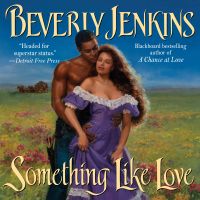
Something Like LoveBeverly Jenkins10h 21m4.6 (2.7K)$29 · $0.00
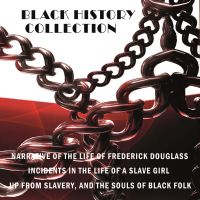
Black History CollectionFrederick Douglass, Harriet Ann Jacobs, Booker T. Washington, W.E.B. Du Bois27h 9m4.6 (2.6K)$18 · $0.00
The Old Man and the Sea (Annotated)Ernest Hemingway4h 27m4.6 (1.4K)$2 · $0.00

White HotIlona Andrews13h 18m4.5 (136.9K)$5 · $0.00

The Ghost by the Billabong (The Matilda Saga, #5)Jackie French14h 58m4.6 (773)$33 · $0.00
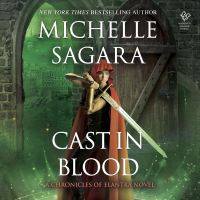
Cast in BloodMichelle Sagara16h 35m4.6 (607)$33 · $0.00
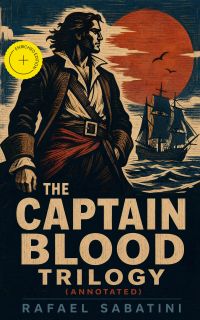
The Captain Blood Trilogy (Annotated)Rafael Sabatini29h 20m4.6 (1K)$3 · $0.00
Ship of the Line (Annotated)Cecil Louis Troughton Smith11h 13m4.6 (1K)$2 · $0.00

The George Orwell CollectionGeorge Orwell24h 46m4.5 (14.4K)$12 · $0.00
Time RegainedMarcel Proust15h 38m4.5 (9.2K)$2 · $0.00

Driving ForceElle James4h 58m4.6 (407)$20 · $0.00

When God Calls the HeartBrian Bird, Michelle Cox3h 24m4.6 (439)$10 · $0.00

Five Little IndiansMichelle Good10h 34m4.5 (64.5K)$29 · $0.00
Lolth's WarriorR. A. Salvatore13h 20m4.6 (2.4K)$33 · $0.00
The Things We Cannot SayKelly Rimmer13h 48m4.5 (359.1K)$33 · $0.00
You may also like
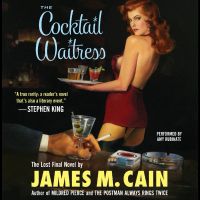
The Cocktail WaitressJames Cain8h 35m3.6 (3.6K)$26 · $0.00

Hunting AnnabelleWendy Heard9h 3m3.6 (3.3K)$29 · $0.00

The CutieDonald E. Westlake5h 26m3.9 (1.4K)$20

The Maltese Falcon (Annotated)Dashiell Hammett8h 48m4.4 (1.2K)$1.99 · $0.00
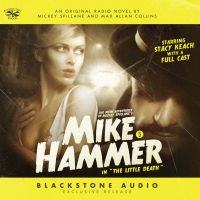
The New Adventures of Mickey Spillane’s Mike Hammer, Vol. 2Max Allan Collins, Mickey Spillane, Carl Amari2h 14m4.0 (458)$10
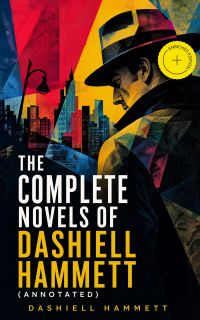
The Complete Novels of Dashiell Hammett (Annotated)Dashiell Hammett37h 48m4.5 (1K)$2 · $0.00
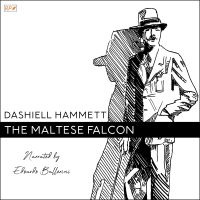
The Maltese FalconDashiell Hammett6h 15m4.0 (146K)$15
What I Lived ForJoyce Carol Oates28h 1m3.8 (1.3K)$53 · $0.00
Crime and PunishmentFyodor Dostoyevsky24h 4m4.4 (1.2M)$1.99 · $0.00

The Maltese FalconDashiell Hammett6h 39m4.0 (154.4K)$12 · $0.00

Voice of the ViolinAndrea Camilleri5h 18m4.2 (15K)$14

The AwardMatthew Pearl7h 10m3.8 (2K)$24 · $0.00
A Bullet for CinderellaJohn D. MacDonald6h 3m4.0 (2.2K)$2.30

The Second MouseArcher Mayor8h 30m4.0 (1.5K)$20
Confess, FletchGregory Mcdonald6h 23m4.0 (6.9K)$17
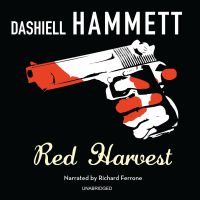
Red HarvestDashiell Hammett6h 26m3.9 (32.6K)$20
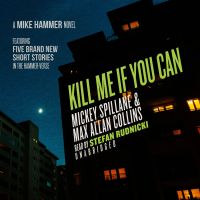
Kill Me If You CanMax Allan Collins, Mickey Spillane7h 19m4.0 (1.7K)$17
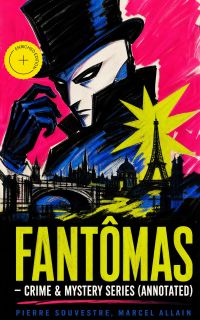
FANTÔMAS – Crime & Mystery Series (Annotated)Pierre Souvestre, Marcel Allain48h 49m$2 · $0.00
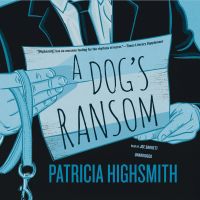
A Dog’s RansomPatricia Highsmith8h 48m3.5 (1.2K)$20
The Red StormGrant Bywaters5h 18m3.4 (110)$20 · $0.00