
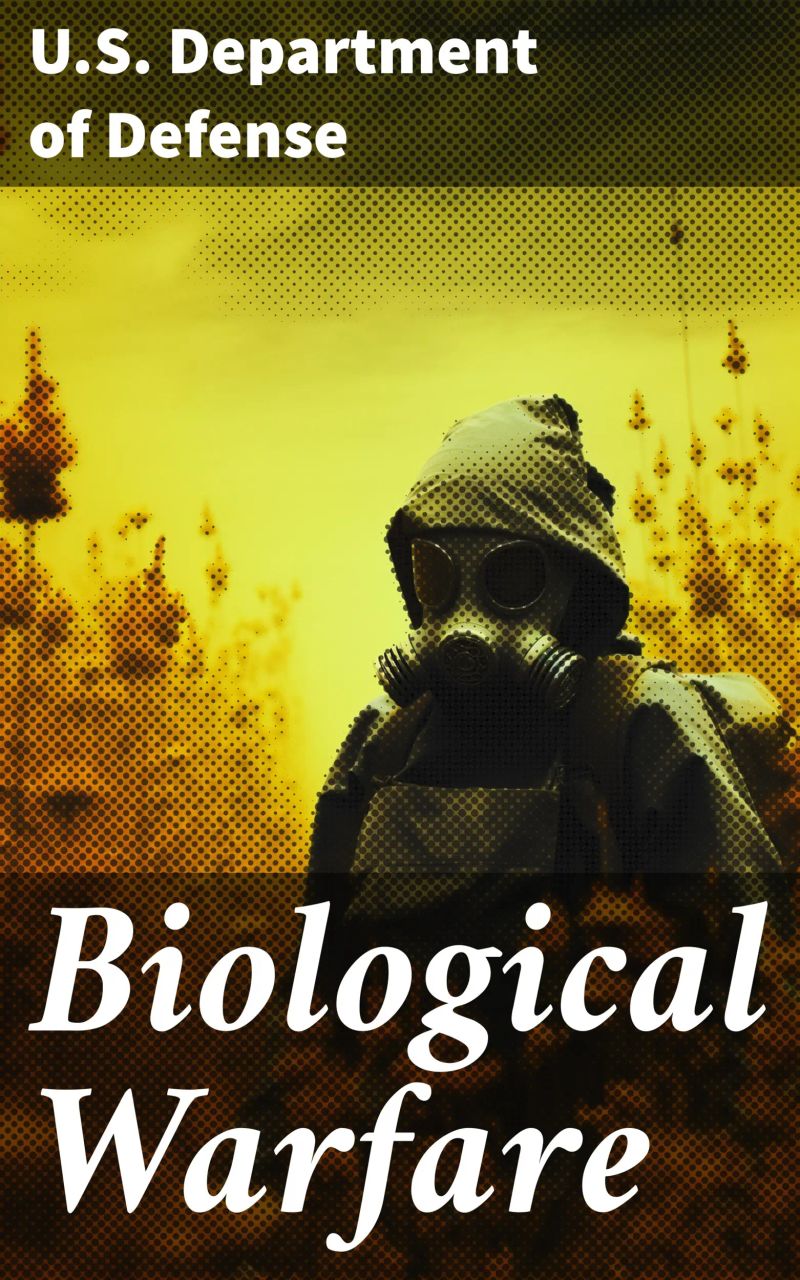
Biological Warfare
Exploring the History and Implications of Biological WeaponsBy U.S. Department of Defense


Length8h 45m
About this audiobook
In "Biological Warfare," the U.S. Department of Defense presents a comprehensive analysis of the strategies, implications, and ethics surrounding the use of biological agents in conflict. This authoritative text delves into the historical context of biological warfare, tracing its roots from ancient practices to modern-day applications. The prose is meticulously crafted, combining empirical research with clear, pragmatic language, making it accessible to both scholars and lay readers. The book critically examines case studies and military doctrines, emphasizing the evolving nature of biological threats in contemporary warfare and the importance of preparedness and regulation within the global arena. The U.S. Department of Defense, as the esteemed authority on national security, draws upon extensive research, military history, and real-world intelligence to inform this vital discourse. Their focus on biological warfare reflects growing concerns about bioterrorism and state-sponsored biological agents, rooted in the complexities and paradoxes of modern security dilemmas. By grounding their analysis in both scientific and strategic frameworks, the authors highlight the urgent need for an informed approach to this multifaceted threat. This book is a crucial resource for policymakers, military strategists, and scholars in the fields of defense studies and international relations. It not only broadens the understanding of biological warfare's potential consequences but also urges readers to consider the moral and ethical dimensions of employing such tactics in today'Äôs interconnected world.
Audiobook details
GenrePolitics and Government
Length8 hrs 45 mins
Narrated byListen with 1,000+ voices
FormateBook with Audio
Publish dateJan 16, 2024
LanguageEnglish
Table of contents
1INTRODUCTION
2HISTORY OF BIOLOGICAL WARFARE AND CURRENT THREAT
3DISTINGUISHING BETWEEN NATURAL AND INTENTIONAL DISEASE OUTBREAKS
4TEN STEPS IN THE MANAGEMENT OF BIOLOGICAL CASUALTIES ON THE BATTLEFIELD
5Therapy
Show all chaptersShow less
6Case Reporting and Epidemiological Assessment
7Prevention
8Protective Equipment
9First Aid
10Protective Measures and Handling of Casualties
11Patient Decontamination
12Infection Control
13Medical Evacuation
14Aeromedical Isolation Team
15BACTERIAL AGENTS
16ANTHRAX
17BRUCELLOSIS
18GLANDERS AND MELIOIDOSIS
19PLAGUE
20Q FEVER
21TULAREMIA
22VIRAL AGENTS
23SMALLPOX
24VENEZUELAN EQUINE ENCEPHALITIS (VEE)
25VIRAL HEMORRHAGIC FEVER
26BIOLOGICAL TOXINS
27BOTULINUM
28RICIN
29STAPHYLOCOCCAL ENTEROTOXIN B
30T-2 MYCOTOXINS
31Emerging Threats and Future Biological Weapons
32DETECTION
33PERSONAL PROTECTION
34DECONTAMINATION
35Appendix A: Glossary of Medical Terms
36Appendix B: Patient Isolation Precautions
37Appendix C: BW Agent Characteristics
38ANTHRAX
39Brucellosis
40Glanders & Meliodosis
41Plague
42Q Fever
43Tularemia
44Botulinum Toxins
45Ricin Toxin
46Staphylococcus Enterotoxins
47Encephalitis Viruses
48Hemorrhagic Fever Viruses
49Smallpox
50Bacteria and Rickettsia

Biological WarfareU.S. Department of Defense8h 57m$1.99 · $0.00

The German Campaign in Russia: 1940-1942U.S. Department of Defense8h 20m$1.99 · $0.00

Counter Sniper Handbook - Eliminate the Risk with the Official US Army ManualU.S. Department of Defense1h 1m$1.99 · $0.00

Fight Like a Marine - Close Combat Fighting (Official U.S. Marine Handbook)U.S. Department of Defense3h 36m4.1 (233)$1.99 · $0.00

Sniper and Counter Sniper Tactics - The Official U.S. Army ManualU.S. Department of Defense9h 42m4.2 (203)$1.99 · $0.00
Survival Handbook - Manual for Learning How to Persist and SurviveU.S. Department of Defense10h 2m$1 · $0.00

The U.S. Marine Manual for Close Combat FightingU.S. Department of Defense3h 28m4.4 (413)$1 · $0.00

Sniper & Counter Sniper Tactics - Official U.S. Army HandbooksU.S. Department of Defense9h 32m3.5 (20)$1 · $0.00

SURVIVAL HANDBOOK - How to Find Water, Food and Shelter in Any Environment, How to Protect Yourself and Create Tools, Learn How to SurviveU.S. Department of Defense10h 2m4.3 (117)$1 · $0.00

Become a Rifle Expert - Master Your Marksmanship With US Army Rifle & Sniper HandbooksU.S. Department of Defense20h 53m4.4 (10)$1 · $0.00

Counter Sniper Handbook - Eliminate the Risk with the Official US Army ManualU.S. Department of Defense49m$1 · $0.00
U.S. Army Survival ManualU.S. Department of Defense9h 56m4.0 (624)$1 · $0.00
Counter Sniper Manual - The Official US Army ManualU.S. Department of Defense49m4.0 (39)$2 · $0.00
Counter Sniper Handbook - Eliminate the Risk with the Official US Army ManualU.S. Department of Defense50m4.2 (58)$1 · $0.00

Act in a Split Second - First Aid Manual of the US ArmyU.S. Department of Defense5h 7m4.4 (11)$1 · $0.00

Become a Rifle Expert - Master Your Marksmanship With US Army Rifle & Sniper HandbooksU.S. Department of Defense20h 53m$2 · $0.00
U.S. Army Survival ManualU.S. Department of Defense9h 56m4.2 (2K)$2 · $0.00

Russian Cyber Attack - Grizzly Steppe Report & The Rules of Cyber WarfareU.S. Department of Defense, Department of Homeland Security, Federal Bureau of Investigation, Strategic Studies Institute, United States Army War College2h 38m$1 · $0.00

Sniper & Counter Sniper Tactics - Official U.S. Army HandbooksU.S. Department of Defense9h 42m3.5 (20)$1.99 · $0.00
RiggedMollie Hemingway12h 48m4.6 (4.2K)$23 · $0.00

SledgehammerDavid Friedman8h 21m4.7 (589)$26 · $0.00

Citizenship in a Republic (Annotated)Theodore Roosevelt2h 44m4.6 (1.4K)$2 · $0.00

No EscapeNury Turkel9h 30m4.6 (809)$28 · $0.00

Always FaithfulThomas Schueman, Zainullah Zaki12h 12m4.6 (977)$29 · $0.00

UnthinkableJamie Raskin15h 8m4.5 (9.3K)$8 · $0.00

My Fourth Time, We DrownedSally Hayden13h 59m4.6 (2.9K)$23 · $0.00

A Revolution of Common SenseScott Jennings9h 29m4.6 (528)$29 · $0.00

Statement From the Dock at the Rivonia TrialNelson Mandela2h 18m4.6 (1.3K)$1 · $0.00

Lessons from the EdgeMarie Yovanovitch17h 11m4.5 (5.9K)$40 · $0.00

To Rescue the American SpiritBret Baier10h 12m4.5 (2.7K)$8 · $0.00

StonewalledSharyl Attkisson15h 19m4.5 (4.3K)$33 · $0.00

The World According to Orwell: 1984 & Animal FarmGeorge Orwell15h 42m4.6 (1.1K)$1 · $0.00

Basic EconomicsThomas Sowell18h 32m4.5 (29.3K)$28 · $0.00

To Rescue the RepublicBret Baier, Catherine Whitney11h 42m4.5 (8.6K)$29 · $0.00
Modern WarriorsPete Hegseth7h 10m4.5 (4.7K)$24 · $0.00

Philosophy and Opinions of Marcus Garvey (Annotated)Marcus Mosiah Garvey4h 42m4.5 (1.7K)$1.99 · $0.00

A Plague Upon Our HouseScott W. Atlas MD10h 37m4.5 (3.4K)$20 · $0.00

One Bright MoonAndrew Kwong12h 21m4.5 (813)$29 · $0.00
CredibleDeborah Tuerkheimer8h 5m4.6 (551)$26 · $0.00
You may also like

Invasive ProceduresOrson Scott Card, Aaron Johnston11h 49m3.7 (3.9K)$23

Unrestricted AccessJames Rollins13h 35m4.3 (2.8K)$33 · $0.00

InvasiveChuck Wendig9h 29m3.9 (5.5K)$29 · $0.00

Altar of EdenJames Rollins11h 33m4.0 (19.4K)$29 · $0.00

The 6th ExtinctionJames Rollins15h 1m4.1 (21.1K)$33 · $0.00

The Paradise Key: A Harvey Bennett ThrillerNick Thacker8h 50m4.1 (1.4K) Only with Ultra

Ringer, Version 1Lauren Oliver11h 11m3.8 (4.4K)$29 · $0.00

SleeplessCharlie Huston13h 36m3.8 (3K)$23
Threat VectorMichael DiMercurio16h 15m4.3 (705)$30

A Drop of NightStefan Bachmann9h 36m3.6 (3.1K)$29 · $0.00

The Island of Doctor MoreauH. G. Wells6h 16m3.9 (310.4K)$1 · $0.00

MicroMichael Crichton13h 52m3.7 (50.5K)$33 · $0.00

The Devil’s FortressDale Brown12h 47m4.4 (2K)$25

FragmentsDan Wells16h 19m4.2 (32.1K)$40 · $0.00

NextMichael Crichton6h 16m3.6 (89.8K)$24 · $0.00

Aliens: InfiltratorWeston Ochse9h 9m4.0 (1.6K)$20

Hong Kong BlackAlex Ryan10h 40m4.2 (1.1K)$20
Biological WarfareU.S. Department of Defense8h 57m$1.99 · $0.00
Net Force: Kill ChainJerome Preisler5h 45m4.3 (102)$24 · $0.00

Able Baker CharlieRussell H. Ford3h 30m$20