
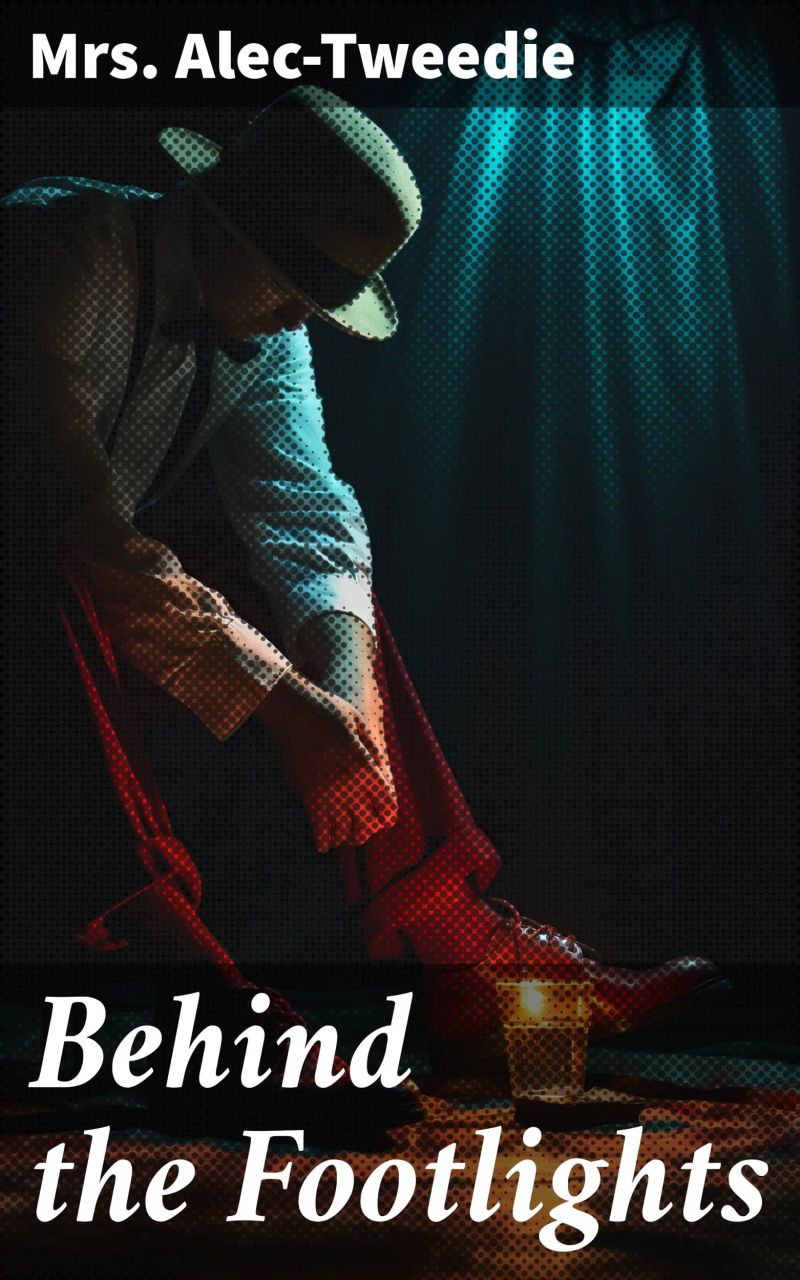
Behind the Footlights
Unveiling the Theatrical World of Victorian LondonBy Mrs. Alec-Tweedie


Length10h 9m
About this audiobook
In "Behind the Footlights," Mrs. Alec-Tweedie provides an illuminating glimpse into the world of Victorian theater, capturing the essence of its vibrant personalities and captivating performances. The narrative interweaves rich descriptions with first-hand accounts of theatrical life, showcasing not only the grandeur of the stage but also the struggles faced by those behind it. Employing a distinctive blend of memoir and cultural critique, Mrs. Alec-Tweedie's literary style balances anecdotal storytelling with sharp observations of the societal norms and expectations of her time, effectively placing the theater within the broader context of 19th-century England. Mrs. Alec-Tweedie, a pioneering female journalist and playwright, was deeply entrenched in the theatrical scene of her era. Her experiences and interactions with notable figures in the arts, along with her keen insight into the challenges women faced in this male-dominated field, inevitably shaped her perspective as an author. Her work often championed the importance of female voices, making her a crucial figure in both theatrical and literary circles. "Behind the Footlights" is an essential read for anyone interested in the intersection of gender, culture, and performance in Victorian society. It is a vivid testament to the power of the arts to reflect and challenge the status quo, and a celebration of the women who contributed to its legacy. Readers will find not only a captivating narrative but also an insightful exploration of the enduring influence of theater.
Audiobook details
GenreLiterary Classics
Length10 hrs 9 mins
Narrated byListen with 1,000+ voices
FormateBook with Audio
Publish dateNov 2, 2023
LanguageEnglish
Table of contents
1Introduction
2CHAPTER I THE GLAMOUR OF THE STAGE Girlish Dreams of Success—Golden Glitter—Overcrowding—Few successful—Weedon Grossmith—Beerbohm Tree—How Mrs. Tree made Thousands for the War Fund—The Stage Door reached—Glamour fades—The Divorce Court and the Theatre—Childish Enthusiasm—Old Scotch Body’s Horror—Love Letters—Temptations—Emotions—How Women began to Act under Charles I.—Influence of the Theatre for Good or Ill.
3CHAPTER II CRADLED IN THE THEATRE Three Great Aristocracies—Born on the Stage—Inherited Talent—Interview with Mrs. Kendal—Her Opinions and Warning to Youthful Aspirants—Usual Salary—Starving in the Attempt to Live—No Dress Rehearsal—Overdressing—A Peep at Harley Street—Voice and Expression—American Friends—Mrs. Kendal’s Marriage—Forbes Robertson’s Romance—Why he deserted Art for the Stage—Fine Elocutionist—Bad Enunciation and Noisy Music—Ellen Terry—Gillette—Expressionless Faces—Long Runs—Charles Warner—Abuse of Success.
4CHAPTER III THEATRICAL FOLK Miss Winifred Emery—Amusing Criticism—An Actress’s Home Life—Cyril Maude’s first Theatrical Venture—First Performance—A Luncheon Party—A Bride as Leading Lady—No Games, no Holidays—A Party at the Haymarket—Miss Ellaline Terriss and her First Appearance—Seymour Hicks—Ben Webster and Montagu Williams—The Sothern Family—Edward Sothern as a Fisherman—A Terrible Moment—Almost a Panic—Asleep as Dundreary—Frohman at Daly’s Theatre—English and American Alliance—Mummers.
5CHAPTER IV PLAYS AND PLAYWRIGHTS Interview with Ibsen—His Appearance—His Home—Plays Without Plots—His Writing-table—His Fetiches—Old at Seventy—A Real Tragedy and Comedy—Ibsen’s First Book—Winter in Norway—An Epilogue—Arthur Wing Pinero—Educated for the Law—As Caricaturist—An Entertaining Luncheon—How Pinero writes his Plays—A Hard Worker—First Night of Letty.
Show all chaptersShow less
6CHAPTER V THE ARMY AND THE STAGE Captain Robert Marshall—From the Ranks to the Stage—£10 for a Play—How Copyright is Retained—I. Zangwill as Actor—Copyright Performance—Three First Plays (Pinero, Grundy, Sims)—Cyril Maude at the Opera—Mice and Men—Sir Francis Burnand, Punch, Sir John Tenniel, and a Cartoon—Brandon Thomas and Charley’s Aunt—How that Play was Written—The Gaekwar of Baroda—Changes in London—Frederick Fenn at Clement’s Inn—James Welch on Audiences.
7CHAPTER VI DESIGNING THE DRESSES Sarah Bernhardt’s Dresses and Wigs—A Great Musician’s Hair—Expenses of Mounting—Percy Anderson—Ulysses—The Eternal City—A Dress Parade—Armour—Over-elaboration—An Understudy—Miss Fay Davis—A London Fog—The Difficulties of an Engagement.
8CHAPTER VII SUPPER ON THE STAGE Reception on the St. James’s Stage—An Indian Prince—His Comments—The Audience—George Alexander’s Youth—How he missed a Fortune—How he learns a Part—A Scenic Garden—Love of the Country—Actors’ Pursuits—Strain of Theatrical Life—Life and Death—Fads—Mr. Maude’s Dressing-room—Sketches on Distempered Walls—Arthur Bourchier and his Dresser—John Hare—Early and late Theatres—A Solitary Dinner—An Hour’s Make-up—A Forgetful Actor—Bonne camaraderie—Theatrical Salaries—Treasury Day—Thriftlessness—The Advent of Stalls—The Bancrofts—The Haymarket photographs—A Dress Rehearsal.
9CHAPTER VIII MADAME SARAH BERNHARDT Sarah Bernhardt and her Tomb—The Actress’s Holiday—Love of her Son—Sarah Bernhardt Shrimping—Why she left the Comédie Française—Life in Paris—A French Claque—Three Ominous Raps—Strike of the Orchestra—Parisian Theatre Customs—Programmes—Late Comers—The Matinée Hat—Advertisement Drop Scene—First Night of Hamlet—Madame Bernhardt’s own Reading of Hamlet—Yorick’s Skull—Dr. Horace Howard Furness—A Great Shakespearian Library.
10CHAPTER IX AN HISTORICAL FIRST NIGHT An Interesting Dinner—Peace in the Transvaal—Beerbohm Tree as a Seer—How he cajoled Ellen Terry and Mrs. Kendal to Act—First-nighters on Camp-stools—Different Styles of Mrs. Kendal and Miss Terry—The Fun of the Thing—Bows of the Dead—Falstaff’s Discomfort—Amusing Incidents—Nervousness behind the Curtain—An Author’s Feelings.
11CHAPTER X OPERA COMIC How W. S. Gilbert loves a Joke—A Brilliant Companion—Operas Reproduced without an Altered Line—Many Professions—A Lovely Home—Sir Arthur Sullivan’s Gift—A Rehearsal of Pinafore—Breaking up Crowds—Punctuality—Soldier or no Soldier—Iolanthe—Gilbert as an Actor—Gilbert as Audience—The Japanese Anthem—Amusement.
12CHAPTER XI THE FIRST PANTOMIME REHEARSAL Origin of Pantomime—Drury Lane in Darkness—One Thousand Persons—Rehearsing the Chorus—The Ballet—Dressing-rooms—Children on the Stage—Size of “The Lane”—A Trap-door—The Property-room—Made on the Premises—Wardrobe-woman—Dan Leno at Rehearsal—Herbert Campbell—A Fortnight Later—A Chat with the Principal Girl—Miss Madge Lessing.
13CHAPTER XII SIR HENRY IRVING AND STAGE LIGHTING Sir Henry Irving’s Position—Miss Geneviève Ward’s Dress—Reformations in Lighting—The most Costly Play ever Produced—Strong Individuality—Character Parts—Irving earned his Living at Thirteen—Actors and Applause—A Pathetic Story—No Shakespeare Traditions—Imitation is not Acting—Irving’s Appearance—His Generosity—The First Night of Dante—First night of Faust—Two Terriss Stories—Sir Charles Wyndham.
14CHAPTER XIII WHY A NOVELIST BECOMES A DRAMATIST Novels and Plays—Little Lord Fauntleroy and his Origin—Mr. Hall Caine—Preference for Books to Plays—John Oliver Hobbes—J. M. Barrie’s Diffidence—Anthony Hope—A London Bachelor—A Pretty Wedding—A Tidy Author—A First Night—Dramatic Critics—How Notices are Written—The Critics Criticised—Distribution of Paper—“Stalls Full”—Black Monday—Do Royalty pay for their Seats?—Wild Pursuit of the Owner of the Royal Box—The Queen at the Opera.
15CHAPTER XIV SCENE-PAINTING AND CHOOSING A PLAY Novelist—Dramatist—Scene-painter—An Amateur Scenic Artist—Weedon Grossmith to the Rescue—Mrs. Tree’s Children—Mr. Grossmith’s Start on the Stage—A Romantic Marriage—How a Scene is built up—English and American Theatres Compared—Choosing a Play—Theatrical Syndicate—Three Hundred and Fifteen Plays at the Haymarket.
16CHAPTER XV THEATRICAL DRESSING-ROOMS A Star’s Dressing-room—Long Flights of Stairs—Miss Ward at the Haymarket—A Wimple—An Awkward Predicament—How an Actress Dresses—Herbert Waring—An Actress’s Dressing-table—A Girl’s Photographs of Herself—A Grease-paint Box—Eyelashes—White Hands—Mrs. Langtry’s Dressing-room—Clara Morris on Make-up—Mrs. Tree as Author—“Resting”—Mary Anderson on the Stage—An Author’s Opinion—Actors in Society.
17CHAPTER XVI HOW DOES A MAN GET ON THE STAGE? A Voice Trial—How it is Done—Anxious Faces—Singing into Cimmerian Darkness—A Call to Rehearsal—The Ecstasy of an Engagement—Proof Copy; Private—Arrival of the Principals—Chorus on the Stage—Rehearsing Twelve Hours a Day for Nine Weeks without Pay.
18CHAPTER XVII A GIRL IN THE PROVINCES Why Women go on the Stage—How to prevent it—Miss Florence St. John—Provincial Company—Theatrical Basket—A Fit-up Tour—A Theatre Tour—Répertoire Tour—Strange Landladies—Bills—The Longed-for Joint—Second-hand Clothes—Buying a Part—Why Men Deteriorate—Oceans of Tea—E. S. Willard—Why he Prefers America—A Hunt for Rooms—A Kindly Clergyman—A Drunken Landlady—How the Dog Saved an Awkward Predicament.
19CHAPTER XVIII PERILS OF THE STAGE Easy to Make a Reputation—Difficult to Keep One—The Theatrical Agent—The Butler’s Letter—Mrs. Siddons’ Warning—Theatrical Aspirants—The Bogus Manager—The Actress of the Police Court—Ten Years of Success—Temptations—Late Hours—An Actress’s Advertisement—A Wicked Agreement—Rules Behind the Scenes—Edward Terry—Success a Bubble.
20CHAPTER XIX “CHORUS GIRL NUMBER II. ON THE LEFT” A Fantasy Founded on Fact Plain but Fascinating—The Swell in the Stalls—Overtures—Persistence—Introduction at Last—Her Story—His Kindness—Happiness crept in—Love—An Ecstasy of Joy—His Story—A Rude Awakening—The Result of Deception—The Injustice of Silence—Back to Town—Illness—Sleep.
More from Mrs. Alec-Tweedie
To Kill a MockingbirdHarper Lee12h 18m4.5 (7.4M)$29 · $0.00

These Precious DaysAnn Patchett11h 14m4.5 (45.2K)$29 · $0.00
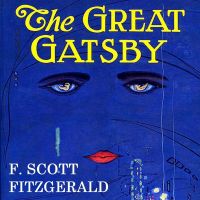
The Great Gatsby: Original 1925 Edition (An F. Scott Fitzgerald Classic NovelFrancis Scott Fitzgerald4h 45m4.6 (9.3K)$18 · $0.00
TWELFTH NIGHTWilliam Shakespeare, Sidney Lee16h 38m4.6 (2.8K)$1.99 · $0.00
The Complete Histories / History Plays of William Shakespeare (Annotated)William Shakespeare29h 42m4.6 (2.3K)$0.99 · $0.00

Braving the TruthRachel Held Evans11h 31m4.7 (359)$29 · $0.00

The Old Man and the Sea (Annotated)Ernest Hemingway4h 27m4.6 (1.4K)$2 · $0.00

Henry V (The Play, Historical Background and Analysis of the Character in the Play)William Shakespeare, William Hazlitt8h 50m4.6 (1.3K)$1.99 · $0.00
H. P. LOVECRAFT Ultimate Collection: Novellas, Short Stories, Poetry & Essays (Annotated)H. P. Lovecraft12h 28m4.6 (2.3K)$2 · $0.00
Time RegainedMarcel Proust16h 8m4.5 (10.6K)$1.99 · $0.00
The Mis-Education of the NegroCarter Goodwin Woodson4h 32m4.5 (28.4K)$10 · $0.00

TORAH - Bilingual Edition: English/Hebrew (Annotated)Max Margolis, JPS28h 26m4.6 (1K)$2 · $0.00

Betty Crocker picture cooky bookBetty Crocker, Inc. General Mills2h 13m4.5 (6.5K)$1 · $0.00

The Complete Tales of Beatrix PotterBeatrix Potter3h 36m4.5 (75K)$3 · $0.00
Anne of Green GablesL. M. Montgomery11h 1m4.5 (1.2M)$2.30 · $0.00
Crime and Punishment (The Unabridged Garnett Translation) (Annotated)Fyodor Dostoevsky24h 25m4.5 (15.4K)$0.99 · $0.00

The North American IndianEdward S. Curtis, Frederick Webb Hodge6h4.5 (1.2K)$2 · $0.00
The Picture of Dorian Gray: The Uncensored 13 Chapter Version + The Revised 20 Chapter Version (Annotated)Oscar Wilde16h 12m4.5 (2.8K)$0.99 · $0.00
Grimoire Of The Everyday WitchIsadora Lys / Virginia Santos5h 35m4.5 (3.9K)$9 · $0.00

Winnie-the-PoohAlan Alexander Milne2h 52m4.5 (401.1K)$3 · $0.00
You may also like
Science of LogicGeorg Wilhelm Friedrich Hegel17h 39m4.3 (2.4K)$1 · $0.00
Great by ChoiceJim Collins, Morten T. Hansen8h 45m4.2 (26.1K)$26 · $0.00
Fundamental Principles of the Metaphysics of MoralsImmanuel Kant3h 20m4.0 (28K)$2.30
First StepsJeremy DeSilva9h 17m4.4 (1.8K)$29 · $0.00
ParmenidesPlato4h 9m4.1 (4.2K)$1.80 · $0.00
Groundwork of the Metaphysics of MoralsImmanuel Kant4h 47m4.0 (28.9K)$2 · $0.00
Tractatus Logico-PhilosophicusLudwig Wittgenstein4h 57m4.2 (31.9K)$1.99 · $0.00
THE CRITIQUE OF PURE REASONImmanuel Kant25h 39m4.1 (51.3K)$1.99 · $0.00
Tertium Organum: The Third Canon of ThoughtP. D. Ouspensky14h 48m4.3 (688)$0.99 · $0.00

Aspects of the novelE. M. Forster4h 49m4.0 (7.5K)$2.30 · $0.00
OrthodoxyG. K. Chesterton6h 37m4.3 (65.9K)$2.30
MetaphysicsAristotle11h 38m4.2 (21.9K)$1.20 · $0.00

Hegel: The Science of LogicGeorg Wilhelm Friedrich Hegel17h 53m4.3 (4.5K)$1.99 · $0.00
Kant's Prolegomena to Any Future MetaphysicsImmanuel Kant4h 21m4.1 (12.1K)$1 · $0.00
The RepublicPlato12h 22m3.9 (255.5K)$15 · $0.00

SapiensYuval Noah Harari15h 18m4.3 (1.4M) · 1332$33 · $0.00

The Mysteries of LoveVictoria The Love Guru Foster5h 5m$6.40 · $0.00

The Critical Thinker's ToolkitRikard Halpert1h 52m5.0 (2) Only with Ultra

OHIO MOTORCYCLE PERMIT EXAM PREP 2026–2027Tyler Knox8h 11m$10

The Untold Story of the Talking BookMatthew Rubery11h 31m3.9 (277)$23 · $0.00