


Length5h 43m
About this audiobook
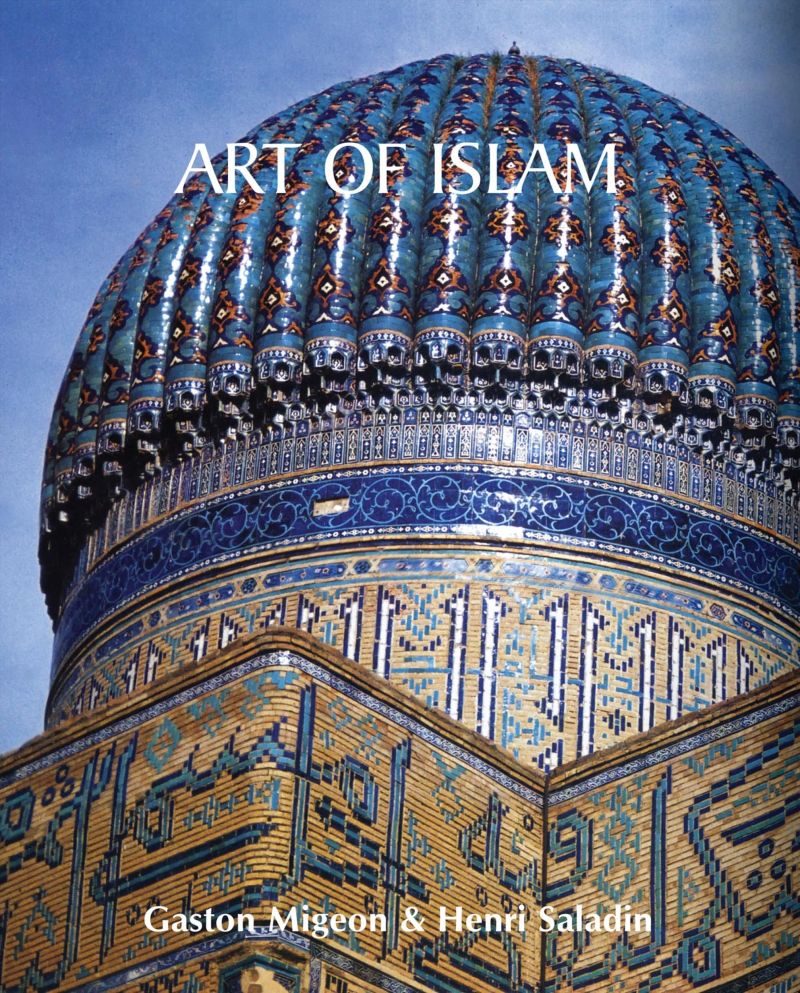
Islamic art is not the art of a nation or of a people, but that of a religion: Islam. Spreading from the Arabian Peninsula, the proselyte believers conquered, in a few centuries, a territory spreading from the Atlantic to the Indian Ocean. Multicultural and multi-ethnical, this polymorphic and highly spiritual art, in which all representation of Man and God were prohibited, developed canons and various motives of great decorative value. Thorough and inventive, these artists expressed their beliefs by creating monumental masterpieces such as the Al-Aqsa mosque in Jerusalem, the Taj Mahal in Agra and the Alhambra in Granada, architectural works in which one recognises the stylisation of motives of the Muslim ceramics. Lively and coloured, Islamic art mirrors the richness of these people whose common denominator was the belief in one singular truth: the absolute necessity of creating works whose beauty equaled their respect for God.
Audiobook details
GenreOther
Length5 hrs 43 mins
Narrated byListen with 1,000+ voices
FormateBook with Audio
Publish dateMay 8, 2012
LanguageEnglish
Table of contents
1ART OF ISLAM
233 ter – 33 bis Mac Dinh Chi St.
3© Confidential Concepts, Worldwide, USA
4Introduction
5A – The Near and Middle East
Show all chaptersShow less
6Maghreb until around the close of the 9th century.
7Architecture
8The Dome of the Rock, 691-692.
9Architecture
10his mosque on Yachkur hill.
11Prayer hall in the Great Mosque of Damascus, 706-715.
12Damascus.
13towards the mosque’s southern tip.
14Architecture
15means, an extraordinary effect.
16B – North Africa and Spain
17techniques to artisans.
18and attractive monuments.
19Architecture
2010th century either in Egypt or Syria.
21magnificent sculptures and superb hanging draperies.
22this period.
23large golden blade from Tiber.
24of the arch.
25Cupola of the mihrab in the Great Mosque of
26Granada.
27Architecture
28formless palace on an elliptical plan.
29C – Iran and the Persian School
30Mohammad Khan of the Qajar tribe.
31or the Maghreb.
32one of the most elegant and original components of Persian architecture.
33applications of architectural ceramics: cornices with stalactites, fascia boards, friezes with
34Architecture
35for Persia and Samarkand respectively.
36faithful to prayer.
37Architecture
38those of the architects and main workers.
39Architecture
40promenade in the world at the dawn of the 17th century.
41Mosque in Cairo.
42Gonbad-e Qabus, 1006-1007.
43D – The Ottoman School
44framework of line correction and porch design.
45Architecture
46Architecture
47conical structure.
48and of Hagia Sophia of Thessaloniki.
49remarkable sense of harmony.
50each other’s beauty.
More from Gaston Migeon, Henri Saladin
Die Kunst des IslamsGaston Migeon, Henri Saladin6h 16m$18 · $0.00
Die Kunst des IslamsGaston Migeon, Henri Saladin6h 22m$15.50 · $0.00
Arts d'IslamGaston Migeon, Henri Saladin5h 53m$15.50 · $0.00
Art of IslamGaston Migeon, Henri Saladin5h 27m$18 · $0.00
Arts d'IslamGaston Migeon, Henri Saladin5h 43m$18 · $0.00
Mere ChristianityC. S. Lewis7h 7m4.4 (519.7K)$24 · $0.00

Her Daily BreadKate Wood12h 57m4.6 (153)$33 · $0.00
The Holy Bible - 1 SamuelKing James2h 13m4.8 (1.6K)$3 · $0.00
The American Standard Bible — The Gospel of MatthewMatthew3h 56m4.7 (3K)$2 · $0.00

Bad Fat Black GirlSesali Bowen6h 32m4.7 (2.8K)$24 · $0.00
The King James Audio Bible New Testament CompleteChristopher Glyn20h 2m4.7 (2.6K)$12 · $0.00

Faiths CheckbookCharles Spurgeon12h 44m4.7 (3.2K)$11 · $0.00

Ten Things I Wish You Knew About Your Child's Mental HealthDr. Billy Garvey4h 53m4.7 (2.4K)$20 · $0.00
Designing Terry Pratchett’s DiscworldPaul Kidby3h 52m4.7 (343)$20 · $0.00
The Chosen Book OneAmanda Jenkins, Kristen Hendricks, Dallas Jenkins3h 8m4.6 (4.9K)$10 · $0.00
The Lives of BrianBrian Johnson9h 45m4.6 (3.5K)$29 · $0.00
Expository Thoughts on the Gospel of LukeJ.C. Ryle27h 13m4.7 (536)$18 · $0.00

CrossroadsKaleb Dahlgren7h 56m4.6 (4.9K)$26 · $0.00

Across the RiverKent Babb11h 40m4.6 (927)$29 · $0.00

Brain Training for RidersAndrea Monsarrat Waldo5h 56m4.7 (550)$19 · $0.00

My Effin' LifeGeddy Lee17h 11m4.6 (13.1K)$40 · $0.00

Kings and PawnsHoward Bryant10h 9m4.6 (678)$29 · $0.00

The Elementia Chronicles #2: The New OrderSean Fay Wolfe11h 17m4.6 (841)$29 · $0.00

The ActsLuke2h 55m4.6 (19.7K)$12 · $0.00
New Testament - Easy NavigationWorld English Bible19h 35m4.6 (1.3K)$1.30 · $0.00
You may also like
Aristotle in 90 MinutesPaul Strathern1h 16m3.6 (3.6K)$7

Taming the Potted BeastMolly Williams6h 14m4.1 (560)$17
The Plain-English Guide to StarlinkWalter Hemsley4h 21m$7

Organic ChayoteMárcio Pereira52m$10 · $0.00

Organic CauliflowerMárcio Pereira53m$13 · $0.00
Harmony Children's EditionCharles HRH The Prince of Wales14m4.1 (50)$4 · $0.00
Arcimboldo and artworksLiana De Girolami Cheney1h 35m4.5 (12)$15 · $0.00
Persian EmpireGeorge Rawlinson13h 7m3.7 (21)$2 · $0.00

Windsor CastleEdward Thomas12m$1 · $0.00

The Forest of Dean: An Historical and Descriptive AccountH. G. Nicholls10h 2m$1 · $0.00
Eccentricities of the Animal CreationJohn Timbs9h$2 · $0.00
Hyde Park, Its History and RomanceMrs. Alec-Tweedie12h 6m$2 · $0.00

Ponies past and presentSir Walter Gilbey2h 43m$2 · $0.00

Life with Wildlife - 1, ADr M.K. Ranjitsinh6h 45m4.6 (162)$8

Warwickshire: The Land of ShakespeareClive Holland7h 17m$1 · $0.00

ArcimboldoLiana De Girolami Cheney1h 45m4.4 (41)$13.50 · $0.00

Rio de Janeiro at the Turn of the MillenniumIngo Latotzki, Klaus H. Carl1h 19m$8 · $0.00
The Horse and His RiderSir Francis Bond Head5h 49m$2.30

Tea and Tea DrinkingArthur Reade2h 53m$1 · $0.00

The Suburbs of LondonHenry James44m$2.30 · $0.00