
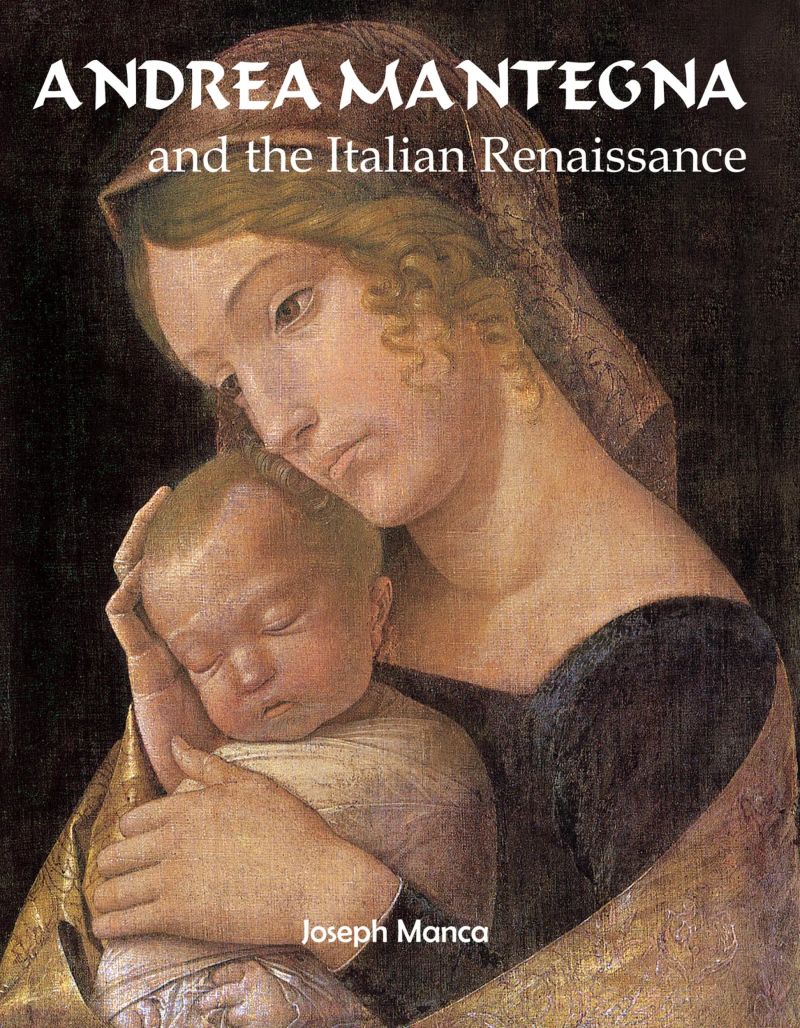
Andrea Mantegna and the Italian Renaissance
Renaissance Innovator of PerspectiveBy Joseph Manca


Length6h 49m
About this audiobook
Mantegna; humanist, geometrist, archaeologist, of great scholastic and imaginative intelligence, dominated the whole of northern Italy by virtue of his imperious personality. Aiming at optical illusion, he mastered perspective. He trained in painting at the Padua School where Donatello and Paolo Uccello had previously attended. Even at a young age commissions for Andrea's work flooded in, for example the frescos of the Ovetari Chapel of Padua. In a short space of time Mantegna found his niche as a modernist due to his highly original ideas and the use of perspective in his works. His marriage with Nicolosia Bellini, the sister of Giovanni, paved the way for his entree into Venice. Mantegna reached an artistic maturity with his Pala San Zeno. He remained in Mantova and became the artist for one of the most prestigious courts in Italy – the Court of Gonzaga. Classical art was born. Despite his links with Bellini and Leonardo da Vinci, Mantegna refused to adopt their innovative use of colour or leave behind his own technique of engraving.
Audiobook details
GenreOther
Length6 hrs 49 mins
Narrated byListen with 1,000+ voices
FormateBook with Audio
Publish dateMay 8, 2012
LanguageEnglish
Table of contents
1ANDREA MANTEGNA and the Italian Renaissance
2Author: Joseph Manca
3List of Illustrations
4Mantegna as Artistic Revolutionary
5to sharp definition and virile action.
Show all chaptersShow less
6narrative and classical revivalism.
7to his students progressive ideas.
8The Debut of a Prodigy: Mantegna’s Early years in Padua
9fragmented world.
10The Debut of a Prodigy: Mantegna’s Early Years in Padua
11the Renaissance.
12Musei Civici, Padua.
13The Debut of a Prodigy: Mantegna’s Early Years in Padua
14laudable civilisations of classical antiquity.
15Latin literature.
16but not extraordinary painter.
17130 young artists in his school, among them Andrea Mantegna.
18recreations of ancient Roman costumes, architecture, and sculpture.
19Church of the Eremitani, Padua.
20classicised style.
21British Museum, London.
22spatial recession in elaborate settings.
23art instead on Roman antiquity, the Tuscan Renaissance and real models.
24composition.
25Kunsthistoriches Museum, Vienna.
26The Debut of a Prodigy: Mantegna’s Early Years in Padua
27prevails over a moral world in collapse.
28Tempera on panel, 66 x 90 cm.
29The Debut of a Prodigy: Mantegna’s Early Years in Padua
30San Sepolcro.
31The Debut of a Prodigy: Mantegna’s Early Years in Padua
32modest size.
33Mantegna as Court Painter in Mantua
34Fresco. Ducal Palace, Mantua.
35Mantegna as Court Painter in Mantua
36intensely interested in questions of representation and imitation.
37Servants with Horse and Dogs
38Ducal Palace, Mantua.
39Mantegna as Court Painter in Mantua
40(Fig. 39). These important figures, like
41face, or a more serious, grave appearance.
42because of the internal lighting and the suppleness of representation.
43specimen by Mantegna.
44Mantegna as Court Painter in Mantua
45(right panel), 1472.
46Piety and Passion in Mantegna’s Later Religious Works
47fire-and-brimstone preacher Girolamo Savonarola, or Michelangelo Buonarroti’s
48Piety and Passion in Mantegna’s Mature Religious Works
49political and social relations in Italy at the time.
50Gemäldegalerie, Berlin.
More from Joseph Manca

Skulptur - von den Anfängen bis heuteJoseph Manca, Patrick Bade, Sarah Costello, Victoria Charles16h 12m4.6 (30)$18 · $0.00

MantegnaJoseph Manca7h 23m$18 · $0.00
1000 SculpturesJoseph Manca, Patrick Bade, Sarah Costello, Victoria Charles15h 43m4.1 (18)$18 · $0.00
1000 de sculpturi ale unor artişti de geniuJoseph Manca, Patrick Bade, Sarah Costello15h 55m4.3 (209)$18 · $0.00
30 Millennia of SculptureJoseph Manca, Patrick Bade, Sarah Costello, Victoria Charles14h 51m4.6 (10)$18 · $0.00

Andrea Mantegna et la Renaissance italienneJoseph Manca7h 6m$18 · $0.00

MantegnaJoseph Manca6h 24m$15.50 · $0.00

1000 Meisterwerke der BildhauereiJoseph Manca, Patrick Bade, Sarah Costello18h 16m$15.50 · $0.00
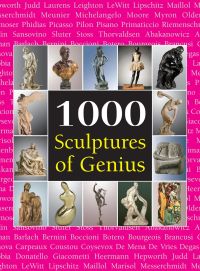
1000 Sculptures of GeniusJoseph Manca, Patrick Bade, Sarah Costello16h 22m4.1 (18)$15.50 · $0.00
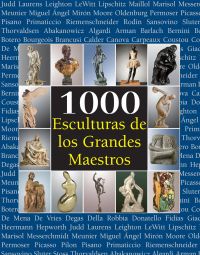
1000 Esculturas de los Grandes MaestrosJoseph Manca, Patrick Bade, Sarah Costello15h 31m4.2 (183)$15.50 · $0.00
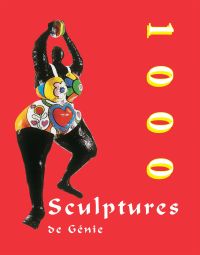
1000 Sculptures de GénieJoseph Manca, Patrick Bade, Sarah Costello16h 30m4.2 (160)$18 · $0.00
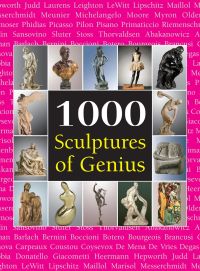
1000 Sculptures of GeniusJoseph Manca, Patrick Bade, Sarah Costello15h 28m4.1 (18)$18 · $0.00

Andrea Mantegna and the Italian RenaissanceJoseph Manca6h 28m$18 · $0.00

Andrea Mantegna et la Renaissance italienneJoseph Manca7h 32m$18 · $0.00
1000 Meisterwerke der BildhauereiJoseph Manca, Patrick Bade, Sarah Costello17h 15m4.2 (30)$18 · $0.00
1000 Sculptures de GénieJoseph Manca, Patrick Bade, Sarah Costello16h 13m4.3 (122)$18 · $0.00
1000 Esculturas de los Grandes MaestrosJoseph Manca, Patrick Bade, Sarah Costello16h 2m4.2 (175)$18 · $0.00
Mere ChristianityC. S. Lewis7h 7m4.4 (519.7K)$24 · $0.00

Her Daily BreadKate Wood12h 57m4.6 (153)$33 · $0.00
The Holy Bible - 1 SamuelKing James2h 13m4.8 (1.6K)$3 · $0.00

The American Standard Bible — The Gospel of MatthewMatthew3h 56m4.7 (3K)$2 · $0.00

Bad Fat Black GirlSesali Bowen6h 32m4.7 (2.8K)$24 · $0.00
The King James Audio Bible New Testament CompleteChristopher Glyn20h 2m4.7 (2.6K)$12 · $0.00
Faiths CheckbookCharles Spurgeon12h 44m4.7 (3.2K)$11 · $0.00

Ten Things I Wish You Knew About Your Child's Mental HealthDr. Billy Garvey4h 53m4.7 (2.4K)$20 · $0.00

Designing Terry Pratchett’s DiscworldPaul Kidby3h 52m4.7 (343)$20 · $0.00
The Chosen Book OneAmanda Jenkins, Kristen Hendricks, Dallas Jenkins3h 8m4.6 (4.9K)$10 · $0.00
The Lives of BrianBrian Johnson9h 45m4.6 (3.5K)$29 · $0.00
Expository Thoughts on the Gospel of LukeJ.C. Ryle27h 13m4.7 (536)$18 · $0.00

CrossroadsKaleb Dahlgren7h 56m4.6 (4.9K)$26 · $0.00

Across the RiverKent Babb11h 40m4.6 (927)$29 · $0.00

Brain Training for RidersAndrea Monsarrat Waldo5h 56m4.7 (550)$19 · $0.00

My Effin' LifeGeddy Lee17h 11m4.6 (13.1K)$40 · $0.00

Kings and PawnsHoward Bryant10h 9m4.6 (678)$29 · $0.00

The Elementia Chronicles #2: The New OrderSean Fay Wolfe11h 17m4.6 (841)$29 · $0.00
The ActsLuke2h 55m4.6 (19.7K)$12 · $0.00

New Testament - Easy NavigationWorld English Bible19h 35m4.6 (1.3K)$1.30 · $0.00
You may also like
Ancient RomeThomas R. Martin8h 52m4.1 (994)$20
Ancient Greece, Second EditionThomas R. Martin12h 59m4.1 (3.3K)$23

The History of EnglandDavid Hume125h 2m4.3 (2.1K)$0.60 · $0.00
The Antiquities of the Jews (Annotated)Josephus48h 27m4.3 (7.3K)$2 · $0.00
History of the Decline and Fall of the Roman Empire — Volume 1Edward Gibbon20h 18m4.3 (14.6K)Free
The Civilization of the Middle AgesNorman F. Cantor28h 42m4.2 (4.8K)$35
The Children’s HomerPadraic Colum4h 44m4.1 (3.9K)$14

The Ten Books on ArchitectureVitruvius Pollio9h 49m4.2 (3.8K)Free

VeroneseFrançois Crastre1h 6m$2 · $0.00
Roman Empire - The History & the Myth (Annotated)John Bagnell Bury27h 33m$2 · $0.00

Ancient Egypt: History, Archaeology & Ancient SourcesArthur Gilman, George Rawlinson, E. A. Wallis Budge, Gaston Maspero, Agnes Sophia Griffith Johns36h 19m$1 · $0.00
Tutankhamun and the Valley of the KingsSantiago Machain6h 24m$24 · $0.00
The Roman Empire: 20 Must-Read BooksPlutarch, Livy, Julius Caesar, Emperor of Rome Augustus, Suetonius, Tacitus, Polybius, Marcus Aurelius, Harold Whetstone Johnston, Edward Gibbon, Theodor Mommsen, A. H. J. Greenidge, John Bagnell Bury, Samuel Griswold Goodrich, Marc Monnier, Evelyn S. Shuckburgh, W. Lucas Collins708h 30m4.5 (11)$0.99

The Story of the Indian MutinyA. R. Hope Moncrieff5h 39m$2.30
The History of the Ancient CivilizationsMax Duncker82h 26m$1.99 · $0.00
The History of the Ancient Civilizations (Annotated)Max Duncker82h 21m$0.99 · $0.00
History of the Sasanian Empire (Annotated)George Rawlinson17h 20m3.9 (25)$2 · $0.00
Michelangelo and artworksEugène Müntz57m4.0 (79)$15 · $0.00

Septuagint - HaggaiScriptural Research Institute50m$4.10 · $0.00
The Inca Empire: Mythology and Religion of the Inca (A Guide to Inca History, Myths, Deities, and the Rise and Decline of the Ancient Civilization)Daniel Pemberton1h 16m$3.50 · $0.00