
An Introduction to the Prose and Poetical Works of John Milton
Comprising All the Autobiographic Passages in His Works, the More Explicit Presentations of His Ideas of True LibertyBy John Milton


Length10h 2m
About this audiobook
In "An Introduction to the Prose and Poetical Works of John Milton," the author meticulously examines Milton's expansive oeuvre, offering readers a comprehensive lens through which to appreciate his groundbreaking contributions to English literature. The book is structured to juxtapose his poetic masterpieces with his fervent prose, highlighting themes of freedom, individualism, and the divine. Milton's use of blank verse and intricate imagery not only propels his narratives but also reflects the socio-political turbulence of 17th-century England, making the work relevant to the study of the English Renaissance and the evolution of poetic forms. John Milton (1608-1674), a seminal figure in literary history, was deeply influenced by the tumultuous events of his time, including the Civil War and the Interregnum. His passionate advocacy for personal liberties and challenges to ecclesiastical authority infuse his writings with an urgency that resonates today. A scholar, poet, and political figure, Milton's diverse experiences, including his time spent in Italy and as a civil servant for the Commonwealth, shaped his literary voice and cemented his role as a champion of both art and freedom. I highly recommend this book to scholars, students, and lovers of literature alike. It serves as an essential gateway to understanding Milton's complex body of work, providing insightful analyses that unravel the intricate relationship between his life experiences and literary output. Whether you are a seasoned Miltonist or a newcomer to his writings, this introduction will enrich your appreciation for one of the greatest poets in the English language.
Audiobook details
GenreLiterary Classics
Length10 hrs 2 mins
Narrated byListen with 1,000+ voices
FormateBook with Audio
Publish dateSep 4, 2022
LanguageEnglish
Table of contents
1From the Preface to 'A Defence of the English People'
2From the 'Second Defence of the People of England in Reply to an Anonymous Libel, entitled "The Cry of the Royal Blood to Heaven against the English Parricides"'
3To Charles Diodati, Milton's schoolfellow at St. Paul's School, and his dearest friend
4To Alexander Gill, Jr. (Familiar Letters, No. III.)
5To Thomas Young. (Familiar Letters, No. IV.)
Show all chaptersShow less
6To Charles Diodati,
7Prolusiones quædam Oratoriæ
8An English letter to a friend (unknown), who, it appears, had been calling him to account for his apparent indifference as to his work in life
9To Alexander Gill, Jr. (Familiar Letters, No. V.)
10To Charles Diodati. (Familiar Letters, No. VI.)
11To Charles Diodati. (Familiar Letters, No. VII.)
12To Benedetto Bonmattei of Florence. (Familiar Letters, No. VIII.)
13Mansus
14From the 'Areopagitica: a speech for the liberty of unlicensed printing. To the Parliament of England'
15To Lucas Holstenius in the Vatican at Rome. (Familiar Letters, No. IX.)
16Epitaphium Damonis
17From 'Of Reformation in England'
18From 'Animadversions upon the Remonstrant's Defence,' etc.
19From 'The Reason of Church Government urged against Prelaty'
20From 'Apology for Smectymnuus'
21To Carlo Dati, Nobleman of Florence. (Familiar Letters, No. X.)
22On his Blindness
23To the most distinguished Leonard Philaras, of Athens, Ambassador from the Duke of Parma to the King of France. (Familiar Letters, No. XII.)
24To Henry Oldenburg, agent for the city of Bremen in Lower Saxony with the Commonwealth. (Familiar Letters, No. XIV.)
25To Leonard Philaras, Athenian. (Familiar Letters, No. XV.)
26To Cyriac Skinner
27On his deceased wife
28To the most accomplished Emeric Bigot. (Familiar Letters, No. XXI.)
29To Henry Oldenburg. (Familiar Letters, No. XXIX.)
30From 'Considerations touching the Likeliest Means to remove Hirelings out of the Church.' (August, 1659)
31Autobiographic passages in the 'Paradise Lost'
32To the very distinguished Peter Heimbach, Councillor to the Elector of Brandenburg. (Familiar Letters, No. XXXI.)
33From 'The Reason of Church Government urged against Prelaty.' Chap. I.
34Peroration of 'The Second Defence of the People of England'
35On the Detraction which followed upon my Writing Certain Treatises
36THE PERSONS
37LYCIDAS
38OF THAT SORT OF DRAMATIC POEM WHICH IS CALLED TRAGEDY
39THE ARGUMENT
40THE PERSONS
41SAMSON AGONISTES
42A Defence of the People of England
43The Second Defence of the People of England
44To Charles Diodati
45To Alexander Gill, Jr. (Familiar Letters, No. III.)
46To Thomas Young. (Familiar Letters, No. IV.)
47To Charles Diodati, making a Stay in the Country
48Ad Patrem
49An English Letter to a Friend
50To Alexander Gill, Jr. (Familiar Letters, No. V.)
More from John Milton
Paradise Lost and Its Sequel, Paradise Regained (Illustrated Edition)John Milton11h 53m$1.99 · $0.00
Paradise LostJohn Milton17m4.1 (220.8K)$14 · $0.00
Paradise Lost (Annotated)John Milton8h 21m4.3 (6K)$1.99 · $0.00
El Paraíso Perdido (texto completo, con índice activo)John Milton11h 9m4.4 (142.1K)$0.99 · $0.00
Areopagitica (Annotated)John Milton5h 40m$2 · $0.00
Paradise Lost + Paradise Regained (2 Unabridged Classics + Original Illustrations by Gustave Doré) (Annotated)John Milton11h 56m4.4 (2.2K)$3 · $0.00
The Complete Poetical Works of John MiltonJohn Milton20h 33m4.3 (3.8K)$1 · $0.00
L'Allegro, Il Penseroso, Comus, and LycidasJohn Milton2h 4m4.1 (664)$2 · $0.00
An Introduction to the Prose and Poetical Works of John MiltonJohn Milton12h 16m$2 · $0.00
Milton's ComusJohn Milton6h 50m3.6 (689)$1 · $0.00
El Paraíso PerdidoJohn Milton12h 17m4.1 (214.1K)$2 · $0.00
The Complete Poetical Works of John MiltonJohn Milton19h 13m$2 · $0.00
The Complete Poetical Works of John Milton (Annotated)John Milton21h 3m4.3 (2.3K)$0.99 · $0.00
Das verlorene Paradies (Paradise Lost) mit Illustrationen von William Blake (Kommentiert)John Milton15h 23m4.1 (19)$1 · $0.00
On His BlindnessJohn Milton1m4.1 (310)$3

To Kill a MockingbirdHarper Lee12h 18m4.5 (7.4M)$29 · $0.00

These Precious DaysAnn Patchett11h 14m4.5 (45.2K)$29 · $0.00
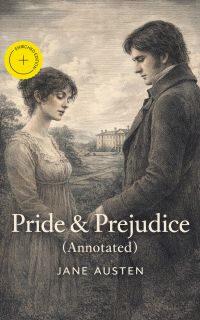
Pride & Prejudice (Annotated)Jane Austen15h 10m4.7 (13.3K)$2 · $0.00
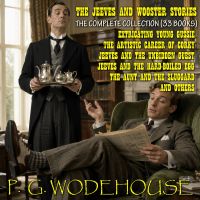
The Jeeves and Wooster Stories: The Complete Collection (33 Books)P. G. Wodehouse21h 57m4.7 (2.8K)$15 · $0.00
The Gulag Archipelago Volume 3Aleksandr I. Solzhenitsyn21h 56m4.7 (8.9K)$46 · $0.00
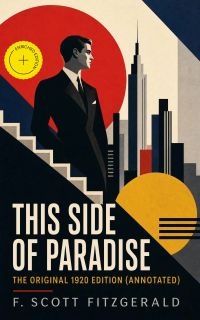
This Side of Paradise - The Original 1920 Edition (Annotated)F. Scott Fitzgerald11h 30m4.6 (1.6K)$2 · $0.00
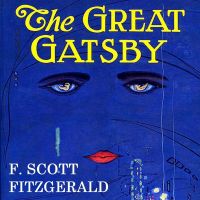
The Great Gatsby: Original 1925 Edition (An F. Scott Fitzgerald Classic NovelFrancis Scott Fitzgerald4h 45m4.6 (9.3K)$18 · $0.00
TWELFTH NIGHTWilliam Shakespeare, Sidney Lee16h 38m4.6 (2.8K)$1.99 · $0.00
The Complete Histories / History Plays of William Shakespeare (Annotated)William Shakespeare29h 42m4.6 (2.3K)$0.99 · $0.00
Braving the TruthRachel Held Evans11h 31m4.7 (359)$29 · $0.00

The Old Man and the Sea (Annotated)Ernest Hemingway4h 27m4.6 (1.4K)$2 · $0.00
Henry V (The Play, Historical Background and Analysis of the Character in the Play)William Shakespeare, William Hazlitt8h 50m4.6 (1.3K)$1.99 · $0.00
H. P. LOVECRAFT Ultimate Collection: Novellas, Short Stories, Poetry & Essays (Annotated)H. P. Lovecraft12h 28m4.6 (2.3K)$2 · $0.00
Time RegainedMarcel Proust16h 8m4.5 (10.6K)$1.99 · $0.00
The Mis-Education of the NegroCarter Goodwin Woodson4h 32m4.5 (28.4K)$10 · $0.00
TORAH - Bilingual Edition: English/Hebrew (Annotated)Max Margolis, JPS28h 26m4.6 (1K)$2 · $0.00

Betty Crocker picture cooky bookBetty Crocker, Inc. General Mills2h 13m4.5 (6.5K)$1 · $0.00
The Complete Tales of Beatrix PotterBeatrix Potter3h 36m4.5 (75K)$3 · $0.00
Anne of Green GablesL. M. Montgomery11h 1m4.5 (1.2M)$2.30 · $0.00
Crime and Punishment (The Unabridged Garnett Translation) (Annotated)Fyodor Dostoevsky24h 25m4.5 (15.4K)$0.99 · $0.00
You may also like

A Treatise on Christian Liberty (Annotated)Martin Luther4h 19m4.3 (3.8K)$0.99 · $0.00

Benedict XVI: A LifePeter Seewald24h 23m4.6 (440)$30
Here I StandRoland H. Bainton11h 16m4.2 (7.5K)$21
The Kingdom of God is Within YouLeo Tolstoy13h 32m4.3 (8.2K)$16 · $0.00
The Kingdom of God is within youLeo Tolstoy13h 48m4.3 (8.4K)$3 · $0.00
Paradise Lost + Paradise Regained (2 Unabridged Classics + Original Illustrations by Gustave Doré) (Annotated)John Milton11h 56m4.4 (2.2K)$3 · $0.00
HereticAyaan Hirsi Ali8h 56m4.3 (7K)$29 · $0.00
The Complete Poetical Works of John MiltonJohn Milton20h 33m4.3 (3.8K)$1 · $0.00
The Complete Poetical Works of John Milton (Annotated)John Milton21h 3m4.3 (2.3K)$0.99 · $0.00
Thus Spake Zarathustra: A Book for All and NoneFriedrich Wilhelm Nietzsche11h 55m4.1 (210.6K)Free
The Smalcald ArticlesMartin Luther2h 33m4.4 (314)$2 · $0.00
Indian Home RuleMahatma Gandhi1h 52m4.1 (5.3K)$2 · $0.00
The Divine Conspiracy ContinuedDallas Willard, Gary Black13h 12m4.3 (557)$33 · $0.00
Hegel's Phenomenology of MindGeorg Wilhelm Friedrich Hegel27h 45m4.1 (29.6K)$1.99 · $0.00
Three GuineasVirginia Woolf6h 7m4.1 (9.2K)$1.20 · $0.00
Institutes of the Christian ReligionJohn Calvin66h 40m4.5 (16.2K)$30

This Wound Is a WorldBilly-Ray Belcourt1h 6m4.4 (2.7K)$15
Disputation on the Power of Indulgences (Annotated)Martin Luther3h 46m4.1 (15.2K)$2 · $0.00
Super-InfiniteKatherine Rundell7h 4m4.4 (9.3K)$17 · $0.00
GandhiWilliam L. Shirer8h 11m4.2 (712)$20