
A History of English Versification
Exploring the Evolution of Poetic Forms in English LiteratureBy J. Schipper


Length10h 58m
About this audiobook
In "A History of English Versification," J. Schipper meticulously traces the evolution of English poetic forms from their primitive origins to the sophisticated structures of modern poetry. With a keen eye for detail, Schipper employs an analytical literary style that blends historical narrative with critical analysis, exploring the intricate relationship between verse forms and cultural contexts. Each chapter deftly interweaves examples from landmark poets, offering readers a comprehensive understanding of the technical and aesthetic choices that have shaped English verse, including rhyme, meter, and stanzaic structures. Schipper's command of the subject is evident as he situates these poetic traditions within broader literary movements, reflecting on how societal changes influenced poetic practices over centuries. J. Schipper, a distinguished scholar of English literature, draws upon his extensive academic background and passion for poetry to illuminate the complex history of verse. His previous works have garnered acclaim for their incisive readings and contextual insights, establishing him as a leading voice in the field. Schipper's dedication to understanding how historical contexts sculpt poetic expression has led him to this ambitious work, offering a profound exploration of the artistry of English verse. This book is an invaluable resource for students, scholars, and poetry enthusiasts alike, providing not only a historical overview but also a rich analysis of the art of versification. Schipper'Äôs engaging prose makes complex ideas accessible, inviting readers to appreciate the beauty and craft of poetry through the ages. A must-read for anyone wishing to deepen their understanding of English literary heritage.
Audiobook details
GenrePoetry
Length10 hrs 58 mins
Narrated byListen with 1,000+ voices
FormateBook with Audio
Publish dateDec 13, 2019
LanguageEnglish
Table of contents
1Introduction
2LIST OF EDITIONS REFERRED TO
3ERRATA
4BOOK I. THE LINE
5PART I. THE NATIVE METRE
Show all chaptersShow less
6CHAPTER I GENERAL INTRODUCTION TO THE SCIENCE OF METRE AND THE STRUCTURE OF VERSE
7CHAPTER II THE ALLITERATIVE VERSE IN OLD ENGLISH
8Analysis of the verse types.
9The Principles of Alliteration.
10The Lengthened Verse
11Formation of Stanzas and Rhyme.
12CHAPTER III THE FURTHER DEVELOPMENT OF THE FREER FORM OF THE ALLITERATIVE LINE IN LATE OLD ENGLISH AND EARLY MIDDLE ENGLISH
13A. Transitional Forms.
14B. The ‘Proverbs of Alfred’ and Layamon’s ‘Brut’.
15C. The progressive form of the alliterative line, rhymed throughout. ‘King Horn.’
16CHAPTER IV THE ALLITERATIVE LINE IN ITS CONSERVATIVE FORM DURING THE FOURTEENTH AND FIFTEENTH CENTURIES
17A. The alliterative verse without rhyme.
18B. The alliterative line combined with rhyme
19C. Revival of the old four-beat alliterative verse in the Modern English period.
20PART II. FOREIGN METRES
21DIVISION I. The Foreign Metres in General CHAPTER V. INTRODUCTION
22CHAPTER VI VERSE-RHYTHM
23CHAPTER VII THE METRICAL TREATMENT OF SYLLABLES
24CHAPTER VIII WORD-ACCENT
25I. Word-accent in Middle English.
26II. Word-accent in Modern English
27DIVISION II Verse-forms Common to the Middle and Modern English Periods CHAPTER IX LINES OF EIGHT FEET, FOUR FEET, TWO FEET, AND ONE FOOT
28CHAPTER X THE SEPTENARY, THE ALEXANDRINE, AND THE THREE-FOOT LINE
29CHAPTER XI THE RHYMED FIVE-FOOT VERSE
30DIVISION III Verse-forms Occurring in Modern English Poetry Only
31CHAPTER XII BLANK VERSE
32CHAPTER XIII TROCHAIC METRES
33CHAPTER XIV IAMBIC-ANAPAESTIC AND TROCHAIC-DACTYLIC METRES
34I. Iambic-anapaestic Metres.
35II. Trochaic-dactylic Metres
36CHAPTER XV NON-STROPHIC, ANISOMETRICAL COMBINATIONS OF RHYMED VERSE
37CHAPTER XVI IMITATIONS OF CLASSICAL FORMS OF VERSE AND STANZA
38BOOK II. THE STRUCTURE OF STANZAS
39PART I
40CHAPTER I. DEFINITIONS STANZA, RHYME, VARIETIES OF RHYME
41CHAPTER II THE RHYME AS A STRUCTURAL ELEMENT OF THE STANZA
42PART II STANZAS COMMON TO MIDDLE AND MODERN ENGLISH, AND OTHERS FORMED ON THE ANALOGY OF THESE
43CHAPTER III BIPARTITE EQUAL-MEMBERED STANZAS
44I. Isometrical stanzas.
45II. Anisometrical Stanzas.
46CHAPTER IV ONE-RHYMED INDIVISIBLE AND BIPARTITE UNEQUAL-MEMBERED STANZAS
47I. One-rhymed and indivisible stanzas.
48II. Bipartite unequal-membered isometrical stanzas.
49III. Bipartite unequal-membered anisometrical stanzas.
50CHAPTER V TRIPARTITE STANZAS
Saundarya LahariUnknown Author3h 16m4.6 (256)$18 · $0.00
The Mesnevi (Annotated)Maulana Jalal al-Din Rumi18h 41m4.5 (4.2K)$2 · $0.00

Songs of a SourdoughRobert W. Service2h 13m4.5 (13.6K)$1 · $0.00
Little Flower of Jesus (Annotated)Thérèse of Lisieux5h 4m4.5 (1.4K)$1.99 · $0.00

The Poems of LeopardiGiacomo Leopardi3h 9m4.5 (3.6K)$2 · $0.00

Nikki Giovanni: Love Poems & A Good CryNikki Giovanni2h 44m4.6 (405)$18 · $0.00

The Complete Poetry of Walt Whitman (Annotated)Walt Whitman19h 58m4.5 (4.2K)$1.99 · $0.00
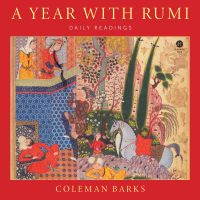
A Year with RumiColeman Barks5h 56m4.5 (2.6K)$24 · $0.00
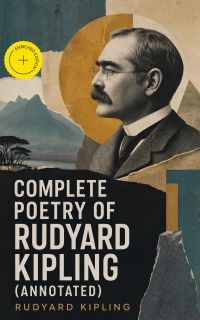
Complete Poetry of Rudyard Kipling (Annotated)Rudyard Kipling22h 50m4.5 (2.6K)$3.99 · $0.00
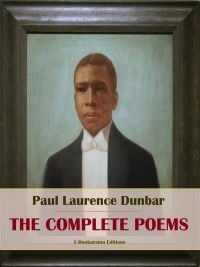
The Complete PoemsPaul Laurence Dunbar12h 40m4.5 (1.5K)$21 · $0.00
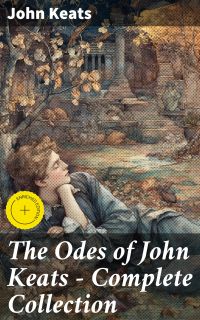
The Odes of John Keats - Complete CollectionJohn Keats22h 16m4.5 (1.3K)$1 · $0.00
SonnetsWilliam Shakespeare2h 39m4.4 (128.3K)$3 · $0.00
PoemsEdna St. Vincent Millay2h 39m4.5 (1.3K)$2 · $0.00
PoemsW. B. Yeats5h 6m4.4 (46.9K)$1 · $0.00
Metamorphoses (Annotated)Ovid28h 37m4.3 (80.8K)$2 · $0.00

THE FLOWERS OF EVILCharles Baudelaire2h 28m4.3 (94.6K)$1.99 · $0.00
A Book of Strife in the Form of The Diary of an Old SoulGeorge MacDonald2h 9m4.4 (839)$2 · $0.00
Paradise Lost + Paradise Regained (2 Unabridged Classics + Original Illustrations by Gustave Doré) (Annotated)John Milton11h 56m4.4 (2.2K)$3 · $0.00
The Ballad of the White HorseG. K. Chesterton2h 43m4.4 (3.8K)$1.20 · $0.00

PORPHYRIA'S LOVERRobert Browning7h 52m4.3 (3K)$1.99 · $0.00
You may also like
The Idea of Progress (Annotated)J. B. Bury11h4.4 (48)$1.99 · $0.00
Rapid Arabic, Vols. 1 & 2Earworms Learning2h 17m4.2 (55)$20

Attraction MarketingFernando Moreira0m$6 · $0.00

British Manufacturing Industries: Pottery, Glass and Silicates, Furniture and WoodworkLéon Arnoux, Frederick Settle Barff, John Hungerford Pollen6h 30m$2 · $0.00

Porneiopathology A Popular Treatise on Venereal and Other Diseases of the Male and Female Genital SystemRobert James Culverwell8h 19m$2.30
Lessons in Music Form (Annotated)Percy Goetschius5h 15m4.6 (16)$2 · $0.00

On Generation and CorruptionAristotle2h 58m3.5 (307)$1.80 · $0.00
How to Play Chess (Annotated)Charlotte Boardman Rogers2h 43m4.1 (12)$2 · $0.00

I Just Wanna Make Love to YouBill Brown Jr.40m$4
ArizonaBill Brown Jr.1h 19m$10

A Manual of Shoemaking and Leather and Rubber Products (Annotated)William H. Dooley3h 54m$2 · $0.00
Minuet in DmBill Brown Jr.19m$2

Open Arms – Classical soloBill Brown Jr.45m$4

Waltz in Am (Chopin)Bill Brown Jr.48m$5
ABLETON LIVE 12 MUSIC PRODUCTION HANDBOOKStephen Dave21h 55m$10

Inside the Event LoopElliot Farrell7h 52m$5 · $0.00
The Up-To-Date Sandwich Book 400 Ways To Make A SandwichEva Greene Fuller2h 49m$2.30
Guitar By Ear: Solos Box Set 5Bill Brown15h 3m$30

Purple HazeBill Brown Jr.34m$4

Baby Please Don't GoBill Brown Jr.49m$5