
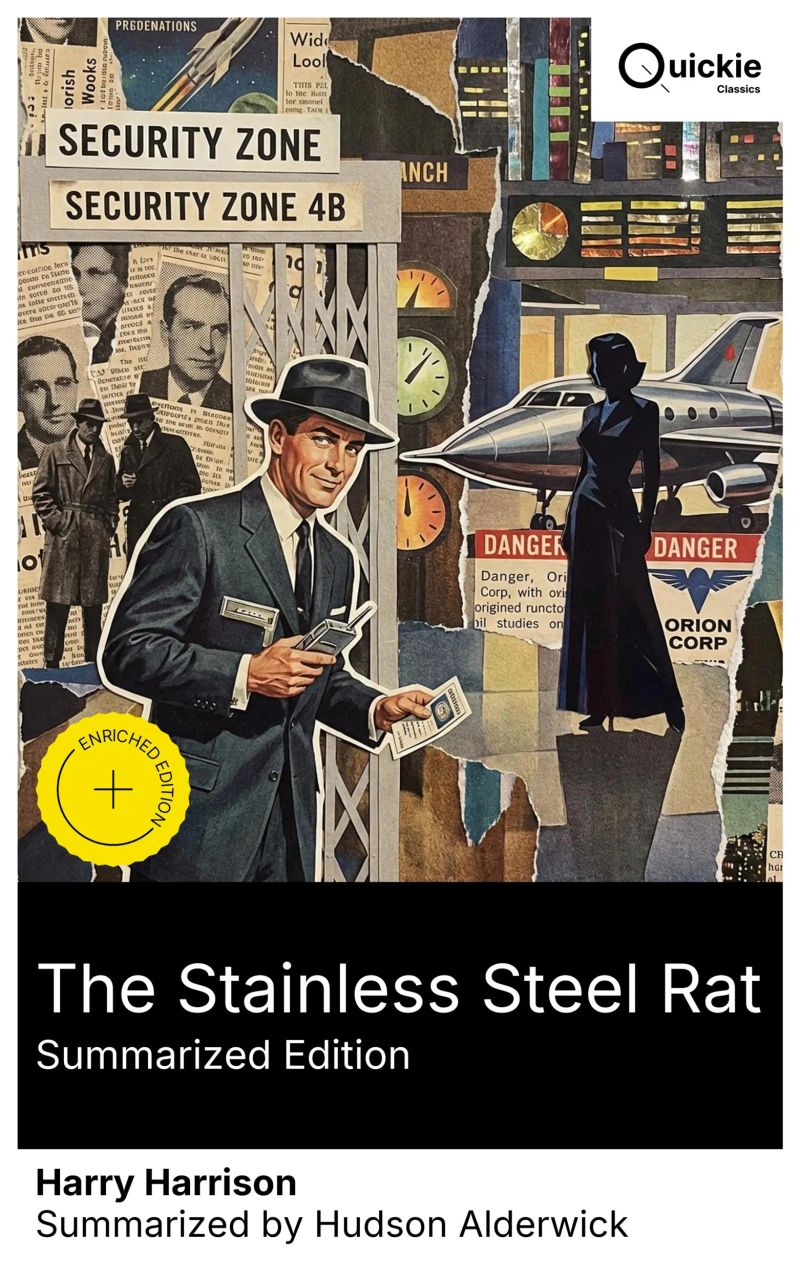
The Stainless Steel Rat (Summarized Edition)
Enriched edition. In a future that 'cured' crime, a charming con is drafted into the Special Corps for a witty high-tech caper against a femme fatale.De Harry Harrison


Duração2h 38m
Sobre este audiolivro
First published in 1961, The Stainless Steel Rat introduces Slippery Jim diGriz, the galaxy's most charming outlaw, in a brisk blend of caper and satirical science fiction. In a complacent interstellar order that thinks crime cured, Jim's heists—and his conscription into the Special Corps of reformed crooks—reveal the gaps in technocratic control. In sardonic first person, Harrison favors clockwork plotting, gadgetry, and whipcrack wit; Jim's duel with the brilliant Angelina sharpens the comedy into a study of free will, authority, and the uses of cunning. Harrison—American novelist, ex-comics artist, and U.S. Army Air Forces veteran—brought a pacifist's skepticism about coercion and a visual storyteller's momentum. His transatlantic magazine-and-paperback career honed the book's economy and color, while travel and editorial work supplied its cosmopolitan slang, bureaucratic send-ups, and gleeful disrespect for sacred cows. Recommended to readers who relish clever antiheroes, high-velocity plots, and satire with bite, The Stainless Steel Rat remains a superb entry to classic SF. It rewards fans of caper fiction and anyone curious how wit, ethics, and technology collide when the smartest thief is hired to police his own kind.
Quickie Classics summarizes timeless works with precision, preserving the author's voice and keeping the prose clear, fast, and readable—distilled, never diluted. Enriched Edition extras: Introduction · Synopsis · Historical Context · Brief Analysis · 4 Reflection Q&As · Editorial Footnotes.
Detalhes do audiolivro
GêneroScience Fiction
Duração2 h 38 min
Narrado porOuça com mais de 1.000 vozes
FormatoeBook com áudio
Data de publicação3 de abr. de 2026
IdiomaInglês
Sumário
1Introduction
5The Stainless Steel Rat
2Introduction
6Analysis
3Synopsis
7Reflection
4Historical Context
Mais de Harry Harrison
DeathworldHarry Harrison11h 46min4.0 (13.1K)$1.99 · $0.00
DEATHWORLD (SF Novel)Harry Harrison7h 16min4.1 (13.5K)$1.99 · $0.00

Harry Harrison - Boxed Set (Illustrated Edition)Harry Harrison28h 26min4.2 (139)$1.99 · $0.00

The Ethical EngineerHarry Harrison5h 31min3.8 (4.1K)$1.99 · $0.00
Planet of the Damned (SF Classic)Harry Harrison7h 2min3.6 (4.5K)$1.99 · $0.00

The Stainless Steel RatHarry Harrison6h 29min3.9 (19.7K)$1 · $0.00
The RepairmanHarry Harrison35min3.8 (492)$10 · $0.00

The Misplaced BattleshipHarry Harrison1h 11min3.8 (839)$10 · $0.00
Deathworld 2: The Ethical Engineer (Illustrated) (Annotated)Harry Harrison5h 30min4.3 (26)$2 · $0.00

Deathworld (Book 1&2) (Annotated)Harry Harrison11h 52min4.3 (18)$2 · $0.00

Planet of the Damned (Annotated)Harry Harrison7h 9min$2 · $0.00
The Stainless Steel Rat (Annotated)Harry Harrison6h 30min$2 · $0.00
Sense of ObligationHarry Harrison5h 14min3.7 (2.4K)$2 · $0.00
The Misplaced BattleshipHarry Harrison1h 18min3.7 (694)$6.60
Arm of the LawHarry Harrison47min3.8 (453)$4.70

The K-FactorHarry Harrison1h 3min3.4 (224)$10 · $0.00
Arm of the LawHarry Harrison41min3.8 (370)$10 · $0.00

Before the Coffee Gets Cold: A Toshikazu Kawaguchi Book SetToshikazu Kawaguchi18h 55min4.5 (1.4K)$40 · $0.00
PRIMAL 2055 - EscapeJack Silkstone6h 47min4.4 (232)Grátis

Thud!Terry Pratchett12h 29min4.4 (108.4K)$8 · $0.00

Anne of Green GablesLucy Maud Montgomery10h 54min4.4 (1.3M)$12 · $0.00

Science Fiction & Fantasy CollectionH. P. Lovecraft16h 32min4.5 (2.7K)$2 · $0.00

The Twilight Zone Companion, Second EditionMarc Scott Zicree16h 46min4.5 (1.8K)$28 · $0.00
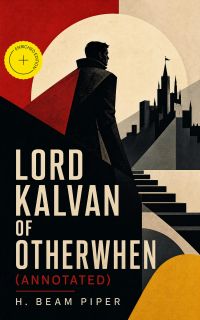
Lord Kalvan of Otherwhen (Annotated)H. Beam Piper8h 23min4.5 (1.6K)$2 · $0.00

Philip K. Dick: SF Boxed SetPhilip K. Dick29h 38min4.5 (608)$1 · $0.00
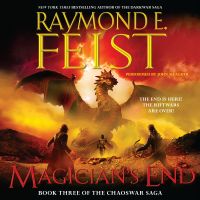
Magician's EndRaymond E. Feist17h 5min4.4 (21.7K)$40 · $0.00
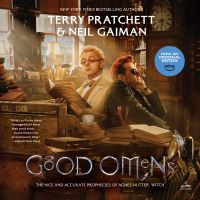
Good OmensNeil Gaiman, Terry Pratchett12h 14min4.4 (1M)$29 · $0.00

The Emperor's FistJay Allan8h 37min4.5 (272)$26 · $0.00
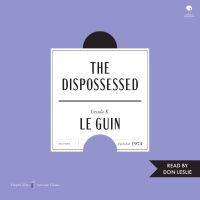
The DispossessedUrsula K. Le Guin13h 26min4.4 (189.3K)$33 · $0.00
1984George Orwell11h 31min4.3 (6.2M)$1.20 · $0.00

Lost ValleyWalt Browning7h 47min4.3 (5.4K)$20 · $0.00

AgincourtBernard Cornwell16h 18min4.3 (41.4K)$40 · $0.00

Frankenstein (The Uncensored 1818 Edition) (Annotated)Mary Shelley9h 9min4.3 (1.7M)$3 · $0.00
The World Wasn't Ready for YouJustin C. Key11h 34min4.4 (812)$5 · $0.00

Godzilla vs. KongGreg Keyes10h 32min4.3 (1.4K)$20 · $0.00

Alas, Babylon (Annotated)Pat Frank12h 20min4.3 (11.6K)$1.99 · $0.00

Day of WrathWilliam R. Forstchen4h 36min4.3 (1.9K)$14 · $0.00
Você também pode gostar

Pineapple GrenadeTim Dorsey11h 4min4.1 (3.8K)$29 · $0.00
Swords of MarsEdgar Rice Burroughs8h 50min4.0 (4.7K)$2.30

The Disintegration MachineArthur Conan Doyle40min3.7 (1.1K)$7 · $0.00

Safety OffLA. Walker2h 46min4.2 (2.1K)$2.99 · $0.00

JAMES BOND 007 Complete CollectionIan Fleming102h 36min4.5 (3.1K)$2 · $0.00
The Misplaced Battleship and three more StoriesHarry Harrison3h 7min3.7 (694)$2.30
The Misplaced BattleshipHarry Harrison1h 11min3.8 (839)$10 · $0.00
The Stainless Steel Rat (Annotated)Harry Harrison6h 30min$2 · $0.00

A Prince of Swindlers (Annotated)Guy Boothby7h 25min3.4 (118)$1.99 · $0.00

Amazing Tales Volume 175James H. Schmitz3h 26min$2.30
Takeoff (Sci-Fi Classic)Cyril M. Kornbluth7h 2min2.9 (30)$1 · $0.00
Amazing Tales Volume 172Randall Garrett2h 15min$2.30
Rocket Launch (Sci-Fi Classic)Cyril M. Kornbluth7h$1.99 · $0.00
The agile AlgolianKendell Foster Crossen1h 56min$1 · $0.00

One-Way Ticket to NowhereLeroy Yerxa1h 8min$1 · $0.00

The Rapscallion AgencyChristof Laputka4h 56min$20
The Misplaced BattleshipHarry Harrison1h 18min3.7 (694)$6.60

More Educated EvansEdgar Wallace5h 55min3.9 (21)$2 · $0.00

Rocket SummerRay Bradbury38min3.5 (180)$8 · $0.00

Castles In The AirBaroness Emmuska Orczy7h 2min$2.30