
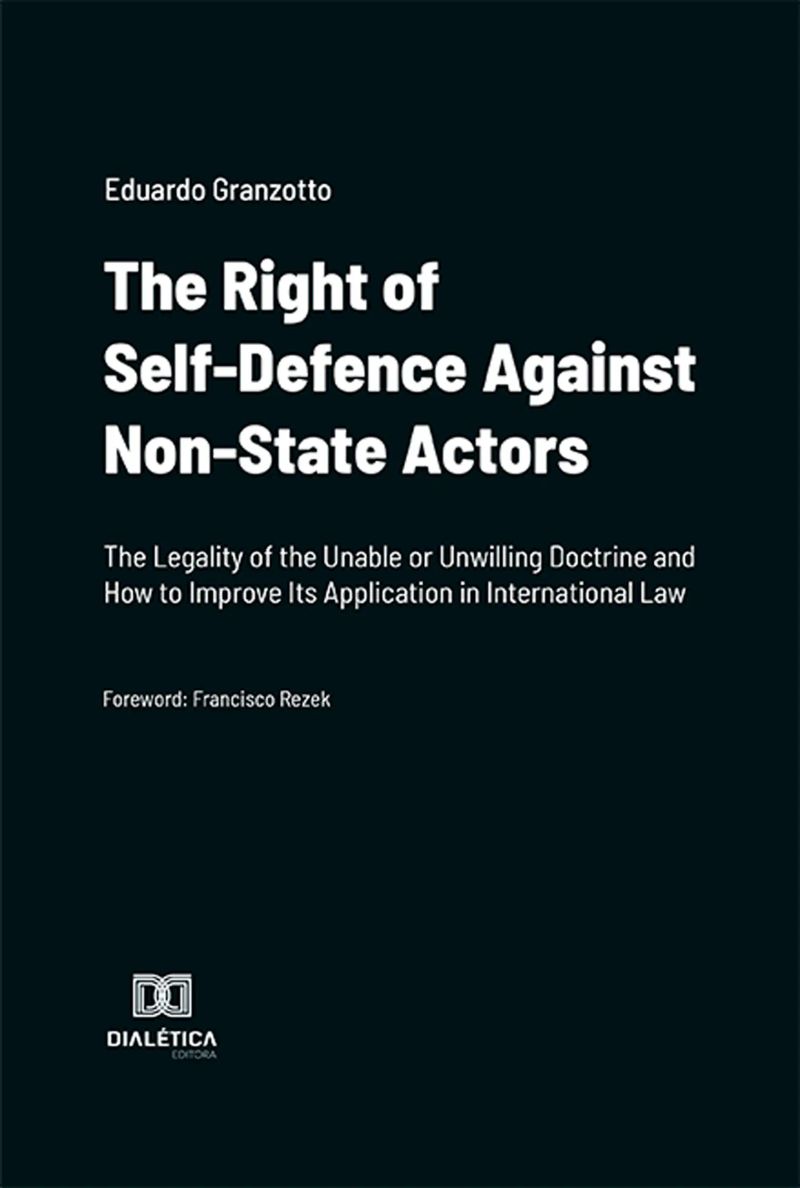
The Right of Self-Defence Against Non-State Actors
The Legality of the Unable or Unwilling Doctrine and How to Improve Its Application in International LawBy Eduardo Granzotto


Length2h 13m
About this audiobook
"This book is the product of the author's master's thesis, defended in 2019 at King's College, in the International Peace and Security programme of the Department of War Studies. […] In light of the new contemporary threats to international peace and security and their impact on jus ad bellum rules, the author questions whether the Unable or Unwilling Doctrine(UoU), used as an argument for the use of force in the recent fight against the 'Islamic State' in Syria, has a legal basis in the context of self-defence against non-state actors. He then goes on to explore practical ways in which the doctrine's application can be improved.
[…]
In the King's College's Department of War Studies, the examiners described the author's thesis as an exceptional piece of scholarly work, absorbing from its first line and reported that the author demonstrates a striking comprehension of complex legal questions, in addition to providing coherent, insightful, and very sophisticated arguments.
Professor Granzotto's clever, perceptive, and opportune master's thesis led to a rich and particularly persuasive book, which reflects the thoughts of a mature, though young scholar ___ for whom we must predict the continuity of a superb career. "
Audiobook details
GenrePolitics and Government
Length2 hrs 13 mins
Narrated byListen with 1,000+ voices
FormateBook with Audio
Publish dateJun 7, 2021
LanguageEnglish
Table of contents
1ACKNOWLEDGEMENTS
21. Introduction
32. Self-defence against non-state actors:an ongoing controversy
42.1 The right of self-defence: a lawful exception to the use of force
52.2 Non-state actors as a threat to international peace and security
Mostrar todos os capítulosVer menos
62.3 The right of self-defence against non-state actors: the attribution problem
73. The Unable or Unwilling Doctrine (UoU)
83.1 Content and origin of the UoU doctrine: the possibility to apply the law of neutrality analogically
93.2 The UoU doctrine as an emerging customary norm
103.3 Adjusting the course of the debate and mitigating the principle of sovereignty
114. The UoU test: shaping the decision-making process
124.1 Who decides on the application of the UoU test and what are the preventive measures that can be taken to improve the quality of the decision?
134.2 The armed attack is actual or imminent. What should be done?
144.3 Precautions during the military response, transparency, wand subsequent accountability
155. Conclusion
166. References

Balcony Over Jerusalem: A Middle East Memoir - Israel, Palestine and BeyondJohn Lyons12h 37m4.6 (1.4K)$33 · $0.00
RiggedMollie Hemingway12h 48m4.6 (4.2K)$23 · $0.00
SledgehammerDavid Friedman8h 21m4.7 (589)$26 · $0.00
Citizenship in a Republic (Annotated)Theodore Roosevelt2h 44m4.6 (1.4K)$2 · $0.00
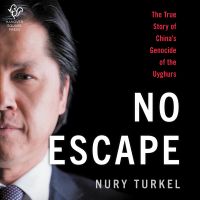
No EscapeNury Turkel9h 30m4.6 (809)$28 · $0.00

Always FaithfulThomas Schueman, Zainullah Zaki12h 12m4.6 (977)$29 · $0.00
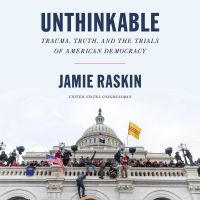
UnthinkableJamie Raskin15h 8m4.5 (9.3K)$8 · $0.00
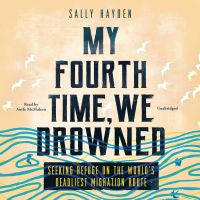
My Fourth Time, We DrownedSally Hayden13h 59m4.6 (2.9K)$23 · $0.00
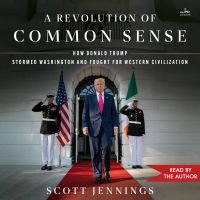
A Revolution of Common SenseScott Jennings9h 29m4.6 (528)$29 · $0.00
Statement From the Dock at the Rivonia TrialNelson Mandela2h 18m4.6 (1.3K)$1 · $0.00

Lessons from the EdgeMarie Yovanovitch17h 11m4.5 (5.9K)$40 · $0.00
To Rescue the American SpiritBret Baier10h 12m4.5 (2.7K)$8 · $0.00

StonewalledSharyl Attkisson15h 19m4.5 (4.3K)$33 · $0.00
The World According to Orwell: 1984 & Animal FarmGeorge Orwell15h 38m4.6 (1.1K)$0.99 · $0.00
Basic EconomicsThomas Sowell18h 32m4.5 (29.3K)$28 · $0.00
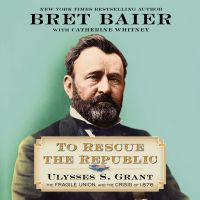
To Rescue the RepublicBret Baier, Catherine Whitney11h 42m4.5 (8.6K)$29 · $0.00
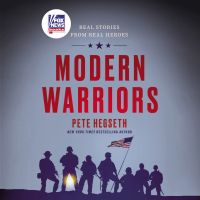
Modern WarriorsPete Hegseth7h 10m4.5 (4.7K)$24 · $0.00
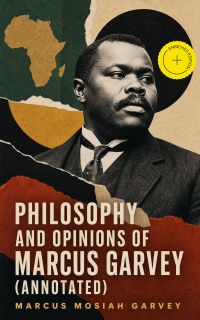
Philosophy and Opinions of Marcus Garvey (Annotated)Marcus Mosiah Garvey4h 42m4.5 (1.7K)$1.99 · $0.00

A Plague Upon Our HouseScott W. Atlas MD10h 37m4.5 (3.4K)$20 · $0.00

One Bright MoonAndrew Kwong12h 21m4.5 (813)$29 · $0.00
You may also like
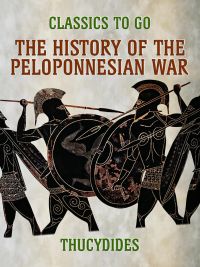
The History of the Peloponnesian WarThucydides22h 10m4.2 (54.2K)$2.30
On War (Vom Kriege)Carl von Clausewitz32h 20m4.2 (27.2K)$0.99 · $0.00

The Art of WarSun Tzu1h 10m4.0 (623.2K) · 3200Free
Improvised Weapons and Munitions - The Official U.S. Army ManualU.S. Department of the Army4h 38m4.3 (2.7K)$1 · $0.00

Old-Earth Creationism on TrialTim Chaffey, Jason Lisle7h 45m4.1 (327)$20

The Influence of Sea Power Upon History, 1660-1783Alfred Thayer Mahan22h 4m4.1 (1.5K)$2.30
Some Principles of Maritime Strategy (Annotated)Julian Stafford Corbett11h 14m4.1 (385)$1.99 · $0.00

The Art of War in the Middle Ages: Military History of Europe (378-1515) (Annotated)Charles Oman6h 12m4.1 (812)$2 · $0.00
Some Principles of Maritime StrategyJulian Stafford Corbett9h 25m4.2 (988)Free

Ottoman Empire: The Complete History of Its Rise, Golden Age, Powerful Sultans and Ultimate FallFrancis Duncan1h 2m4.4 (43)$3.40 · $0.00
Julius CaesarJ. F. C. Fuller14h 6m3.9 (677)$25 · $0.00

Social Security for Future GenerationsJohn A. Turner, Serena E. McCarthy9h 4m$15

Fore-Armed: How To Build A Citizen ArmyGranville Fortescue3h 26m$3

The Franco-German War of 1870-71 (Annotated)Helmuth Graf von Moltke15h 32m3.9 (31)$1.99 · $0.00
Technique Of Modern TacticsP. S. Bond & M. J. McDonough21h 24m$2

Chancellorsville and GettysburgAbner Doubleday6h 38m4.0 (285)$10 · $0.00
Artillery Through the Ages (Annotated)Albert Manucy3h 22m4.6 (32)$2 · $0.00

Battle Of Rocroi, 1643, In The Thirty Years' WarAndré Geraque Kiffer1h 58m$5 · $0.00
Sea Power in its Relations to the War of 1812 (Annotated)Alfred Thayer Mahan33h 20m4.5 (12)$2 · $0.00

TROMKRicardo Garay3m$4 · $0.00