
Só áudio
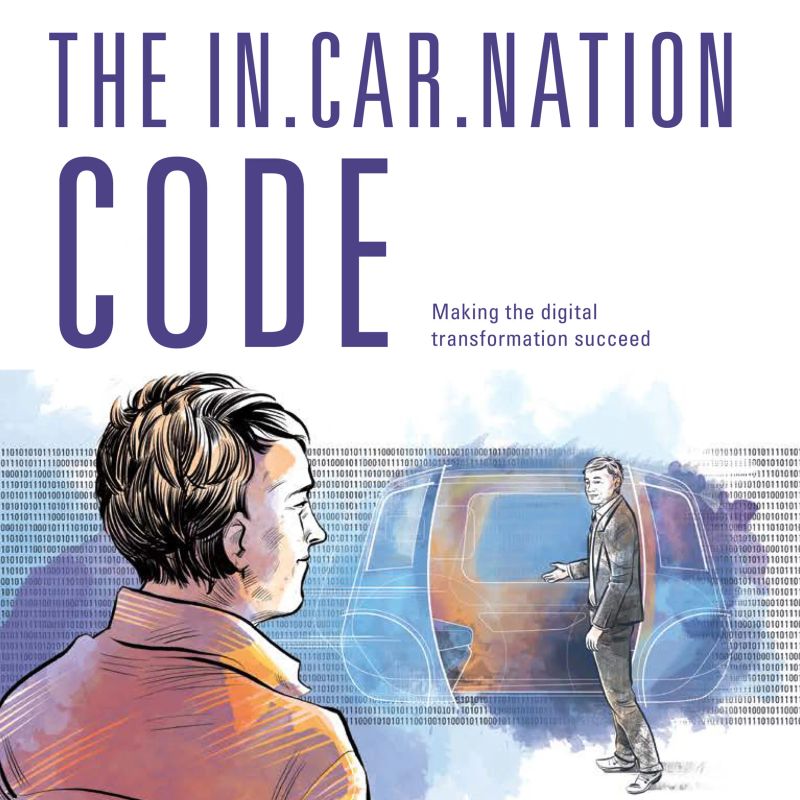
The In-Car-Nation Code
Making the Digital Transformation Succeed.De Dr. Engelbert WimmerNarrado por Paul Coia, Dr. Engelbert WimmerDuração20h 14m
Sobre este audiolivro
The automotive industry is the motor which drives many western economies: in Germany, for instance, it employs around 1.5 million people. As the digital transformation gathers pace, however, this pillar of the economy will, just like various other industries, need to wholly reinvent itself. This book is about the multitude of challenges this epochal change will entail. Blending a fictional storyline with factual information, it takes readers on a journey to the key locations of the digital transformation while explaining how it is happening and what it means. Readers can also expect a wealth of concrete recommendations of relevance to leading figures shaping the future of industry. Rich in facts with entertaining moments along the way, this book is a genuine thought-leadership piece written for hands-on people. THE IN.CAR.NATION CODE EXPLAINS: C-reating digital user value - Turning products into digital experiences; O-perating in learning cycles - Making agile cycles out of linear processes: D-esigning bi-modal organisations - Bringing scaling and innovation together: E-volving leadership techniques - Ushering in the era of post-heroism.
Detalhes do audiolivro
GêneroBusiness and Economics
Duração20 h 14 min
Narrado porPaul Coia, Dr. Engelbert Wimmer
FormatoAudiolivro
Data de publicação14 de jul. de 2020
IdiomaInglês
Sumário
1Introduction by the Author
2Chapter 1: Mahlich Gets onto the Starting Blocks
3Chapter 2: China or Maybe Israel? , Pt. 1
4Chapter 2: China or Maybe Israel? , Pt. 2
5Chapter 3: the Four Areas of the Digital Value Economy, Pt. 1
Mostrar todos os capítulosVer menos
6Chapter 3: the Four Areas of the Digital Value Economy, Pt. 2
7Chapter 3: the Four Areas of the Digital Value Economy, Pt. 3
8Chapter 3: the Four Areas of the Digital Value Economy, Pt. 4
9Chapter 4: Operating in Learning Cycles, Pt. 1
10Chapter 4: Operating in Learning Cycles, Pt. 2
11Chapter 4: Operating in Learning Cycles, Pt. 3
12Chapter 4: Operating in Learning Cycles, Pt. 4
13Chapter 4: Operating in Learning Cycles, Pt. 5
14Chapter 4: Operating in Learning Cycles, Pt. 6
15Chapter 5: Designing Bi-Modal Organisations, Pt. 1
16Chapter 5: Designing Bi-Modal Organisations, Pt. 2
17Chapter 5: Designing Bi-Modal Organisations, Pt. 3
18Chapter 5: Designing Bi-Modal Organisations, Pt. 4
19Chapter 5: Designing Bi-Modal Organisations, Pt. 5
20Chapter 5: Designing Bi-Modal Organisations, Pt. 6
21Chapter 6: Evolving Leadership, Pt. 1
22Chapter 6: Evolving Leadership, Pt. 2
23Chapter 6: Evolving Leadership, Pt. 3
24Chapter 6: Evolving Leadership, Pt. 4
25Chapter 6: Evolving Leadership, Pt. 5
26Chapter 6: Evolving Leadership, Pt. 6
27Author's Postscript

Never Split the DifferenceChris Voss, Tahl Raz8h 7min4.4 (277.7K)$26 · $0.00
The Intelligent Investor Rev Ed.Benjamin Graham17h 48min4.3 (191.5K)$40 · $0.00
The Hard Thing About Hard ThingsBen Horowitz7h 57min4.2 (134.3K)$26 · $0.00
Boundaries for LeadersHenry Cloud7h 36min4.3 (3.6K)$26 · $0.00

Progress and Poverty, Volumes I and II (Annotated)Henry George19h 21min4.6 (574)$1.99 · $0.00
Not Everything Counts but Everything Matters: The powerful and inspirational new book about leadership and achieving success from the visionary multi-premiership winning Panthers coachIvan Cleary6h 1min4.6 (680)$24 · $0.00
BuildTony Fadell11h 5min4.5 (14.3K)$8 · $0.00
The Joys Of CompoundingGautam Baid17h 34min4.5 (2.5K)$18 · $0.00
Basic EconomicsThomas Sowell18h 32min4.5 (29.3K)$28 · $0.00

The Ambuja StoryNarotam Sekhsaria13h 59min4.5 (830)$33 · $0.00

The Secret Door to SuccessFlorence Scovel Shinn2h 25min4.5 (2.1K)$1.20 · $0.00

This Is Going to HurtAdam Kay5h 47min4.4 (444.7K)$24 · $0.00

Big TrustShadé Zahrai, Fayçal Sekkouah8h 36min4.6 (406)$26 · $0.00
The Intelligent Investor Third EditionBenjamin Graham, Jason Zweig20h4.4 (156.6K)$46 · $0.00

Bottle of LiesKatherine Eban14h 25min4.4 (12K)$33 · $0.00

The Antiracist Business BookTrudi Lebrón6h 10min4.6 (275)$17 · $0.00
The FormulaJoshua Robinson, Jonathan Clegg10h 41min4.4 (6.9K)$29 · $0.00

Let Them LeadJohn U. Bacon7h 10min4.5 (1.4K)$24 · $0.00

Secrets of the Millionaire MindT. Harv Eker5h 11min4.4 (301.4K)$24 · $0.00

The Person You Mean to BeDolly Chugh9h 6min4.4 (7.2K)$29 · $0.00
Você também pode gostar

The PerfectionistsSimon Winchester11h 46min4.2 (9.9K)$29 · $0.00
Collected Writings of Nikola TeslaThomas Commerford Martin, Nikola Tesla19h 42min4.4 (2.8K)$1.99 · $0.00

Arriving TodayChristopher Mims11h 23min4.1 (1.9K)$29 · $0.00
Mars Rover CuriosityRob Manning, William L. Simon7h 43min4.3 (1.7K)$20

Tesla: The Problem of Increasing Human EnergyNikola Tesla5h 38min4.2 (1.9K)$1.99 · $0.00

Seeing Around CornersRita McGrath7h 46min4.1 (886)$26 · $0.00
Advantage India : From Challenge to OppourtunityA.P.J Abdul Kalam, Srijan Pal Singh6h 9min4.5 (252)$8

Knowing What We KnowSimon Winchester14h 19min3.9 (2.5K)$33 · $0.00
RepluggedSatnam Bains13h 47min$14 · $0.00
The 9 AI Powers: How to Build Digital Wealth in 2025Yasin Ali 1h 41min4.7 (12) Só no Ultra
Eft Investing: A Comprehensive Guide to Researching and Investing (The Intelligent Investor's Guide to Using Free Online Stock Screeners to Find Winning Stocks)Matthew Nagel2h 7min$3.50 · $0.00
Think, Focus, Grow RichRobert4h 38min$6 · $0.00
The AI RevolutionTorsten J. Koerting3h 11min$5 · $0.00

In Our Own ImageGeorge Zarkadakis13h 48min3.8 (341)$23 · $0.00
The Calculating EngineCharles Babbage3h 4min$2.40

Missions to MarsLarry Crumpler12h 3min4.2 (44)$29 · $0.00
The Electric SlidePacky McCormick4h 31min5.0 (12)Grátis
Human Work in the Age of Smart MachinesJamie Merisotis6h 30min3.9 (164)$15 · $0.00

Business-Englisch lernen Audio - Agile at workMelita Cameron-Wood1h 3min$18
TelecosmGeorge Gilder11h 14min3.7 (275)$21 · $0.00