
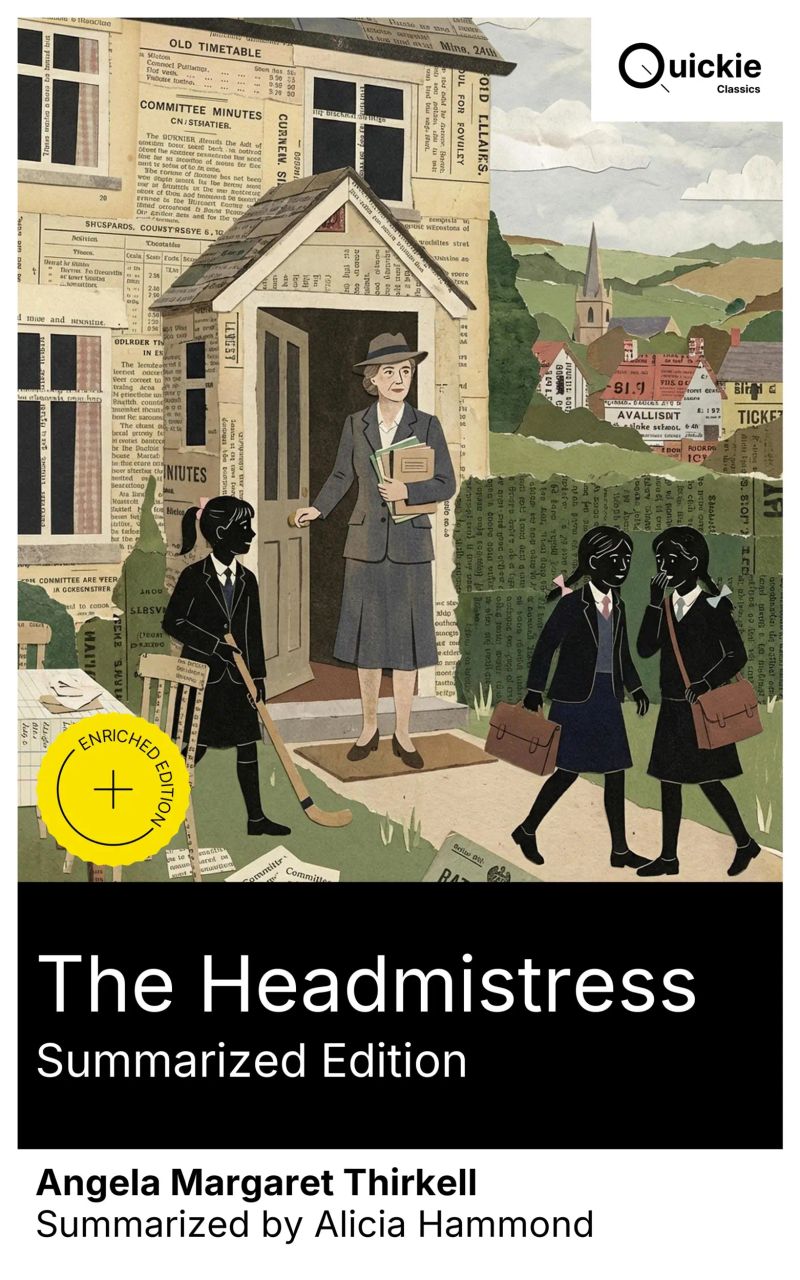
The Headmistress (Summarized Edition)
Enriched edition. Mid-century English village comedy of a schoolhead's trials, teacher-student tangles, and a witty heroine in nostalgic small-town lifeDe Angela Margaret Thirkell


Duração3h 5m
Sobre este audiolivro
Set in wartime Barsetshire, The Headmistress carries Thirkell's Trollopian county into the 1940s, as an evacuated girls' school finds its place among county families and committees. With a gently sardonic omniscience, she orchestrates a social comedy of ration books, red tape, and tentative courtships, balancing pastoral nostalgia with the moral economies of war. Brisk dialogue and free indirect asides trace how education, philanthropy, and class obligation interlock under pressure. Thirkell—granddaughter of Pre-Raphaelite Edward Burne-Jones and daughter of classicist J. W. Mackail—brought to Barsetshire a cultivated sense of tradition under strain. After years in Australia and a return to England before the war, she wrote with intimate knowledge of the home front: committees, billets, the unsung heroism of administrators, and the stagecraft learned from mentors like J. M. Barrie. For readers of Trollope, Barbara Pym, and the best chroniclers of civilian life, The Headmistress offers civilized wit with steel: compassionate about foibles, exact about institutions, unsentimental about change. It is an inviting entry to the Barsetshire cycle and a revealing text for studying gendered labor, class negotiation, and educational ideals in the Second World War.
Quickie Classics summarizes timeless works with precision, preserving the author's voice and keeping the prose clear, fast, and readable—distilled, never diluted. Enriched Edition extras: Introduction · Synopsis · Historical Context · Brief Analysis · 4 Reflection Q&As · Editorial Footnotes.
Detalhes do audiolivro
GêneroGeneral Fiction
Duração3 h 5 min
Narrado porOuça com mais de 1.000 vozes
FormatoeBook com áudio
Data de publicação10 de jan. de 2026
IdiomaInglês
Sumário
1Introduction
5The Headmistress
2Introduction
6Analysis
3Synopsis
7Reflection
4Historical Context
Mais de Angela Margaret Thirkell
The Duke's Daughter (Annotated)Angela Margaret Thirkell14h 9min4.5 (12)$2 · $0.00
County Chronicle (Annotated)Angela Margaret Thirkell13h 53min4.2 (844)$2 · $0.00
Jutland Cottage (Annotated)Angela Margaret Thirkell12h 17min4.3 (1.7K)$2 · $0.00

Wild Strawberries (Annotated)Angela Margaret Thirkell8h 45min3.9 (2.9K)$2 · $0.00
Enter Sir RobertAngela Margaret Thirkell10h 9min3.9 (348)$1 · $0.00
Jutland CottageAngela Margaret Thirkell12h 9min4.1 (218)$1 · $0.00
Northbridge RectoryAngela Margaret Thirkell11h 19min4.1 (1.3K)$1 · $0.00
Marling HallAngela Margaret Thirkell11h 39min4.0 (2.2K)$1 · $0.00
Private EnterpriseAngela Margaret Thirkell18h 21min4.0 (779)$1 · $0.00
The Demon in the HouseAngela Margaret Thirkell6h 34min3.9 (817)$1 · $0.00
The BrandonsAngela Margaret Thirkell11h 44min4.0 (1.8K)$2 · $0.00
High Rising (Annotated)Angela Margaret Thirkell9h 3min3.9 (4.1K)$2 · $0.00
Enter Sir RobertAngela Margaret Thirkell10h 50min3.9 (450)$2 · $0.00
The HeadmistressAngela Margaret Thirkell13h 43min4.0 (1K)$2 · $0.00
A Double Affair (Annotated)Angela Margaret Thirkell11h 29min3.8 (153)$1.99 · $0.00
WhistlerAnn Patchett10h 45min4.6 (4.6K)$29 · $0.00
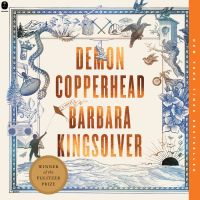
Demon CopperheadBarbara Kingsolver21h 3min4.5 (949.4K)$46 · $0.00
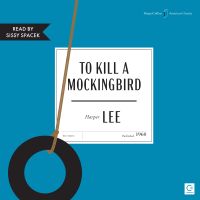
To Kill a MockingbirdHarper Lee12h 18min4.5 (7.4M)$29 · $0.00
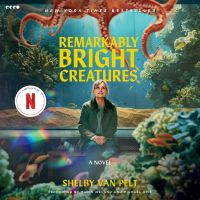
Remarkably Bright CreaturesShelby Van Pelt11h 17min4.4 (1.7M)$29 · $0.00
War LordBernard Cornwell13h 21min4.6 (33.1K)$33 · $0.00
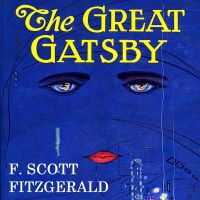
The Great Gatsby: Original 1925 Edition (An F. Scott Fitzgerald Classic NovelFrancis Scott Fitzgerald4h 45min4.6 (9.3K)$15 · $0.00
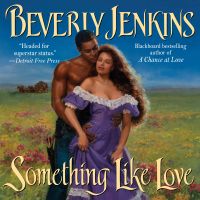
Something Like LoveBeverly Jenkins10h 21min4.6 (2.7K)$29 · $0.00
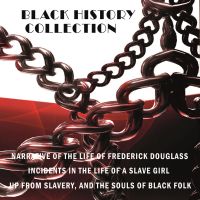
Black History CollectionFrederick Douglass, Harriet Ann Jacobs, Booker T. Washington, W.E.B. Du Bois27h 9min4.6 (2.6K)$15 · $0.00

The Old Man and the Sea (Annotated)Ernest Hemingway4h 27min4.6 (1.4K)$2 · $0.00
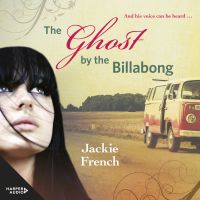
The Ghost by the Billabong (The Matilda Saga, #5)Jackie French14h 58min4.6 (773)$33 · $0.00
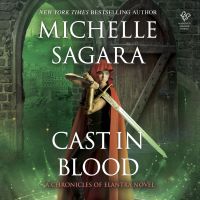
Cast in BloodMichelle Sagara16h 35min4.6 (607)$33 · $0.00
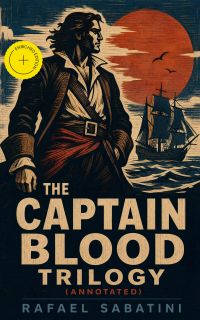
The Captain Blood Trilogy (Annotated)Rafael Sabatini29h 20min4.6 (1K)$3 · $0.00
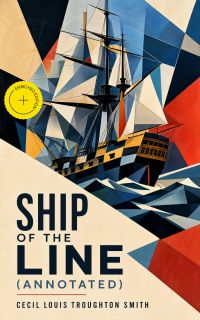
Ship of the Line (Annotated)Cecil Louis Troughton Smith11h 13min4.6 (1K)$2 · $0.00
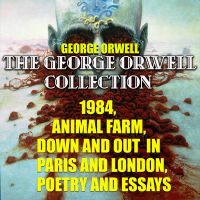
The George Orwell CollectionGeorge Orwell24h 46min4.5 (14.4K)$10 · $0.00
ShivajiRanjit Desai25h 13min4.6 (3.1K)$24 · $0.00
Time RegainedMarcel Proust15h 38min4.5 (9.2K)$2 · $0.00
Driving ForceElle James4h 58min4.6 (407)$20 · $0.00
When God Calls the HeartBrian Bird, Michelle Cox3h 24min4.6 (439)$10 · $0.00
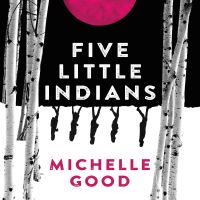
Five Little IndiansMichelle Good10h 34min4.5 (64.5K)$29 · $0.00
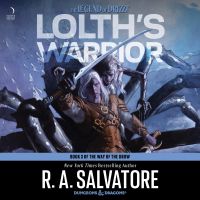
Lolth's WarriorR. A. Salvatore13h 20min4.6 (2.4K)$33 · $0.00
Você também pode gostar
Marling HallAngela Margaret Thirkell11h 39min4.0 (2.2K)$1 · $0.00
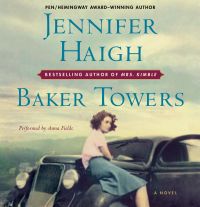
Baker TowersJennifer Haigh8h 50min3.9 (6.3K)$29 · $0.00
The Setons (Historical Novel)O. Douglas9h 32min4.1 (412)$1.99 · $0.00
Adam BedeGeorge Eliot22h 17min3.9 (100.8K)$21 · $0.00

Dakota BornDebbie Macomber11h 38min4.0 (9.5K)$29 · $0.00
The Care and Management of LiesJacqueline Winspear9h 45min3.9 (14.3K)$29 · $0.00
Miss BuntingAngela Thirkell12h4.0 (1.1K)$2 · $0.00
Rilla of Ingleside (Annotated)Lucy Maud Montgomery13h 27min4.4 (67.1K)$2 · $0.00
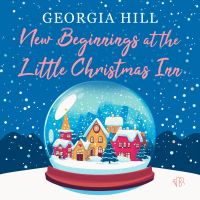
New Beginnings at the Little Christmas InnGeorgia Hill7h 17min4.4 (354)$13 · $0.00
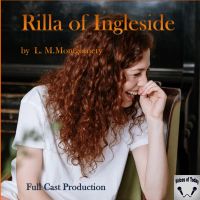
Rilla of InglesideL. M. Montgomery11h 40min4.4 (72.5K)$25
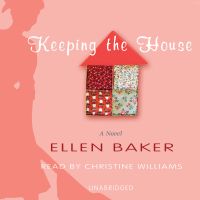
Keeping the HouseEllen Baker16h 17min3.8 (3.8K)$28
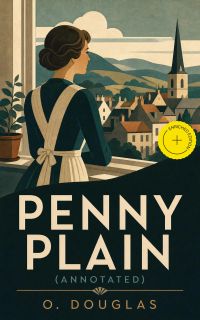
Penny Plain (Annotated)O. Douglas9h 54min4.2 (2.1K)$2 · $0.00
Lucy Maud Montgomery Short StoriesLucy Maud Montgomery10h 25min4.2 (1.9K)$12 · $0.00

CranfordElizabeth Cleghorn Gaskell6h 5min3.9 (62.2K)$10 · $0.00
MarmeeSarah Miller14h 19min3.9 (8.3K)$33 · $0.00
Rilla of InglesideLucy Maud Montgomery9h 55min4.4 (70.3K)$2.30
Under the Light of the Italian MoonJennifer Anton12h 28min4.5 (5.3K)$23 · $0.00
Rilla of InglesideL. M. Montgomery10h 43min4.4 (67.6K)$2.30 · $0.00
The Soul of Susan YellamHorace Annesley Vachell7h 59min$1 · $0.00
The Complete Works of Anna Buchan (Annotated)Anna Buchan113h 52min4.7 (11)$2.99 · $0.00