
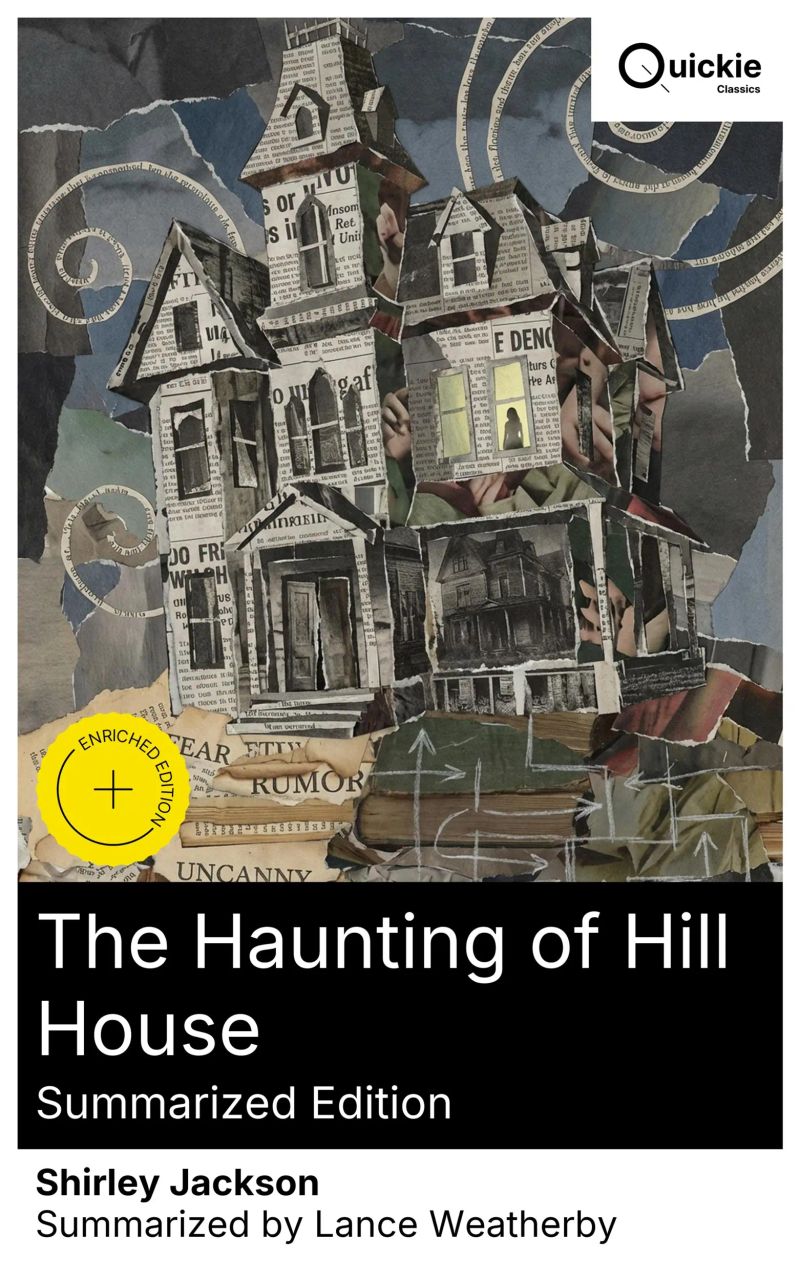
The Haunting of Hill House (Summarized Edition)
Enriched edition. A psychological haunted house mystery where gothic suspense blurs fear and reality amid dark secrets and unreliable mindsDe Shirley Jackson


Duração3h
Sobre este audiolivro
Published in 1959, The Haunting of Hill House refines the Gothic into psychological inquiry. Dr. Montague gathers Eleanor Vance, Theodora, and Luke to test a mansion whose very angles and doors seem hostile; Jackson stages terror through architecture, rumor, and suggestive marks on walls. Her close-third narration clings to Eleanor, cultivating radical ambiguity about agency and phenomena. The novel revitalizes the haunted-house line from James to mid‑century America, marrying lyrical precision with claustrophobic design. Shirley Jackson, already renowned for The Lottery, brought to Hill House a scholar's curiosity about folklore and spiritualism and a satirist's eye for social ritual. Life in Vermont, collaboration with critic Stanley Edgar Hyman, and intimate knowledge of isolation and anxiety inform Eleanor's voice. Jackson's preoccupation with belief, conformity, and tenuous female autonomy shapes the novel's moral pressure. Readers seeking atmosphere over spectacle will find an exacting blueprint for dread here. Essential for students of the Gothic, postwar American culture, and narrative unreliability, Hill House also rewards writers studying how syntax and spatial detail choreograph fear.
Quickie Classics summarizes timeless works with precision, preserving the author's voice and keeping the prose clear, fast, and readable—distilled, never diluted. Enriched Edition extras: Introduction · Synopsis · Historical Context · Author Biography · Brief Analysis · 4 Reflection Q&As · Editorial Footnotes.
Detalhes do audiolivro
GêneroHorror, Mystery and Thriller
Duração3 h
Narrado porOuça com mais de 1.000 vozes
FormatoeBook com áudio
Data de publicação10 de jan. de 2026
IdiomaInglês
Sumário
1Introduction
5Author Biography
2Introduction
6The Haunting of Hill House
3Synopsis
7Analysis
4Historical Context
8Reflection
Mais de Shirley Jackson
Japanese GothicKylie Lee Baker10h 20min4.2 (7K)$29 · $0.00
Treasure Island (Adventure Classic with Illustrations)Robert Louis Stevenson8h 50min4.5 (11.2K)$1.99 · $0.00
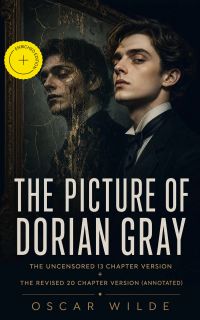
The Picture of Dorian Gray: The Uncensored 13 Chapter Version + The Revised 20 Chapter Version (Annotated)Oscar Wilde16h 12min4.5 (2.8K)$1.99 · $0.00
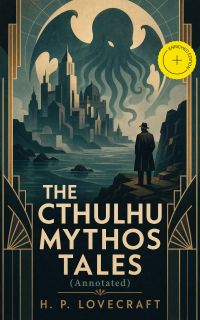
THE CTHULHU MYTHOS TALES (Annotated)H. P. Lovecraft22h 46min4.5 (16.9K)$2 · $0.00
The Undead PoolKim Harrison16h 13min4.4 (34.6K)$33 · $0.00
Glacier's EdgeR. A. Salvatore13h 44min4.5 (3.4K)$33 · $0.00
Good OmensNeil Gaiman, Terry Pratchett12h 33min4.4 (1.1M)$33 · $0.00
Dark of NightJonathan Maberry, Rachael Lavin4h 59min4.4 (3.8K)$20 · $0.00
Lost GodsBrom14h 50min4.4 (18.5K)$33 · $0.00
LambChristopher Moore15h 22min4.3 (211.3K)$33 · $0.00
CARMILLA (Gothic Classic) (Annotated)Joseph Sheridan Le Fanu4h 2min4.4 (1K)$1.99 · $0.00
The ExorcistWilliam Peter Blatty12h 52min4.3 (285.9K)$8 · $0.00

Lost ValleyWalt Browning7h 47min4.3 (5.4K)$20 · $0.00
Twice TemptedJeaniene Frost8h 17min4.3 (54.8K)$26 · $0.00
1984George Orwell12h 18min4.3 (6M)$25 · $0.00
The Best Tales of Edgar Allan PoeEdgar Allan Poe5h 19min4.4 (2.2K)$1 · $0.00
A Christmas CarolCharles Dickens3h 7min4.3 (1.1M)$5 · $0.00
Hollywood DeadRichard Kadrey9h 22min4.3 (5.5K)$29 · $0.00
Frankenstein (The Uncensored 1818 Edition) (Annotated)Mary Shelley9h 9min4.3 (1.7M)$3 · $0.00
The KybalionThree Initiates4h 38min4.3 (29.8K)$4 · $0.00
Remarkably Bright CreaturesShelby Van Pelt11h 17min4.4 (1.7M)$29 · $0.00

To Hold and ProtectSandra Owens7h 59min4.6 (1.1K)$8 · $0.00
The Adventures of Sherlock Holmes (Complete Edition)Arthur Conan Doyle12h 41min4.6 (286.7K)$1.99 · $0.00
Farewell My Lovely (Annotated)Raymond Chandler10h 37min4.6 (1.2K)$2 · $0.00
The Labyrinth of the SpiritsCarlos Ruiz Zafon27h 55min4.5 (77.2K)$53 · $0.00

Olympic Mountain PursuitJodie Bailey5h 55min4.6 (638)$12 · $0.00
Glen AffricKarine Giebel22h 51min4.5 (3.2K)$46 · $0.00

Deadly Badlands PursuitSharee Stover5h 53min4.6 (361)$12 · $0.00
Crime and Punishment (The Unabridged Garnett Translation) (Annotated)Fyodor Dostoevsky24h 25min4.5 (15.4K)$1.99 · $0.00

The BorderDon Winslow29h 8min4.5 (35.7K)$53 · $0.00
FlashpointCatherine Coulter11h 38min4.5 (11.6K)$29 · $0.00
Tracking Stolen SecretsLaura Scott5h 37min4.5 (2.2K)$12 · $0.00
The Gothic Works of Edgar Allan Poe (Illustrated Edition)Edgar Allan Poe21h 5min4.5 (2.9K)$1.99 · $0.00
The Man in the Brown Suit & They Came to BaghdadAgatha Christie15h 43min4.6 (495)$33 · $0.00
Fang Si-Chi's First Love ParadiseYi-Han Lin8h 25min4.5 (4K)$26 · $0.00
The Rose CodeKate Quinn16h 2min4.4 (493.7K)$33 · $0.00
No Woman Left BehindJulie Moffett8h 49min4.5 (3K)$25 · $0.00
CovertJanie Crouch6h 15min4.5 (2K)$12 · $0.00
Cold Case InvestigationNicole Helm5h 30min4.6 (321)$5 · $0.00
The Lost Weekend (Annotated)Charles Jackson9h 46min4.5 (1K)$1.99 · $0.00
Você também pode gostar
The HorlaGuy de Maupassant2h 27min4.1 (27.3K)$2 · $0.00
Midnight SomewhereJohnny Compton9h 44min3.9 (1.9K)$23
The Red RoomH. G. Wells1h 33min3.6 (2.2K)$2 · $0.00
Nightmare at 20,000 FeetRichard Matheson10h 18min4.2 (9.3K)$20
The Haunting of Hill HouseShirley Jackson7h 27min4.0 (504.4K)$17
The Horla (Horror Classic) - (The Classic English Edition) (Annotated)Guy de Maupassant2h 36min4.1 (46K)$2 · $0.00
The Jolly CornerHenry James1h 37min3.5 (1.9K)$2.30 · $0.00
The OutsiderH. P. Lovecraft17min4.1 (10.3K)$2.30
The Night OceanHoward Phillips Lovecraft, Robert Hayward Barlow1h 44min4.0 (2.3K)$1 · $0.00
THE HORLAGuy de Maupassant2h 38min4.0 (28.3K)$1.99 · $0.00
I Am Legend, and Other StoriesRichard Matheson10h 51min4.1 (247.9K)$23
Short Horror Stories Volume 7Scare Street1h 10min4.2 (275) Só no Ultra
The Silent CompanionsLaura Purcell10h 54min4.0 (60.9K)$25
Out of the AirInez Haynes Gillmore5h 19min$2 · $0.00
Where the Tide Does Not SleepBeth A Depaolo48min4.9 (15) Só no Ultra
The HitchHikerJohn Long a. The Dasilva Theatre Players24min$2 · $0.00
The house that remembersmabus mathew41min4.4 (5) Só no Ultra
Return to Silent HillJohn Passarella9h 40min3.5 (137)$25
The Jolly CornerHenry James1h 35min3.2 (1.2K)$6 · $0.00
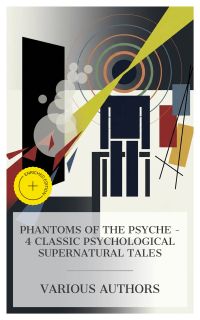
Phantoms of the Psyche – 4 Classic Psychological Supernatural TalesAmbrose Bierce, Arthur Conan Doyle, Edith Wharton, May Sinclair10h 27min$2