
Só áudio
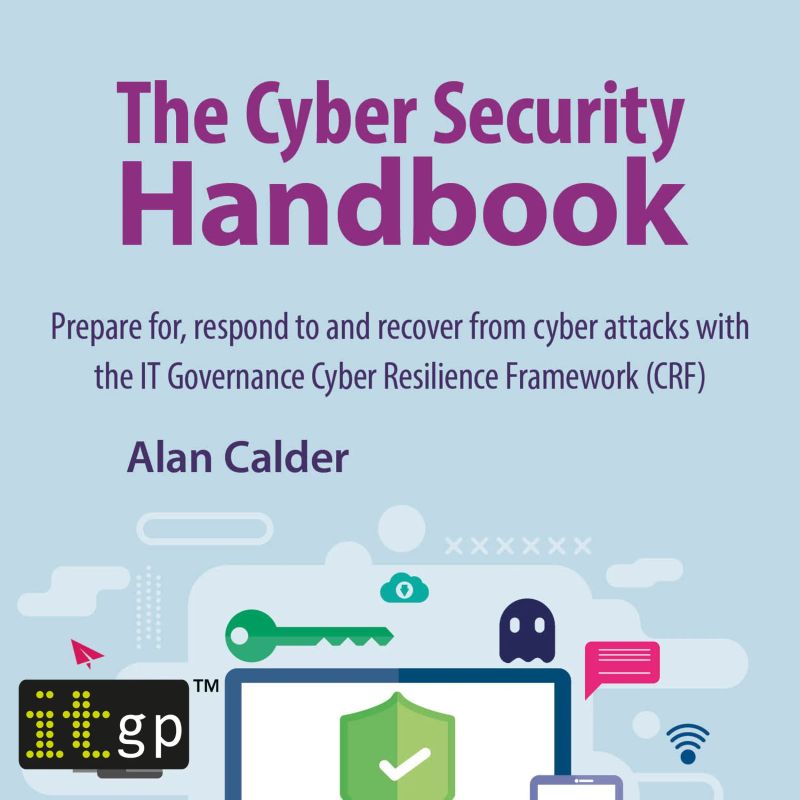
The Cyber Security Handbook – Prepare for, respond to and recover from cyber attacks
De Alan CalderNarrado por Stephen PerringDuração8h
Sobre este audiolivro
In the world as we know it, you can be attacked both physically and virtually. For today's organisations, which rely so heavily on technology – particularly the Internet – to do business, the latter is the far more threatening of the two. The cyber threat landscape is complex and constantly changing. For every vulnerability fixed, another pops up, ripe for exploitation.
This book is a comprehensive cyber security implementation manual which gives practical guidance on the individual activities identified in the IT Governance Cyber Resilience Framework (CRF) that can help organisations become cyber resilient and combat the cyber threat landscape.
Suitable for senior directors (CEO, CISO, CIO), compliance managers, privacy managers, IT managers, security analysts and others, the book is divided into six parts:
Part 1: Introduction. The world of cyber security and the approach taken in this book.
Part 2: Threats and vulnerabilities. A discussion of a range of threats organisations face, organised by threat category, to help you understand what you are defending yourself against before you start thinking about your actual defences.
Part 3: The CRF processes. Detailed discussions of each of the 24 CRF processes, explaining a wide range of security areas by process category and offering guidance on how to implement each.
Part 4: Eight steps to implementing cyber security. Our eight-step approach to implementing the cyber security processes you need and maintaining them.
Part 5: Reference frameworks. An explanation of how standards and frameworks work, along with their benefits. It also presents ten framework options, introducing you to some of the best-known standards and giving you an idea of the range available.
Part 6: Conclusion and appendices. The appendices include a glossary of all the acronyms and abbreviations used in this book.
Whether you are just starting out on the road to cyber security or looking to enhance and improve your existing cyber resilience programme, it should be clear that cyber security is no longer optional in today's information age; it is an essential component of business success.
Make sure you understand the threats and vulnerabilities your organisation faces and how the Cyber Resilience Framework can help you tackle them. Start your journey to cyber security now – buy this book today!
Detalhes do audiolivro
GêneroPolitics and Government, Technology
Duração8 h
Narrado porStephen Perring
FormatoAudiolivro
Data de publicação30 de nov. de 2021
IdiomaInglês
Sumário
1Opening Credits
2Accompanying material
3Structure of the audiobook
4Part 1: Introduction - Chapter 1: The threat landscape
5Chapter 2: Information and cyber security
Mostrar todos os capítulosVer menos
6Chapter 3: Cyber resilience
7Chapter 4: Regulatory and contractual requirements
8Chapter 5: Implementing cyber security
9Part 2: Threats and vulnerabilities - Chapter 6: The anatomy of threats
10Chapter 7: Technical threats
11Chapter 8: Human threats
12Chapter 9: Physical threats
13Chapter 10: Third-party threats
14Part 3: The CRF processes - Chapter 11: An overview of the CRF processes
15Chapter 12 - Part 1: Manage and protect
16Chapter 12 - Part 2
17Chapter 12 - Part 3
18Chapter 13: Identify and detect
19Chapter 14: Respond and recover
20Chapter 15: Govern and assure
21Chapter 16: Maturity levels
22Part 4: Eight steps to implementing cyber security - Chapter 17: Introducing the IT Governance eight-step approach
23Chapter 18: Step 1 – Start the project
24Chapter 19: Step 2 – Determine requirements and objectives
25Chapter 20: Step 3 – Determine the scope
26Chapter 21: Step 4 – Define current and ideal target states
27Chapter 22: Step 5 - Establish a continual improvement model
28Chapter 23: Step 6 – Conduct a risk assessment
29Chapter 24: Step 7 – Select and implement controls
30Chapter 25: Step 8 – Measure and review performance
31Part 5: Reference frameworks - Chapter 26: Why you should consider reference frameworks
32Chapter 27: Core
33Chapter 28: Baseline
34Chapter 29: Extended
35Chapter 30: Embedded
36Part 6: Conclusion and appendices - Chapter 31: Conclusion
37Appendix 1: IT and information asset checklist
38Appendix 2: Template outline project plan
39Appendix 3: Glossary of acronyms and abbreviations
40Further reading
41Closing Credits
Mais de Alan Calder
Cyber ResilienceAlan Calder3h 20min$32 · $0.00
The Ransomware Threat LandscapeAlan Calder1h 39min$22 · $0.00

EU GDPR – An international guide to complianceAlan Calder1h 58min$15 · $0.00
Nine Steps to SuccessAlan Calder2h 59min$32 · $0.00
Cyber Security: Essential principles to secure your organisationAlan Calder1h 49min$15 · $0.00
NIST Cybersecurity FrameworkAlan Calder1h 23min3.5 (17)$15 · $0.00
ISO 22301: 2019 - An introduction to a business continuity management system (BCMS)Alan Calder53min$15 · $0.00

ISO/IEC 38500: A pocket guide, second editionAlan Calder46min$15 · $0.00

ISO27001/ISO27002:2013Alan Calder1h 39min4.2 (76)$15 · $0.00

Suicidal EmpathyGad Saad8h 24min4.1 (736)$28 · $0.00
Unreasonable WomenJustine van der Leun10h 45min4.9 (13)$29 · $0.00

Days of Love and Rage: A Story of RevolutionAnand Gopal22h 36min4.7 (584)$34 · $0.00

KrantikariSanjeev Sanyal11h 44min4.6 (1.3K)$16 · $0.00

Unbroken Bonds of BattleJohnny Joey Jones8h 31min4.6 (2.6K)$8 · $0.00

On Democracies and Death CultsDouglas Murray10h 38min4.6 (6.5K)$29 · $0.00

Balcony Over Jerusalem: A Middle East Memoir - Israel, Palestine and BeyondJohn Lyons12h 37min4.6 (1.4K)$33 · $0.00

RiggedMollie Hemingway12h 48min4.6 (4.2K)$23 · $0.00

SledgehammerDavid Friedman8h 21min4.7 (589)$26 · $0.00

Citizenship in a Republic (Annotated)Theodore Roosevelt2h 44min4.6 (1.4K)$2 · $0.00

No EscapeNury Turkel9h 30min4.6 (809)$28 · $0.00

Always FaithfulThomas Schueman, Zainullah Zaki12h 12min4.6 (977)$29 · $0.00
UnthinkableJamie Raskin15h 8min4.5 (9.3K)$8 · $0.00

My Fourth Time, We DrownedSally Hayden13h 59min4.6 (2.9K)$23 · $0.00

A Revolution of Common SenseScott Jennings9h 29min4.6 (528)$29 · $0.00

Statement From the Dock at the Rivonia TrialNelson Mandela2h 18min4.6 (1.3K)$1 · $0.00

Lessons from the EdgeMarie Yovanovitch17h 11min4.5 (5.9K)$40 · $0.00

To Rescue the American SpiritBret Baier10h 12min4.5 (2.7K)$8 · $0.00

StonewalledSharyl Attkisson15h 19min4.5 (4.3K)$33 · $0.00
The World According to Orwell: 1984 & Animal FarmGeorge Orwell15h 38min4.6 (1.1K)$1.99 · $0.00

Hands of TimeRebecca Struthers8h 8min4.4 (1.3K)$26 · $0.00
Never Lost AgainBill Kilday10h 1min4.4 (805)$29 · $0.00
How the Internet HappenedBrian McCullough13h 28min4.3 (2.7K)$23 · $0.00

Collected Writings of Nikola TeslaNikola Tesla, Thomas Commerford Martin21h 50min4.3 (1.7K)$1 · $0.00

Just AspireAjai Chowdhry9h 13min4.4 (260)$29 · $0.00

The Little Book of AliensAdam Frank8h 20min4.3 (1.3K)$26 · $0.00

The inventions, researches and writings of Nikola Tesla (Annotated)Thomas Commerford Martin16h 59min4.3 (1.3K)$2 · $0.00

KargilV.P. Malik15h 18min4.3 (2K)$24 · $0.00

Experiments with Alternating CurrentsNikola Tesla9h 16min4.3 (874)$1.99 · $0.00

Fire on the HorizonTom Shroder, John Konrad8h 23min4.3 (858)$26 · $0.00

The Smell of Kerosene (Annotated)National Aeronautics and Space Administration, Donald L. Mallick, Peter W. Merlin11h 32min4.3 (523)$2 · $0.00

The Boy Who Harnessed the WindWilliam Kamkwamba, Bryan Mealer10h 5min4.2 (78.9K)$29 · $0.00

Across the Airless WildsEarl Swift10h 8min4.3 (1.3K)$29 · $0.00

Console WarsBlake J. Harris20h 41min4.2 (13.7K)$46 · $0.00
Improvised Munitions HandbookU.S. Department of Defense4h 49min4.3 (1.6K)$1.99 · $0.00

Escaping GravityLori Garver10h 54min4.2 (2.2K)$20 · $0.00
Wireless WarsJonathan Pelson8h 2min4.3 (419)$20 · $0.00

Let There Be WaterSeth M. Siegel8h 36min4.2 (2.3K)$20 · $0.00

The PerfectionistsSimon Winchester11h 46min4.2 (9.9K)$29 · $0.00
Rethinking NarcissismDr. Craig Malkin6h 7min4.2 (3.4K)$24 · $0.00