
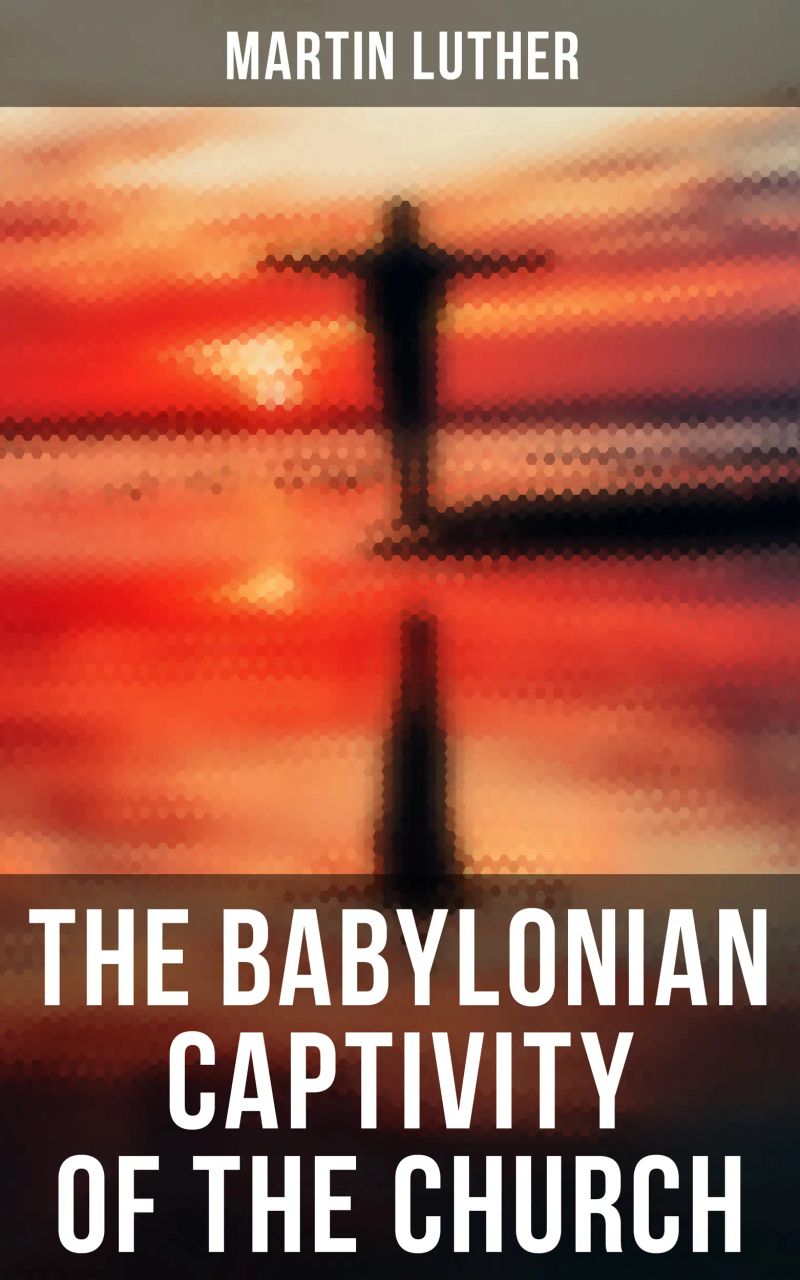
The Babylonian Captivity of the Church
A Theological TreatiseBy Martin Luther


Length4h 58m
About this audiobook
In Martin Luther's 'The Babylonian Captivity of the Church,' the author delves into a critical analysis of the Catholic Church's sacraments and the power structure within it. Written in a passionate and persuasive tone, Luther challenges the Church's practices and beliefs, calling for reform and a return to the true teachings of Christianity. This work is a pivotal piece in the Protestant Reformation, advocating for a more direct relationship between individuals and God, without the need for intermediary figures. The book is a fierce critique of the Church's control over salvation through sacraments like confession and communion. Martin Luther, a German monk and theologian, penned 'The Babylonian Captivity of the Church' in response to the corruption and abuses he witnessed within the Catholic Church. His deep-rooted beliefs in the Bible as the ultimate authority and the priesthood of all believers fueled his desire to challenge the Church's teachings and promote a more personal and inclusive form of Christianity. For readers interested in understanding the history of the Protestant Reformation and the ideological foundations of Protestantism, Martin Luther's 'The Babylonian Captivity of the Church' offers a profound and thought-provoking exploration of the theological issues that sparked a major religious revolution in Europe. This book is essential for anyone seeking insight into the intellectual and spiritual journey that led to the emergence of Protestant Christianity.
Audiobook details
Rating★★★★ 4.3 (633)
Includes Goodreads, Amazon, LibraryThing
GenreSpirituality and Religion
Length4 hrs 58 mins
Narrated byListen with 1,000+ voices
FormateBook with Audio
Publish dateNov 2, 2018
LanguageEnglish
Table of contents
1Treatise On the Incarnation
6The Sacrament of Penance
2Introduction
7Confirmation
3Jesus
8Marriage
4The Sacrament of the Bread
9Ordination
5The Sacrament of Baptism
10The Sacrament of Extreme Unction

Die wichtigsten Werke von Martin LutherMartin Luther195h 33m4.6 (11)$1 · $0.00
Martin Luthers 95 Thesen – Zeitgemäße und verständliche Neuübersetzung aus dem LateinischenMartin Luther44m4.2 (479)$2 · $0.00

The Revolutionary Treatises (Annotated)Martin Luther12h 33m4.4 (29)$1.99 · $0.00
MARTIN LUTHER Premium Collection: Theological Works, Sermons & Hymns (Annotated)Martin Luther126h 39m$2 · $0.00

Von den guten Werken (Kommentiert)Martin Luther5h 47m4.3 (1.7K)$1 · $0.00
Epistle Sermons of Martin Luther (Annotated)Martin Luther28h 39m$2 · $0.00

Die Bibel (Kommentiert)Martin Luther89h 53m4.6 (167)$3 · $0.00

Die Bibel (Kommentiert)Martin Luther102h 21m4.6 (435)$2 · $0.00

Die wichtigsten Werke von Martin Luther (Kommentiert)Martin Luther197h 12m4.4 (10)$1 · $0.00
Gesammelte Lehren: Der große/kleine Katechismus + Von der Freiheit eines Christenmenschen + Von der Babylonischen Gefangenschaft der Kirche + Von weltlicher Obrigkeit und mehr (Kommentiert)Martin Luther34h 20m4.6 (13)$1 · $0.00

Disputation on the Power of Indulgences (Annotated)Martin Luther3h 46m4.1 (15.2K)$2 · $0.00

Vom ehelichen Leben (Kommentiert)Martin Luther2h 35m4.2 (22)$1 · $0.00

Von der Freiheit eines Christenmenschen (Kommentiert)Martin Luther23h 32m4.4 (115)$2 · $0.00
HauspredigtenMartin Luther14h 49m4.8 (12)$23 · $0.00
Der Große KatechismusMartin Luther5h 45m4.5 (2.7K)$15 · $0.00

The Bondage of the Will (Annotated)Martin Luther14h 20m$2 · $0.00

Von weltlicher Obrigkeit (Kommentiert)Martin Luther3h 26m$1 · $0.00

Die Lutherbibel (Kommentiert)Martin Luther102h 18m$1 · $0.00

Von der Babylonischen Gefangenschaft der Kirche - Die wahren drei Sakramente (Kommentiert)Martin Luther4h 23m4.6 (35)$1 · $0.00

The Holy Qur-an: Text, Translation and CommentaryAbdullah Yusuf Ali22h 16m4.7 (133K)$1 · $0.00
All of Grace (Annotated)Charles Spurgeon5h 1m4.7 (1.3K)$1.99 · $0.00

Steps to ChristEllen G. White3h 12m4.7 (13.8K)$2 · $0.00

The Doctrine and Covenants of the Church of Jesus Christ of Latter Day Saints (Annotated)Joseph Smith13h 57m4.7 (575)$2 · $0.00
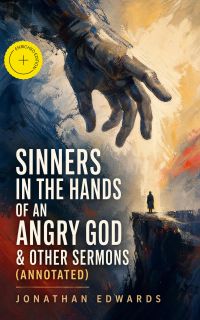
Sinners in the Hands of an Angry God & Other Sermons (Annotated)Jonathan Edwards7h 51m4.7 (1.5K)$2 · $0.00
Swayam Ki AwaazPrem Rawat8h 34m4.7 (1.1K)$26 · $0.00

Behind the BadgeAdam Davis10h 18m4.7 (2.7K)$10 · $0.00
The New Human Revolution, vol. 1Daisaku Ikeda7h 46m4.7 (669)$12 · $0.00

You Are Worth ItKyle Carpenter, Don Yaeger8h 53m4.7 (4.8K)$29 · $0.00
Praying GraceDavid A. Holland3h 2m4.7 (658)$10 · $0.00

Evidence Not SeenDarlene Deibler Rose11h 11m4.6 (11.9K)$29 · $0.00
The Christ KeyChad Bird, Chad Bird7h 33m4.7 (592)$17.40 · $0.00
He and IGabrielle Bossis10h 12m4.7 (554)$17 · $0.00

Your Body Already KnowsNidhi Pandya Bhanshali9h 7m4.7 (360)$16 · $0.00

The Complete WorksFlorence Scovel Shinn7h 59m4.6 (6.6K)$2 · $0.00
Driven by EternityJohn Bevere3h 50m4.6 (3.2K)$10 · $0.00
Spiritual AnatomyDaaji Kamlesh D. Patel9h 47m4.7 (319)$29 · $0.00

The Mahabharata of Krishna-Dwaipayana Vyasa Translated into English ProseAnonymous8h 1m4.7 (1.9K)$2 · $0.00
The Chosen Book OneAmanda Jenkins, Kristen Hendricks, Dallas Jenkins3h 8m4.6 (4.9K)$10 · $0.00
The Grace MessageAndrew Farley8h 49m4.7 (433)$20 · $0.00
You may also like
The Kingdom of God is Within YouLeo Tolstoy2h 8m4.3 (17.7K)$1 · $0.00

The Future of NutritionT. Colin Campbell PhD11h 6m4.2 (1.2K)$20
The Case for NationalismRich Lowry9h 27m4.0 (995)$29 · $0.00

Eve Bites BackAnna Beer11h 32m4.1 (467)$20 · $0.00
Institutes of the Christian ReligionJohn Calvin66h 40m4.5 (16.2K)$30
Whatever Happened to the Gospel of Grace?James Montgomery Boice7h 40m4.4 (484)$17 · $0.00

Console WarsBlake J. Harris20h 41m4.2 (13.7K)$46 · $0.00
Lies My Therapist Told MeGreg E. Gifford9h 3m4.6 (503)$29 · $0.00
HereticAyaan Hirsi Ali8h 56m4.3 (7K)$29 · $0.00

ReconstructionEric Foner30h 45m4.4 (10K)$30
Costly GraceRob Schenck11h 27m4.4 (570)$29 · $0.00
Discourses on Livy (Annotated)Niccolò Machiavelli16h 35m4.1 (10.2K)$2 · $0.00

The Ninety-five ThesesMartin Luther3h 10m4.1 (4.3K)$1 · $0.00
What I BelieveLeo Tolstoy7h 52m4.2 (1.1K)$1 · $0.00

A Treatise on Christian LibertyMartin Luther2h 34m4.2 (4.4K)$2 · $0.00
Christ in CrisisJim Wallis8h 28m4.2 (873)$26 · $0.00
The McCartney LegacyAllan Kozinn, Adrian Sinclair31h 36m4.5 (1.2K)$53 · $0.00

The Future of the Catholic Church with Pope FrancisGarry Wills8h 25m3.7 (317)$20 · $0.00

The Augsburg ConfessionMark C. Mattes, Mark C Mattes24m$0.00 · $0.00
The Revolutionary Treatises (Annotated)Martin Luther12h 33m4.4 (29)$1.99 · $0.00