
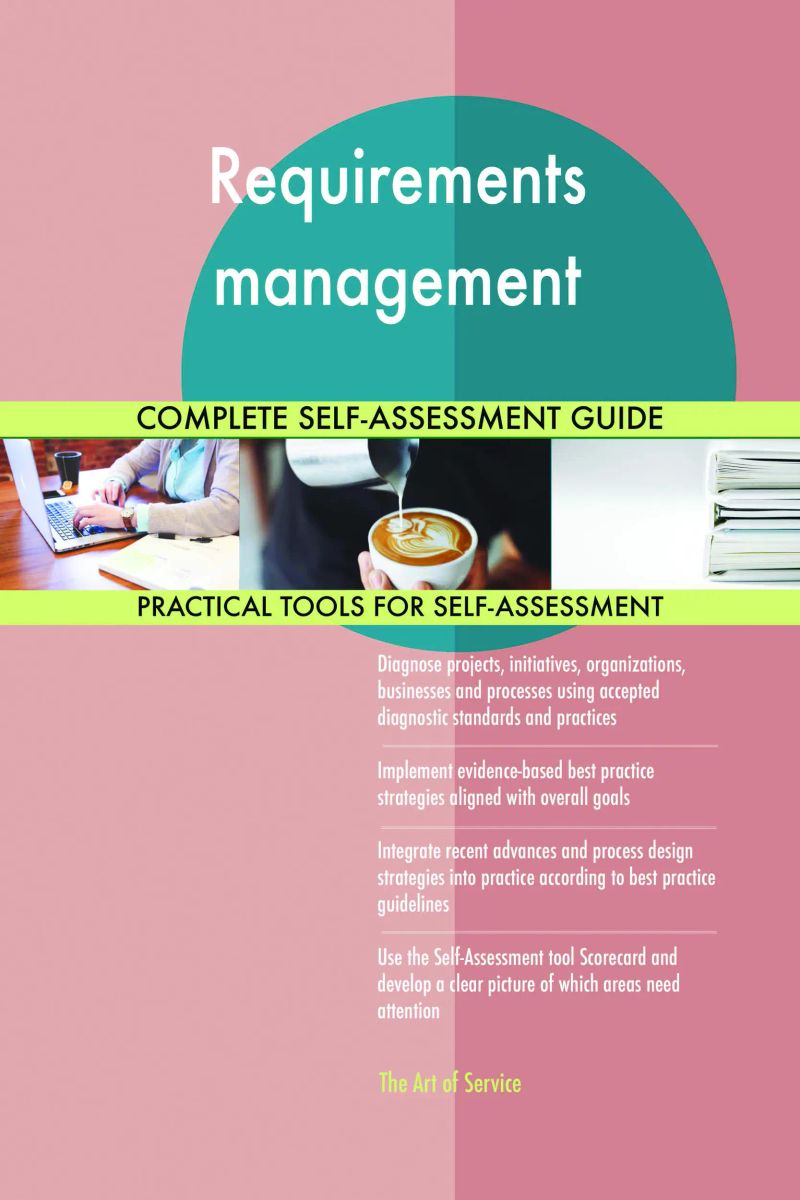
Requirements management Complete Self-Assessment Guide
De Gerardus Blokdyk

Duração1h 59m
Sobre este audiolivro
Is Requirements management linked to key business goals and objectives? What are your current levels and trends in key measures or indicators of Requirements management product and process performance that are important to and directly serve your customers? how do these results compare with the performance of your competi tors and other organizations with similar offerings? What problems are you facing and how do you consider Requirements management will circumvent those obstacles? How do we go about Comparing Requirements management approaches/solutions? How does Requirements management integrate with other business initiatives?
Defining, designing, creating, and implementing a process to solve a business challenge or meet a business objective is the most valuable role… In EVERY company, organization and department.
Unless you are talking a one-time, single-use project within a business, there should be a process. Whether that process is managed and implemented by humans, AI, or a combination of the two, it needs to be designed by someone with a complex enough perspective to ask the right questions. Someone capable of asking the right questions and step back and say, 'What are we really trying to accomplish here? And is there a different way to look at it?'
For more than twenty years, The Art of Service's Self-Assessments empower people who can do just that - whether their title is marketer, entrepreneur, manager, salesperson, consultant, business process manager, executive assistant, IT Manager, CxO etc... - they are the people who rule the future. They are people who watch the process as it happens, and ask the right questions to make the process work better.
This book is for managers, advisors, consultants, specialists, professionals and anyone interested in Requirements management assessment.
Featuring 610 new and updated case-based questions, organized into seven core areas of process design, this Self-Assessment will help you identify areas in which Requirements management improvements can be made.
In using the questions you will be better able to:
- diagnose Requirements management projects, initiatives, organizations, businesses and processes using accepted diagnostic standards and practices
- implement evidence-based best practice strategies aligned with overall goals
- integrate recent advances in Requirements management and process design strategies into practice according to best practice guidelines
Using a Self-Assessment tool known as the Requirements management Scorecard, you will develop a clear picture of which Requirements management areas need attention.
Included with your purchase of the book is the Requirements management Self-Assessment downloadable resource, containing all 610 questions and Self-Assessment areas of this book. This helps with ease of (re-)use and enables you to import the questions in your preferred Management or Survey Tool. Access instructions can be found in the book.
You are free to use the Self-Assessment contents in your presentations and materials for customers without asking us - we are here to help. This Self-Assessment has been approved by The Art of Service as part of a lifelong learning and Self-Assessment program and as a component of maintenance of certification. Optional other Self-Assessments are available. For more information, visit http://theartofservice.com
Detalhes do audiolivro
GêneroBusiness and Economics
Duração1 h 59 min
Narrado porOuça com mais de 1.000 vozes
FormatoeBook com áudio
Data de publicação5 de jan. de 2018
IdiomaInglês
Sumário
1About The Art of Service
2Acknowledgments
3Included Resources - how to access
4Your feedback is invaluable to us
5Purpose of this Self-Assessment
Mostrar todos os capítulosVer menos
6How to use the Self-Assessment
7Requirements managementScorecard Example
8Requirements managementScorecard
9BEGINNING OF THE SELF-ASSESSMENT:
10CRITERION #1: RECOGNIZE:
11CRITERION #2: DEFINE:
12CRITERION #3: MEASURE:
13CRITERION #4: ANALYZE:
14CRITERION #5: IMPROVE:
15CRITERION #6: CONTROL:
16CRITERION #7: SUSTAIN:
Development Experimentation The Ultimate Step-By-Step GuideGerardus Blokdyk4h 15min$71
Hardware As A Service A Complete Guide - 2020 EditionGerardus Blokdyk4h 38min$78
Geothermal Cooling for Data Centers The Ultimate Step-By-Step GuideGerardus Blokdyk4h 18min$71
Automotive Security A Complete Guide - 2020 EditionGerardus Blokdyk4h 32min$78
Account Management Software A Complete Guide - 2020 EditionGerardus Blokdyk4h 30min$71
Security Credentials A Complete Guide - 2019 EditionGerardus Blokdyk4h 34min$71
Life Science Multichannel Campaign Management Complete Self-Assessment GuideGerardus Blokdyk4h 27min$71
Success Oriented Management A Complete Guide - 2020 EditionGerardus Blokdyk4h 41min$78
Modeling Process Improvement A Complete Guide - 2019 EditionGerardus Blokdyk4h 51min$71
SIMAP Standard RequirementsGerardus Blokdyk3h 58min$42
ISO 17024 The Ultimate Step-By-Step GuideGerardus Blokdyk4h 4min$71
Service Accounts The Ultimate Step-By-Step GuideGerardus Blokdyk4h 6min$71
IPsec A Clear and Concise ReferenceGerardus Blokdyk1h 53min$42
Organizational Systems Security Analyst Standard RequirementsGerardus Blokdyk2h 1min$42
IBM Rational A Complete GuideGerardus Blokdyk1h 55min$42
ISO 9001 A Complete Guide - 2020 EditionGerardus Blokdyk4h 36min$71
Negotiating And Contracting A Complete Guide - 2019 EditionGerardus Blokdyk4h 35min$71
IT Process Automation Tools A Complete Guide - 2020 EditionGerardus Blokdyk4h 38min$78
Cash Flow Analysis A Complete Guide - 2020 EditionGerardus Blokdyk4h 27min$71
Never Split the DifferenceChris Voss, Tahl Raz8h 7min4.4 (277.7K)$26 · $0.00
The Intelligent Investor Rev Ed.Benjamin Graham17h 48min4.3 (191.5K)$40 · $0.00
The Hard Thing About Hard ThingsBen Horowitz7h 57min4.2 (134.3K)$26 · $0.00
Boundaries for LeadersHenry Cloud7h 36min4.3 (3.6K)$26 · $0.00
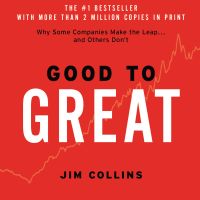
Good to GreatJim Collins9h 59min4.1 (325.2K)$29 · $0.00
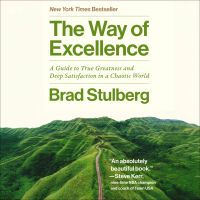
The Way of ExcellenceBrad Stulberg6h 46min4.2 (1.1K)$24 · $0.00
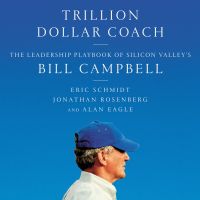
Trillion Dollar CoachEric Schmidt, Jonathan Rosenberg, Alan Eagle5h 40min4.1 (22.2K)$24 · $0.00
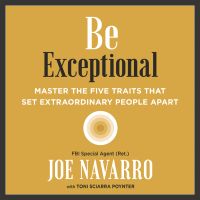
Be ExceptionalJoe Navarro, Toni Sciarra Poynter9h 11min4.0 (1.3K)$29 · $0.00
The Power of the OtherHenry Cloud5h 52min4.2 (3.5K)$24 · $0.00
BuildTony Fadell11h 5min4.5 (14.3K)$8 · $0.00
The Joys Of CompoundingGautam Baid17h 34min4.5 (2.5K)$18 · $0.00
Basic EconomicsThomas Sowell18h 32min4.5 (29.3K)$28 · $0.00
The Ambuja StoryNarotam Sekhsaria13h 59min4.5 (830)$33 · $0.00

The Secret Door to SuccessFlorence Scovel Shinn2h 25min4.5 (2.1K)$1.20 · $0.00

This Is Going to HurtAdam Kay5h 47min4.4 (444.7K)$24 · $0.00

Big TrustShadé Zahrai, Fayçal Sekkouah8h 36min4.6 (406)$26 · $0.00
The Intelligent Investor Third EditionBenjamin Graham, Jason Zweig20h4.4 (156.6K)$46 · $0.00
Bottle of LiesKatherine Eban14h 25min4.4 (12K)$33 · $0.00

The Antiracist Business BookTrudi Lebrón6h 10min4.6 (275)$17 · $0.00
The FormulaJoshua Robinson, Jonathan Clegg10h 41min4.4 (6.9K)$29 · $0.00