


Duração2h 31m
Sobre este audiolivro
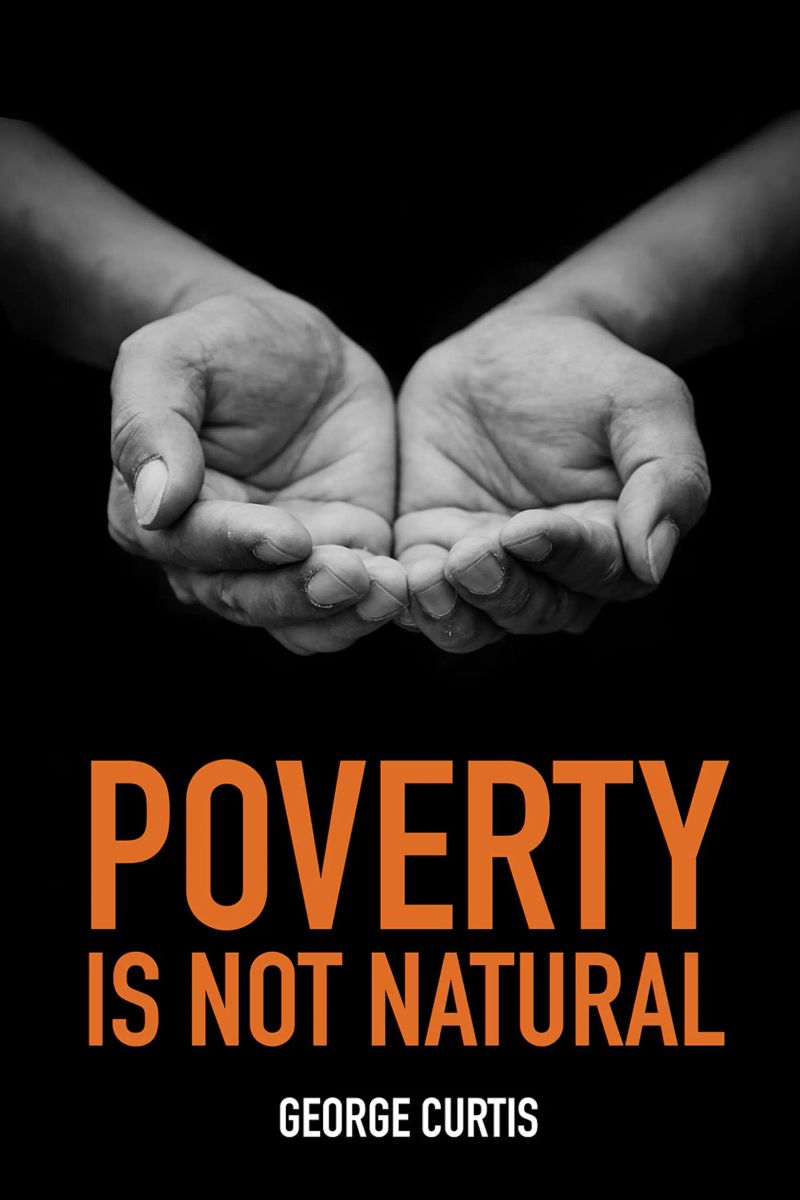
"Like slavery and apartheid, poverty is not natural. It is man-made and it can be overcome and eradicated by the actions of human beings" Nelson Mandela
The author raises some fundamental questions about the distribution of wealth. Why is it that those who produce the wealth, the workers, receive only a small portion of what they have produced? Why are there so many unemployed and so cannot provide for themselves? What is the privilege that grants some a lion's share of the product without having to work for it?
A trade union organiser for many years, George Curtis came to realise that there are limits to the improvement in wages that can be achieved through collective bargaining so long as this privilege remains. In fact higher wages increase the windfall gains of those benefitting from the privilege.
This book traces the cause of poverty to a widely accepted social institution, just as slavery once was, and reveals a way in which this defect could be remedied by introducing a more efficient way of funding government.
Detalhes do audiolivro
Avaliação★★★ 3,4 (30)
Inclui Goodreads
GêneroPsychology, Business and Economics
Duração2 h 31 min
Narrado porOuça com mais de 1.000 vozes
FormatoeBook com áudio
Data de publicação14 de jan. de 2020
IdiomaInglês
Sumário
1Acknowledgements
2Introduction
31 The Great Enigma of Our Times
42 Justice is the First Quality in the Moral Hierarchy
53 Leo Tolstoy and Henry George
Mostrar todos os capítulosVer menos
64 The Unflinching Service of a Holy Ecclesiastic
75 Henry George’s Open Letter to Pope Leo XIII
86 The Giving of Alms Cannot Abolish Poverty
97 Christian Socialism and the Labour Party
108 The Inadequacy of Socialistic Remedies
119 The Significance of Land
1210 A Remedy for the 21st Century
1311 The Way Forward
14About the Author
15Further Reading

Bad Fat Black GirlSesali Bowen6h 32min4.7 (2.8K)$24 · $0.00

Invisible StormJason Kander6h 48min4.7 (3.2K)$24 · $0.00

I Am The StormJanice Dean9h4.6 (1.5K)$8 · $0.00

On Democracies and Death CultsDouglas Murray10h 38min4.6 (6.5K)$29 · $0.00

TerraformPropaganda5h 39min4.7 (594)$24 · $0.00

Southern Horrors: Lynch Law in All Its Phases (Annotated)Ida B. Wells-Barnett2h 44min4.6 (1.3K)$2 · $0.00
Hour of the HeartIrvin D. Yalom, Benjamin Yalom8h 19min4.6 (2.3K)$26 · $0.00

Braving the TruthRachel Held Evans11h 31min4.7 (359)$29 · $0.00
Level UpRob Dial7h 42min4.6 (3.3K)$26 · $0.00

As a JewSarah Hurwitz8h 36min4.6 (1.2K)$26 · $0.00

Saint Joan (Annotated)George Bernard Shaw6h 20min4.6 (1.2K)$1.20 · $0.00

Burn the HaystackJennie Young, PhD9h 30min4.6 (543)$29 · $0.00

Woman and the New Race (Annotated)Margaret Sanger6h 30min4.6 (1K)$1.99 · $0.00

Good InsideBecky Kennedy9h 55min4.5 (59.3K)$29 · $0.00
The Mis-Education of the NegroCarter Godwin Woodson5h 4min4.5 (29.4K)$1.20 · $0.00
Du Bois: EssaysW.E.B. Du Bois6h 22min4.6 (1.5K)$1 · $0.00

The North American Indian (Illustrated Edition)Edward S. Curtis, Frederick Webb Hodge5h 59min4.6 (1.4K)$2 · $0.00

Valley of the BirdtailAndrew Stobo Sniderman, Douglas Sanderson10h 1min4.6 (2.4K)$29 · $0.00

Lies My Therapist Told MeGreg E. Gifford9h 3min4.6 (503)$29 · $0.00

Disturbed in Their NestsAlephonsion Deng, Judy A. Bernstein11h 22min4.6 (595)$23 · $0.00

Never Split the DifferenceChris Voss, Tahl Raz8h 7min4.4 (277.7K)$26 · $0.00
The Intelligent Investor Rev Ed.Benjamin Graham17h 48min4.3 (191.5K)$40 · $0.00
The Hard Thing About Hard ThingsBen Horowitz7h 57min4.2 (134.3K)$26 · $0.00
Boundaries for LeadersHenry Cloud7h 36min4.3 (3.6K)$26 · $0.00

Progress and Poverty, Volumes I and II (Annotated)Henry George19h 21min4.6 (574)$1.99 · $0.00

Not Everything Counts but Everything Matters: The powerful and inspirational new book about leadership and achieving success from the visionary multi-premiership winning Panthers coachIvan Cleary6h 1min4.6 (680)$24 · $0.00
BuildTony Fadell11h 5min4.5 (14.3K)$8 · $0.00
The Joys Of CompoundingGautam Baid17h 34min4.5 (2.5K)$18 · $0.00
Basic EconomicsThomas Sowell18h 32min4.5 (29.3K)$28 · $0.00

The Ambuja StoryNarotam Sekhsaria13h 59min4.5 (830)$33 · $0.00

The Secret Door to SuccessFlorence Scovel Shinn2h 25min4.5 (2.1K)$1.20 · $0.00

This Is Going to HurtAdam Kay5h 47min4.4 (444.7K)$24 · $0.00

Big TrustShadé Zahrai, Fayçal Sekkouah8h 36min4.6 (406)$26 · $0.00
The Intelligent Investor Third EditionBenjamin Graham, Jason Zweig20h4.4 (156.6K)$46 · $0.00

Bottle of LiesKatherine Eban14h 25min4.4 (12K)$33 · $0.00

The Antiracist Business BookTrudi Lebrón6h 10min4.6 (275)$17 · $0.00

The FormulaJoshua Robinson, Jonathan Clegg10h 41min4.4 (6.9K)$29 · $0.00

Let Them LeadJohn U. Bacon7h 10min4.5 (1.4K)$24 · $0.00

Secrets of the Millionaire MindT. Harv Eker5h 11min4.4 (301.4K)$24 · $0.00

The Person You Mean to BeDolly Chugh9h 6min4.4 (7.2K)$29 · $0.00
Você também pode gostar
Common SenseThomas Paine1h 46min4.1 (254.3K)$4 · $0.00

Visionary WomenAndrea Barnet19h 17min4.3 (791)$40 · $0.00

Common SenseThomas Paine2h 25min4.1 (54.4K)$2.30
Not Too Latevarious authors6h 38min4.1 (1.4K)$17
Common SenseThomas Paine2h4.2 (46K)$6 · $0.00

The American CrisisThomas Paine38h 2min4.3 (2.1K)$2 · $0.00
Common Sense (Unabridged)Thomas Paine2h 38min4.1 (74.8K)$10 · $0.00

Animal FactoryDavid Kirby21h 9min4.0 (724)$32
Common SenseThomas Paine1h 54min4.3 (40.9K)$1 · $0.00
A Letter to a HinduLeo Tolstoy41min4.0 (1.5K)$2 · $0.00

ResistVeronica Chambers3h 25min4.1 (467)$18 · $0.00
Common Sense & The Rights of Man - The Voice of the American RevolutionThomas Paine41h 39min4.2 (18.9K)$1 · $0.00

Super ImmunityJoel Fuhrman5h 59min4.2 (5.1K)$24 · $0.00

Twitter and Tear GasAmit Varma12min$4 · $0.00

GREENpeace VIEWSUnknown Author6h 28min$19 · $0.00
Customer Magic – The Macquarie WayJoseph A. Michelli4h 25min4.3 (14)$15 · $0.00

Appeal to the Christian women of the South (Annotated)Angelina Emily Grimké2h 54min4.4 (97)$0.99 · $0.00

No Planet BLucy Diavolo5h 42min3.8 (250)$17

Directions for Cooking by Troops, in Camp and HospitalFlorence Nightingale2h 8min$1 · $0.00

The Great Strike on the "Q"John A. Hall3h 56min$2 · $0.00