
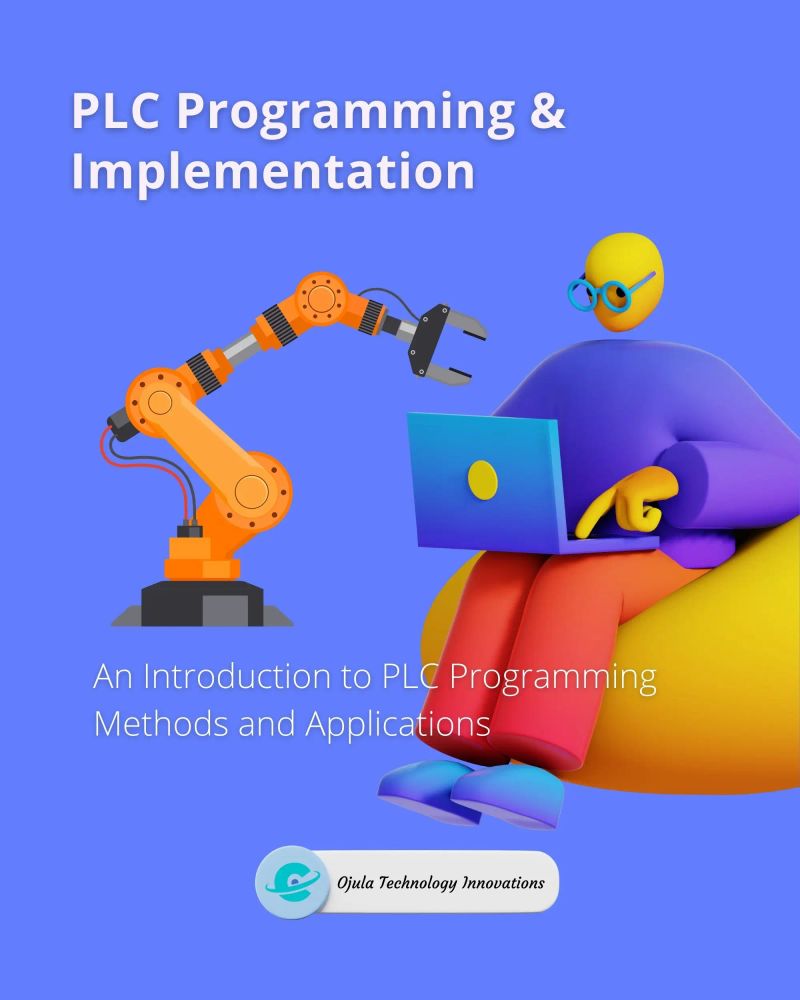
PLC Programming & Implementation
An Introduction to PLC Programming Methods and ApplicationsDe Ojula Technology Innovations


Duração1h 51m
Sobre este audiolivro
In this book, which is part 1 in the series of "PLC Programming & Implementation," I teach you the practical aspect of PLC programming and industrial applications of PLCs. The book is very straightforward and easy-to-read. In this book, I present the principles of PLCs while not tying myself to one manufacturer or another. I included in this book extensive examples and chapter-ending problems that utilize several popular PLCs, highlighting understanding of fundamentals that can be used regardless of manufacturer.
This book will help you to understand the main design characteristics, internal architecture, and operating principles of PLCs, as well as identify safety issues and methods for fault diagnosis, testing, and debugging.
What you'll learn in this book:
Comparison of relay-controlled systems, microprocessor-controlled systems, and the programmable logic controller, a discussion of PLC hardware and architecture, examples from various PLC manufacturers, and coverage of security, the IEC programming standard, programming devices and manufacturer’s software.Detail of programming using Sequential Function Charts.Extended coverage of the sequencer.Information on fault finding, including testing inputs and outputs with an illustration of how it is done with the PLC manufacturer’s software.New case studies.
After reading the book, you will have a good understanding and broad practical knowledge of PLCs and ladder logic programming. You will also be able to apply it to numerous real-world situations and industrial applications, such as:
Paper MillCoal KilnShaft KilnGlass IndustryCement IndustryAutomated Drill Press ControlSCADARobot Cell with Trapped-key Accessand so much more...
Detalhes do audiolivro
GêneroTechnology, Science and Nature
Duração1 h 51 min
Narrado porOuça com mais de 1.000 vozes
FormatoeBook com áudio
Data de publicação7 de ago. de 2022
IdiomaInglês
Sumário
1About the Author
2How this Book can Help You
3Getting Started: Simple Key Terms to Understand Relay Logic to PLC Logic Conversion
41. Define the Control Task
52. Determine a Control Strategy
Mostrar todos os capítulosVer menos
63. Implementation Guidelines
74. Program Organization and Implementation
84.1. How to Create Flowcharts and Output Sequences
94.2. How to Configure the PLC System
104.3. Internal and Real I/O Assignment
114.3.1. Sample Problem 1
124.3.2. Solution to Sample Problem 1
134.4. Assignment of Register Addresses
144.5. Elements Not to Be Wired to the Controller
154.6. Special Input Device Programming
164.6.1. Sample Problem 2
174.6.2. Solution to Sample Problem 2
184.6.3. Sample Problem 3
194.6.4. Solution to Sample Problem 3.
204.7. Program Coding/Translation
215. Discrete I/O Control Programming
225.1. Control Programming and PLC Descriptions
235.2. Simple Relay Replacement
245.3. Simple Start/Stop Motor Circuit
255.4. Forward/Reverse Motor Interlocking
265.5. Reduced-Voltage-Start Motor Control
275.6. AC Motor Drive Interface
285.7. Continuous Bottle-Filling Control
295.8. Large Relay System Modernization
306. Industrial Applications of PLCs
316.1. Process Control
326.2. Safety-Critical Applications
336.3. Remote Monitoring
346.4. The Cement industry
356.5. Safety PLCs Control access to a Robot Cell with Trapped-key Access
366.6. SCADA Systems Control and Monitor Industrial Processes
376.7. Modular PLCs
386.8. Benefits of Using PLCs in Industrial Applications
396.9. Application of PLCs to Paper Mill, Coal Kiln, Shaft Kiln and Glass Industries
406.9.1. How PLCs are Used in Ball Mill
416.9.2. Coal Kiln
426.9.3. Shaft Kiln
436.9.4. Paper Mill
446.9.5. Glass Industry
456.9.6. Benefits of PACs and PLCs in Industries
466.10. Safety PLCs vs Standard PLCs
476.11. Safety Precautions to Take When Working with PLCs
487. Study Guide & Review Questions
497.1. Problems & Solutions to Build Your PLC Skills: 7.1.1. Review, Reinforce, Test & Sharpen your PLC Skills
507.2. Solutions to the Problems
Collected Writings of Nikola TeslaThomas Commerford Martin, Nikola Tesla19h 42min4.4 (2.8K)$1.99 · $0.00

Operation PedestalMax Hastings12h 29min4.4 (5.2K)$29 · $0.00

When the Heavens Went on SaleAshlee Vance18h 20min4.4 (3K)$40 · $0.00
Everybody Has a Podcast (Except You)Justin McElroy, Travis McElroy, Griffin McElroy5h 9min4.3 (2.3K)$24 · $0.00

Hands of TimeRebecca Struthers8h 8min4.4 (1.3K)$26 · $0.00
Never Lost AgainBill Kilday10h 1min4.4 (805)$29 · $0.00
How the Internet HappenedBrian McCullough13h 28min4.3 (2.7K)$23 · $0.00
Collected Writings of Nikola TeslaNikola Tesla, Thomas Commerford Martin21h 50min4.3 (1.7K)$1 · $0.00
Just AspireAjai Chowdhry9h 13min4.4 (260)$29 · $0.00

The Little Book of AliensAdam Frank8h 20min4.3 (1.3K)$26 · $0.00
The inventions, researches and writings of Nikola Tesla (Annotated)Thomas Commerford Martin16h 59min4.3 (1.3K)$2 · $0.00

KargilV.P. Malik15h 18min4.3 (2K)$24 · $0.00
Experiments with Alternating CurrentsNikola Tesla9h 16min4.3 (874)$1.99 · $0.00

Fire on the HorizonTom Shroder, John Konrad8h 23min4.3 (858)$26 · $0.00

The Smell of Kerosene (Annotated)National Aeronautics and Space Administration, Donald L. Mallick, Peter W. Merlin11h 32min4.3 (523)$2 · $0.00

The Boy Who Harnessed the WindWilliam Kamkwamba, Bryan Mealer10h 5min4.2 (78.9K)$29 · $0.00

Across the Airless WildsEarl Swift10h 8min4.3 (1.3K)$29 · $0.00

Console WarsBlake J. Harris20h 41min4.2 (13.7K)$46 · $0.00
Improvised Munitions HandbookU.S. Department of Defense4h 49min4.3 (1.6K)$1.99 · $0.00
Escaping GravityLori Garver10h 54min4.2 (2.2K)$20 · $0.00
A Brief History of IntelligenceMax S. Bennett12h 18min4.6 (6.6K)$29 · $0.00
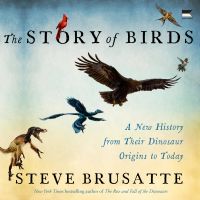
The Story of BirdsSteve Brusatte11h 49min4.6 (401)$29 · $0.00

LiftoffEric Berger9h 4min4.6 (9.5K)$29 · $0.00
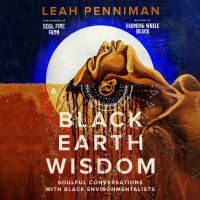
Black Earth WisdomLeah Penniman11h 54min4.6 (577)$8 · $0.00

Total Cat MojoJackson Galaxy10h 13min4.5 (8.4K)$23 · $0.00

My Life Among the UnderdogsTia Torres5h 51min4.5 (4K)$24 · $0.00

What It Takes to Save a LifeKwane Stewart6h4.6 (556)$24 · $0.00

Pastoral SongJames Rebanks8h 35min4.5 (12K)$26 · $0.00
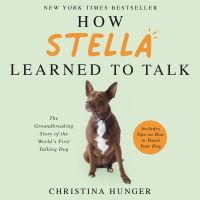
How Stella Learned to TalkChristina Hunger7h4.5 (10.9K)$24 · $0.00

Craig & FredCraig Grossi8h 6min4.5 (9.6K)$26 · $0.00
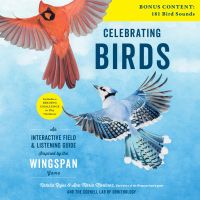
Celebrating BirdsNatalia Rojas, Ana Maria Martinez6h 47min4.6 (330)$24 · $0.00

Saving JemimaJulie Zickefoose4h 59min4.5 (749)$20 · $0.00

Will's Red CoatTom Ryan8h 23min4.5 (2.3K)$26 · $0.00
Of Time and TurtlesSy Montgomery10h 34min4.5 (5K)$29 · $0.00

THE WOLF TRILOGY: Call of the Wild, White Fang & The Son of the WolfJack London17h 31min4.5 (2.4K)$1.99 · $0.00

Zen and the Art of Saving the PlanetThich Nhat Hanh9h 20min4.5 (3.9K)$29 · $0.00

BLACK BEAUTY (With Original Illustrations)Anna Sewell7h 31min4.5 (1.3K)$1.99 · $0.00
Bottle of LiesKatherine Eban14h 25min4.4 (12K)$33 · $0.00
IngrainedCallum Robinson8h 10min4.5 (1.1K)$26 · $0.00

The Lion Tracker's Guide To LifeBoyd Varty3h 1min4.4 (4.8K)$18 · $0.00
Você também pode gostar

The Enceladus MissionBrandon Q. Morris8h 44min3.9 (3.9K)$12 · $0.00
Mars Rover CuriosityRob Manning, William L. Simon7h 43min4.3 (1.7K)$20
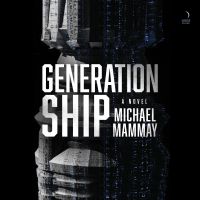
Generation ShipMichael Mammay16h 12min3.9 (2.1K)$33 · $0.00
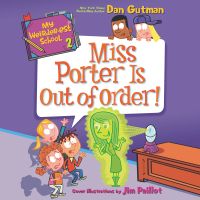
My Weirder-est School #2: Miss Porter Is Out of Order!Dan Gutman1h 1min4.3 (543)$13 · $0.00
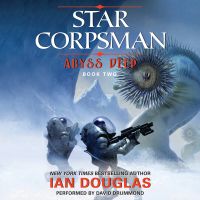
Abyss DeepIan Douglas12h 39min4.0 (1.2K)$33 · $0.00
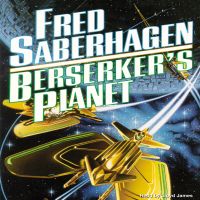
Berserker’s PlanetFred Saberhagen6h 25min3.5 (1.2K)$14
The GunPhilip K. Dick36min3.5 (2.8K)$2
Shattered DawnAnthony J. Melchiorri8h 32min4.3 (1.5K)$20

"the Cyber Pirate's Secret WeaponDenis Braininger2h 17min$7 · $0.00

LEGENDS OF ASTRO Season 1 · Part 05Martin Wintersberger, Manuela Wieninger1h 23min$12 · $0.00
Hollyweird Science: The Next GenerationKevin R. Grazier, Stephen Cass16h 50min3.5 (15)$25
Cycle DriveLogan Russell36min4.5 (8) Só no Ultra
Accidental Flight and four more stories Vol IIFloyd L. Wallace7h 11min$2.30
Centauri Vengeance and four more StoriesStephen Marlowe2h 4min$2.30
The Skill CodeMatt Beane6h 49min3.8 (456)$24 · $0.00
Extraordinary VisionsCDR Steven R. Southard USNR, (ret.), Rev. Matthew T. Hardesty, Joseph S. Walker, Michael Schulkins, Alison L. Randall, Gustavo Bondoni, Janice Rider, David A. Natale, Mike Adamson, Brenda Carre, Demetri Capetanopoulos, Joel Allegretti, Christopher M. Gleason, Kelly A. Harmon, Eric Choi, various authors7h 38min$23
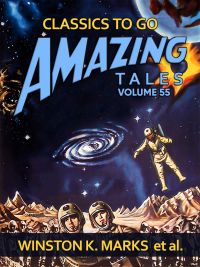
Amazing Tales Volume 55Winston K. Marks et al.5h 7min$2.30
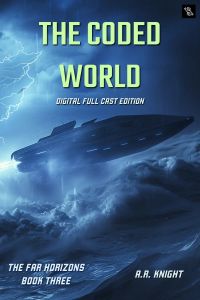
The Coded WorldA.R. Knight8h 34min4.4 (101)$0.00 · $0.00

The Final ShiftGarth Martin39min4.9 (28) Só no Ultra
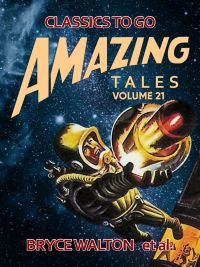
Amazing Tales Volume 21Bryce Walton et al.6h 6min$2.30